




RSPO takes further steps towards a less harmful palm oil sector
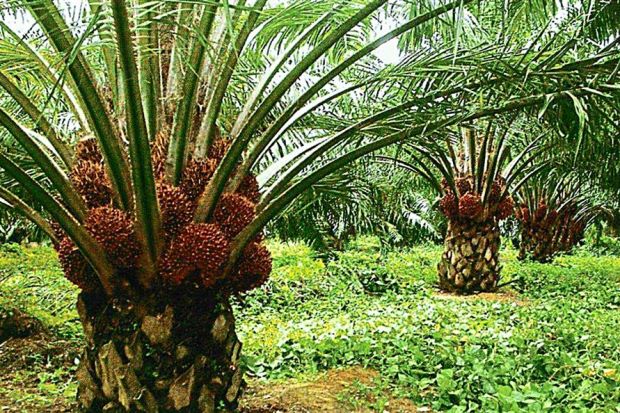
The production of palm oil is often accompanied by deforestation, environmental destruction and land grabbing. Local communities and activists who stand up against these problems are often threatened. Now the RSPO has taken significant steps in recent months to tackle these issues.
The RSPO (Roundtable for Sustainable Palm Oil) is the platform where palm oil producers, traders, processors, vendors and social organizations make agreements about making the palm oil sector less harmful. Both ENDS is represented in the board and can thus be the voice of its partner organizations within the RSPO. In recent times we have achieved important successes.
Stricter rules on deforestation
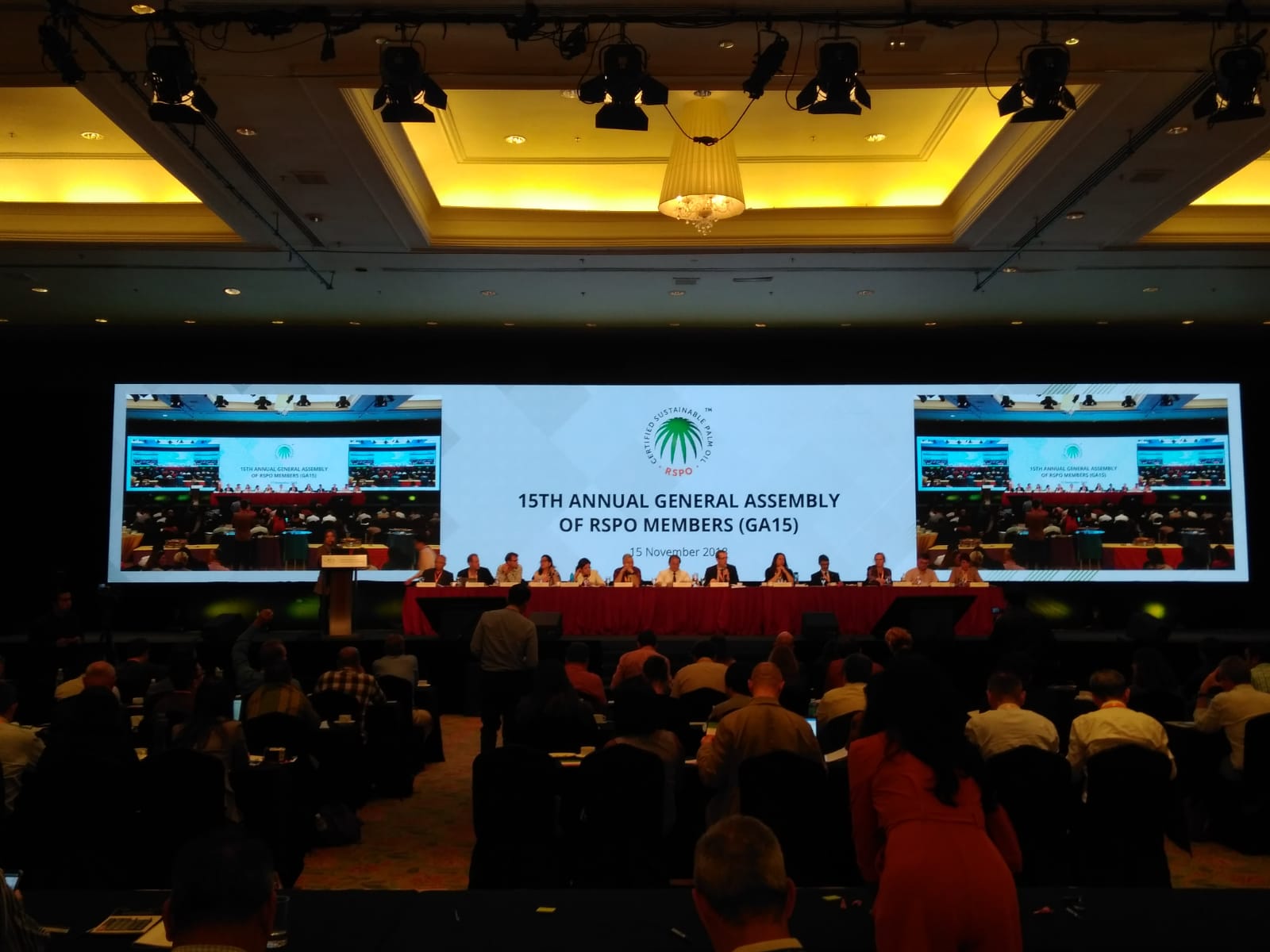
The RSPO's general assembly of 15 November revised its standards, the "Principles and Criteria". The new standard has tightened the requirements for the palm oil sector: zero-deforestation, zero-peat and zero-exploitation. The latter concerns in particular working conditions and land rights.
As far as zero-deforestation is concerned, until now only so-called High Conservation Value forest was protected against felling for palm oil plantations. Stricter requirements apply with the new rules, according to which no forest at all can be cut for palm oil. This is of great importance for communities that depend on forest and on climate and biodiversity.
The new rules, the so-called High Carbon Stock (HCS) and High Conservation Value (HCV) approach, include not only stricter environmental requirements, but also stricter social guidelines, with more attention to land rights and FPIC (free, prior and informed consent).
Policy to protect human rights defenders
Earlier this year, the board of the RSPO already established rules for the protection of human rights defenders, whistleblowers and community leaders. All member organizations of the RSPO (including Both ENDS) must have policies to protect these people. Both ENDS and partner organizations Forest Peoples Program and Oxfam Novib had submitted a resolution to this effect at the general assembly of RSPO in 2016.
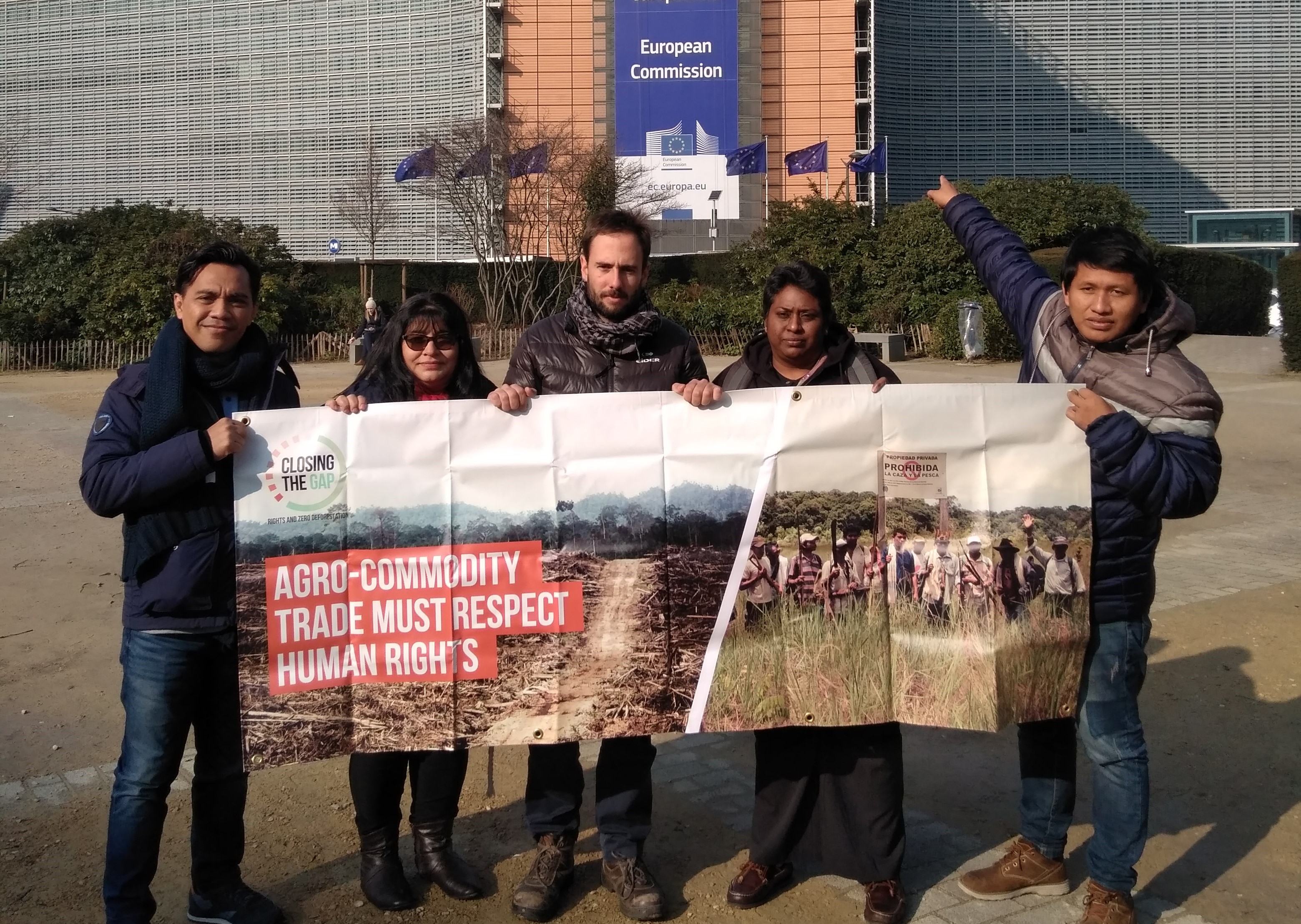
In addition, the RSPO has set up a list of all regions where human rights defenders are at risk of threats and violence. This was a request of indigenous leaders, whose communities are affected by advancing palm oil plantations. Both ENDS and Forest Peoples Program have facilitated a visit of an indigenous leaders' delegation to the European RSPO conference in Paris in June of this year. The risk inventory is of great importance, because especially in the Latin American and African countries where the expansion of palm oil is relatively new, human rights are under heavy pressure.
One of RSPO's biggest challenges now lies in the strict compliance with the standards - by the members, in particular the plantation companies, the certification bodies and RSPO itself.
For more information
Read more about this subject
-
 Dossier /
Fighting for improvements in the production of palm oil
The production of palm oil is causing social and environmental problems worldwide. Both ENDS is working to make the sector fairer and more sustainable and is promoting alternatives for palm oil.
-
 Dossier /
Communities Regreen the Sahel
In various countries in the Sahel, vast tracts of land have been restored by the local population by nurturing what spontaneously springs from the soil and protecting the sprouts from cattle and hazards.
-
 News / 6 July 2026
Strengthening Women's Land Rights Across the Rio Conventions
From 29 June – 2 July 2026, Tamara Mohr, GAGGA coordinator at Both ENDS participated in the 4th convening of the Women's Land Rights Initiative (WLRI) in Nairobi, Kenya.Hosted by the Robert Bosch Stiftung, TMG Research and the Huairou Commission, the event brought together grassroots organisations, (inter)national NGOs, government institutions and donors from around the world.
-
Publication / 3 July 2026
-
Publication / 18 June 2026
-
Publication / 12 May 2026
-
 Dossier /
Rights for People, Rules for Corporations – Stop ISDS!
Indigenous communities in Paraguay saw their attempts to regain their ancestral lands thwarted by German investors. In Indonesia, US-based mining companies succeeded to roll back new laws that were meant to boost the country’s economic development and protect its forests. This is the level of impact that investment treaties can have on social, environmental and economic development and rights. Why? Because of the ‘Investor-to-State Dispute Settlement’ clauses that are included in many such treaties.
-
 News / 24 March 2026
Statement: Invest in local leadership for tropical forest management and local economies
IUCN-NL, Both ENDS, and 16 other Dutch and international civil society organizations (CSOs), networks, and expert groups are calling on the Dutch government to invest more strongly in locally led forest management and forest-based economies. This should be done within the framework of Dutch international cooperation and its associated policy instruments.
-
 Dossier /
Global Alliance for Green and Gender Action (GAGGA)
GAGGA rallies the collective power of the women's rights and environmental justice movements to realize a world where women can and do access their rights to water, food security, and a clean, healthy and safe environment.
-
 Dossier /
Agua Zarca: indigenous fight against dam costs lives
Indigenous Hondurans are resisting the construction of the Agua Zarca hydrodam. Their fight has cost several lives, including that of Berta Cáceres. After considerable public pressure, Dutch development bank FMO withdrew from the project.
-
 Dossier /
Indigenous communities threatened by Barro Blanco dam in Panama
The Barro Blanco dam project in Panama, which has Dutch financial support, is causing indigenous lands to disappear under water. Both ENDS is working to protect the rights of indigenous communities living near the dam.
-
 Blog / 1 December 2025
The Long Road to Justice for the Ngäbe of Kiad
In October 2025 I travelled to Kiad, the Indigenous Ngäbe community that led the struggle against the FMO-financed Barro Blanco dam, for one last time. I went there to say my goodbyes, both personally and on behalf of Both ENDS, and to catch a first glimpse on how a community program financed by FMO and DEG – the result of a dialogue process that took several years – is giving a new impulse to the dam-affected communities. But how did we get here?
-
 Dossier /
Wetlands without Borders
With our Wetlands without Borders program, we work towards environmentally sustainable and socially responsible governance of the wetlands system of the La Plata Basin in South America.
-
Publication / 17 November 2025
-
 Environmentally Just Practice /
Non-Timber Forest Products (NTFPs)
About one in every six people, particularly women, directly rely on forests for their lives and livelihoods, especially for food. This shows how important non-timber forest products (NTFPs) and forests are to ensure community resilience. Not only as a source of food, water and income, but also because of their cultural and spiritual meaning.
-
 Press release / 13 November 2025
Global Alliance Urges Dutch Government to Reconsider Endorsement of Controversial Timber Certification Scheme
A coalition of Malaysian and international NGOs has released a memorandum in response to the recent TPAC report on the Malaysian Timber Certification Scheme (MTCS). The organizations express serious concerns about the independence, quality, and credibility of the assessment carried out by the Timber Procurement Assessment Committee (TPAC).
-
Publication / 16 October 2025
-
Publication / 16 October 2025
-
 News / 22 September 2025
EU-Indonesia Trade Deal Threatens Communities and Environment
On September 23th the European Union and Indonesia concluded their negotiations of the EU-Indonesia Comprehensive Economic Partnership Agreement (CEPA), a free trade agreement between the EU and Indonesia. Both ENDS condemns this agreement for favoring corporate interests over those of local communities and the environment.
-
 Dossier /
Soy: trade in deforestation
The rising demand for soy is having negative consequences for people and the environment in South America. Both ENDS reminds Dutch actors in the soy industry of their responsibilities and is working with partners on fair and sustainable alternatives.




