




Counterpower has to find its own weapons to fight the main power
Guest blog by Debora Calheiros, Brazil
The situation for environmental organisations in Brazil is difficult. The governments, in general, don't think environmental issues are relevant. So even though there are good laws that protect natural reserves like the Pantanal, the governments do not comply with these laws because they put economic interests above the environment.
As the counterpower has little money compared to the economic powers, we have to fight them with our own weapons like science and organization of social movements.
For example, in the Pantanal Wetland the government plans a hidrovia (waterway) project. They want to deepen and straighten the Paraguay River so that it can easily be navigated from Brazil all the way up to Argentina. This would have a huge impact on the whole Pantanal.
ICV (Instituto Centro de Vida), one of the oldest NGO's in the region, has been working together with researchers and a coalition of hundreds of NGO's to fight this hidrovia project since 1992. A large part of the plan was cancelled in 1996, but in 2012, this project came on the agenda of the government again. So ICV, within the Ecosystem Alliance (EA), had the idea to look for new ways to fight. They organized activism classes for social movements to think of creative resistance strategies.
There, the idea emerged to prevent the government from holding public hearings about the hidrovia project. These public hearings are obligatory by law before they can give licenses to companies to implement a project. In a public hearing, the people are informed about the project and can give their opinion. However, overall, the governments don't take these opinions into account and just organizes the hearings because they have to as part of the licensing process. The social movements strategically thought 'no hearing means no license' and planned to disturb the hearings.
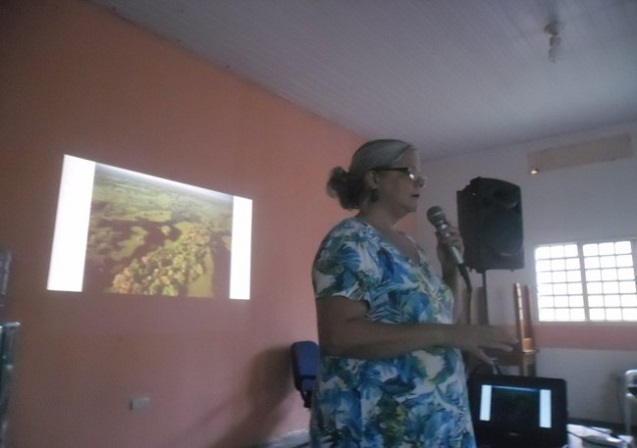
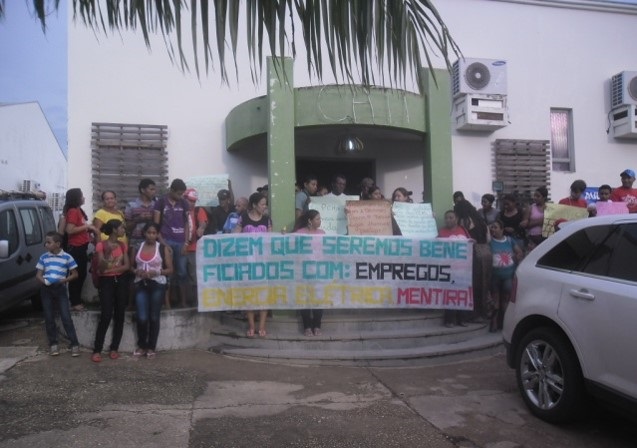
FONASC, an NGO that participated in the Ecosystem Alliance in Brazil, called together fishermen, other local people and civil society organisations. I, as a scientist, explained them the scientific reasons to fight against the hidrovia project. For example, for fishermen it will mean that many fish species will disappear, which they need to survive, to maintain their quality of life, food security and income. Then they decided to react and took action to disturb the public hearings: at one of the meetings they made a human chain around the building so nobody could get in, and at another meeting they went inside and made noise with whistles. Both hearings had to be cancelled. So they succeeded: no hearing meant no license!
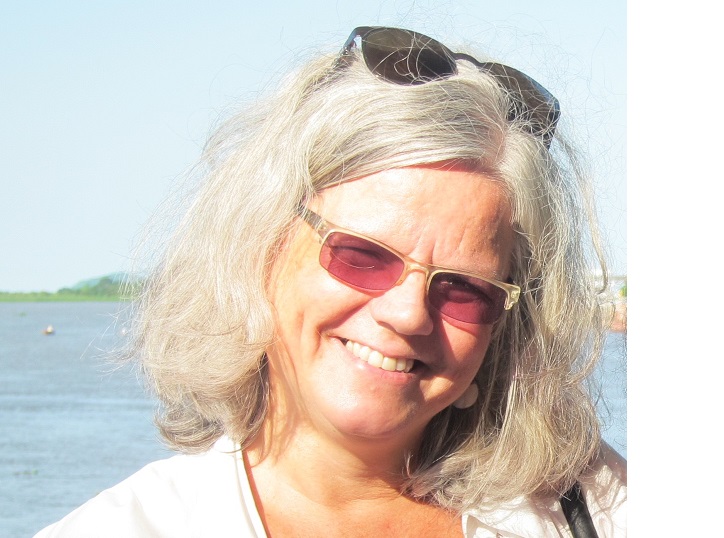
Debora Calheiros from Brazil is a PhD biologist and wetlands ecologist. She has been involved in the Pantanal for 27 years. From 2012 to 2015, she voluntarily worked with Both ENDS, Wetlands International and IUCN NL in the Ecosystem Alliance to protect the Paraguay River/Pantanal Wetland system from projects like the hidrovia project and other threats.
 |
 |
| Debora Calheiros informs the fisherman about the consequences of the hidrovia project |
Protests around the public hearing in Barro do Bugres |
Read more about this subject
-
 Dossier /
Dare to Trust: the power of unconditional funding
At Both ENDS we cherish our long-term relationships with partners in our global network. These relationships are based on equality and built on trust. The trust we have in each other has developed from years of strategic cooperation, including joint advocacy around common agendas, knowledge sharing, networking, and mobilising and sharing resources to advance environmental justice.
-
 Dossier /
Global Alliance for Green and Gender Action (GAGGA)
GAGGA rallies the collective power of the women's rights and environmental justice movements to realize a world where women can and do access their rights to water, food security, and a clean, healthy and safe environment.
-
 News / 29 September 2026
Summary - Both ENDS complaint under the EU-New Zealand trade agreement
On 29 September 2026, Both ENDS lodged the first complaint on climate grounds with the European Commission's Single Entry Point. It asks the Commission to examine whether Aotearoa New Zealand has broken two promises both sides made in the EU-New Zealand Free Trade Agreement: not to weaken or set aside environmental laws in order to encourage trade or investment, and to effectively implement the Paris Agreement.
-
Publication / 29 September 2026
-
 News / 29 September 2026
Q&A: New Zealand's climate rollback and the EU trade agreement
On 29 September 2026 / 30 September in Aotearoa New Zealand, Both ENDS lodged a complaint with the European Commission under the EU-New Zealand Free Trade Agreement. These are the questions we are asked most often, and our answers. The complaint summary, the case explainer and the key public sources are linked at the end of this page.
-
 News / 29 September 2026
What happens now? A timeline of the SEP Case
What happens now? On 29 September 2026 / 30 September in Aotearoa New Zealand, Both ENDS lodged a formal complaint with the European Commission. It is the first complaint to the EU's Single Entry Point on environmental and climate grounds. It asks the Commission to hold New Zealand to two promises it made in its trade agreement with the EU: not to weaken environmental protection to encourage trade or investment, and not to undermine the Paris Agreement on climate change.
-
 Press release / 29 September 2026
New Zealand faces its first climate complaint under EU trade rules
UTRECHT / WELLINGTON, 29 September 2026 /30 September in Aotearoa New Zealand
Both ENDS, a Dutch environmental justice organisation, has lodged a formal complaint with the European Commission arguing that New Zealand has broken the climate promises it made in its free trade agreement with the European Union. It is the first complaint on environmental and climate grounds under the Commission's Single Entry Point, the mechanism that lets civil society ask the EU to enforce the sustainability commitments in its trade agreements.
-
 News / 3 September 2026
Restoring Land, Restoring Hope: Both ENDS at UNCCD COP17 in Mongolia
From 17 to 28 August, governments gathered in Ulaanbaatar, Mongolia, for COP17 of the UN Convention to Combat Desertification (UNCCD). At stake was more than how the world responds to land degradation and drought. It was also a question of who gets to shape land restoration, whose knowledge counts, and where the money goes.
-
Publication / 3 July 2026
-
 Dossier /
Gas in Mozambique
In 2011 one of the world’s largest gas reserves was found in the coastal province of Cabo Delgado, in the north of Mozambique. A total of 35 billion dollars has been invested to extract the gas. Dozens of multinationals and financiers are involved in these rapid developments. It is very difficult for the people living in Cabo Delgado to exert influence on the plans and activities, while they experience the negative consequences. With the arrival of these companies, they are losing their land.
-
Publication / 18 June 2026
-
Publication / 12 May 2026
-
 Press release / 12 May 2026
UN report warns of a growing sand crisis - The Dutch dredging sector plays a key role in global sand extraction
GENEVA/UTRECHT, 12 May 2026 – A new report by the United Nations Environment Programme (UNEP), Sand and Sustainability: An Essential Resource for Nature and Development, warns that global demand for sand is exceeding ecological limits. Large-scale extraction of sand from marine and coastal ecosystems is leading to biodiversity loss, damage to coastal communities and increasing risks in an era of climate change. Dutch dredging companies play a prominent role in this as global market leaders in large-scale sand extraction and land reclamation. “Our analyses show that the dredging sector operates globally within a system in which ecological damage and the consequences for coastal communities are systematically underestimated, whilst transparency and effective oversight are often lacking,” says the Dutch environmental and human rights organisation Both ENDS, which contributed to the report.
-
Publication / 14 April 2026
-
 News / 9 April 2026
Minister Sjoerdsma hosts roundtable conversations with civil society
This week, Minister Sjoerdsma organized roundtable conversations with civil society organizations – a valuable initiative that brings together Dutch civil society voices to address critical challenges faced by democratic societies.
-
 News / 27 February 2026
Both ENDS strengthens the resilience of female environmental defenders worldwide thanks to multi-year contribution from the Postcode Lottery
In recent years, Both ENDS has received an additional contribution of €875,000 from the Postcode Lottery for the Autonomy & Resilience Fund (2022–2025), implemented in collaboration with the Global Alliance for Green and Gender Action (GAGGA). This support was essential because female environmental rights defenders around the world are increasingly facing climate change, repression and shrinking civil space. With this contribution, Both ENDS supports female activists and their communities with flexible, trust-based funding, enabling them to develop their own solutions to urgent environmental and climate problems.
-
 News / 17 February 2026
Civic space at the frontlines: "Build strong coalitions and counter repressive regimes"
Today, we look back on an inspiring event Civic space at the frontlines -
Environmental Defenders and the Role of International Trade and Investment Policy. The panel exist of Michel Forst, UN Special Rapporteur Environmental Defenders under the Aarhus Convention, Suzanne Kröger, Member of Parliament for GroenLinks–PvdA, Dr. Margit van Wessel, Associate Professor at Wageningen University, Anne de Jonghe, policy advisor at Both ENDS, and Jonila Castro, national spokesperson for Kalikasan People's Network for the Environment. With an audience of CSO experts, academics, accountability experts and students we discussed the effects of Dutch economic activity on Environmental Defenders, and what we all can do to support those on the front lines of the fight for the environment and human rights. -
 Dossier /
Seeking justice for the affected communities of Vale’s mining disasters in Mariana and Brumadinho
In 2015 and 2019, the Brazilian state of Minas Gerais experienced two severe mining tragedies in Mariana and Brumadinho, due to the same mining company: Vale. Since then, the affected communities have been seeking justice, via the criminal punishment of the responsible parties, and a fair compensation for the loss of their loved ones, their homes and their livelihoods. Both ENDS supports local CSOs by amplifying their quest for justice within an international audience and, more specifically, by raising awareness amongst Dutch investors in Vale about the high risks this company’s activities pose for people and the environment.
-
 News / 2 February 2026
Seven years after Brumadinho: impunity allows Vale’s disasters to continue
Seven years ago, the dam owned by mining company Vale collapsed in Brumadinho, Brazil, killing 272 people and severely polluting the surrounding area. While the relatives of the victims commemorate them and fight for justice, the pollution continues.
-
 Event / 26 January 2026
Civic space at the frontlines
Environmental Defenders and the Role of International Trade and Investment Policy
Both ENDS invites you to an interactive dialogue with experts from the UN, policy, academia, and civil society on environmental defenders and international trade. Together, we will explore how citizens, policymakers, academics, and activists can defend civic space and support those on the frontlines of environmental and human rights struggles. With a focus on the Netherlands’ role in international trade and investment policy, and drawing on the experiences of activists from the Philippines, the event aims to foster solidarity and identify strategic priorities to better protect environmental defenders amid the global crackdown on civic space




