




Restoring Land, Restoring Hope: Both ENDS at UNCCD COP17 in Mongolia
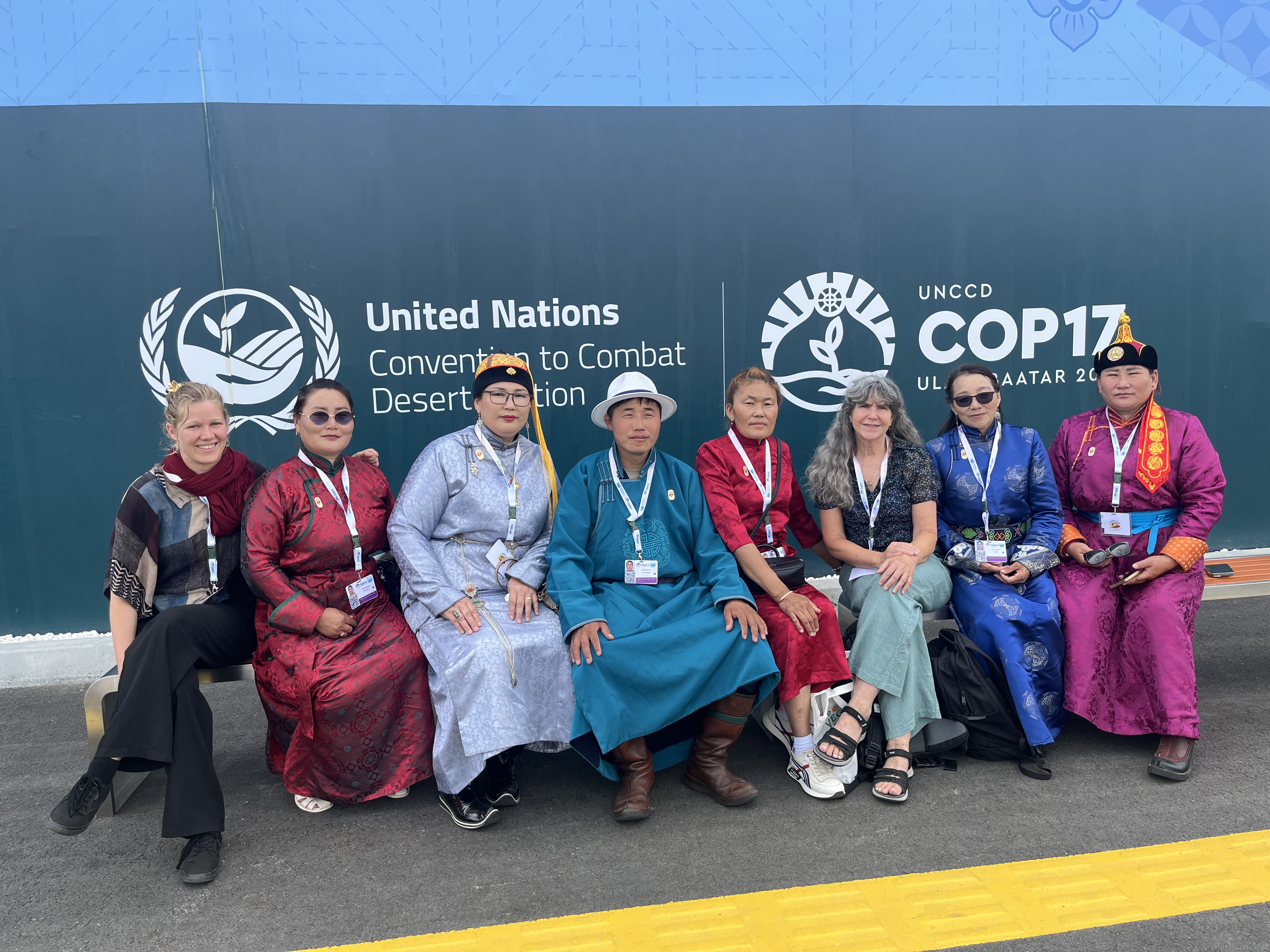
From 17 to 28 August, governments gathered in Ulaanbaatar, Mongolia, for COP17 of the UN Convention to Combat Desertification (UNCCD). At stake was more than how the world responds to land degradation and drought. It was also a question of who gets to shape land restoration, whose knowledge counts, and where the money goes.
For Both ENDS, this was an opportunity to bring the experiences and voices of various networks, organisations and communities into global conversations. Both ENDS colleagues Tamara Mohr and Annabelle Willeme participated in the conference as active members of two networks:
- Drynet, a global network of 25+ civil society organisations works alongside dryland communities, to amongst other things, influence international policies for a more sustainable future
- Communities Regreen the Sahel (CRS) consortium which has nearly a decade of experience supporting with Farmer Managed Natural Regeneration (FMNR) in the Sahel.
What Tamara and Annabelle experienced during their time at the conference, alongside partners and fellow civil society organisations, was a stark reminder of why strong and diverse civil society voices are essential - and how much pressure they are currently under.
A rocky start for civil society and gender
COP17 opened with a setback. The United States immediately argued against negotiations on issues concerning gender, civil society engagement and cooperation between the Rio Conventions, calling for these items to be removed from the agenda. The EU, Brazil and others pushed back, and civil society, Indigenous Peoples, pastoralists, women and youth in Mongolia called for meaningful participation – but the damage was done, and many of the negotiations subsequently stalled or ground to a halt.
For Both ENDS' Tamara Mohr, who was present at COP17, this was not an isolated incident: “This is part of a broader pattern of shrinking civic space and a growing attack on human rights. It is exactly the reason why global civil society present in Mongolia, including Drynet and Both ENDS, pushed back.”
For Annabelle Willeme, also at COP17 for Both ENDS, keeping gender on the agenda is inseparable from effective land restoration: “Women on the frontline are most impacted by land degradation and are core participants in restoration.”
What communities in the Sahel can teach us
In the first week of COP17, Both ENDS and the Communities Regreen the Sahel consortium brought another perspective to the discussion: what can we learn from communities that have been restoring degraded land for years, especially when it comes to social cohesion in areas suffering from high rates of conflicts?
During a side event, partners from Niger, Senegal and Burkina Faso shared more than eight years of experience with Farmer Managed Natural Regeneration (FMNR). This locally led approach to restoring trees and vegetation on farmland is relatively simple and low-cost, but its benefits go beyond the land itself. By putting farmers in the lead, it also strengthens cooperation, livelihoods and social cohesion in a region under growing pressure from climate change.
Investing in the next generation of civil society voices
COP17 was also an opportunity to support a new generation of voices in global land policy.
Through CS4LDN, led by Both ENDS, Drynet and IUCN, 16 young advocates from around the world attended their first COP. Each had been paired with an experienced Drynet mentor in the months leading up to the conference. Together, they went through a process of learning how these conventions work, how to participate and how to engage most effectively - knowledge and experience that can take years to build for those new to international policy spaces.
‘As a mentee from the CS4LDN from Niger, this programme has given me the opportunity to be here in Mongolia at the UNCCD. It helped me understand all about the process of this convention. I also learnt how to develop my leadership skills, for example public speaking. I will take this knowledge back with me and apply it in my work with communities. Participating in the UNCCD convention is important for our work on the resilience of communities in Niger.' Dr. Fanna Abdou Gado - JVE Niger
Putting Land, Peace & Security on the agenda
Both ENDS endorsed the CSO-Led Declaration on Land, Peace & Security, alongside civil society organisations, Indigenous Peoples, pastoralists and community groups from around the world.
The declaration calls for land restoration to be recognised as part of peacebuilding, with four priorities: governance, finance, partnerships and implementation. It also calls for restoration finance to reach frontline communities directly and for conflict-sensitive, community-led approaches to guide policies on land, drought and security.
Closing the gap between global commitments and local action
COP17's delivered US$1.3 billion in new and confirmed commitments for land restoration and drought resilience - a start, but a fraction of the US$278 billion needed every year to close the global restoration finance gap. Much of what was pledged is still flowing through large infrastructure and government channels, instead of going to locally led organisations and communities leading the change on the ground, the same pattern Both ENDS has flagged before.
For Both ENDS and our partners, the answer is clear: more resources need to reach the communities and organisations already restoring their land. Farmer-led approaches such as FMNR need to be supported at scale, women and civil society need a meaningful place in decision-making, and local knowledge needs to be recognised as an essential part of the solution.
Read more about this subject
-
 Dossier /
Communities Regreen the Sahel
In various countries in the Sahel, vast tracts of land have been restored by the local population by nurturing what spontaneously springs from the soil and protecting the sprouts from cattle and hazards.
-
 News / 2 July 2026
Land restoration can help mitigate and resolve conflict - but only if everyone has a seat at the table
Can restoring degraded land also help reduce conflict? According to experts from Niger, Ghana, the Netherlands and other regions, the answer is yes - but only when restoration is rooted in inclusive land governance, local ownership and social cohesion.
-
 News / 5 November 2025
Interview: Both ENDS at COP30 for Climate Justice and Systemic Change
Both ENDS is present at COP30 to advocate for genuine access to climate finance for locally led, gender-just climate solutions and the mechanisms that facilitate this, including those for farmer-led restoration. Furthermore, the organisation participates to ensure the crucial connection between the climate negotiations and the trade and investment frameworks that shape them.
Learn more about the Both ENDS team at COP30 below, and find all the activities and side-events in which Both ENDS will participate.
-
 News / 14 October 2025
Communities regreening the Sahel: strengthening resilience from the ground up
How can communities in the Sahel strengthen their food systems in the face of climate change and other shocks? Through the ARFSA Programme, Both ENDS and its partners SPONG (Burkina Faso), CRESA/INRAN (Niger) and IED Afrique (Senegal) are working together to show that locally led landscape restoration works. -
 Dossier /
Inclusive ways to sustainable and healthy food for all
All around the world small-scale farmers are using sustainable and inclusive methods to produce food. Working together with nature and each other, they provide their families and communities with sufficient and healthy food. But their production methods are under pressure from large-scale agriculture and the globally dominant system of industrial food production. Together with our partners, Both ENDS is trying to turn the tide in favour of sustainable, local practices that are mostly known as 'agro-ecological' or 'nature-inclusive'. Why are we focusing on these methods? Agro-ecological practices are climate-proof and inclusive and increase the opportunities for communities around the world to produce their food sustainably.
-
 Environmentally Just Practice /
Farmer Managed Natural Regeneration
In various countries in the Sahel, vast tracts of degraded land have been restored by the local population by nurturing what spontaneously springs from the soil. They do this using a method called 'Farmer Managed Natural Regeneration (FMNR)'.
-
 News / 13 January 2025
New partnership with Netherlands Enterprise Agency for resilient food systems in Sahel
The situation in Africa's Sahel is the world's fastest-growing humanitarian crisis. Over 3 million people are fleeing violence. They are ravaged by hunger, disease and increasing drought caused by climate change. Both ENDS and its partners are successfully working on accelerating the resilience of local food systems and communities in the Sahel, based on ‘Farmer Managed Natural Regeneration’ (FMNR). The project, funded by DOB Ecology, will end in mid-2026, but has already been followed up thanks to a new collaboration with the Netherlands Enterprise Agency (RVO).
-
 Event / 12 December 2024, 13:00 - 14:30
Exploring new avenues of CSO participation in UNCCD processes
Enhancing inclusivity within UNCCD processes and its implementation by strengthening the involvement of civil society organizations (CSOs) and Indigenous Peoples.
-
 Event / 11 December 2024, 13:00 - 14:30
Making strategic impact: Shifting resources and power to women-led initiatives for Land Degradation Neutrality (LDN)
How donors, foundations and other funders can better support women-led initiatives in achieving Land Degradation Neutrality (LDN), focusing on challenges, collaboration, and opportunities for improved matchmaking.
-
 Dossier /
Small Grants Big Impacts
Small grants funds offer an effective, alternative way to channel big money from large donors and funds to local groups and organisations that are striving for a sustainable and just society everywhere around the world.
-
 Event / 4 December 2024, 18:00 - 19:30
Enhancing the role of civil society in the UNCCD to achieve Land Degradation Neutrality (LDN)
Effective local action by land-using communities is at the heart of achieving LDN globally. However, their contributions are often not well recognized or adequately supported by governments and other agencies. Within the UNCCD framework, civil society organisations play a key role in engaging with policymakers in the context of recognizing and supporting these contributions by local communities. The side event will engage participants in a GEF-supported joint Drynet/ IUCN initiative to enhance the capacities of civil society to engage effectively in the achieving Land Degradation Neutrality (LDN) within the UNCCD framework.
-
 News / 2 December 2024
Ten recommendations for the UNCCD COP16 to strengthen its efforts in combating desertification, land degradation, and drought
For decades, our local partner organisations have been developing and promoting effective ways to combat land degradation, desertification, and drought. This includes regions like the drylands, as well as forests, and wetlands. Supporting these locally-led actions is essential to reversing negative trends. For COP16, Drynet has developed 10 recommendations to strengthen the implementation of the UNCCD. Success at COP16 would mean turning these recommendations into action, fostering inclusive land governance and sustainable land management practices globally. By enabling locally-led actions—particularly those led by women, youth, pastoralists, and Indigenous Peoples—we can build a more resilient future.
-
 News / 2 December 2024
Advocating for Local Solutions: Both ENDS at UNCCD COP16 to Champion Sustainable Land Management and Gender Equality
As the United Nations Convention to Combat Desertification (UNCCD) celebrates its 30th anniversary, the global community faces an urgent need to address the escalating challenges of land degradation, desertification and drought. At the forefront of these efforts, Both ENDS has long advocated for inclusive, locally-led solutions to these critical issues. In this interview, Nathalie van Haren and Yordanos Mulder, who will represent Both ENDS at the upcoming UNCCD COP16, share insights into the significance of the conference, the key issues on the agenda, and the crucial role of local communities in shaping effective land governance. They discuss Both ENDS' ongoing work to amplify the voices of marginalised groups and emphasise the importance of sustainable land management practices, particularly those driven by women, youth, and Indigenous Peoples.
-
 News / 2 December 2024
Both ENDS at UNCCD COP16
Since 1994, Both ENDS has been advocating for inclusive governance in addressing desertification, land degradation, and drought, ensuring local communities have a strong voice in global discussions. As a member of Drynet, a network of over 20 civil society organisations, we champion the inclusion of women, youth, and Indigenous Peoples in land governance and highlight the importance of locally-led initiatives. Our work promotes gender equality, agroecology, and sustainable land management. This landing page serves as a comprehensive hub for all information and updates related to the UNCCD COP16 and Both ENDS' efforts to drive positive change. Here, you’ll find key resources, initiatives, and insights into how locally-led solutions can shape the future of land governance and environmental sustainability.
-
 News / 15 June 2023
Combating drought by protecting saplings
Koussanar, in eastern Senegal, is a small town that is expanding rapidly, surrounded by villages still rooted in rural and nomadic life. The region is hot and dry, which is exacerbated by climate change. The soil in the region is also dry and often exhausted due to a combination of factors such as unsustainable agricultural practices, (peanut) monoculture, intensive agriculture, forest fires and overgrazing. Today, however, the region's farmers and nomadic pastoralists take a different approach. They are working towards a better future by committing to the restoration of degraded land using Farmer Managed Natural Regeneration (FMNR).
-
 News / 14 June 2023
Both ENDS’s partners combat land degradation and drought
For decades, the local partner organisations of Both ENDS have been developing and promoting ways to fight land degradation, desertification and drought in their surroundings. And this accounts not only for regions like the Sahel, but also for forests and wetlands. To celebrate the UNCCD's Desertification and Drought Day 2023, we'd like to show a few examples of how our partners restore ecosystems to serve the well-being of people and the environment.
-
 Environmentally Just Practice /
Inclusive Land Governance
Both ENDS works with partners around the world to ensure that land is governed fairly and inclusively and managed sustainably with priority for the rights and interests of local communities.
-
 Dossier /
The merits of community-based restoration
Globally, the area that is suffering desertification and land degradation is ever expanding. Unsustainable and often large-scale agricultural practices, including the copious use of pesticides and fertilisers, are a major driver of land degradation, aprocess that is further exacerbated by climate change, causing more erratic rainfall patterns, longer periods of drought and unpredictable growing seasons. This is very problematic not only for the hundreds of millions of people who directly depend on land and water for their livelihoods, but also for life on earth as a whole. It is clear that this process must be stopped and reversed, better sooner than later. But how to go about it?
-
 External link / 19 June 2020
The social practice of regreening the Sahel (Annual Report 2019)
In the first two years of the programme "Communities Regreen the Sahel", more than 10,000 farmers have been trained in Farmer-Managed Natural Regeneration and the practice has expanded to more than 44,000 ha. Moreover, the number of agreements by farmers and nomadic pastoralists has increased significantly, which is important to avoid conflict over land use.
-
 Event / 6 September 2019, 13:00 - 15:00
UNCCD COP14: Communities regreen the Sahel
At the UNCCD COP14 in India, which is taking place from 2-13 September 2019, Both ENDS is co-organising a number of side events.