




Despite climate agreements, the Netherlands supports the fossil sector with 7.6 billion euros a year
Although outgoing economics minister Henk Kamp stated in May of this year that fossil fuels are not subsidised in the Netherlands, a report out today shows that this is clearly not the case. The report. ‘Phase-Out 2020: Monitoring Europe’s fossil fuel subsidies’, by the Overseas Development Institute (ODI) and Climate Action Network Europe (CAN-Europe), says that the Netherlands is supporting the fossil sector at home and abroad with more than 7.6 billion euros a year (1). The Netherlands made international agreements as long ago as 2009 (2) to ban subsidies for fossil fuels. Environment NGO Milieudefensie and Both ENDS – both members of CAN-Europe – call attention to these findings because they find it unacceptable that the government perpetuates our dependence on fossil fuels in this way.
The report provides an overview of the substantial sums of money that eleven EU member states and the EU institutions continue to invest in the production and consumption of fossil fuels. In total, these investments come to 112 billon euros a year. The report concludes that most countries, including the Netherlands, have no concrete plans to phase out their fossil fuel subsidies.
“The government already has its work cut out to achieve the Paris goals,’ says Milieudefensie director Donald Pols. ‘So we shouldn’t be pumping money into the fossil sector. We can better invest the money in sustainable energy supplies – an area in which we are lagging seriously behind. Then we can also stop extracting gas in Groningen more quickly.”
The biggest fossil fuel subsidy in the Netherlands is the energy tax exemption for air transport and shipping, sectors that are way behind in terms of sustainability. The exemption poses a serious threat to achievement of the Paris goals, and costs the Netherlands 3.5 billion euros in lost tax revenues every year. The government also supports the oil and gas production industry in the Netherlands to the tune of 144 million euros a year. Investments by companies in the fossil sector that are largely in the hands of the state amount to 946 million euros a year.
The total amount with which the Netherlands supports the fossil industry every year is most probably much higher than the 7.6 billion euros calculated in the report. For almost half of the support measures the researchers identified, they could not determine exact amounts due to lack of transparency. Milieudefensie and Both ENDS find that unacceptable, as without transparency, it is almost impossible to determine whether the Netherlands is complying with its international agreements.
The Netherlands also supports the fossil fuel sector abroad with more than two billion euros a year. “It does this mainly in the form of export support,’ says Niels Hazekamp, policy advisor at Both ENDS. “The Dutch economy is strongly focused on exports and the government supports companies that are active abroad with, for example, export credit insurance to reduce their financial risks. By far the greatest share of export credit insurance goes to oil- and gas-related projects, while the Netherlands should really be supporting sustainable and innovative projects.”
For more information:
The full report Phase-Out 2020: Monitoring Europe’s fossil fuel subsidies
The executive summary of Phase-Out 2020: Monitoring Europe’s fossil fuel subsidies
Both ENDS' publication: Paris Proof Export Support: why and how the Dutch government must exclude credit support for fossil fuel
Contact
Milieudefensie press information:
020-5507333 of persvoorlichting@milieudefensie.nl
Both ENDS:
Niels Hazekamp 020-5306639 of n.hazekamp@bothends.org
Masja Helmer 020-5306637 of m.helmer@bothends.org
Notes:
(1) This consists of 4.4 billion euros in direct subsidies and fiscal arrangements, 2.2 billion in international public financing for oil and gas (by public financial bodies) and 946 million in investments by state companies in oil and gas.
(2) The European Union has committed itself to ending environmentally harmful subsidies by 2020. In addition, through the G20 and the G7, European governments have made international agreements to ban fossil fuels.
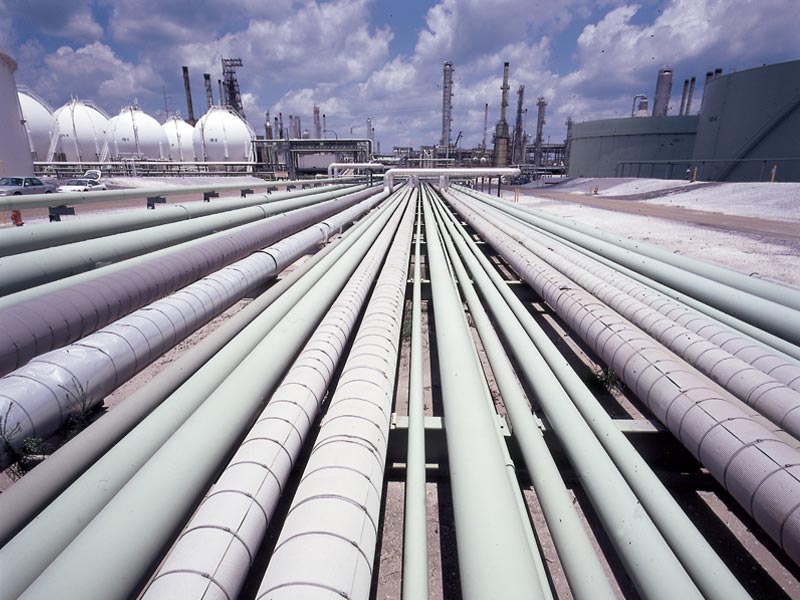
Photo: Oil transport on Student Energy
Read more about this subject
-
Publication / 18 June 2017
-
 Dossier /
Paris Proof Export Support
Almost two-thirds of the export credit insurances that Atradius DSB provided in the 2012-2018 period went to the fossil energy sector. That is contrary to the climate agreements that the Netherlands signed in Paris.
-
 News / 15 October 2021
German research confirms: Dutch Export Credit Agency is not Paris Proof
The Dutch export credit agency Atradius DSB is not aligned with the Paris Climate Agreement; on behalf of the Dutch State, it continues to strongly support investments in fossil fuels. This is the conclusion of a report by German research agency Perspectives Climate Research (PCR), in which the export credit agencies of the Netherlands and Japan are measured in terms of their climate ambitions and alignment with the Paris Agreement.
-
 Event / 4 November 2021, 16:45 - 18:00
UNFCCC COP 26 side event ‘Aligning export finance with the Paris Agreement: high time to phase out fossil fuels’
Many countries heavily support fossil fuel investments abroad through their export credit agency (ECA). This contributes to carbon lock- in, whereby companies or even countries commit themselves to a certain amount of greenhouse gas emissions for the lifetime of the infrastructure — oftentimes years or even decades. This seriously delays the transition to renewable energy sources, and is certainly not in line with Art. 2.1c of the Paris Agreement.
Highlighting the impacts caused by export finance in the global South, this side event will provide concrete recommendations to decarbonize export credit agencies.
-
 Press release / 3 November 2022
The Netherlands breaks major climate promise to end public financing for international fossil fuel projects
Today, a week before the international climate summit in Egypt, the Dutch Government has broken a major climate promise it made last year to end public financing for international fossil fuel projects. International and Dutch NGOs argue that the new policy published by the Dutch Government on restricting finance for fossil fuels has such significant loopholes, that it essentially means The Netherlands has reneged on its promise.
-
 News / 8 November 2021
The Netherlands will stop export support for fossil fuel projects, after all
Today, the Netherlands announced that it will join a leading group of countries, including the United States, Canada and Italy, which declared that they would stop international support for fossil energy projects. At the day of the launch of the declaration at the climate summit in Glasgow on the 4th of November, the Netherlands had no intention of joining, but because of pressure from civil society and political parties, the responsible ministries decided to sign after all. Both ENDS, together with organizations at home and abroad, has been pushing for this for years, and we are very happy with this step. We will of course continue to monitor developments.
-
 External link / 24 August 2022
A breakthrough in finance, a break with fossil fuels (Annual Report 2021)
Both ENDS works with partners worldwide to amplify the voices of communities that are experiencing first-hand the devastating social and environmental impacts of unsustainable financial policies and practices – from climate change to pollution to forced displacement. For more than two decades, we have worked to draw attention to an obscure, yet hugely influential type of financial institution: export credit agencies (ECAs).
-
 Press release / 8 July 2021
After Shell ruling, banks, pension funds and insurance companies now have to take action
Civil society organisations send urgent letter on climate to financial sector
Amsterdam, 8 July 2021 – The Shell ruling has consequences for the financiers of major climate polluters. That is the message in a letter from a number of civil society organisations, including Oxfam Novib, Eerlijke Geldwijzer, Milieudefensie, Greenpeace and Both ENDS, to the biggest banks, pension funds and insurance companies in the Netherlands. In the letter, they call on the financial institutions to reduce CO2 emissions from loans and investments in line with the 1.5 degrees goal laid down in the Paris climate agreement.
-
 News / 21 December 2021
Two generations fighting against climate change in Ghana: meet our partners Richard and Kenneth
In Ghana, the effects of climate change are already tangible, just like in many countries around the world. How to ensure that these different experiences are heard and known by the Ghanaian government so that it will take actions that have a positive effect on people and their environment? And how to make local communities aware that they can hold the government accountable - and even have the responsibility to do so? During COP26 in Glasgow we spoke with Kenneth Nana Amoateng (47) and Richard Matey (30). Kenneth works at the AbibiNsroma Foundation, a local NGO, and took it as his mission to advocate for a healthy environment, climate change, and to give young people opportunities. Richard is part of that younger generation and works at the Alliance for Empowering Rural Communities in Ghana.
-
 Press release / 19 May 2022
122 CSOs warn signatory countries they have only six months left to meet COP26 commitment to end international public finance for all fossil fuels
Today, 122 civil society groups are releasing letters to eleven government signatories to the Glasgow Statement on International Public Support for the Clean Energy Transition, laying out the actions they must take as soon as possible to meet their commitment. In this joint statement at COP26, 35 countries and 5 public finance institutions committed to end their international public finance for 'unabated' fossil fuels by the end of 2022, and instead prioritise their "support fully towards the clean energy transition."
-
 External link / 17 November 2021
Stop export support for fossil fuel project in Mozambique
Julio Bichehe Erneste of Farmers Union Cabo Delgado Mozambique (UPC) on a side event of COP26 in Glasgow, speaking about the negative impacts of export support for fossil fuel projects for local people and their enrironment, and about the need to support renewable energy projects instead.
-
 News / 15 April 2021
New initiative to phase out export support for fossil fuels lacks ambition
On Wednesday, April 14, seven countries, including the Netherlands, launched an initiative called Export Finance for Future (E3F), in which they set a number of ambitions with regard to phasing out export support for the fossil sector. Many NGOs worldwide, including Both ENDS in the Netherlands, have been calling for such an initiative in recent years and we are therefore pleased with this step. However, to achieve results and contribute to the Paris climate goals, countries will have to commit to much more ambitious goals than those now set. Concerned civil society organizations, including Both ENDS, therefore prepared a statement detailing the weaknesses they felt in the policy proposed by E3F, supplemented with recommendations for improvements.
-
Letter / 20 February 2023
Letter of international CSO's to Dutch Parliament: close gaps in Dutch policy on limiting public finance to fossil fuels
In October 2022, the Dutch government published a policy to implement the COP26 statement in which it promised to stop public finance for fossil fuel projects abroad by the end of 2022 . The proposed policy, unfortunately, has quite some 'loopholes' that make it possible for the Dutch government to keep supporting large fossil projects abroad for at least another year. These projects often run for years and will have a negative impact on the countries where they take place for decades to come.
-
 Press release / 15 May 2017
Criticism of Dutch pension fund ABP’s investments in coal, oil and gas
The Dutch pension fund, ABP, invested about two billion euros more in the fossil energy industry at the end of 2016 than the year before. This is announced by the report "Dirty & Dangerous: the fossil fuel investments of Dutch pension fund ABP," published today by Both ENDS, German urgewald and Fossielvrij NL. The report criticizes these investments because of the impact on the climate and the catastrophic consequences for the people in the areas where coal, oil and gas are being produced.
-
 Dossier /
Making pension funds more sustainable
Pension funds have a lot of influence because of their enormous assets. Both ENDS therefore wants pension funds such as the Dutch ABP to withdraw their investments from the fossil industry and to invest sustainably instead.
-
 Press release / 12 November 2024
Ruling climate case Shell: "Shell has an obligation to protect human rights."
The Hague, 12 November 2024 - The court has ruled in Shell's appeal in the Climate Case that Milieudefensie won against Shell in 2021. The Court of Appeal has ruled that the oil and gas giant has a responsibility to reduce its emissions, but has not imposed a reduction obligation.
-
Publication / 17 November 2019
-
 Press release / 18 November 2019
Press release: Government undermines its own climate policy with export credit insurance
The Netherlands provides export credit insurances and guarantees worth 1.5 billion euros annually to Dutch companies active in the oil and gas sector abroad. This support amounts to one and a half times the annual amount that the Cabinet of Prime Minister Rutte mobilises for climate initiatives worldwide. The intended effects of Dutch international climate policy are more than offset by this fossil export support. That is the conclusion of a new report from Both ENDS which is published today.
-
Letter / 28 February 2023
175 CSOs call on world leaders to end OECD export finance for oil and gas
This joint position launched by 175 civil society organisations from 45 countries calls on world leaders to end OECD export finance for oil and gas, and explains how it can be done.
-
 News / 11 December 2017
Stop funding fossils at the 'One Planet Summit' in Paris
Yesterday, the French President Macron, the President of the World Bank Group, Jim Yong Kim, and the Secretary-General of the United Nations, António Guterres, met with international leaders and committed citizens from around the world in Paris. According to the organisers, the aim of this gathering was to 'address the ecological emergency for our planet' as 'two years to the day after the historic Paris Agreement, it is time for concrete action.'


