




World Water Day: just climate solutions already exist
These past weeks we have been joining the #WeWomenAreWater campaign to put the spotlights on just climate solutions of and for women, girls, trans, intersex and non-binary people around the world. The campaign started on International Women's Day (March 8th) and ends today, on World Water Day. Just climate solutions already exist but these initiatives are grossly underfunded, and the people implementing them are also those most impacted by climate change and climate-related water scarcity. Therefore, we would like to highlight, especially today on World Water Day, some of these solutions below. And we also have a special message from the colleagues at Both ENDS working on inclusive water governance.
Here, you find the short video-messages from our collegueas Murtah Shannon (above) Melvin van der Veen (below).
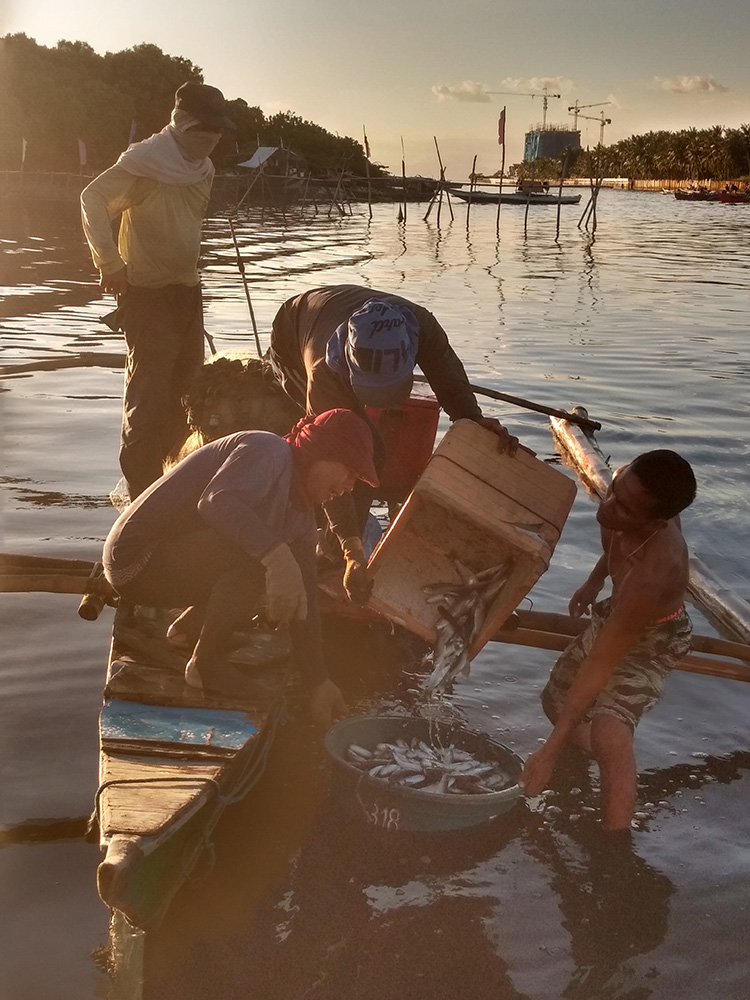
Philippines: The People's Plan for Manila Bay
Both ENDS supports Kalikasan's visionary People's Plan, a participatory environmental governance initiative that aims to empower communities along the bay to play a meaningful role in the management of their ecosystem. "We work with Both ENDS because a Negotiated Approach enables communities to effectively influence stakeholders who are working in the local areas", says Leon Dulce from NGO Kalikasan.
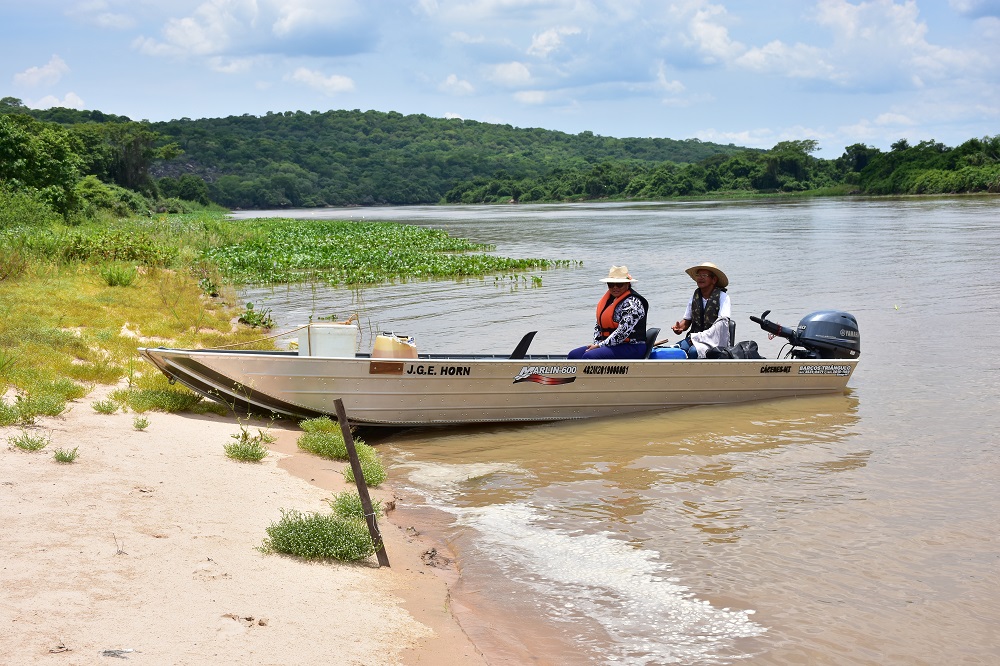
Faith and life in a wetland without borders
The world's largest freshwater wetland connects the lives of no less than 160 million people in five countries. The wetland, known as the La Plata Basin, feeds communities and ecosystems along a meandering path that reaches from the Andes to the Río de la Plata. As part of the Wetlands without Borders programme, Both ENDS is supporting partners in Argentina, Bolivia, Brazil, Paraguay and Uruguay as they work together to build a powerful transnational people's movement to match the movement of the water. Here you can find the 2021 successes of this programme!
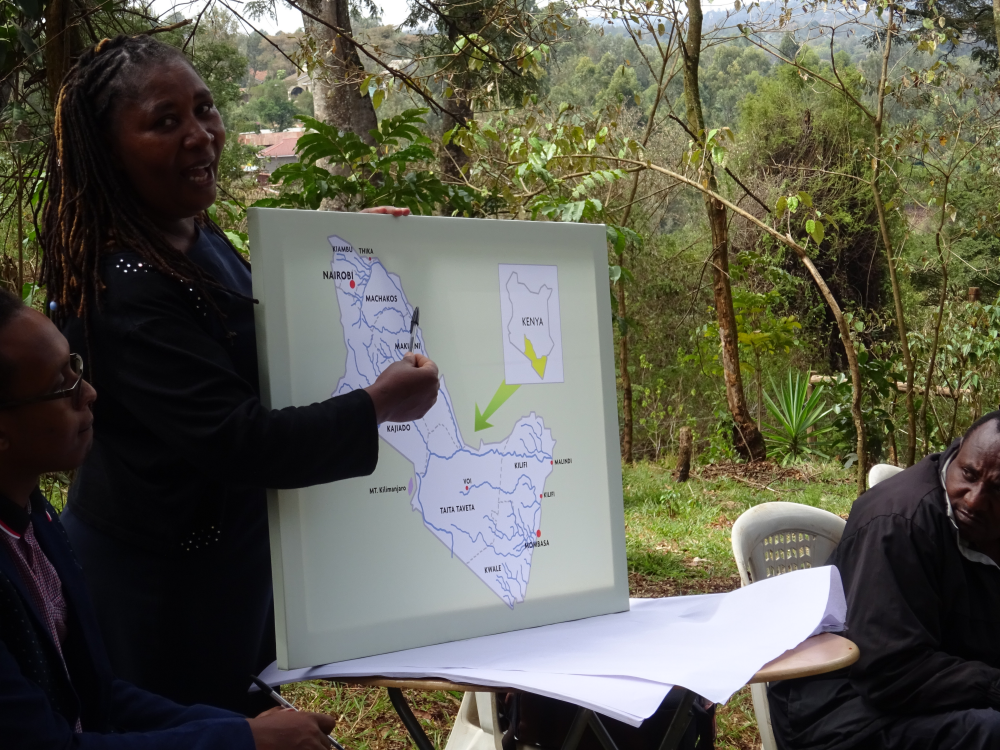
Inclusive water governance sytem in Kenya
Violet Matiru from MCDI Kenya (Millennium Community Development Initiatives) explains: "We have been able to connect the various Water Resources Management Authorities in the Athi River basin to form the Athi River Community Network. This way, they can inspire one another other and teach each other the lessons they have learned. But we know: the solution is different for each location. When you don't take the local situation into account, the odds of causing a conflict over water are much higher. This is why it is best to work with the local communities themselves."
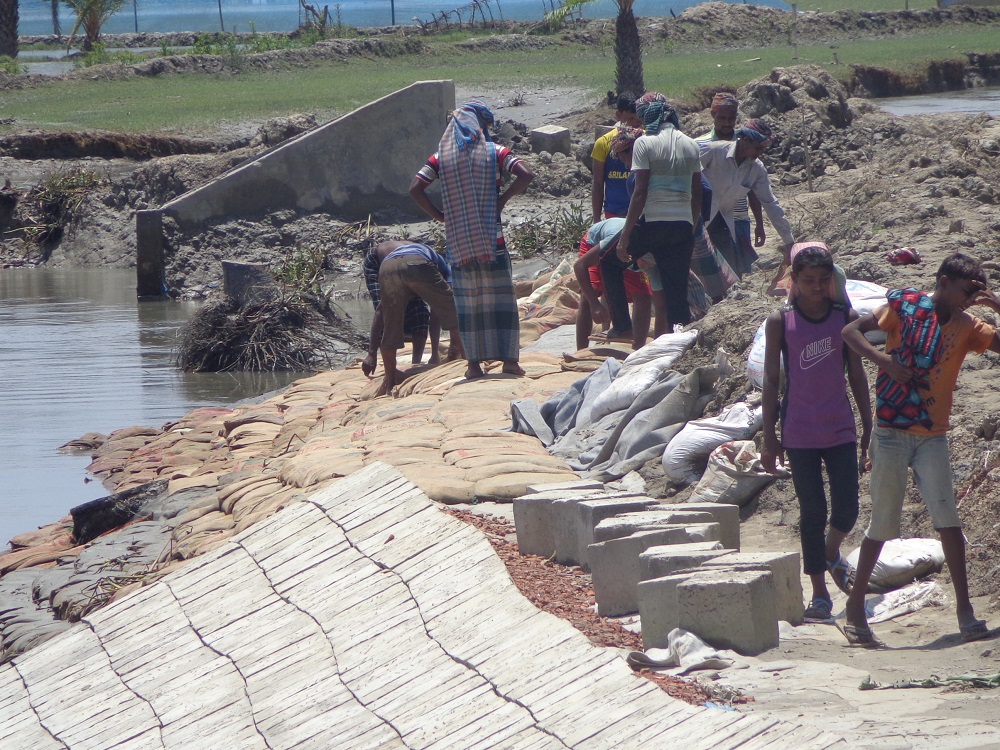
Bangladesh: Involving communities for free rivers
Uttaran (Bangladesh) advocates for the ecological restoration of tidal rivers using Tidal River Management (TRM). This nature-based approach is inspired by indigenous practices: local communities were already used to flooding the plains in a controlled way, resulting in a new layer of fertile soil and enhancing the river basin's drainage capacity. In their advocacy for TRM, Uttaran supports local communities as rightful and knowledgeable actors in the management of tidal river basin.
More information:
The above examples are just a few of the many different ways people can and do manage their water resources in al sustainable, inclusive and just way, in order to protect them for current and future generations. Below, you can find more related content.
For more information
Read more about this subject
-
 Environmentally Just Practice /
A Negotiated Approach for Inclusive Water Governance
A Negotiated Approach envisages the meaningful and long-term participation of communities in all aspects of managing the water and other natural resources on which their lives depend. It seeks to achieve healthy ecosystems and equitable sharing of benefits among all stakeholders within a river basin. This inclusive way of working is an essential precondition for the Transformative Practices that are promoted by Both ENDS and partners.
-
 Dossier /
Wetlands without Borders
With our Wetlands without Borders program, we work towards environmentally sustainable and socially responsible governance of the wetlands system of the La Plata Basin in South America.
-
Publication / 27 november 2025
-
 News / 27 november 2025
Communities and International Consortium Present Community-Led Plan for Nature-Based Adaptation to Sea-Level Rise in Coastal Bangladesh
Local communities in the southwestern coastal region of Bangladesh—together with an international consortium including Uttaran, CEGIS, and Both ENDS—have presented a community-led plan to confront climate change and accelerating sea-level rise through nature-based adaptation. The People’s Plan for Upscaling Ecosystem-Based Adaptation outlines a scalable strategy rooted in local ownership and generations of lived experience. At its centre is Community-Based Tidal River Management (CBTRM), a proven approach that reduces waterlogging, raises land elevation, and restores ecological balance by working with natural tidal and sediment dynamics.
-
Letter / 14 november 2025
Letter: TPAC’s report “Final Judgement Detailed Research MTCS’’
A coalition of Malaysian and international NGOs has released a memorandum in response to the recent TPAC report on the Malaysian Timber Certification Scheme (MTCS). The organisations express serious concerns about the independence, quality, and credibility of the assessment carried out by the Timber Procurement Assessment Committee (TPAC).
-
 Dossier /
Communities Regreen the Sahel
In various countries in the Sahel, vast tracts of land have been restored by the local population by nurturing what spontaneously springs from the soil and protecting the sprouts from cattle and hazards.
-
 News / 23 oktober 2025
TotalEnergies financiers beware: EACOP is eating up money, nature and livelihoods
A new analysis shows that the developers of the East African Crude Oil Pipeline, led by France’s TotalEnergies, are being forced to self-finance the project almost entirely. The analysis, part of a new Finance Risk Updatefrom a coalition of African and International civil society organisations, shows that the companies have abandoned plans to raise 60% of the project’s growing costs from bank loans, and are now on the hook for almost 90% of the costs themselves.
-
Publication / 9 oktober 2025
-
 Dossier /
Amplifying environmentally just practices
Because of the close relationship with their living environment, local communities often have the best ideas for the sustainable and equitable use and governance of land, water and forests. These environmentally just practices and processes successfully protect and restore ecosystems and address climate change. They are essential in the light of the multiple crises the world faces, but are in dire need of financial and policy support.
-
 News / 6 oktober 2025
From Entebbe to Accra: civil society is rewriting the rules of investment
By Fernando Hernández Espino and Bart-Jaap Verbeek
Almost a year after African civil society gathered in Uganda to adopt the Entebbe Declaration, the call to transform international investment governance continues to gain strength. From the 6th to the 9th of October, over 50 civil society organisations from across West Africa, including from Ghana, Senegal, Nigeria, Côte d’Ivoire, Cameroon, Gambia, Sierra Leone, as well as from Kenya and Latin America, are convening in Accra to deepen and operationalise the Declaration’s vision.
-
 Dossier /
Soy: trade in deforestation
The rising demand for soy is having negative consequences for people and the environment in South America. Both ENDS reminds Dutch actors in the soy industry of their responsibilities and is working with partners on fair and sustainable alternatives.
-
 News / 10 juli 2025
Both ENDS and Global Witness condemn harassment of anti-reclamation activists in Manila Bay
Global Witness and Both ENDS strongly condemn the reported of harassment and surveillance by the Armed Forces of the Philippines of environmental activists and fishing communities in Navotas, Philippines. Pamalakaya-Pilipinas, a National Federation of Small Fisherfolk Organisation in the Philippines, has received credible reports that the Armed Forces of the Philippines (AFP) are engaged in “red-tagging” their members.
-
Publication / 1 juli 2025
-
 News / 23 juni 2025
Who benefits from better protection of our oceans?
The ocean emerged strengthened from the UN Ocean Conference in Nice. More countries are supporting a ban on deep-sea mining, more marine protected areas are being established, and more pledges are being made to fight pollution. The question now is whether countries will follow through on their commitments. Because the ocean movement faces a camp of powerful interests.
This article was originally posted in Dutch on MO*Magazine.
-
 News / 6 juni 2025
Both ENDS at the UN Ocean Conference: voicing our environmental justice concerns about the “Blue Economy”
Next week, the United Nations Ocean Conference will take place in Nice, France. This conference is focused on the conservation and sustainable use of coasts, seas and marine resources. Both ENDS colleague Murtah Shannon will be attending. We’ve asked him to explain a bit more about his plans.
-
Letter / 15 april 2025
African civil society urges Oman against EACOP support as east Africa trade expo kicks off
Just one day before the Oman East Africa Trade and Investment
Expo opens in Muscat on April 16, over 70 civil society organisations (CSOs) from Uganda, Tanzania, the Democratic Republic of Congo, and beyond have published an open letter urging the Government of Oman to refrain from providing financial or diplomatic support for the controversial East African Crude Oil Pipeline (EACOP). -
 Dossier /
Inclusive ways to sustainable and healthy food for all
All around the world small-scale farmers are using sustainable and inclusive methods to produce food. Working together with nature and each other, they provide their families and communities with sufficient and healthy food. But their production methods are under pressure from large-scale agriculture and the globally dominant system of industrial food production. Together with our partners, Both ENDS is trying to turn the tide in favour of sustainable, local practices that are mostly known as 'agro-ecological' or 'nature-inclusive'. Why are we focusing on these methods? Agro-ecological practices are climate-proof and inclusive and increase the opportunities for communities around the world to produce their food sustainably.
-
 Blog / 31 maart 2025
International cooperation and solidarity are in the interest of both the Netherlands and Africa
Traditional development aid keeps Africa in a state of aid dependency, but development cooperation is essential to break this post-colonial dependency, argues Melvin van der Veen in response to an interview in NRC Handelsblad with the Cameroonian economist Célestin Monga. By breaking off this cooperation on the basis of equality, we are actually stifling the voices of African civil society organisations, indigenous communities, youth and women's movements and human rights defenders, and we are not solving global problems.
-
 News / 21 maart 2025
Dutch Royal couple visits Thogoto Forest: a green oasis on the outskirts of Nairobi
This week, King Willem-Alexander and Queen Máxima visited Thogoto Forest as part of their state visit to Kenya. They were able to see the impact of the work of our partner MCDI in the area: a restored forest, clean water and farmers who can earn a living by selling their agro-ecological products.
-
 Blog / 28 januari 2025
Sinking promises in Manila
Yesterday, Global Witness published a new report, "Sunk Costs" - in which I had a modest role to play - that comes up with new facts about the disastrous New Manila International Airport project in the Philippines, for which the Dutch dredging multinational Boskalis received Dutch export credit insurance (ekv) of €1.5 billion.



