



Stop unsafe and unsustainable energy policies in Ukraine!
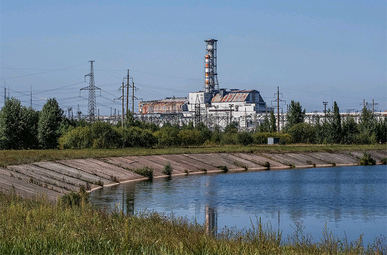
Ukraine has recently renewed the license for two old nuclear reactors that were supposed to close in 2020. As this involves risks, Ukraine should have conducted research and at least have consulted neighbouring countries. The Ukrainian government didn’t do any of this, while intends to keep in business a total of up to twelve old reactors after 2020. Both ENDS has major objections to these plans and appeals to the European Commission to take action.
Espoo Convention
In its national energy strategy Ukraine aims to extend the lifetime of twelve old nuclear reactors. For two of these twelve a new license is already issued, but without following the rules that apply for this. One of these rules is the so-called ‘Espoo Convention’ which was adopted in 1991 by the United Nations Economic Commission for Europe (UNECE) to oblige EU member states to discuss and negotiate projects that might have negative trans-boundary environmental effects. It also obliges countries to conduct Environmental Impact Assessments (EIA’s).
Sustainable alternatives
Besides extending the lifetime, Ukraine also wants to expand the reactors. The East-Europe Bank (EBRD) reserved a loan of 300 million euro’s for this. ‘They’d better use the money for energy saving and investments in sustainable energy’, Both ENDS’ Huub Scheele thinks. ‘Ukraine wants to keep the reactors in business far beyond their expected life-span.’ Huub acknowledges that Ukraine is using a lot of energy. ‘But’, he adds, ‘this doesn’t happen in an efficient way. There are alternatives to reduce the energy intensity. Ukraine could for example isolate buildings and avoid wasting and losing energy while transporting it. Moreover, it would be better to invest in sustainable and safe energy from natural resources, like wind- and solar energy.’
Pressure
The European Atomic Energy Community (Euratom) also plans on lending 300 million euro’s to Ukraine to adjust the reactors to keep them working after 2020..For this, the European Commission has to give permission first. Both ENDS and many other organisations state that the European Commission should not give this permission because the investments don’t meet the European requirements. Besides, the EU wants to focus on sustainable energy supplies in the years to come If it supports Ukraine’s energy policy, the European Commission is giving a bad example and loses credibility. Therefore Both ENDS’ partner CEE Bankwatch Network has started actions towards the European Commission. In a letter, which was also signed by Both ENDS and more than 30 other organisations, CEE Bankwatch calls upon institutions in Europa to put pressure on the European Commission. After all, it is the European Commission which can eventually make Ukraine follow the rules, and encourage the country to develop a sustainable energy policy.
The letter that calls upon institutions in Europa to put pressure on the European Commission.
More information on how Ukraine’s nuclear reactors are violating UN convention.
Read more about this subject
-
 News / 5 oktober 2026
Rural Women's Assembly wins Right Livelihood Award
We are thrilled to share that our partner the Rural Women's Assembly (RWA) is one of this year's Right Livelihood Laureates! The award, often called the "Alternative Nobel Prize", honours RWA for bringing together more than 178,000 women farmers in eleven Southern African countries. Together, these women stand up for their land, their seeds and their right to make decisions about their own lives and bodies.
-
 News / 29 september 2026
Summary - Both ENDS complaint under the EU-New Zealand trade agreement
On 29 September 2026, Both ENDS lodged the first complaint on climate grounds with the European Commission's Single Entry Point. It asks the Commission to examine whether Aotearoa New Zealand has broken two promises both sides made in the EU-New Zealand Free Trade Agreement: not to weaken or set aside environmental laws in order to encourage trade or investment, and to effectively implement the Paris Agreement.
-
Publication / 29 september 2026
-
Publication / 29 september 2026
-
 News / 29 september 2026
Q&A: New Zealand's climate rollback and the EU trade agreement
On 29 September 2026 / 30 September in Aotearoa New Zealand, Both ENDS lodged a complaint with the European Commission under the EU-New Zealand Free Trade Agreement. These are the questions we are asked most often, and our answers. The complaint summary, the case explainer and the key public sources are linked at the end of this page.
-
 News / 29 september 2026
What happens now? A timeline of the SEP Case
What happens now? On 29 September 2026 / 30 September in Aotearoa New Zealand, Both ENDS lodged a formal complaint with the European Commission. It is the first complaint to the EU's Single Entry Point on environmental and climate grounds. It asks the Commission to hold New Zealand to two promises it made in its trade agreement with the EU: not to weaken environmental protection to encourage trade or investment, and not to undermine the Paris Agreement on climate change.
-
 Press release / 29 september 2026
New Zealand faces its first climate complaint under EU trade rules
UTRECHT / WELLINGTON, 29 September 2026 /30 September in Aotearoa New Zealand
Both ENDS, a Dutch environmental justice organisation, has lodged a formal complaint with the European Commission arguing that New Zealand has broken the climate promises it made in its free trade agreement with the European Union. It is the first complaint on environmental and climate grounds under the Commission's Single Entry Point, the mechanism that lets civil society ask the EU to enforce the sustainability commitments in its trade agreements.
-
 Dossier /
Trade agreements
International trade agreements often have far-reaching consequences not only for the economy of a country, but also for people and the environment. It is primarily the most vulnerable groups who suffer most from these agreements.
-
 News / 10 september 2026
Rutu Foundation receives UNESCO Literacy Prize for multilingual education
Both ENDS’ partner the Rutu Foundation for Intercultural Multilingual Education has been awarded the 2026 UNESCO King Sejong Literacy Prize for its language friendly school programme. This prestigious prize recognises the importance of multilingual education and the right of children to learn in an environment where their home languages are valued.
-
 News / 7 september 2026
Unprecedented criminal conviction in the Mariana disaster case breaks mining industry's cycle of impunity
A Brazilian federal court has, for the first time, criminally convicted a mining company and three of its managers for their role in the 2015 collapse of the Fundão dam, one of the worst environmental disasters in Brazil's history. Our partner Instituto Cordilheira, which represented victims as assistant prosecutors in the case, calls it a historic breakthrough after years of impunity.
-
 Dossier /
Communities Regreen the Sahel
In various countries in the Sahel, vast tracts of land have been restored by the local population by nurturing what spontaneously springs from the soil and protecting the sprouts from cattle and hazards.
-
 News / 3 september 2026
Restoring Land, Restoring Hope: Both ENDS at UNCCD COP17 in Mongolia
From 17 to 28 August, governments gathered in Ulaanbaatar, Mongolia, for COP17 of the UN Convention to Combat Desertification (UNCCD). At stake was more than how the world responds to land degradation and drought. It was also a question of who gets to shape land restoration, whose knowledge counts, and where the money goes.
-
Letter / 14 juli 2026
Statement on CAO Cambodia Microfinance Case
The independent complaints mechanism of the International Finance Corporation (IFC) and the World Bank Group found that the IFC violated its own Environmental and Social Sustainability Framework by investing in six banks providing microfinance in Cambodia.
-
 News / 6 juli 2026
Strengthening Women's Land Rights Across the Rio Conventions
From 29 June – 2 July 2026, Tamara Mohr, GAGGA coordinator at Both ENDS participated in the 4th convening of the Women's Land Rights Initiative (WLRI) in Nairobi, Kenya.Hosted by the Robert Bosch Stiftung, TMG Research and the Huairou Commission, the event brought together grassroots organisations, (inter)national NGOs, government institutions and donors from around the world.
-
Publication / 3 juli 2026
-
 News / 2 juli 2026
Land restoration can help mitigate and resolve conflict - but only if everyone has a seat at the table
Can restoring degraded land also help reduce conflict? According to experts from Niger, Ghana, the Netherlands and other regions, the answer is yes - but only when restoration is rooted in inclusive land governance, local ownership and social cohesion.
-
 Dossier /
Gas in Mozambique
In 2011 one of the world’s largest gas reserves was found in the coastal province of Cabo Delgado, in the north of Mozambique. A total of 35 billion dollars has been invested to extract the gas. Dozens of multinationals and financiers are involved in these rapid developments. It is very difficult for the people living in Cabo Delgado to exert influence on the plans and activities, while they experience the negative consequences. With the arrival of these companies, they are losing their land.
-
 Dossier /
Finance for agroecology
The lion's share of public budgets for climate, agriculture and development still goes to conventional agroindustrial projects that contribute to the current climate, food and biodiversity crises. Both ENDS and our partners are calling for a transition to agroecological practices that are people- and environment-friendly.
-
Publication / 18 juni 2026
-
Publication / 12 mei 2026