




Rutu Foundation receives UNESCO Literacy Prize for multilingual education
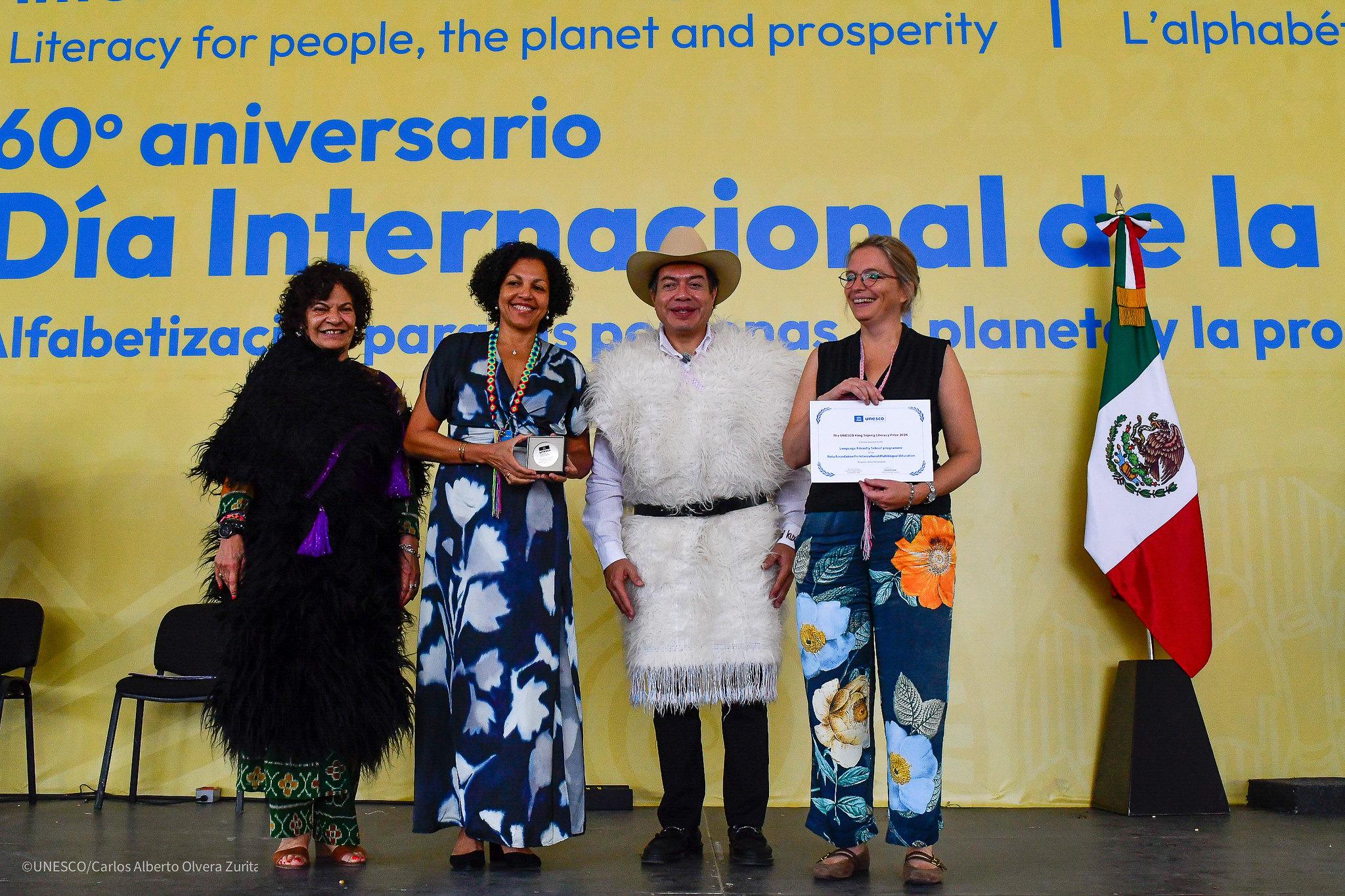
Both ENDS’ partner the Rutu Foundation for Intercultural Multilingual Education has been awarded the 2026 UNESCO King Sejong Literacy Prize for its language friendly school programme. This prestigious prize recognises the importance of multilingual education and the right of children to learn in an environment where their home languages are valued.
The award was presented on 8 September during UNESCO’s global celebration of International Literacy Day in Chiapas, Mexico. This year marks the 60th anniversary of International Literacy Day, held under the theme ‘Literacy for people, the planet and prosperity’.
The language friendly school programme, established by the Rutu Foundation in 2019, supports schools in creating inclusive learning environments where children’s home languages are recognised and used alongside the language of instruction. The programme currently operates in around 70 schools across 12 countries and has reached more than 32,000 students through teacher training, school certification and community engagement.
Both ENDS and the Rutu Foundation have worked together for years, brought together by a shared conviction that language, culture and Indigenous knowledge are inseparable from environmental justice. Together with Indigenous organisations and other partners, the two helped set up the Indigenous-Led Education (ILED) Network in 2020, coordinated from Rutu's secretariat in Amsterdam. That collaboration has since been recognised repeatedly.
In 2023 the ILED Network received a grant through the Inclusive GEF Assembly Challenge Programme, and this year it announced the winners of its Women Are Educators Award, honouring women who play an extraordinary role in passing on knowledge in their communities. For Both ENDS, supporting the Rutu Foundation's work is part of a wider commitment to Indigenous-led, community-based approaches to education and environmental stewardship.
Language is more than communication
For children and communities, language is closely connected to identity, culture, knowledge and participation. Yet education systems around the world often marginalise the languages spoken at home, particularly Indigenous and minority languages. This can deepen educational inequalities, lead to the loss of languages and knowledge systems and can undermine children’s self-confidence and sense of identify and belonging.
The work of the Rutu Foundation challenges this by placing multilingualism at the heart of education. It demonstrates that recognising children’s languages can help create more inclusive schools while strengthening cultural identity and learning. This approach is also central to the Indigenous-Led Education (ILED) Network. The network brings together organisations and support partners across Africa, Asia and Latin America to strengthen the inter-generational transmission of knowledge, languages, cultures and institutions, and to support youth, community resilience and ecosystem preservation.
For Both ENDS, the UNESCO award is an important recognition of the work being done by partner organisations such as Rutu, and by innovative schools, local grassroots groups and their allies to defend linguistic and cultural diversity and strengthen community-led education.
“We are very proud to see the work of the Rutu Foundation recognised at this international level. Language is not only a means of communication. It carries knowledge, culture and identity. Supporting children to use their mother tongue alongside the dominant language is therefore also about strengthening communities and their ability to shape their own futures", said Paul Wolvekamp, advisor at Both ENDS.
The UNESCO King Sejong Literacy Prize recognises contributions to mother-language-based literacy development. Each laureate receives a medal, diploma and an endowment of US$30,000.
Congratulations to the Rutu Foundation and everyone involved in the language friendly school programme!
Read more about this subject
-
 News / 24 August 2023
Recognition of the transformative work of the ILED Network by GEF
A wave of international recognition is shedding light on the valuable role that indigenous communities play in looking after our planet's most vital ecosystems. Last night in Vancouver, two of our partners won a grant in the Inclusive GEF Assembly Challenge Program: the ILED Network and AIDER (Peru). Our colleague Eva Schmitz was present to receive the prize on behalf of the ILED Network.
-
 Press release / 8 August 2022
Indigenous knowledge and languages crucial in the fight against climate change
Amsterdam, 8 August 2022 – In most countries around the world, the extensive knowledge of Indigenous peoples on nature, food, health, cultural traditions and Indigenous languages receives insufficient appreciation and attention in education and policy. The Indigenous-Led Education (ILED) Network believes that this must change. To mark the International Day of the World's Indigenous Peoples on 9 August, the ILED Network is calling for more support for the transfer of this Indigenous knowledge, which also plays a major role in resolving the biodiversity and climate crises.
-
 News / 19 March 2026
Winners of the ILED ‘Women Are Educators Award’ announced
Our partner organisation ILED (Indigenous-led Education Network) announced the seven winners of the ILED ‘Women Are Educators Award’ this month. These are women who play extraordinary roles in passing on knowledge, whether in formal or informal educational settings.