Two generations fighting against climate change in Ghana: meet our partners Richard and Kenneth
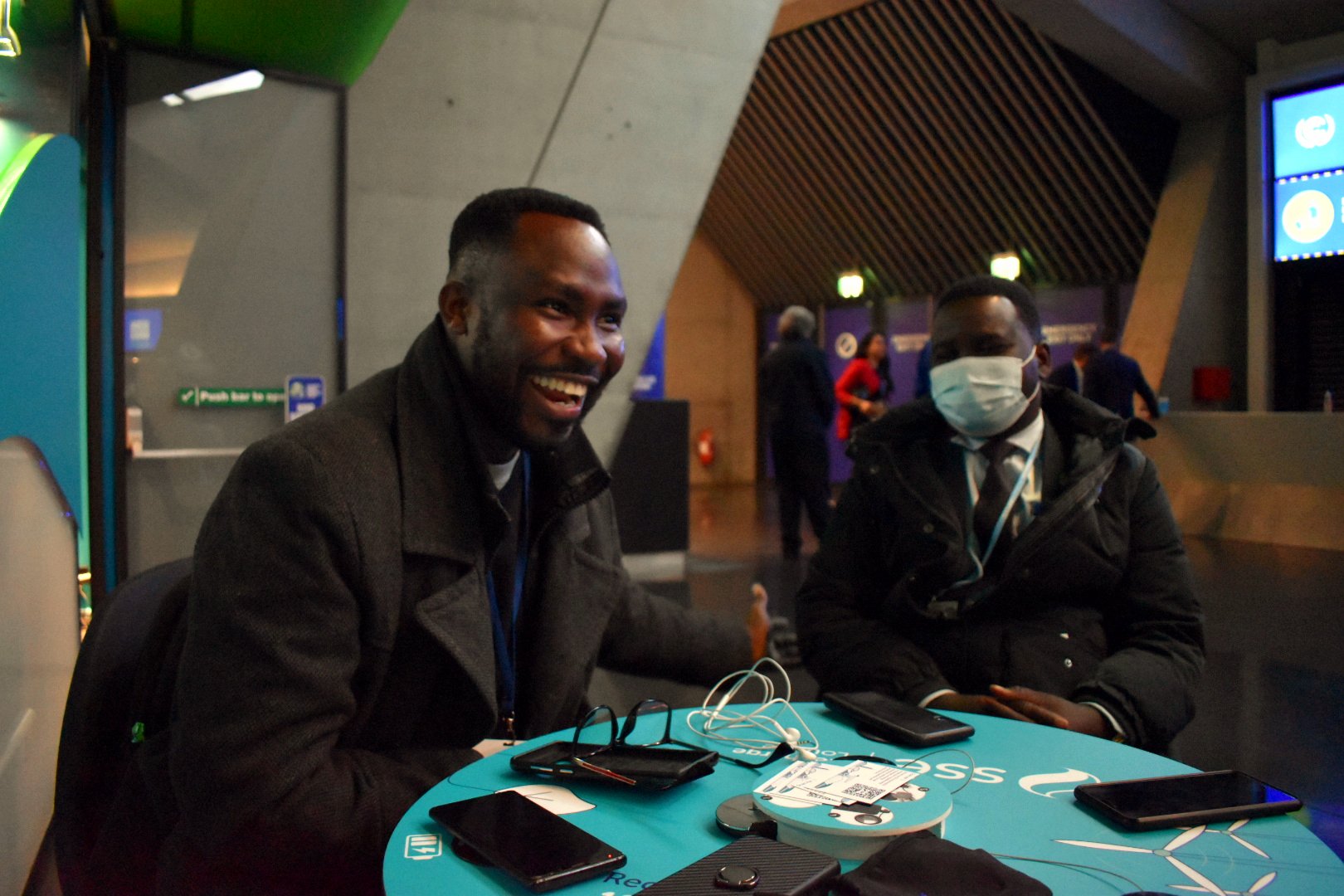
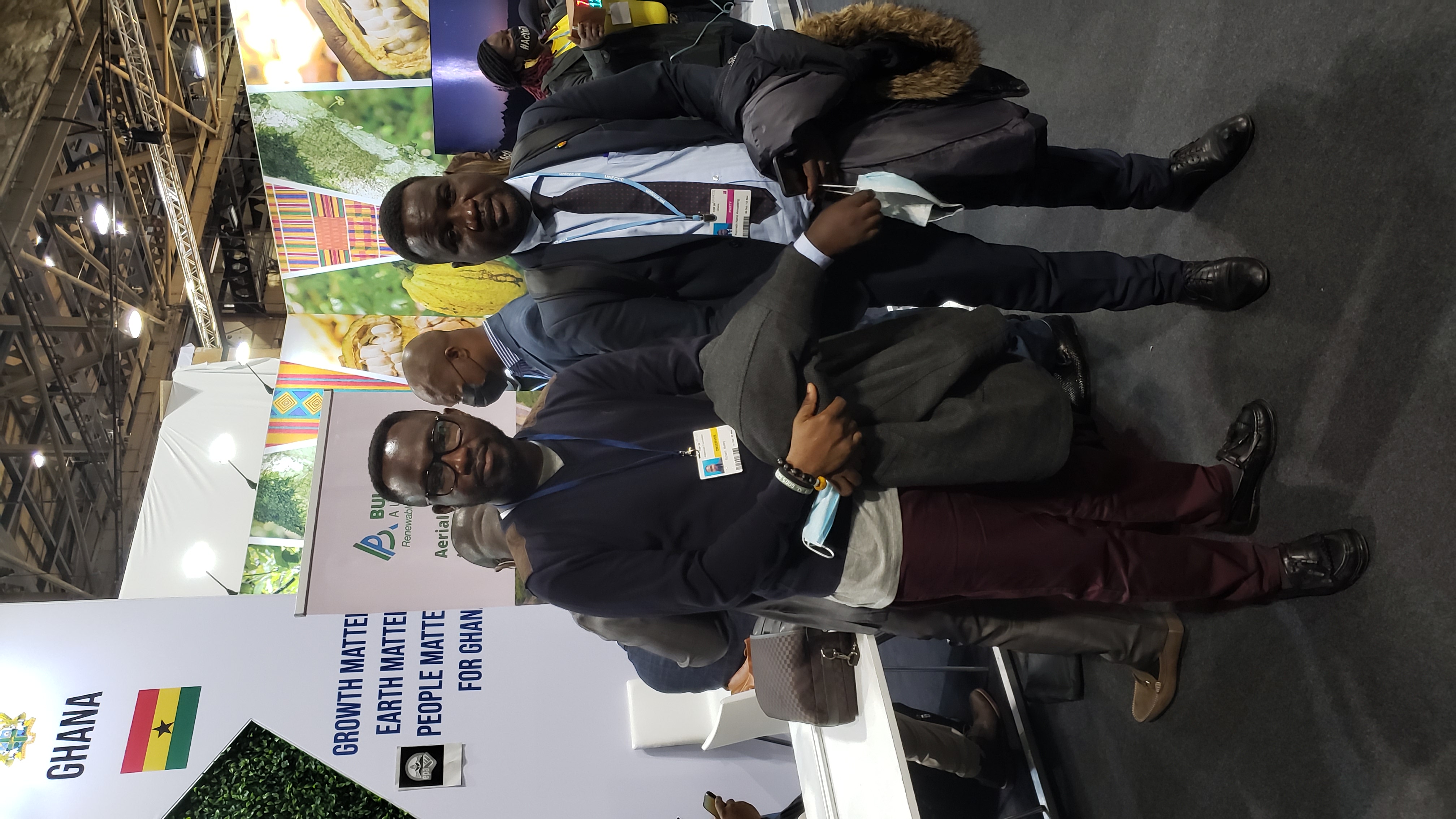
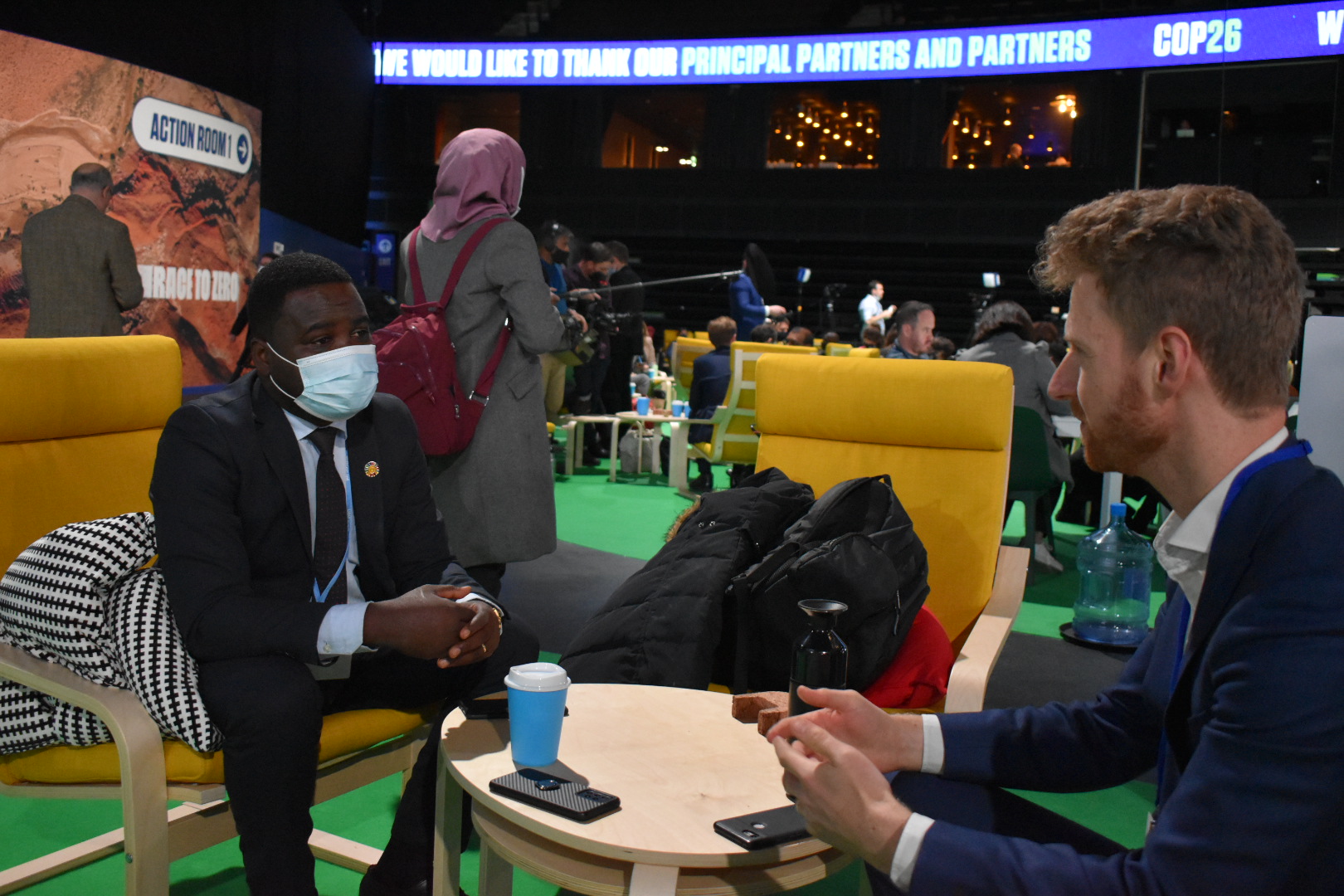
In Ghana, the effects of climate change are already tangible, just like in many countries around the world. How to ensure that these different experiences are heard and known by the Ghanaian government so that it will take actions that have a positive effect on people and their environment? And how to make local communities aware that they can hold the government accountable - and even have the responsibility to do so? During COP26 in Glasgow we spoke with Kenneth Nana Amoateng (47) and Richard Matey (30). Kenneth works at the AbibiNsroma Foundation, a local NGO, and took it as his mission to advocate for a healthy environment, climate change, and to give young people opportunities. Richard is part of that younger generation and works at the Alliance for Empowering Rural Communities in Ghana.
What are the climate change impacts in Ghana?
Richard: Climate change is impacting us in Ghana really fast. We now have migrations from North to South in Ghana and while they say this is because of economic reasons, the real reason is climate change. I will give you a personal example, I was at the family house in my mother's hometown by the sea in 2007. When I went back in 2013 the whole house was in the ocean. This means a lot to us and to me. Because I am only 30 and if am already experiencing this at a fast rate like this, imagine when I am 40.
Kenneth: The sea has washed away some of the coastal area, which means that also the livelihoods of many people have disappeared. To counter this, the government is now spending a lot of money on coastal defense. What we actually need in Ghana is an energy transition, but the challenge lies in making the government see this transition as something they can also benefit from.
Could you give an example of the impact of renewable energy in Ghana?
Richard: In rural areas, for example, having access to light is a very real and practical way to reduce teen pregnancies. The birth rate in those area's is very high. You find very young girls of 11/12 years old having children. Because what happens when people are home and there is no light? Imagine having solar energy in such rural areas!
Kenneth: Solar energy is a need, especially for women. Communities that have electricity have less teenage pregnancies. Instead of directly going home after having worked on the farm, electricity makes it possible for people to have some form of entertainment. However, when it comes to the energy transition and cleaner and renewable energy, it is a difficult subject because a lot of people in the community will lose their jobs. So we need to find a way to fill this gap. Fortunately, Ghana has everything within our hands needed for an energy transition and windmills: gold, diamond, copper, iron. We have good land for agriculture and a lot of sun of course for solar power and wind.
Is it dangerous to lobby for a energy transition?
Kenneth: I need to be careful in our lobby and advocacy when speaking about oil. Because the government uses oil to pay for education for example. So if you are trying to convince the government not the use the oil, you are seen as the enemy of the state and this can be dangerous. This makes having organisations such as Both ENDS out there important, you feel more protected to talk about your issue. Because if something happens, you have someone who is able to point at human rights and go public with it. We have Both ENDS to talk and back us, if not we can risk our life. I have a family with 5 children, so I need to be careful.
How do you make the politicians listen to you?
Kenneth: Unfortunately, more than having the community safe, the main drives of politicians are money and votes. So you need to make the issues known to them. What we try to do, for example, is link the Members of Parliament (MP) with the communities they are from. If it's affecting their families, we make those families speak out. Governments may want raw data, but sometimes you need to speak to the heart ánd the mind. In this way we try to explain to them that before signing anything they should also look at the input of the community, especially of young people.
Richard: I am very grateful to have come under Kenneth's leadership and mentorship. He has given me a lot of exposure by providing the platform to speak and represent young people. Platforms provide opportunities to meet decision and law makers, but you rarely see young people. Even when decisions are being made about young people, you do not see young people. But with the help of Kenneth I was able to, for example, lobby for a youth component in the 'national climate change learning and green economy strategy.'
Why are you Kenneth so dedicated to making young people heard?
Kenneth: One of my missions is to influence and inspire young people and to give them opportunities. Because we ourselves did not have those opportunities. Old people want to go their way and after they leave they die, without putting that knowledge into us. I said 'no, my generation needs to be willing to transform, change the dynamic'. When I see people that have passion, it inspires me to give them the opportunity and train them, and this I have been doing for years.
Richard: Some of the young people from Ghana who are doing very well at the national front, were mentored by him. Kenneth's influence in Civil Society space in Ghana is very huge and very enormous. When you come to Ghana, everybody knows him, also in the government.
Kenneth: I have been to eleven COP's. When I was only young guy, I started a 'Ghana youth Climate Change coalition' and that changed into an Africa's youth coalition of climate change. Our thought was that Africa needed to change. Africa needed to have a new face, for this we need to raise people and have young people pushing this.
Richard, can you give an example of how you have been pushing this?
Richard: Well, in 2018 Kenneth and I got in touch with Both ENDS, because we wanted to know more about the Export Credit Agencies (ECAs). And since 2019 we have been working closely together, conducting research into ECA support for the energy sector in Africa. Also, we have been lobbying in Africa and beyond to stop the support for fossil fuels and large hydro dams. We especially focus on the impact on local communities. This collaboration with Both ENDS has resulted in the publication "A Just Energy Transition for Africa - Mapping the impacts of ECAs active in the energy sector in Ghana, Nigeria, Togo and Uganda". When I got involved in this research I found out how communities in the specific case I investigated, were promised jobs, scholarships and a lot of goodies, but were not well-informed about the downsides to such fossil fuel projects. Such as contribution to climate change, human rights abuses and environmental destruction.heard. We hope to continue our work on this and other subjects with Both ENDS , strengthen local communities and advocate for energy transition in Ghana.
Read more about this subject
-
 Dossier /
Paris Proof Export Support
Almost two-thirds of the export credit insurances that Atradius DSB provided in the 2012-2018 period went to the fossil energy sector. That is contrary to the climate agreements that the Netherlands signed in Paris.
-
 Dossier /
Export Credit Agencies: Who pays the price?
Both ENDS calls on the government only to provide export credit insurance to sustainable projects that cause no social and/or environmental damage in the countries where they take place.
-
 News / 27 oktober 2026
Both ENDS at COP31: Locally led climate finance and ending investment rules that block climate action
At COP31, Both ENDS advocates for climate finance that reaches women-led and community-based organisations at the forefront of climate action, while challenging the economic rules that obstruct the transition away from fossil fuels. Together with partners in the Global Alliance for Green and Gender Action (GAGGA) and the PAPeS programme, we push for locally led adaptation, gender-just climate action and greater accountability for governments and companies.
We asked our colleagues Daan Robben and Fernando Hernandez why they are going to COP31, what messages they want to bring to negotiators, and what a positive outcome would look like.
-
 Dossier /
The JWH Initiative: supporting young environmental leaders
The JWH Initiative aims to stimulate leadership of young people in environmental organisations by giving small grants to individuals to expand their knowledge, experience and training.
-
 Dossier /
International trade and investment with respect for people and planet
The network of international trade and investment treaties is large and complex. The Netherlands alone has signed more than 70 bilateral investment treaties (BITs) and is party to the trade and investment agreements concluded by the EU, like the EU-Mercosur and EU-Indonesia trade deals.
-
 News / 15 oktober 2026
ISDS infringement complaint filed with the European Commission
The Netherlands and Portugal join four other EU countries facing such a complaint.
-
 Press release / 15 oktober 2026
Dutch and Portuguese organisations file EU complaint over investment treaties that let companies and sanctioned Russian oligarchs sue EU countries for compensation
The Netherlands and Portugal join four other EU countries facing such a complaint, as the Global Days of Action against Investor-State Dispute Settlement (ISDS) begin.
-
 Dossier /
Global Alliance for Green and Gender Action (GAGGA)
GAGGA rallies the collective power of the women's rights and environmental justice movements to realize a world where women can and do access their rights to water, food security, and a clean, healthy and safe environment.
-
 News / 29 september 2026
Summary - Both ENDS complaint under the EU-New Zealand trade agreement
On 29 September 2026, Both ENDS lodged the first complaint on climate grounds with the European Commission's Single Entry Point. It asks the Commission to examine whether Aotearoa New Zealand has broken two promises both sides made in the EU-New Zealand Free Trade Agreement: not to weaken or set aside environmental laws in order to encourage trade or investment, and to effectively implement the Paris Agreement.
-
Publication / 29 september 2026
-
Publication / 29 september 2026
-
 News / 29 september 2026
Q&A: New Zealand's climate rollback and the EU trade agreement
On 29 September 2026 / 30 September in Aotearoa New Zealand, Both ENDS lodged a complaint with the European Commission under the EU-New Zealand Free Trade Agreement. These are the questions we are asked most often, and our answers. The complaint summary, the case explainer and the key public sources are linked at the end of this page.
-
 News / 29 september 2026
What happens now? A timeline of the SEP Case
What happens now? On 29 September 2026 / 30 September in Aotearoa New Zealand, Both ENDS lodged a formal complaint with the European Commission. It is the first complaint to the EU's Single Entry Point on environmental and climate grounds. It asks the Commission to hold New Zealand to two promises it made in its trade agreement with the EU: not to weaken environmental protection to encourage trade or investment, and not to undermine the Paris Agreement on climate change.
-
 Press release / 29 september 2026
New Zealand faces its first climate complaint under EU trade rules
UTRECHT / WELLINGTON, 29 September 2026 /30 September in Aotearoa New Zealand
Both ENDS, a Dutch environmental justice organisation, has lodged a formal complaint with the European Commission arguing that New Zealand has broken the climate promises it made in its free trade agreement with the European Union. It is the first complaint on environmental and climate grounds under the Commission's Single Entry Point, the mechanism that lets civil society ask the EU to enforce the sustainability commitments in its trade agreements.
-
 News / 3 september 2026
Restoring Land, Restoring Hope: Both ENDS at UNCCD COP17 in Mongolia
From 17 to 28 August, governments gathered in Ulaanbaatar, Mongolia, for COP17 of the UN Convention to Combat Desertification (UNCCD). At stake was more than how the world responds to land degradation and drought. It was also a question of who gets to shape land restoration, whose knowledge counts, and where the money goes.
-
 News / 6 juli 2026
Strengthening Women's Land Rights Across the Rio Conventions
From 29 June – 2 July 2026, Tamara Mohr, GAGGA coordinator at Both ENDS participated in the 4th convening of the Women's Land Rights Initiative (WLRI) in Nairobi, Kenya.Hosted by the Robert Bosch Stiftung, TMG Research and the Huairou Commission, the event brought together grassroots organisations, (inter)national NGOs, government institutions and donors from around the world.
-
Publication / 3 juli 2026
-
 Dossier /
Gas in Mozambique
In 2011 one of the world’s largest gas reserves was found in the coastal province of Cabo Delgado, in the north of Mozambique. A total of 35 billion dollars has been invested to extract the gas. Dozens of multinationals and financiers are involved in these rapid developments. It is very difficult for the people living in Cabo Delgado to exert influence on the plans and activities, while they experience the negative consequences. With the arrival of these companies, they are losing their land.
-
 Dossier /
Finance for agroecology
The lion's share of public budgets for climate, agriculture and development still goes to conventional agroindustrial projects that contribute to the current climate, food and biodiversity crises. Both ENDS and our partners are calling for a transition to agroecological practices that are people- and environment-friendly.
-
Publication / 18 juni 2026