


Our call to FMO: Put people and climate before Eni’s profits
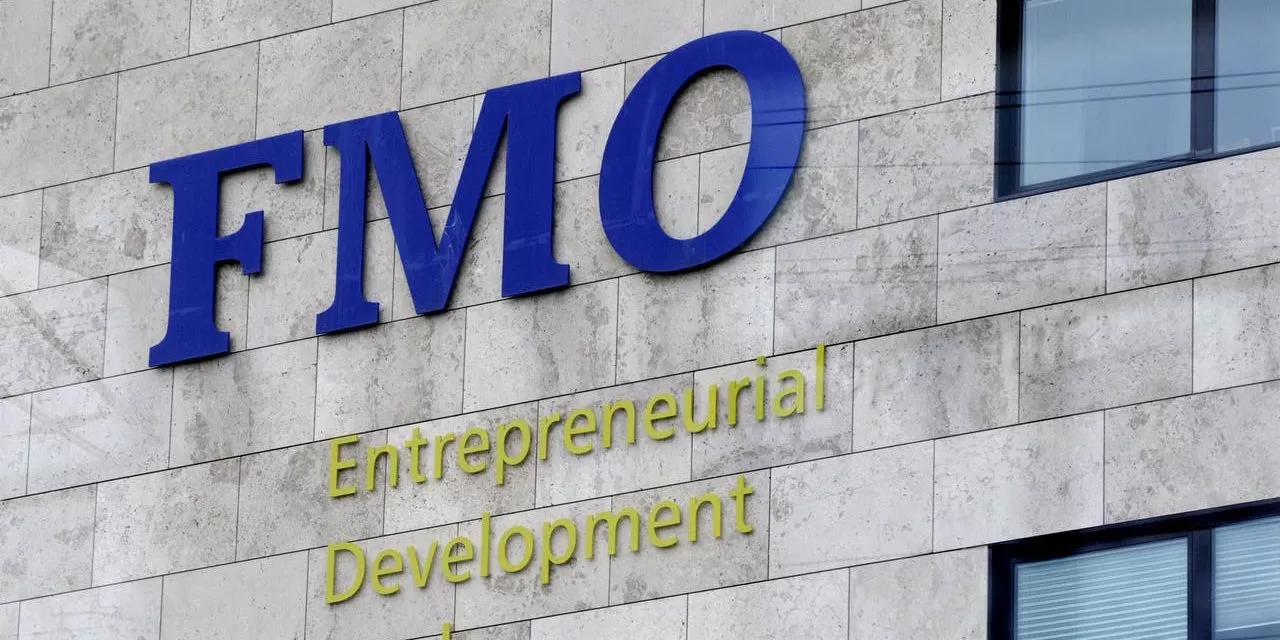
The Dutch development bank FMO is considering a loan to help Eni natural Energie Congo1 to grow its biofuel business in Africa. Together with our partners, we have asked FMO not to go ahead, for three reasons: Eni is a highly profitable oil and gas company that does not need public development, its biofuel projects in Africa have harmed farmers and put pressure on food supplies, and it uses lawsuits to intimidate its critics.
On 9 October FMO, the Dutch development bank, published a plan to invest in Eni Natural Energies Congo SAU, a subsidiary2 of the fossil fuel giant Eni SpA. On 23 October Both ENDS, ReCommon (Italy) and JA! (Justica Ambiental, Mozambique) sent a letter to FMO asking it not to go ahead with this investment.
FMO proposes to join a loan of up to USD 150 million led by the IFC, the World Bank’s private-sector arm. FMO would lend part of that money alongside the IFC (as a so-called B-lender). The loan would help Eni expand the supply of crops it uses to make biofuels in Angola, the Republic of the Congo and Mozambique. According to FMO, the investment would support Eni’s plan to cut its carbon emissions.
Eni SpA is an Italian fossil fuel company. According to Urgewald, a German environmental research organisation, it ranks fourth worldwide for short-term expansion plans3, in other words, plans to develop new oil and gas fields in the coming years. Based on projections using 2025 figures, Eni could make a net profit of around 10 billion euros this year. This is not a company short of cash. Development finance - public money meant to support sustainable development in poorer countries - should not be spent helping a wealthy and profitable fossil fuel giant grow its business.
Biofuels are not automatically a climate solution and can harm f farmers and food supplies
Biofuels are fuels made from plants instead of oil, gas or coal. They are often presented as a greener alternative, but whether they really are depends on how and where the crops are grown – and on what else the company is doing. Supporting biofuel production does notmake a credible climate strategy when the company’s broader business model continues to rely on fossil fuels.
Furthermore, Eni’s biofuel activities in African countries have raised serious concerns about where its crops come from and whether they are grown sustainably, as well as how they affect local communities. According to research by the European campaign group Transport & Environment 4, Eni has been importing castor and croton oils (oils from non-food plants) from Kenya and the Republic of the Congo, relying on a system that deprives farmers of their land and leaves them poorer. Recent investigations show that crop production in Kenya - financed with $135 million from the IFC5 - is not delivering at Eni’s expectations, and the company is now importing large amounts of rapeseed – a crop also used for cooking oil and animal feed - from South Africa - at odds with its commitment not to compete with food production6.
Development finance needs to protect communities and civil society
Because of Eni’s track record of harming the climate and its failure to take responsibility for it, in May 2023 the Italian campaigning organisation ReCommon, together with Greenpeace Italy and 12 citizens, took Eni to Court for violating its obligations under the Paris Climate Agreement and fundamental human rights. It was the first climate lawsuit ever brought against a company in Italy. Since then, Eni has stepped up its own legal action against ReCommon and Greenpeace Italy.7 Lawsuits like these are knowing as SLAPPS (Strategic lawsuits Against Public Participation): court cases used to intimidate and silence critics by dragging them into long and expensive legal battles. The Coalition Against Slapps in Europe (CASE-EU) has given the Italian company three of its symbolic awards : “Corporate bully of the year” in 2021,8 “SLAPP Addict of the year” in 2025 9 and “Green gag award” in 2026.10
Legal action against environmental organisations can have consequences far beyond the parties directly involved; it can scare others into silence. This matters directly to development finance. Communities affected by large projects funded by banks like FMO and the organisations that support them must be able to question what companies say, look closely at how projects affect people and nature and stand up for their rights without being threatened with costly lawsuits or other kind of pressure.
For these reasons, we have urged FMO not to proceed with this loan. You can read the full letter.
---------------------
1 Eni Natural Energies Congo SAU
2 Eni Natural Energies Congo SAU is 100 % owned by Eni Natural Energies. In turn, Eni Natural Energies is 100% owned by Eni SpA
4 https://www.transportenvironment.org/articles/from-farm-to-fuel-inside-enis-african-biofuels-gamble
5 https://www.ifc.org/en/pressroom/2024/ifc-and-the-italian-climate-fund-partner-with-eni-to-support-biofuel-production-farmers-in-kenya
6 https://www.transportenvironment.org/articles/not-what-they-promised; https://www.eni.com/en-IT/media/press-release/2022/10/eni-concluso-approvvigionamento-olio-di-palma.html
7 https://www.theguardian.com/environment/2025/jul/04/italian-oil-firm-eni-accused-of-trying-to-silence-green-activists
8 2021 European SLAAP Contest Awards, 21/05/2021, https://www.youtube.com/watch?v=AdPFcDB2Y_w
9 2021 European SLAAP Contest Awards, 21/05/2021, https://www.youtube.com/watch?v=AdPFcDB2Y_w
10 https://www.the-case.eu/latest/european-slapp-contest-shines-light-on-europes-biggest-bullies-days-ahead-of-legal-deadline/
Read more about this subject
-
Letter / 10 juni 2022
Joint submission on FMO’s Position Statement on Financial Intermediaries
Both ENDS, SOMO, Oxfam Novib and Recourse sent in a submission to FMO's public consultation on its Position Statement on Financial Intermediaries. In this position statement, FMO only takes limited responsibility for the consequences of its investments through so-called financial intermediaries. We call upon FMO to publish a position statement that focuses on protecting human rights and the environment and take full responsibility for this.
-
 News / 7 mei 2014
Indigenous people file complaint against FMO for funding of Barro Blanco Dam, Panama
Residents belonging to the indigenous Ngäbe-Bugle people living on the traditional indigenous territory surrounding the Barro Blanco dam in Panama, have filed a complaint against the Dutch development bank FMO. The bank has invested $ 25 million in the dam that is currently under construction in the river Tabasará. The Ngäbe-Bugle blame FMO for not adequately following its own social and environmental standards. FMO also violates international agreements relating to indigenous peoples. For Both ENDS, Anouk Franck is closely following FMO’s activities.
-
 News / 23 december 2021
2022 is the year for FMO to make good on its promises and provide financial support only to sustainable development
2021 was a turbulent year for Dutch development bank FMO, to say the least. The bank has been under fire for many years for investments linked to human rights violations and suspected corruption. But in the past year, the Dutch press and media have reported on one new development after the other in ongoing cases involving FMO. Below we give a short summary of these cases and call on FMO to make the promised improvements in 2022.
-
 Press release / 5 december 2022
Groups react with dismay to FMO’s position statement on Financial Intermediaries, pointing to outstanding human rights and climate concerns
On October 13th 2022, FMO published the final version of its Position Statement on Impact and ESG for Financial Intermediaries (FI statement). As civil society groups which have engaged with FMO on this topic for more than four years, we are extremely disappointed with the result. In the statement, FMO does not show sufficient commitment to ensuring its investments into financial intermediaries – which represent the bank's largest investment sector* – do not violate human rights or contribute to environmental harms.
-
 News / 10 juli 2020
Honduran NGOs call on FMO not to invest in controversial bank
Dutch development bank FMO is considering investing in the controversial Ficohsa bank in Honduras. The bank has close ties with the elite in Honduras, which holds considerable power in politics, the (para)military and the business community. Last Wednesday, a number of Honduran organisations, including the indigenous organisation COPINH – whose leader Berta Cáceres was murdered in 2016 – sent a letter to the FMO management. The letter, signed by forty organisations including Both ENDS, calls on FMO not to do business with this bank.
-
 News / 10 november 2020
FMO takes a step towards divesting from fossil fuels
The Dutch development bank FMO has published a statement about fossil fuels to take steps in climate action. Both ENDS and partners are pleased that FMO is finally taking a stand regarding fossil fuels, but in our opinion it could be more ambitious. In order to really contribute to sustainability and equality, it is essential that development banks stop investing in harmful fossil projects.
-
Letter / 9 november 2020
Input into FMO’s public consultation on Climate Action Commitments and Fossil Fuel Statement
Both ENDS and partners gave their input on FMO's public consultation on Climate Action Commitments and Fossil Fuel Statement. Both ENDS and partners are pleased that FMO is finally taking a stand regarding fossil fuels, but in our opinion it could be more ambitious.
-
 News / 10 juni 2022
FMO fails to meet best practices on financial intermediaries
In a new Position Statement on Financial Intermediary (FI) Lending, Dutch development bank FMO argues for limited responsibility over the outcomes investments that are channeled through commercial banks, investment funds, and other financial intermediaries, representing by far the bigger sector of its portfolio. In doing so, FMO is undermining its development mission, including the protection of human rights and addressing the climate crisis. FMO intends to delegate these key responsibilities to its FI clients only, falling short of best practices of peer financial institutions. In a joint submission prepared by Both ENDS, Oxfam Novib, Recourse and SOMO, we argue that FMO can do much more to ensure the protection of human rights, the environment, and to measure the development impact of its indirect investments.
-
 News / 6 november 2023
Response to FMO investments in Nicaragua
On 27 October, RTL Nieuws reported that the Steungroep Nicaragua considers the millions of euros that the Dutch development bank FMO is investing in Nicaragua irresponsible. When asked, FMO stated that 'it had to continue to support its entrepreneurs in difficult times'. Both ENDS believes that the choice to continue to invest in Nicaragua brings substantial risks, which FMO does not take sufficiently into account when deciding on financing. Previous FMO investments have caused harm to people and the environment and, in some cases, even led to violence – with, as its lowest point, the murder of Berta Cáceres in Honduras in 2016.
-
 Press release / 10 februari 2021
Transparency at development bank FMO is seriously lacking
The Dutch development bank FMO is not sufficiently transparent about the projects it finances and is therefore acting contrary to its mandate. This is evident from a new report published by the International Accountability Project (IAP) and the Foundation for the Development of Sustainable Policies (FUNDEPS), endorsed by 28 organizations including Both ENDS, SOMO, and Oxfam Novib. The research assesses FMO's disclosure and access to information practices for investments proposed between January 1, 2019, and May 31, 2020. Only in 25% of the cases was it disclosed what potential negative consequences an investment by FMO would have for people and the environment.
-
 News / 17 mei 2018
Charge against Dutch FMO for complicity in human rights violations in Honduras
Today, three representatives of the Honduran indigenous people's organisation COPINH, together with the family of environmental activist Berta Cáceres, who was murdered in March 2016, announced that they are preparing to press charges against the Dutch development bank FMO. COPINH accuses the FMO of complicity in human rights violations in connection with the controversial Agua Zarca hydroelectric project.
-
 Blog / 11 april 2025
FMO is very pleased with its own success – now the local population still needs to be
The FMO development bank is proud of its results and the opportunities it seizes where commercial banks fail to act. But do the bank's actions really help, ask Anne de Jonghe and Nick Middeldorp.
-
Letter / 7 juli 2020
Public letter to urge FMO not to provide a new loan to FICOHSA
A number of Honduran organisations sent a letter to the FMO management to call on FMO not to do business with Honduran bank FICOHSA. The bank has close ties with the elite in Honduras, which holds considerable power in politics, the (para)military and the business community.
-
 News / 16 juni 2014
FMO investigates complaint about Barro Blanco dam, Panama
For the very first time, the expert panel of the independent complaints mechanism of the Dutch development bank FMO will handle a complaint. It was filed on May 5 by residents of the area where the Barro Blanco dam is currently being built. These people form part of the indigenous Ngäbe-Buglé tribe. They feel that FMO has not adhered to its own social and environmental standards when they lent 25 million US dollars to build the dam. Anouk Franck of Both ENDS has been keeping a close eye on the situation.
-
 News / 1 juni 2015
FMO did not follow its own rules in financing Barro Blanco dam
Dutch development bank FMO did not sufficiently take into account the rights of the local population and effects on the environment before approving a $ 25 million loan for the construction of the Barro Blanco dam in Panama. This is not in accordance with FMO’s own standards. This was revealed in the long-awaited report by the independent complaints mechanism (ICM) of the FMO and the German development bank DEG, released on May 29. The report was published in response to a complaint filed by the M-10, the movement representing the affected indigenous Ngöbe population, in May 2014. Both ENDS has been supporting the M-10 in its struggle against the dam for years, and was one of the organisations that supported the complaint.
-
 News / 18 mei 2015
Dutch FMO pushed Panama to continue construction Barro Blanco dam
The Dutch Entrepreneurial Development Bank (FMO) has put pressure on the Panamanian government to proceed with the construction of the Barro Blanco dam. This was reported by the Dutch Newspaper ‘de Volkskrant’ on Monday the 18th of May. Construction works were suspended last February after the Panamanian environmental authority had found out that the company carrying out the construction – the Panamanian company Genisa – had violated environmental regulations and had failed to make proper arrangements with local Ngöbe communities. FMO is one of the investors in the project.
-
 News / 4 juni 2021
Welcoming step of FMO to phase out fossil fuels from their direct investments
FMO's new position statement on fossil fuel investments commits to ending new direct finance in the downstream and midstream coal and oil sectors, whilst still allowing for investments in gas-fired electricity generation under exceptional circumstances only. Both ENDS welcomes this development as a step in the right direction.
-
 External link / 31 mei 2018
Agua Zarca debacle leads to policy changes at FMO (Annual Report 2017)
Sometimes things must go terribly wrong before big players start to move. In March 2016, Honduran activist Berta Cáceres was murdered because of her leading role in the protests against the Agua Zarca hydro dam, co-financed by the Dutch FMO. One and a half year later, FMO changed their policies to prevent such events in the future.
-
 Press release / 13 januari 2026
Investigation: FMO failed to exercise adequate control over project linked to the murder of Berta Cáceres
TEGUCIGALPA/UTRECHT, January 12, 2026 – The murder of indigenous environmental activist Berta Cáceres, which took place almost 10 years ago in Honduras, appears to be the result of an organized criminal operation, in which funds from the Dutch Development Bank FMO were misappropriated to finance illegal activities. This is the conclusion of the investigation report published today by the independent commission set up by the Inter-American Commission on Human Rights, the Honduran state, and the relatives of Berta Cáceres.
For years, FMO was a major financier of the Agua Zarca project. Berta Cáceres, an indigenous leader, fought against this controversial dam and was murdered for that reason in March 2016.
-
 Press release / 5 oktober 2022
Independent research confirms FMO’s responsibility for destruction caused by Barro Blanco dam, recommends compensation
Utrecht, 5 October 2022 - Dutch development bank FMO bears responsibility for the destruction of livelihoods, economic losses and environmental damage caused by the construction of the Barro Blanco dam in Panama, according to a report by the bank's Independent Complaints Mechanism (ICM). Indigenous communities affected by the dam are pleased that their complaints have been confirmed and reiterate their call for apologies and compensation.