




Dutch Royal couple visits Thogoto Forest: a green oasis on the outskirts of Nairobi
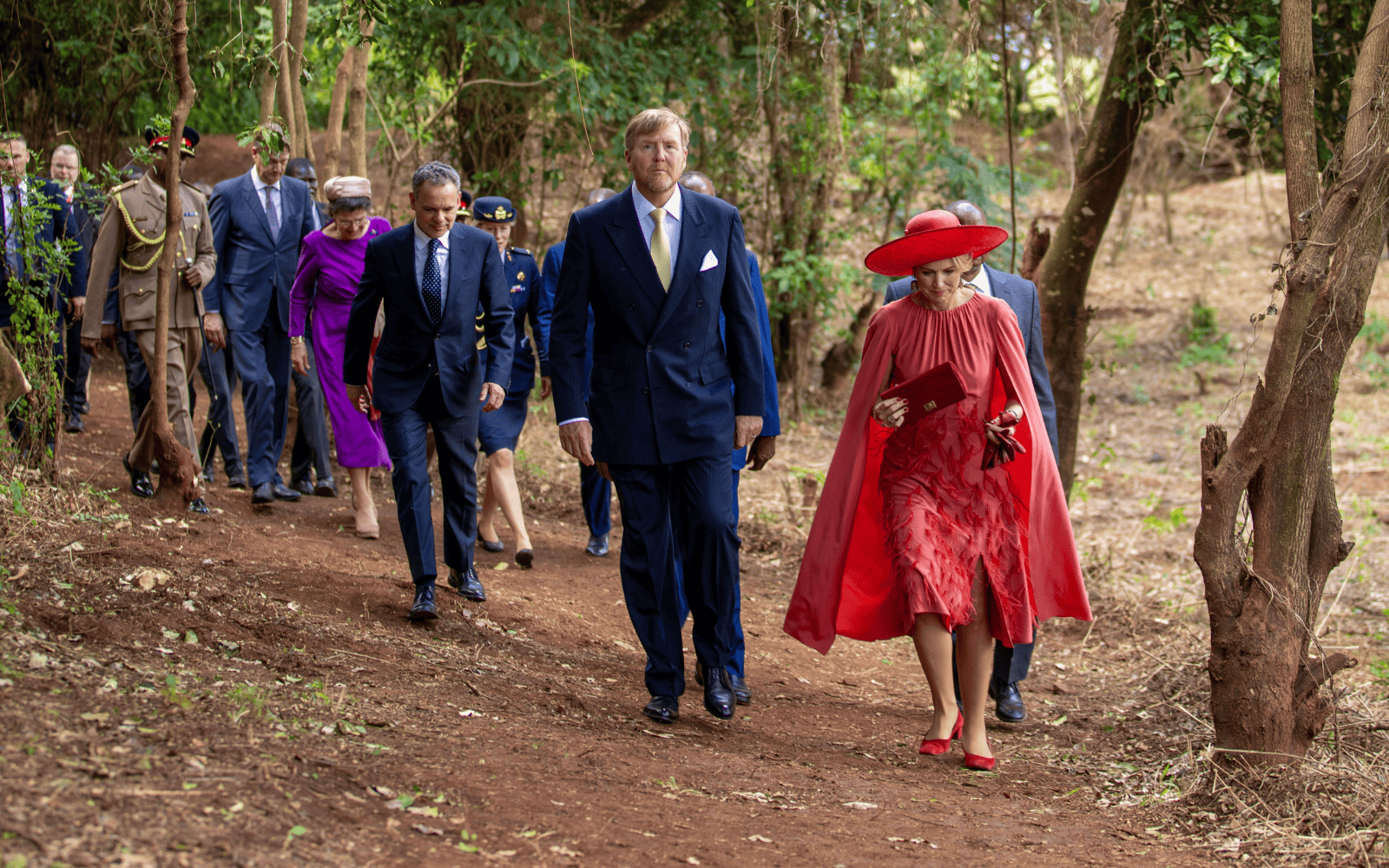
This week, King Willem-Alexander and Queen Máxima visited Thogoto Forest as part of their state visit to Kenya. They were able to see the impact of the work of our partner MCDI in the area: a restored forest, clean water and farmers who can earn a living by selling their agro-ecological products.
Thogoto Forest is a lush green area near the metropolis of Nairobi. The air is fresh and the forest is the source of the Athi River, a beautiful clear stream that eventually becomes a river that flows past Nairobi and the Nairobi National Park.
The King and Queen spoke with members of the Thogoto Forest Family youth organisation, among others. These young people have successfully managed to protect and green the forest. They now promote ecological tourism in the area and work to raise visitors' awareness of the importance of Thogoto Forest and other green areas for biodiversity and water supply.
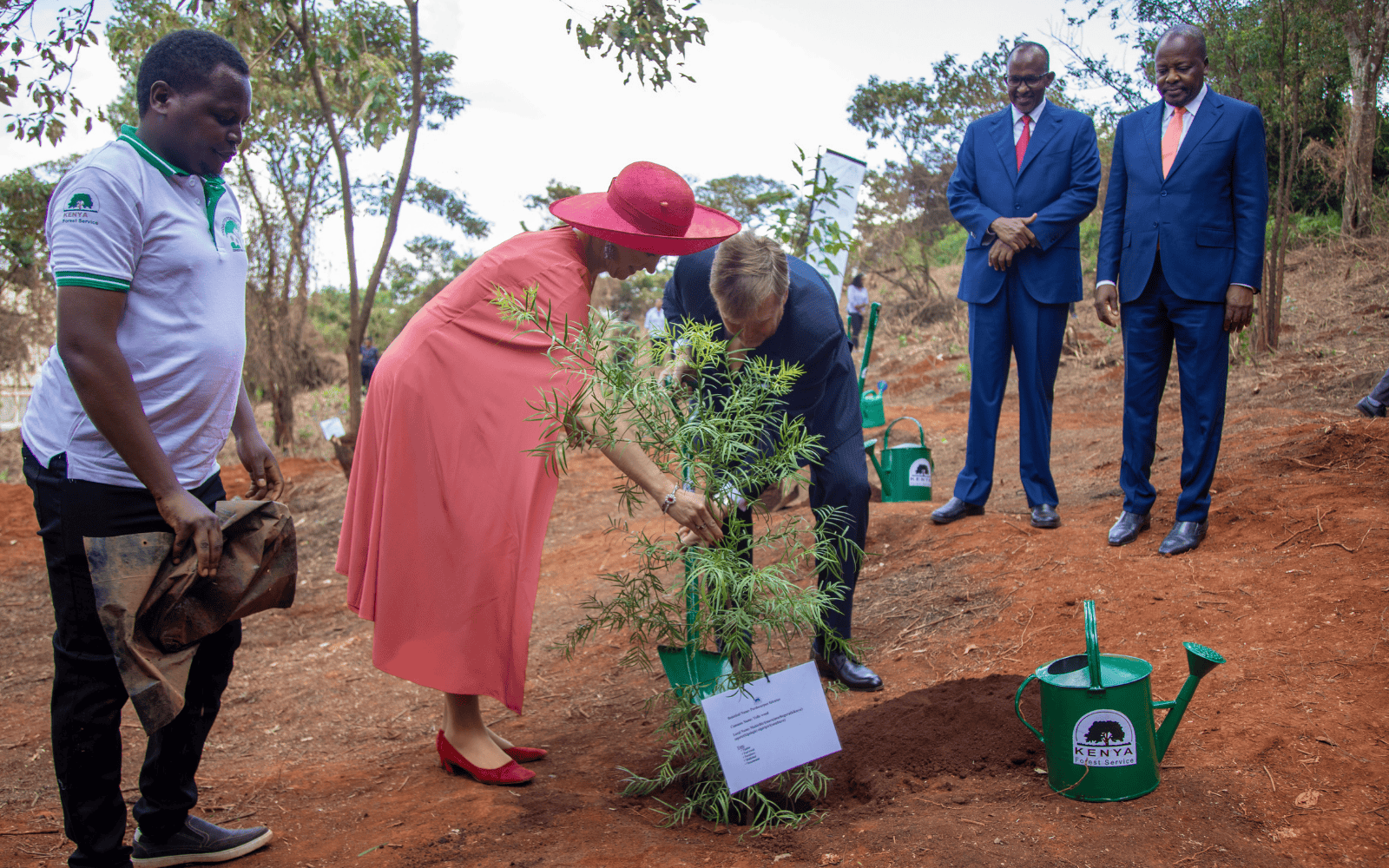
During the visit of the Royal couple, Thogoto Forest Family organised a tree planting campaign. The King and Queen also did their bit by planting a tree.
Athi River Community Network
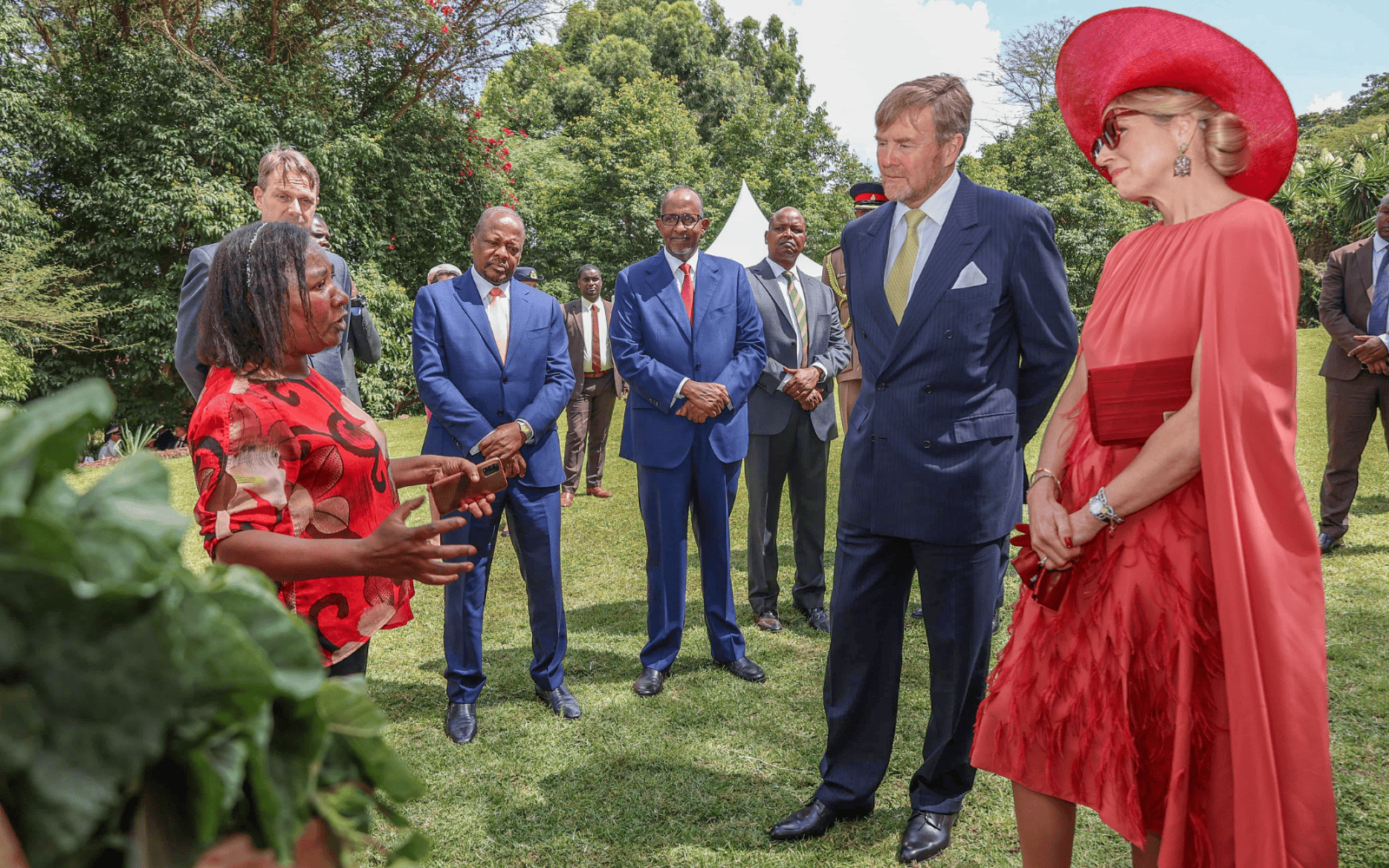
The royal couple also spoke with Violet Matiru from our partner organisation MCDI Kenya. She leads MCDI's work with the Athi River Community Network (ARCN) in the fields of agroecology, water management and nature conservation. The ARCN is a network of local Water Resource Users Associations (WRUAs), Community Forest Associations (CFAs) and community organisations along the Athi River basin, Kenya's second longest river. Both ENDS has been supporting MCDI and ARCN since 2019, not only in and around Thogoto Forest but also in the entire area around the upper Athi River.
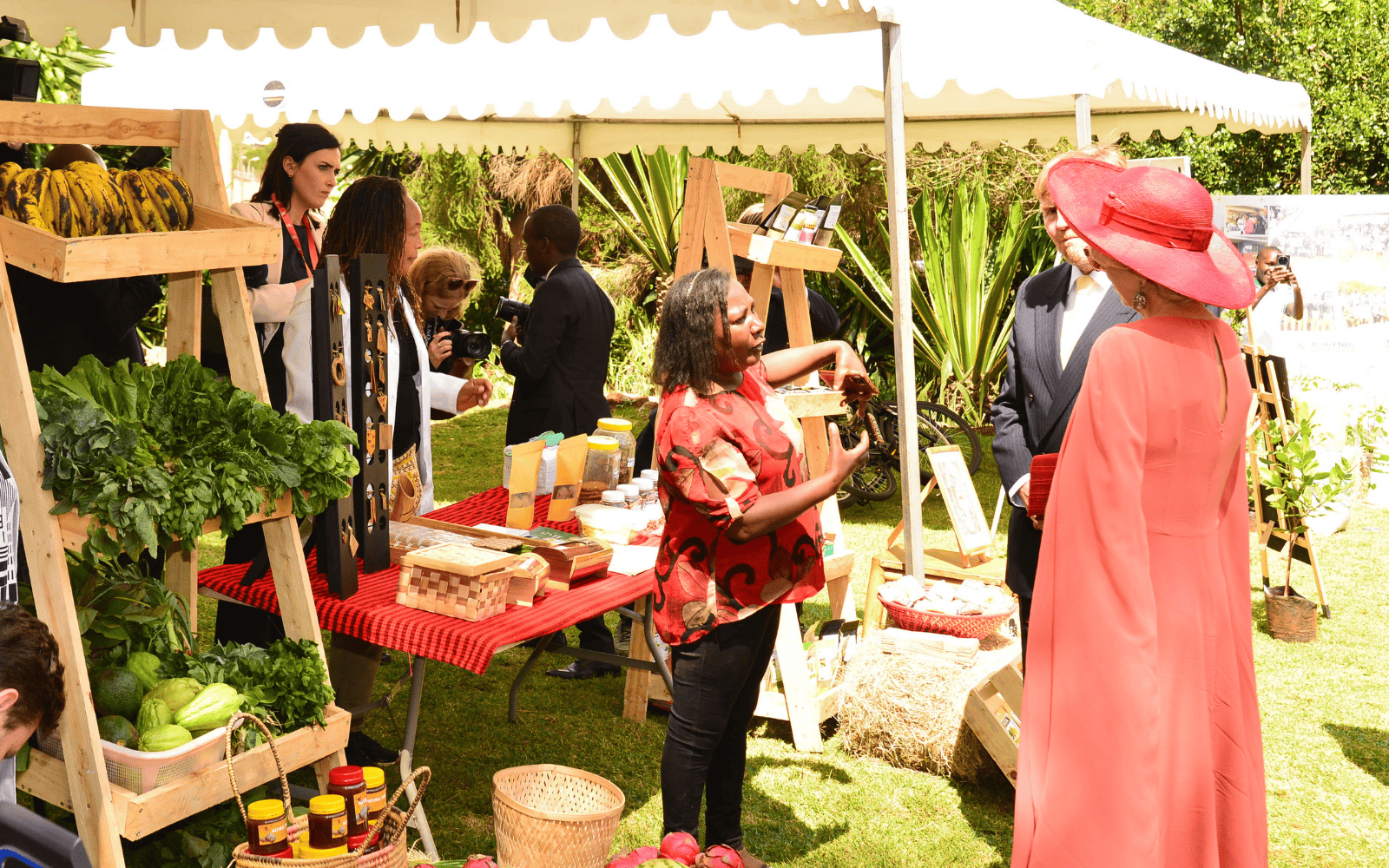
Among other things, the network has trained small-scale farmers (especially women) in agro-ecological practices. This is very important for the conservation of nature and for securing clean water; a lot of agrochemicals are being used in the area, with consequences for human health and the environment. In 2020, the Kikuyu Organic Farmers Market and Shop (KOFARMS) was established. This market and shop is now financially independent and even supplies a Kenyan online supermarket.
‘It was a great pleasure to host the King and Queen of the Netherlands at our Thogoto Forest and to showcase our conservation, agroecology and ecotourism activities,’ Violet Matiru said afterwards. ‘We had so much fun and laughter with the Royal Couple, further cementing our long term collaboration with Dutch people that we've had through Both ENDS and more recently with IHE-Delft.’
A nice recognition
‘The royal couple's visit to Thogoto Forest is a wonderful recognition of the important work that the ARCN communities and organisations have done in recent years to preserve, restore and protect the Athi River basin,’ says Melvin van der Veen, who coordinates activities in this area on behalf of Both ENDS. ‘Our support for ARCN - in the areas of water management and agroecology - has resulted in greater connection between communities, a socioeconomic perspective and a healthier living environment. This is especially true for young people and women. In this way, we contribute to a more stable society and socio-economic development, and we are therefore proud that the Dutch embassy has chosen this place to show the impact of Dutch development cooperation to the Royal couple.’
For more information
Read more about this subject
-
 Dossier /
International trade and investment with respect for people and planet
The network of international trade and investment treaties is large and complex. The Netherlands alone has signed more than 70 bilateral investment treaties (BITs) and is party to the trade and investment agreements concluded by the EU, like the EU-Mercosur and EU-Indonesia trade deals.
-
 Dossier /
Amplifying environmentally just practices
Because of the close relationship with their living environment, local communities often have the best ideas for the sustainable and equitable use and governance of land, water and forests. These environmentally just practices and processes successfully protect and restore ecosystems and address climate change. They are essential in the light of the multiple crises the world faces, but are in dire need of financial and policy support.
-
 Dossier /
Fair Green and Global Alliance (FGG)
Together with civil society organisations from all over the world, the Fair Green and Global (FGG) Alliance aims for socially just, inclusive and environmentally sustainable societies in the Netherlands and the Global South.
-
Publication / 27 november 2025
-
 Environmentally Just Practice /
A Negotiated Approach for Inclusive Water Governance
A Negotiated Approach envisages the meaningful and long-term participation of communities in all aspects of managing the water and other natural resources on which their lives depend. It seeks to achieve healthy ecosystems and equitable sharing of benefits among all stakeholders within a river basin. This inclusive way of working is an essential precondition for the Transformative Practices that are promoted by Both ENDS and partners.
-
 News / 27 november 2025
Communities and International Consortium Present Community-Led Plan for Nature-Based Adaptation to Sea-Level Rise in Coastal Bangladesh
Local communities in the southwestern coastal region of Bangladesh—together with an international consortium including Uttaran, CEGIS, and Both ENDS—have presented a community-led plan to confront climate change and accelerating sea-level rise through nature-based adaptation. The People’s Plan for Upscaling Ecosystem-Based Adaptation outlines a scalable strategy rooted in local ownership and generations of lived experience. At its centre is Community-Based Tidal River Management (CBTRM), a proven approach that reduces waterlogging, raises land elevation, and restores ecological balance by working with natural tidal and sediment dynamics.
-
 Dossier /
Wetlands without Borders
With our Wetlands without Borders program, we work towards environmentally sustainable and socially responsible governance of the wetlands system of the La Plata Basin in South America.
-
Publication / 17 november 2025
-
 Environmentally Just Practice /
Non-Timber Forest Products (NTFPs)
About one in every six people, particularly women, directly rely on forests for their lives and livelihoods, especially for food. This shows how important non-timber forest products (NTFPs) and forests are to ensure community resilience. Not only as a source of food, water and income, but also because of their cultural and spiritual meaning.
-
Letter / 14 november 2025
Letter: TPAC’s report “Final Judgement Detailed Research MTCS’’
A coalition of Malaysian and international NGOs has released a memorandum in response to the recent TPAC report on the Malaysian Timber Certification Scheme (MTCS). The organisations express serious concerns about the independence, quality, and credibility of the assessment carried out by the Timber Procurement Assessment Committee (TPAC).
-
 Dossier /
Communities Regreen the Sahel
In various countries in the Sahel, vast tracts of land have been restored by the local population by nurturing what spontaneously springs from the soil and protecting the sprouts from cattle and hazards.
-
 Dossier /
Global Alliance for Green and Gender Action (GAGGA)
GAGGA rallies the collective power of the women's rights and environmental justice movements to realize a world where women can and do access their rights to water, food security, and a clean, healthy and safe environment.
-
 News / 5 november 2025
Interview: Both ENDS at COP30 for Climate Justice and Systemic Change
Both ENDS is present at COP30 to advocate for genuine access to climate finance for locally led, gender-just climate solutions and the mechanisms that facilitate this, including those for farmer-led restoration. Furthermore, the organisation participates to ensure the crucial connection between the climate negotiations and the trade and investment frameworks that shape them.
Learn more about the Both ENDS team at COP30 below, and find all the activities and side-events in which Both ENDS will participate.
-
Publication / 9 oktober 2025
-
 News / 6 oktober 2025
From Entebbe to Accra: civil society is rewriting the rules of investment
By Fernando Hernández Espino and Bart-Jaap Verbeek
Almost a year after African civil society gathered in Uganda to adopt the Entebbe Declaration, the call to transform international investment governance continues to gain strength. From the 6th to the 9th of October, over 50 civil society organisations from across West Africa, including from Ghana, Senegal, Nigeria, Côte d’Ivoire, Cameroon, Gambia, Sierra Leone, as well as from Kenya and Latin America, are convening in Accra to deepen and operationalise the Declaration’s vision.
-
 News / 23 september 2025
With the undemocratic splitting of the EU-Mercosur deal, Europe is missing the chance to lead on fair trade
Recently, many newspapers have written about Brussels’ rush to finalize the trade agreement between the EU and the South American Mercosur countries. According to the European Commission, national parliaments do not need to approve it because the trade part and the “political” part have been separated. This “splitting” means that the trade part can be approved as an EU-only decision by the European Council and the European Parliament, while national parliaments are sidelined and the political-cooperation part is postponed. Both ENDS and its partners are deeply concerned and are calling on the Dutch government to vote against this outdated agreement.
-
 News / 22 september 2025
EU-Indonesia Trade Deal Threatens Communities and Environment
On September 23th the European Union and Indonesia concluded their negotiations of the EU-Indonesia Comprehensive Economic Partnership Agreement (CEPA), a free trade agreement between the EU and Indonesia. Both ENDS condemns this agreement for favoring corporate interests over those of local communities and the environment.
-
 News / 11 september 2025
EU-Mercosur: Small GDP Gain, Big Question Marks for Farmers and Democracy
A recent report by Wageningen Economic Research (WER) on the economic consequences of the trade agreement between the EU and Mercosur confirms what civil society organizations, policymakers, and trade unions have been signaling for years: this agreement does not offer a balanced perspective for farmers and the environment. Instead, it increases power inequalities and shifts burdens onto (small-scale) farmers. Moreover, the deal risks reinforcing unsustainable practices that complicate the climate transition and addressing environmental challenges in both the EU and Mercosur countries.
-
 Blog / 12 augustus 2025
Nickel mining for the energy transition: who is accountable for the damage?
Photo blog - In June, I travelled to Indonesia with our partner organization Puanifesto to research the impacts of nickel mining in East Sulawesi. On July 13th, the news broke that the European Union and Indonesia have reached a political agreement on a free trade agreement that was years in the making, called the Comprehensive Economic Partnership Agreement (CEPA). Nickel from Sulawesi is already being used in European cars. This makes it all the more important that we ensure that human and environmental rights are secured in mining and refining operations in Indonesia, before the road is opened to more extraction and exploitation for the European market. The conversations we have had with communities and workers on East Sulawesi show that more binding regulations are necessary to make this happen and ensure an energy transition that is socially and environmentally just.
-
 Blog / 17 juli 2025
A disaster for farmers: here and there
The trade agreement with South America is harmful to farmers, the climate, and biodiversity, on both sides of the Atlantic. It’s time to take this deal off the table once and for all, argues Fernando Hernandez, Senior Policy Officer for Trade and Investment at Both ENDS.



