Both ENDS to attend climate conference in Egypt
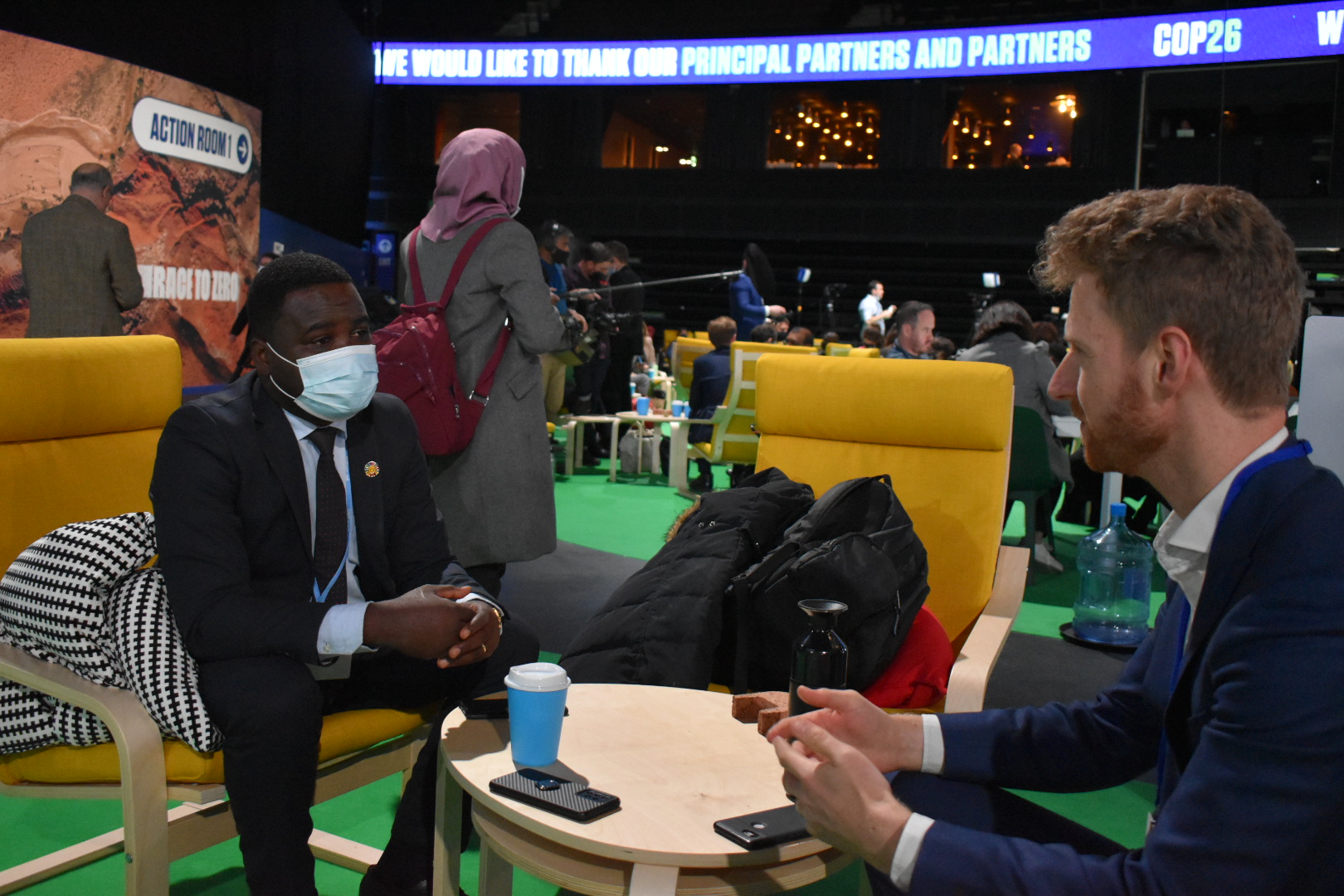
Climate action is urgently needed to slow down global warming. The effects of climate change are already showing themselves. Floods in Pakistan and closer to us, in the Netherlands, are causing loss of life and much emotional and economic damage, while local climate solutions are still largely being ignored. That's why Both ENDS is going to participate in COP27, the climate conference in Sharm El Sheikh, Egypt.
From 6 to 18 November, countries from around the world will be talking about how much money will go to developing countries to protect them against the effects of climate change, will have to honour their commitment stop providing export support for fossil fuels, and decide about a loss and damage fund. In other words, it's time for action.
Time for action
At last year's climate conference in Glasgow the Dutch government and 38 other governments and financial institutions pledged to stop support for fossil fuels as of the end of this year. Both ENDS will monitor whether these countries honour this pledge and call on other countries like Australia to do the same.
Together with our partners, Both ENDS is organizing two side events at COP27 on the importance of fair climate finance: gender-just climate finance and climate finance for agroecology. Food systems are responsible for 33% of greenhouse gas emissions but receive only 3% of climate finance. There is an urgent need for climate finance to fund solutions for food systems that can deliver real impacts and major benefits in widely varying contexts. In addition, only a small percentage of climate finance goes to local communities, and to women and indigenous peoples in particular, while these groups are crucial and already have climate solutions to offer.
Human rights in Egypt
Both ENDS made a considered choice to attend COP27 because of the urgency of the climate crisis. At the same time, together with many civil society organisations around the world, Both ENDS is seriously concerned about the human rights situation in Egypt, and especially about the restrictions imposed by the government on the freedom of expression, peaceful assembly and association, which threaten to undermine the prospects of a successful, inclusive and participative climate conference.
We support the call by the UN Special Rapporteur on Freedom of Peaceful Assembly and of Association for the work of civil society organisations to be recognised publicly and at the highest level as essential to the progress of climate measures and a fair transition. We also stress the importance of the right to freedom of expression and independent journalism to promote efforts to tackle the climate crisis.
For more information
Read more about this subject
-
 Dossier /
Finance for agroecology
The lion's share of public budgets for climate, agriculture and development still goes to conventional agroindustrial projects that contribute to the current climate, food and biodiversity crises. Both ENDS and our partners are calling for a transition to agroecological practices that are people- and environment-friendly.
-
 Dossier /
Paris Proof Export Support
Almost two-thirds of the export credit insurances that Atradius DSB provided in the 2012-2018 period went to the fossil energy sector. That is contrary to the climate agreements that the Netherlands signed in Paris.
-
 News / 27 oktober 2026
Both ENDS at COP31: Locally led climate finance and ending investment rules that block climate action
At COP31, Both ENDS advocates for climate finance that reaches women-led and community-based organisations at the forefront of climate action, while challenging the economic rules that obstruct the transition away from fossil fuels. Together with partners in the Global Alliance for Green and Gender Action (GAGGA) and the PAPeS programme, we push for locally led adaptation, gender-just climate action and greater accountability for governments and companies.
We asked our colleagues Daan Robben and Fernando Hernandez why they are going to COP31, what messages they want to bring to negotiators, and what a positive outcome would look like.
-
 News / 25 oktober 2026
Meet Sarah Adongo: “The soil remembers those who cry and defend it”
By Sarah Adongo, Lawyer, Witness Radio, Uganda
Sarah Adongo is one of the three winners of the 2026 Irene Dankelman Young Ecofeminist Award, presented on 21 October at the UN Biodiversity Conference (CBD COP17) in Yerevan, Armenia. A lawyer working with Witness Radio Uganda, Sarah works with women affected by gender-based violence and communities affected by land dispossession and large-scale investments. In this piece, she shares what the award means to her and why gender and environmental justice must go hand in hand.
-
 Dossier /
The JWH Initiative: supporting young environmental leaders
The JWH Initiative aims to stimulate leadership of young people in environmental organisations by giving small grants to individuals to expand their knowledge, experience and training.
-
 News / 25 oktober 2026
Meet Yemi Knight: “Your experience is expertise”
By Yemi Knight (they/them), Founder and Executive Director, AnchorBridge Environmental Inc., Barbados
Yemi Knight is one of the three winners of the 2026 Irene Dankelman Young Ecofeminist Award, presented on 21 October at the UN Biodiversity Conference (CBD COP17) in Yerevan, Armenia. Yemi founded AnchorBridge Environmental, a youth-led organisation that combines policy advocacy with climate education across the Caribbean. We asked them what the award means to them, what they are working on, and what they would tell other young ecofeminist leaders.
Yemi is also part of the network of the Joke Waller-Hunter Initiative, powered by Both ENDS. With a JWH grant, Yemi followed courses in Social, Environmental and Economic Impact Assessment and in Risk, Crisis and Disaster Management at the University of the West Indies, Cave Hill Campusc, as well as a Level 1A Spanish course at the Centre for Language Learning at the university’s St. Augustine Campus.
-
 Dossier /
International trade and investment with respect for people and planet
The network of international trade and investment treaties is large and complex. The Netherlands alone has signed more than 70 bilateral investment treaties (BITs) and is party to the trade and investment agreements concluded by the EU, like the EU-Mercosur and EU-Indonesia trade deals.
-
 Dossier /
Rights for People, Rules for Corporations – Stop ISDS!
Indigenous communities in Paraguay saw their attempts to regain their ancestral lands thwarted by German investors. In Indonesia, US-based mining companies succeeded to roll back new laws that were meant to boost the country’s economic development and protect its forests. This is the level of impact that investment treaties can have on social, environmental and economic development and rights. Why? Because of the ‘Investor-to-State Dispute Settlement’ clauses that are included in many such treaties.
-
 Press release / 15 oktober 2026
Dutch and Portuguese organisations file EU complaint over investment treaties that let companies and sanctioned Russian oligarchs sue EU countries for compensation
The Netherlands and Portugal join four other EU countries facing such a complaint, as the Global Days of Action against Investor-State Dispute Settlement (ISDS) begin.
-
 Dossier /
Dare to Trust: the power of unconditional funding
At Both ENDS we cherish our long-term relationships with partners in our global network. These relationships are based on equality and built on trust. The trust we have in each other has developed from years of strategic cooperation, including joint advocacy around common agendas, knowledge sharing, networking, and mobilising and sharing resources to advance environmental justice.
-
 Dossier /
Global Alliance for Green and Gender Action (GAGGA)
GAGGA rallies the collective power of the women's rights and environmental justice movements to realize a world where women can and do access their rights to water, food security, and a clean, healthy and safe environment.
-
 News / 7 september 2026
Unprecedented criminal conviction in the Mariana disaster case breaks mining industry's cycle of impunity
A Brazilian federal court has, for the first time, criminally convicted a mining company and three of its managers for their role in the 2015 collapse of the Fundão dam, one of the worst environmental disasters in Brazil's history. Our partner Instituto Cordilheira, which represented victims as assistant prosecutors in the case, calls it a historic breakthrough after years of impunity.
-
 Dossier /
Communities Regreen the Sahel
In various countries in the Sahel, vast tracts of land have been restored by the local population by nurturing what spontaneously springs from the soil and protecting the sprouts from cattle and hazards.
-
 News / 3 september 2026
Restoring Land, Restoring Hope: Both ENDS at UNCCD COP17 in Mongolia
From 17 to 28 August, governments gathered in Ulaanbaatar, Mongolia, for COP17 of the UN Convention to Combat Desertification (UNCCD). At stake was more than how the world responds to land degradation and drought. It was also a question of who gets to shape land restoration, whose knowledge counts, and where the money goes.
-
Letter / 14 juli 2026
Statement on CAO Cambodia Microfinance Case
The independent complaints mechanism of the International Finance Corporation (IFC) and the World Bank Group found that the IFC violated its own Environmental and Social Sustainability Framework by investing in six banks providing microfinance in Cambodia.
-
 News / 6 juli 2026
Strengthening Women's Land Rights Across the Rio Conventions
From 29 June – 2 July 2026, Tamara Mohr, GAGGA coordinator at Both ENDS participated in the 4th convening of the Women's Land Rights Initiative (WLRI) in Nairobi, Kenya.Hosted by the Robert Bosch Stiftung, TMG Research and the Huairou Commission, the event brought together grassroots organisations, (inter)national NGOs, government institutions and donors from around the world.
-
Publication / 3 juli 2026
-
 Dossier /
Gas in Mozambique
In 2011 one of the world’s largest gas reserves was found in the coastal province of Cabo Delgado, in the north of Mozambique. A total of 35 billion dollars has been invested to extract the gas. Dozens of multinationals and financiers are involved in these rapid developments. It is very difficult for the people living in Cabo Delgado to exert influence on the plans and activities, while they experience the negative consequences. With the arrival of these companies, they are losing their land.
-
Publication / 18 juni 2026
-
Publication / 12 mei 2026