




“Connecting people for change”: that is what Both ENDS did at the COP
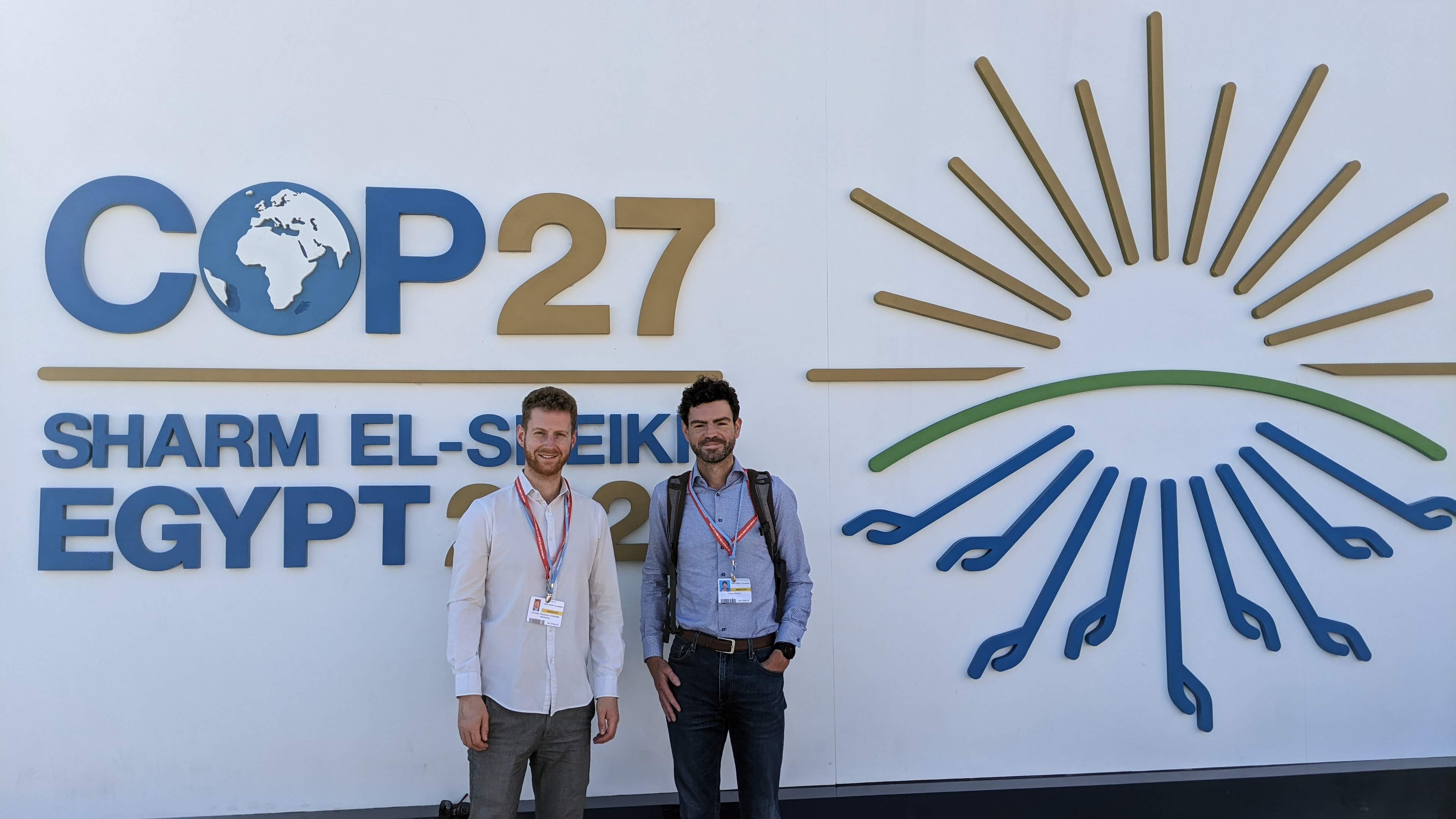
After a busy week filled with side-events, meetings, negotiations and covid, our colleagues Daan and Niels are back in the office in Utrecht. Together, they look back to their expereiences and results during the climate conference COP27 in Egypt.
How useful is a climate conference like this?
Niels: It's the best and worst global climate process that we have. A conference like COP shows the power generated by everyone being in the same place at the same time. In a little more than a week I spoke to leading Dutch political figures like Diederik Samsom and Rob Jetten, members of the Dutch parliament, ministers from other countries, dozens of Both ENDS' partners and climate activists from all over the world, and made a wide range of useful new contacts. The conversations in the corridors at the conference are so important for the negotiations that take place throughout the day. Your world literally becomes smaller.
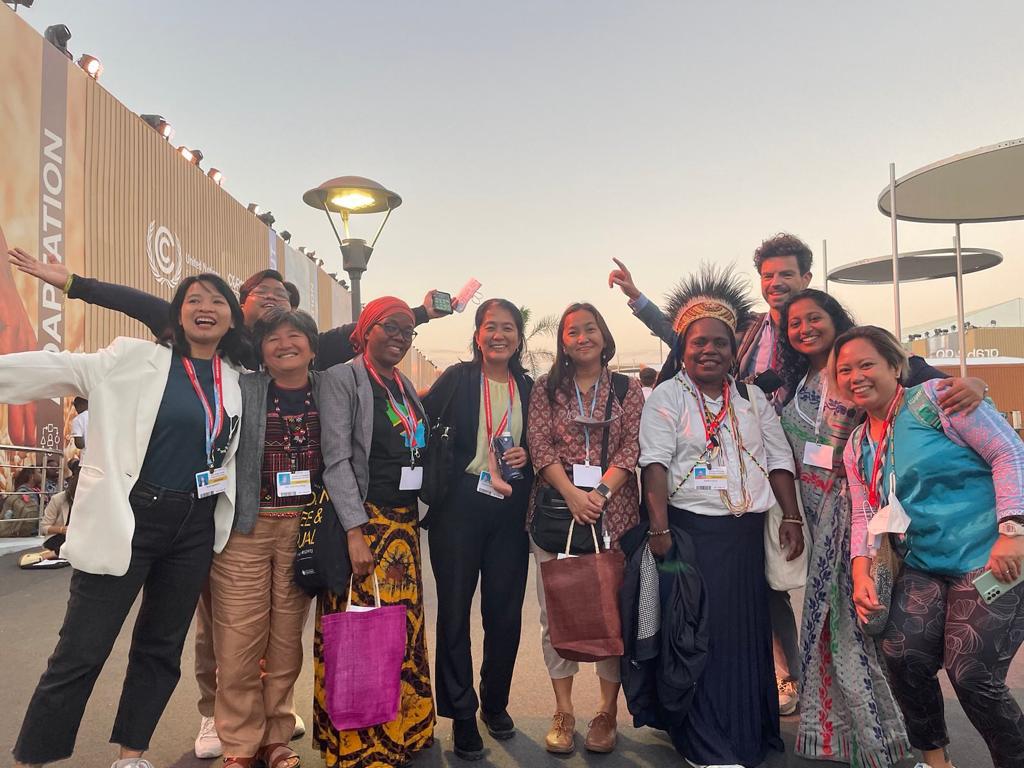
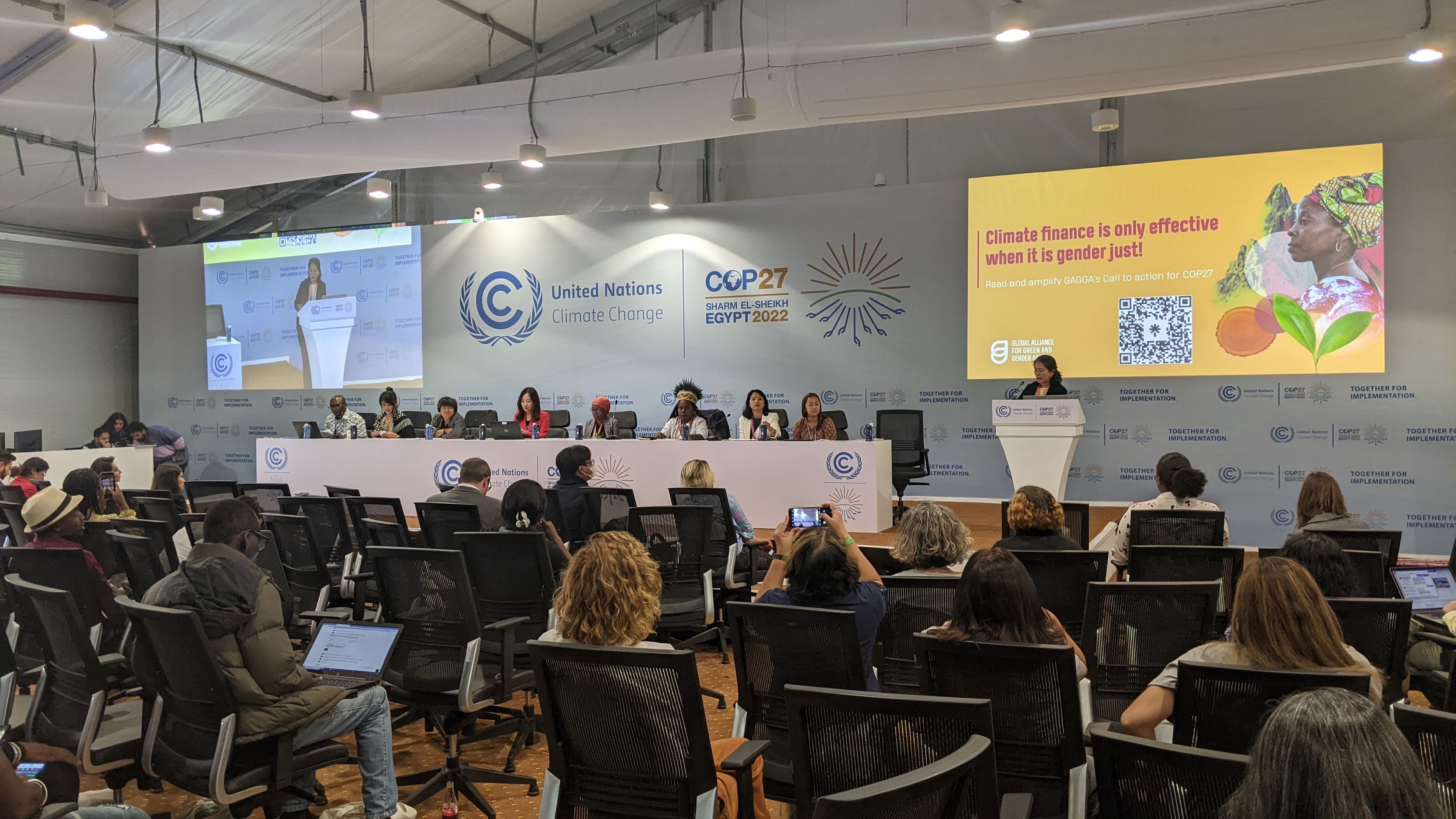
Daan: That applies even more to our partners who are much less familiar with having access to policymakers at international events. It's my mission during such a conference to give our partners a podium on wchih to make their voices heard – connecting people for change. Our side-events are an example of that. In the session about gender-just climate finance, some GAGGA partner organisations engaged directly with representatives of the Canadian government, the Green Climate Fund and the Adaptation Fund on the need for giving local women and indigenous organisations a central role in the fight against climate change. And in our session on finance for acroecology, Rosinah Mbenya from our partner PELUM Kenya had the opportunity to cross examine one of the directors of IFAD. Niels and I were also able to facilitate many bilateral meetings between our partners and policymakers. This served to increase the sense of urgency among policymakers on these themes – some called it a reality check during their negotiations. Lastly it gave many partners the motivation and strength to continue their struggle, a factor that should not be underestimated and which also resounds in their local communities.
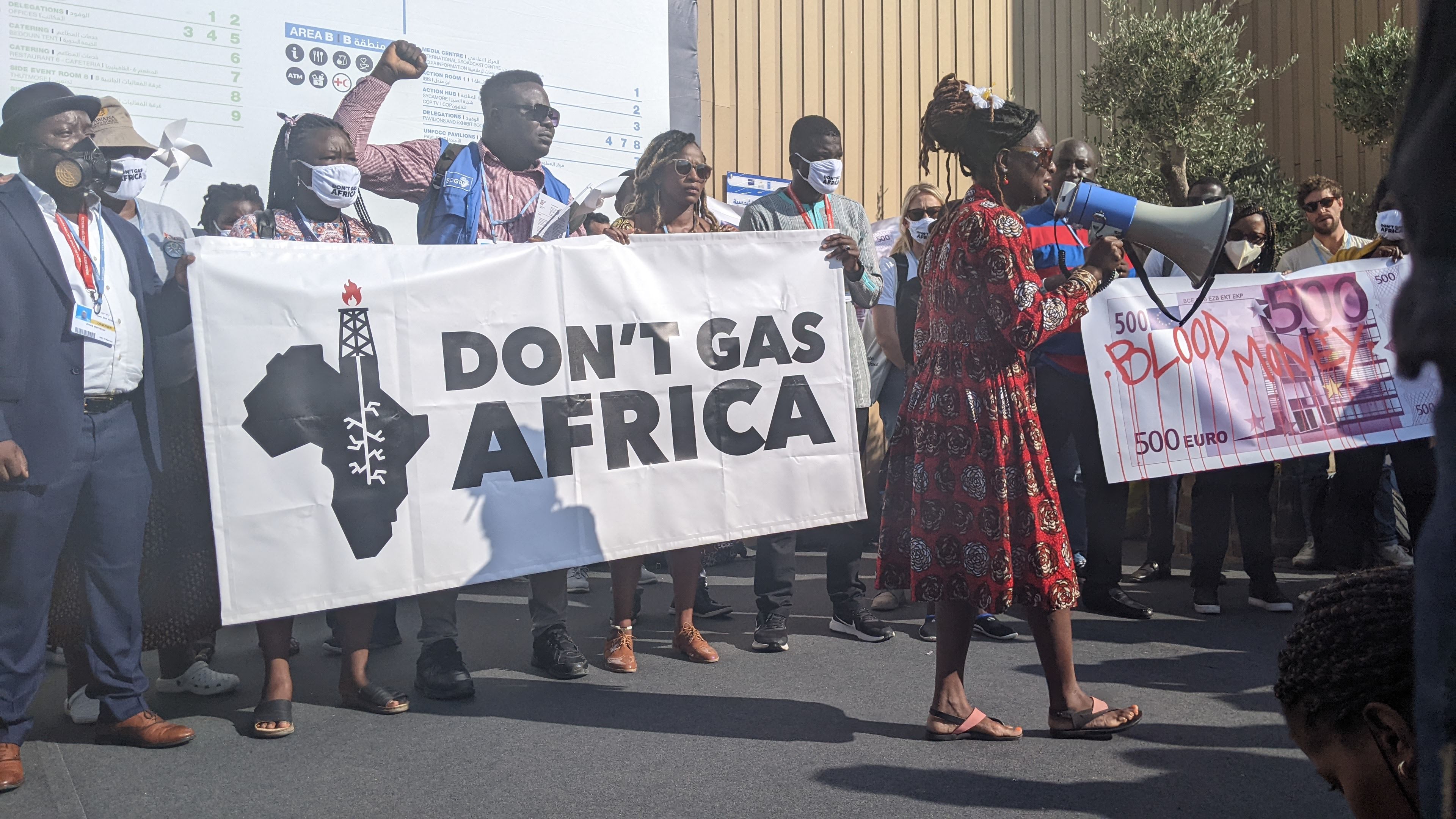
Niels: At the same time, there was a record number of fossil lobbyists at the conference, going around with 'green' sales pitches and false solutions. And they had a gigantic impact.
Tell us more: what impact did the fossil lobbyists have?
Niels: Civil society organisations and activists have been calling for years for fossil fuels to be included in the final texts of climate conferences. Last year there was a breakthrough with the phasing out of coal and fossil subsidies being referred to. But oil and gas have remained out of the firing line this year. The good news is that more than 80 countries, including Europe and now India too, want them to be mentioned. And there was a lot of discussion about them at this COP.
What were you lobbying the hardest for at this COP, and did you have some success?
Niels: After signing an agreement at COP26 last year, together with 38 other countries and financial institutions, to put an end to public funding for international coal, oil and gas projects, the Netherlands has now published the weakest policy of all those countries. I naturally wanted to do something about that. But climate and energy minister Rob Jetten dug in his heels at the conference and refused to abandon the transition period, leaving the door open for the fossil industry for another year. But that fight has not yet been lost: there's still to be a debate on the issue in the Dutch parliament!
Daan: My advocacy activities were focused on our GAGGA call to action for Gender Just Climate Finance, in which we call for local access to climate finance. This I discussed with the Dutch and Canadian delegations, the various climate funds and other actors like the Global Centre for Adaptation. Again, this topic that I have been promoting for many years, found resonance among many of those I spoke to but implementation remains severely lacking. Countless adaptation initiatives on which our partners are working – such as agroecological practices, but also other gender-just climate solutions – are ready to be financed but, due to a series of factors (and more importantly, choices!), climate financing is hardly finding its way to them.
For the first time, together with our partners, I was given concrete answers about the deployment of small grants funds to serve as bridges between the bureaucracy that stands in the way between climate financing and local initiatives. In the coming period, we will continue to advocate on the urgency of this with renewed vigour. But regarding this year's negotiations, it was disappointing to see how the outcomes on gender were somewhat diluted. Not surprising, but quite worrying nevertheless.
What do you both see as the most important breakthrough this year?
Niels: The main issues this year was loss and damage. If you cannot prevent climate change and cannot adapt to it, as with the floods in Pakistan, then that damage – economic and emotional - will occur. This year, the most vulnerable countries called for a loss and damage fund to be set up. And that is coming. That means, finally, recognition for people who are already suffering damage. Now we need to see the money. With a fossil industry that for the time being faces far too little resistance, I am very careful about getting overly enthusiastic. Because this is still a drop in the ocean.
Daan: I agree with Niels that a Loss & Damage Fund is an important step in the right direction, especially for the recognition and, to a certain extent, restoration of confidence among the countries of the Global South in this process, whichcould certainly do with a boost after many broken promises. However, I hope that the new Loss & Damage Fund does not come at the expense of other climate finance. Furthermore, 12 years ago when the Green Climate Fund was set up, the pledge was made to invest a large part of the 100 billion a year in mitigation and adaptation projects in the Global South, with many opportunities for smaller, transformational projects led by local organisations. This promise has not materialised, even after many awkward – to put it mildly – board meetings, so as civil society organisations it is our task to continue to push for access to this money for those in the Global South who need it the most. Because, at the end of the day, that's what it's all about!
And Niels, what are you going to focus on?
Niels: There are quite a few issues I'd hoped to have seen addressed at this climate conference, but which were not. The Netherlands and other rich countries, for example, should have joined the Beyond Oil and Gas Alliance and signed the Fossil Fuel Non-Proliferation Treaty. By doing so, the Netherlands would have taken its responsibility to finally stop extracting oil and gas in the Netherlands itself, such as below the Waddenzee, and stop providing fossil grants.
In addition, the financial sector should be compelled by law to set reduction goals, and fossil advertisements should also be banned. But above all, I will continue to work hard to achieve the correct implementation of the Glasgow Declaration: 100% fossil-free export credit insurance!
* Also read the report about the side-event on gender-just climate finance on the GAGGA website.
** More finance for agroecological initiatives was one of our goals for this climate conference.
For more information
Read more about this subject
-
 Dossier /
Finance for agroecology
The lion's share of public budgets for climate, agriculture and development still goes to conventional agroindustrial projects that contribute to the current climate, food and biodiversity crises. Both ENDS and our partners are calling for a transition to agroecological practices that are people- and environment-friendly.
-
 Dossier /
Communities Regreen the Sahel
In various countries in the Sahel, vast tracts of land have been restored by the local population by nurturing what spontaneously springs from the soil and protecting the sprouts from cattle and hazards.
-
 News / 3 September 2026
Restoring Land, Restoring Hope: Both ENDS at UNCCD COP17 in Mongolia
From 17 to 28 August, governments gathered in Ulaanbaatar, Mongolia, for COP17 of the UN Convention to Combat Desertification (UNCCD). At stake was more than how the world responds to land degradation and drought. It was also a question of who gets to shape land restoration, whose knowledge counts, and where the money goes.
-
Letter / 14 July 2026
Statement on CAO Cambodia Microfinance Case
The independent complaints mechanism of the International Finance Corporation (IFC) and the World Bank Group found that the IFC violated its own Environmental and Social Sustainability Framework by investing in six banks providing microfinance in Cambodia.
-
 News / 6 July 2026
Strengthening Women's Land Rights Across the Rio Conventions
From 29 June – 2 July 2026, Tamara Mohr, GAGGA coordinator at Both ENDS participated in the 4th convening of the Women's Land Rights Initiative (WLRI) in Nairobi, Kenya.Hosted by the Robert Bosch Stiftung, TMG Research and the Huairou Commission, the event brought together grassroots organisations, (inter)national NGOs, government institutions and donors from around the world.
-
Publication / 3 July 2026
-
 Dossier /
Gas in Mozambique
In 2011 one of the world’s largest gas reserves was found in the coastal province of Cabo Delgado, in the north of Mozambique. A total of 35 billion dollars has been invested to extract the gas. Dozens of multinationals and financiers are involved in these rapid developments. It is very difficult for the people living in Cabo Delgado to exert influence on the plans and activities, while they experience the negative consequences. With the arrival of these companies, they are losing their land.
-
Publication / 18 June 2026
-
Publication / 12 May 2026
-
 Press release / 12 May 2026
UN report warns of a growing sand crisis - The Dutch dredging sector plays a key role in global sand extraction
GENEVA/UTRECHT, 12 May 2026 – A new report by the United Nations Environment Programme (UNEP), Sand and Sustainability: An Essential Resource for Nature and Development, warns that global demand for sand is exceeding ecological limits. Large-scale extraction of sand from marine and coastal ecosystems is leading to biodiversity loss, damage to coastal communities and increasing risks in an era of climate change. Dutch dredging companies play a prominent role in this as global market leaders in large-scale sand extraction and land reclamation. “Our analyses show that the dredging sector operates globally within a system in which ecological damage and the consequences for coastal communities are systematically underestimated, whilst transparency and effective oversight are often lacking,” says the Dutch environmental and human rights organisation Both ENDS, which contributed to the report.
-
Publication / 14 April 2026
-
 News / 9 April 2026
Minister Sjoerdsma hosts roundtable conversations with civil society
This week, Minister Sjoerdsma organized roundtable conversations with civil society organizations – a valuable initiative that brings together Dutch civil society voices to address critical challenges faced by democratic societies.
-
 News / 24 March 2026
Statement: Invest in local leadership for tropical forest management and local economies
IUCN-NL, Both ENDS, and 16 other Dutch and international civil society organizations (CSOs), networks, and expert groups are calling on the Dutch government to invest more strongly in locally led forest management and forest-based economies. This should be done within the framework of Dutch international cooperation and its associated policy instruments.
-
 News / 19 March 2026
Winners of the ILED ‘Women Are Educators Award’ announced
Our partner organisation ILED (Indigenous-led Education Network) announced the seven winners of the ILED ‘Women Are Educators Award’ this month. These are women who play extraordinary roles in passing on knowledge, whether in formal or informal educational settings.
-
 Dossier /
Global Alliance for Green and Gender Action (GAGGA)
GAGGA rallies the collective power of the women's rights and environmental justice movements to realize a world where women can and do access their rights to water, food security, and a clean, healthy and safe environment.
-
 News / 27 February 2026
Both ENDS strengthens the resilience of female environmental defenders worldwide thanks to multi-year contribution from the Postcode Lottery
In recent years, Both ENDS has received an additional contribution of €875,000 from the Postcode Lottery for the Autonomy & Resilience Fund (2022–2025), implemented in collaboration with the Global Alliance for Green and Gender Action (GAGGA). This support was essential because female environmental rights defenders around the world are increasingly facing climate change, repression and shrinking civil space. With this contribution, Both ENDS supports female activists and their communities with flexible, trust-based funding, enabling them to develop their own solutions to urgent environmental and climate problems.
-
News / 2 February 2026
Response to the D66-VVD-CDA coalition agreement
Coalition: Repair the damage and dare to go further
At Both ENDS, we see a number of cautious steps in the right direction in this coalition agreement. There is a slight emphasis on green issues, renewed attention to women's rights, recognition of the importance of civil society, and discussion of trade agreements with a focus on mutual interests. However, without structural change in how we trade, invest, and cooperate, fine words remain empty shells.
-
 Dossier /
Export Credit Agencies: Who pays the price?
Both ENDS calls on the government only to provide export credit insurance to sustainable projects that cause no social and/or environmental damage in the countries where they take place.
-
 News / 27 November 2025
Communities and International Consortium Present Community-Led Plan for Nature-Based Adaptation to Sea-Level Rise in Coastal Bangladesh
Local communities in the southwestern coastal region of Bangladesh—together with an international consortium including Uttaran, CEGIS, and Both ENDS—have presented a community-led plan to confront climate change and accelerating sea-level rise through nature-based adaptation. The People’s Plan for Upscaling Ecosystem-Based Adaptation outlines a scalable strategy rooted in local ownership and generations of lived experience. At its centre is Community-Based Tidal River Management (CBTRM), a proven approach that reduces waterlogging, raises land elevation, and restores ecological balance by working with natural tidal and sediment dynamics.
-
 Blog / 25 November 2025
COP30 shows why dismantling ISDS is essential for real climate action
Standing in Belém during COP30, I felt the weight of the moment. We came to the Amazon hoping for decisive progress on phasing out fossil fuels, yet the final outcome fell far short of the ambition science and justice demand. The agreement brought welcome commitments on adaptation finance and global indicators, but it refused to confront the structural forces that make climate action so difficult.




