




“Connecting people for change”: that is what Both ENDS did at the COP
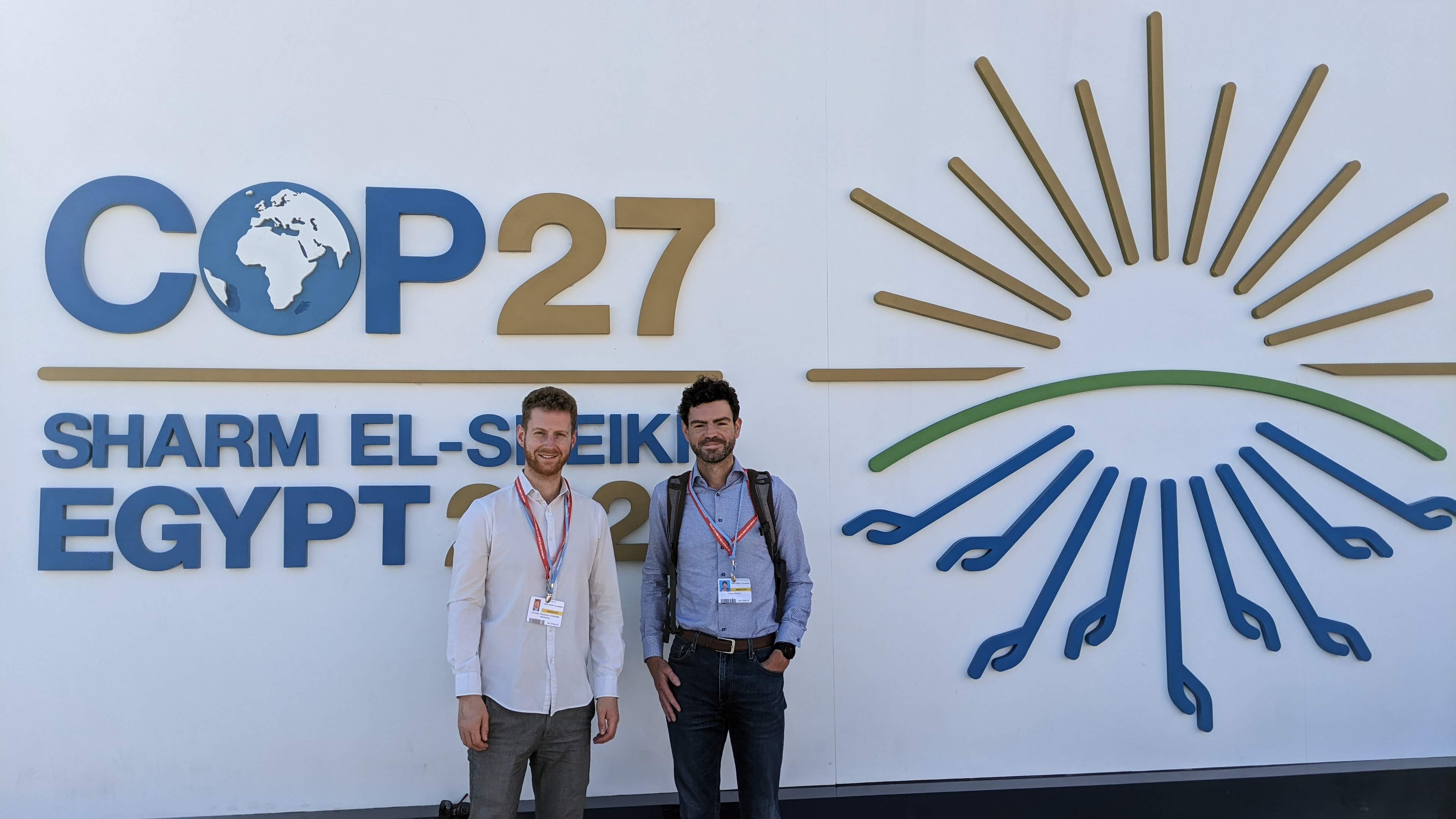
After a busy week filled with side-events, meetings, negotiations and covid, our colleagues Daan and Niels are back in the office in Utrecht. Together, they look back to their expereiences and results during the climate conference COP27 in Egypt.
How useful is a climate conference like this?
Niels: It's the best and worst global climate process that we have. A conference like COP shows the power generated by everyone being in the same place at the same time. In a little more than a week I spoke to leading Dutch political figures like Diederik Samsom and Rob Jetten, members of the Dutch parliament, ministers from other countries, dozens of Both ENDS' partners and climate activists from all over the world, and made a wide range of useful new contacts. The conversations in the corridors at the conference are so important for the negotiations that take place throughout the day. Your world literally becomes smaller.
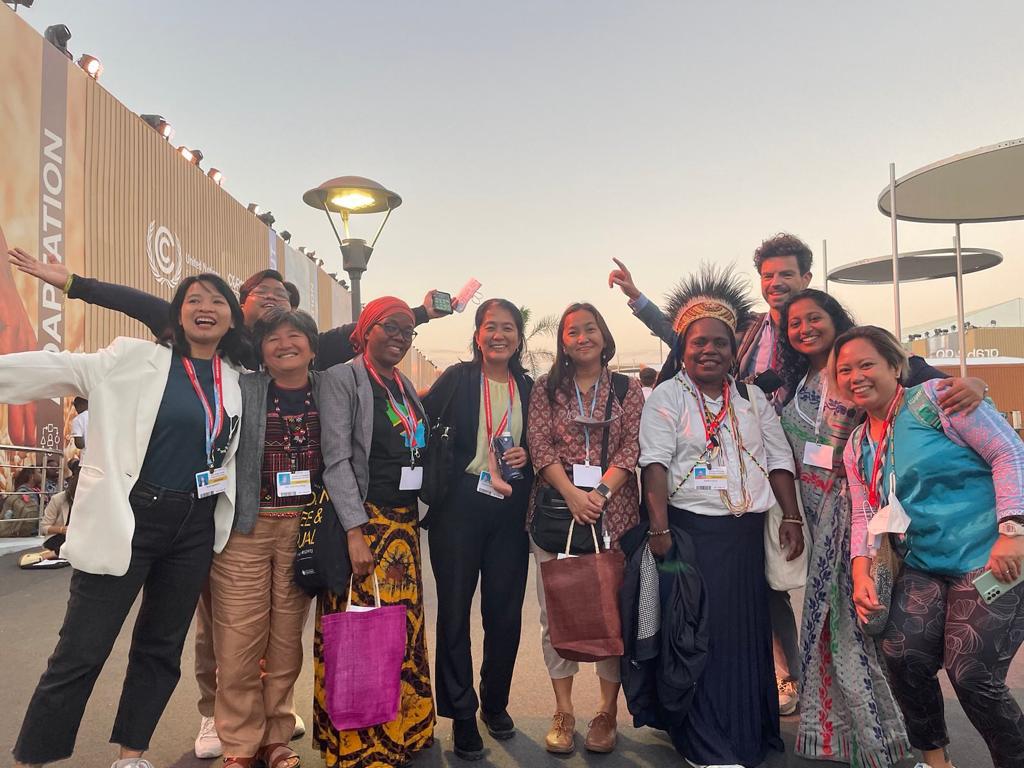
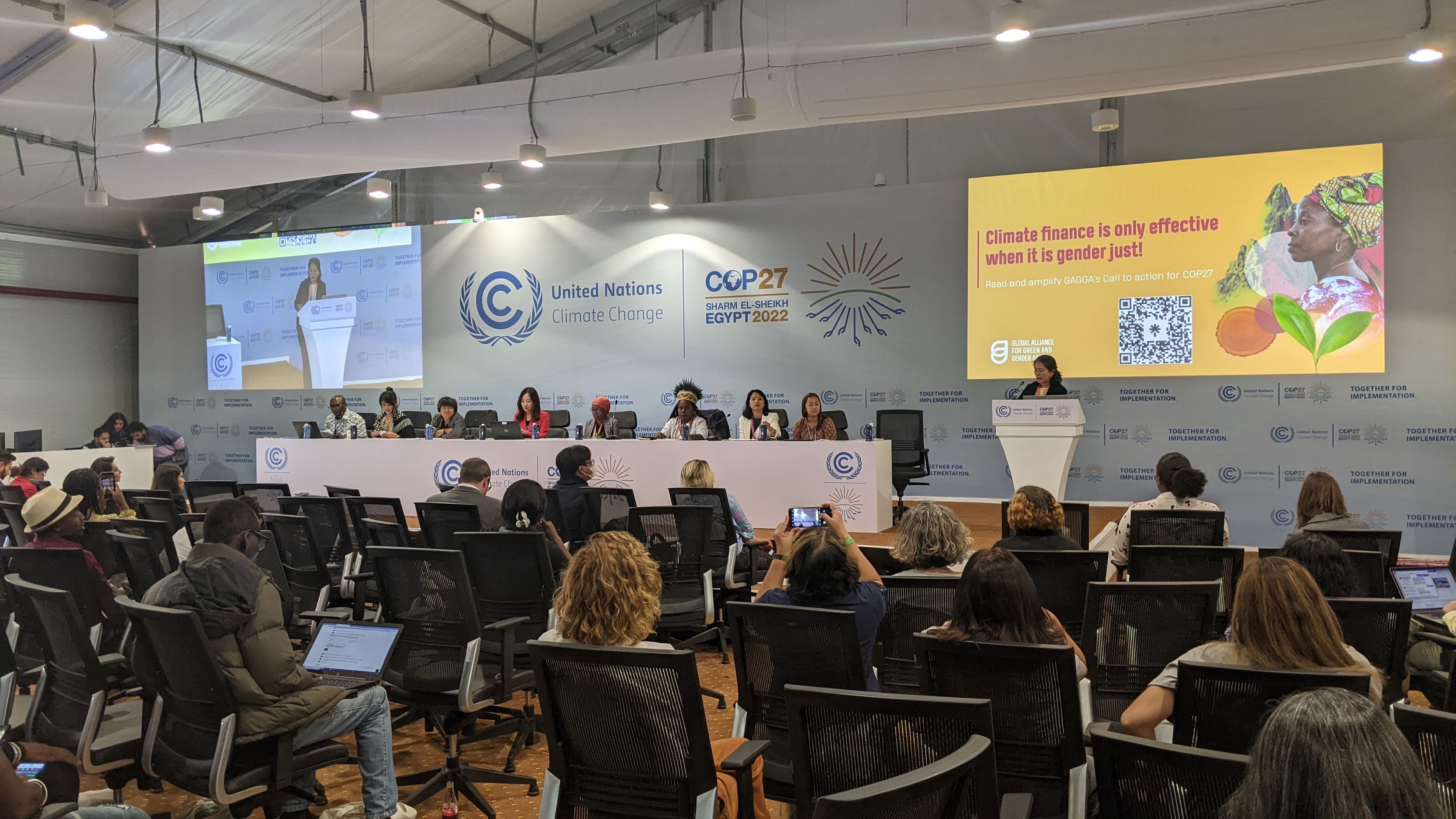
Daan: That applies even more to our partners who are much less familiar with having access to policymakers at international events. It's my mission during such a conference to give our partners a podium on wchih to make their voices heard – connecting people for change. Our side-events are an example of that. In the session about gender-just climate finance, some GAGGA partner organisations engaged directly with representatives of the Canadian government, the Green Climate Fund and the Adaptation Fund on the need for giving local women and indigenous organisations a central role in the fight against climate change. And in our session on finance for acroecology, Rosinah Mbenya from our partner PELUM Kenya had the opportunity to cross examine one of the directors of IFAD. Niels and I were also able to facilitate many bilateral meetings between our partners and policymakers. This served to increase the sense of urgency among policymakers on these themes – some called it a reality check during their negotiations. Lastly it gave many partners the motivation and strength to continue their struggle, a factor that should not be underestimated and which also resounds in their local communities.
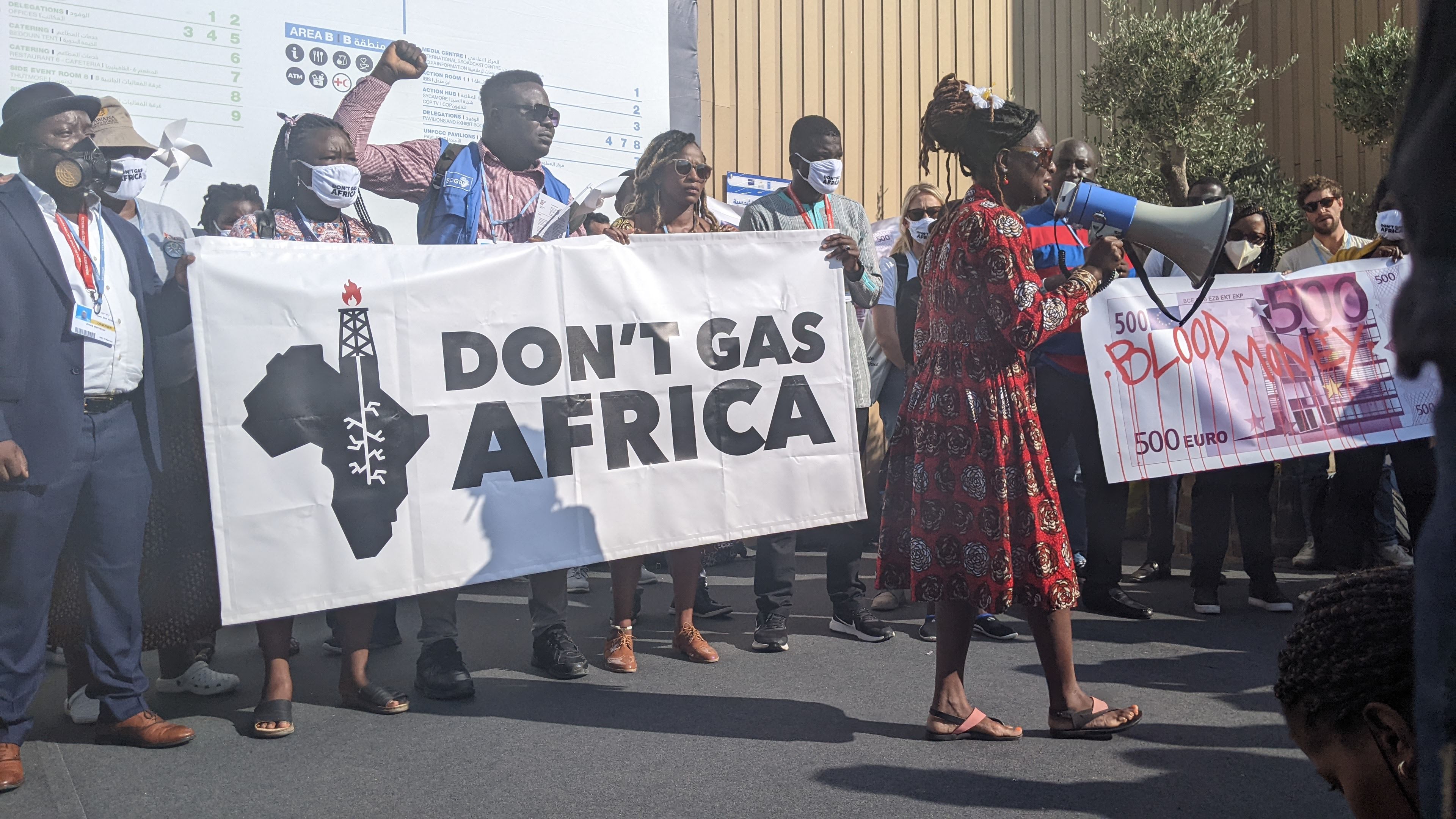
Niels: At the same time, there was a record number of fossil lobbyists at the conference, going around with 'green' sales pitches and false solutions. And they had a gigantic impact.
Tell us more: what impact did the fossil lobbyists have?
Niels: Civil society organisations and activists have been calling for years for fossil fuels to be included in the final texts of climate conferences. Last year there was a breakthrough with the phasing out of coal and fossil subsidies being referred to. But oil and gas have remained out of the firing line this year. The good news is that more than 80 countries, including Europe and now India too, want them to be mentioned. And there was a lot of discussion about them at this COP.
What were you lobbying the hardest for at this COP, and did you have some success?
Niels: After signing an agreement at COP26 last year, together with 38 other countries and financial institutions, to put an end to public funding for international coal, oil and gas projects, the Netherlands has now published the weakest policy of all those countries. I naturally wanted to do something about that. But climate and energy minister Rob Jetten dug in his heels at the conference and refused to abandon the transition period, leaving the door open for the fossil industry for another year. But that fight has not yet been lost: there's still to be a debate on the issue in the Dutch parliament!
Daan: My advocacy activities were focused on our GAGGA call to action for Gender Just Climate Finance, in which we call for local access to climate finance. This I discussed with the Dutch and Canadian delegations, the various climate funds and other actors like the Global Centre for Adaptation. Again, this topic that I have been promoting for many years, found resonance among many of those I spoke to but implementation remains severely lacking. Countless adaptation initiatives on which our partners are working – such as agroecological practices, but also other gender-just climate solutions – are ready to be financed but, due to a series of factors (and more importantly, choices!), climate financing is hardly finding its way to them.
For the first time, together with our partners, I was given concrete answers about the deployment of small grants funds to serve as bridges between the bureaucracy that stands in the way between climate financing and local initiatives. In the coming period, we will continue to advocate on the urgency of this with renewed vigour. But regarding this year's negotiations, it was disappointing to see how the outcomes on gender were somewhat diluted. Not surprising, but quite worrying nevertheless.
What do you both see as the most important breakthrough this year?
Niels: The main issues this year was loss and damage. If you cannot prevent climate change and cannot adapt to it, as with the floods in Pakistan, then that damage – economic and emotional - will occur. This year, the most vulnerable countries called for a loss and damage fund to be set up. And that is coming. That means, finally, recognition for people who are already suffering damage. Now we need to see the money. With a fossil industry that for the time being faces far too little resistance, I am very careful about getting overly enthusiastic. Because this is still a drop in the ocean.
Daan: I agree with Niels that a Loss & Damage Fund is an important step in the right direction, especially for the recognition and, to a certain extent, restoration of confidence among the countries of the Global South in this process, whichcould certainly do with a boost after many broken promises. However, I hope that the new Loss & Damage Fund does not come at the expense of other climate finance. Furthermore, 12 years ago when the Green Climate Fund was set up, the pledge was made to invest a large part of the 100 billion a year in mitigation and adaptation projects in the Global South, with many opportunities for smaller, transformational projects led by local organisations. This promise has not materialised, even after many awkward – to put it mildly – board meetings, so as civil society organisations it is our task to continue to push for access to this money for those in the Global South who need it the most. Because, at the end of the day, that's what it's all about!
And Niels, what are you going to focus on?
Niels: There are quite a few issues I'd hoped to have seen addressed at this climate conference, but which were not. The Netherlands and other rich countries, for example, should have joined the Beyond Oil and Gas Alliance and signed the Fossil Fuel Non-Proliferation Treaty. By doing so, the Netherlands would have taken its responsibility to finally stop extracting oil and gas in the Netherlands itself, such as below the Waddenzee, and stop providing fossil grants.
In addition, the financial sector should be compelled by law to set reduction goals, and fossil advertisements should also be banned. But above all, I will continue to work hard to achieve the correct implementation of the Glasgow Declaration: 100% fossil-free export credit insurance!
* Also read the report about the side-event on gender-just climate finance on the GAGGA website.
** More finance for agroecological initiatives was one of our goals for this climate conference.
For more information
Read more about this subject
-
 Dossier /
Finance for agroecology
The lion's share of public budgets for climate, agriculture and development still goes to conventional agroindustrial projects that contribute to the current climate, food and biodiversity crises. Both ENDS and our partners are calling for a transition to agroecological practices that are people- and environment-friendly.
-
 Dossier /
Global Alliance for Green and Gender Action (GAGGA)
GAGGA rallies the collective power of the women's rights and environmental justice movements to realize a world where women can and do access their rights to water, food security, and a clean, healthy and safe environment.
-
 News / 27 February 2026
Both ENDS strengthens the resilience of female environmental defenders worldwide thanks to multi-year contribution from the Postcode Lottery
In recent years, Both ENDS has received an additional contribution of €875,000 from the Postcode Lottery for the Autonomy & Resilience Fund (2022–2025), implemented in collaboration with the Global Alliance for Green and Gender Action (GAGGA). This support was essential because female environmental rights defenders around the world are increasingly facing climate change, repression and shrinking civil space. With this contribution, Both ENDS supports female activists and their communities with flexible, trust-based funding, enabling them to develop their own solutions to urgent environmental and climate problems.
-
 News / 2 February 2026
Response to the D66-VVD-CDA coalition agreement
Coalition: Repair the damage and dare to go further
At Both ENDS, we see a number of cautious steps in the right direction in this coalition agreement. There is a slight emphasis on green issues, renewed attention to women's rights, recognition of the importance of civil society, and discussion of trade agreements with a focus on mutual interests. However, without structural change in how we trade, invest, and cooperate, fine words remain empty shells.
-
 Dossier /
Gas in Mozambique
In 2011 one of the world’s largest gas reserves was found in the coastal province of Cabo Delgado, in the north of Mozambique. A total of 35 billion dollars has been invested to extract the gas. Dozens of multinationals and financiers are involved in these rapid developments. It is very difficult for the people living in Cabo Delgado to exert influence on the plans and activities, while they experience the negative consequences. With the arrival of these companies, they are losing their land.
-
 Dossier /
Export Credit Agencies: Who pays the price?
Both ENDS calls on the government only to provide export credit insurance to sustainable projects that cause no social and/or environmental damage in the countries where they take place.
-
 News / 27 November 2025
Communities and International Consortium Present Community-Led Plan for Nature-Based Adaptation to Sea-Level Rise in Coastal Bangladesh
Local communities in the southwestern coastal region of Bangladesh—together with an international consortium including Uttaran, CEGIS, and Both ENDS—have presented a community-led plan to confront climate change and accelerating sea-level rise through nature-based adaptation. The People’s Plan for Upscaling Ecosystem-Based Adaptation outlines a scalable strategy rooted in local ownership and generations of lived experience. At its centre is Community-Based Tidal River Management (CBTRM), a proven approach that reduces waterlogging, raises land elevation, and restores ecological balance by working with natural tidal and sediment dynamics.
-
 Blog / 25 November 2025
COP30 shows why dismantling ISDS is essential for real climate action
Standing in Belém during COP30, I felt the weight of the moment. We came to the Amazon hoping for decisive progress on phasing out fossil fuels, yet the final outcome fell far short of the ambition science and justice demand. The agreement brought welcome commitments on adaptation finance and global indicators, but it refused to confront the structural forces that make climate action so difficult.
-
 Dossier /
Wetlands without Borders
With our Wetlands without Borders program, we work towards environmentally sustainable and socially responsible governance of the wetlands system of the La Plata Basin in South America.
-
 Environmentally Just Practice /
Non-Timber Forest Products (NTFPs)
About one in every six people, particularly women, directly rely on forests for their lives and livelihoods, especially for food. This shows how important non-timber forest products (NTFPs) and forests are to ensure community resilience. Not only as a source of food, water and income, but also because of their cultural and spiritual meaning.
-
 Dossier /
Communities Regreen the Sahel
In various countries in the Sahel, vast tracts of land have been restored by the local population by nurturing what spontaneously springs from the soil and protecting the sprouts from cattle and hazards.
-
 News / 5 November 2025
Interview: Both ENDS at COP30 for Climate Justice and Systemic Change
Both ENDS is present at COP30 to advocate for genuine access to climate finance for locally led, gender-just climate solutions and the mechanisms that facilitate this, including those for farmer-led restoration. Furthermore, the organisation participates to ensure the crucial connection between the climate negotiations and the trade and investment frameworks that shape them.
Learn more about the Both ENDS team at COP30 below, and find all the activities and side-events in which Both ENDS will participate.
-
 News / 5 November 2025
Overview of Both ENDS events at COP30 in Belem, Brazil
Both ENDS is present at COP30 to advocate for genuine access to climate finance for locally led, gender-just climate solutions, and for the mechanisms that make these possible, including those supporting farmer-led restoration. The organisation also engages to highlight the crucial connection between climate negotiations and the trade and investment frameworks that shape them.
Below is an overview of the Both ENDS team at COP30 and a detailed look at the activities and side-events in which Both ENDS will participate.
-
 News / 14 October 2025
Communities regreening the Sahel: strengthening resilience from the ground up
How can communities in the Sahel strengthen their food systems in the face of climate change and other shocks? Through the ARFSA Programme, Both ENDS and its partners SPONG (Burkina Faso), CRESA/INRAN (Niger) and IED Afrique (Senegal) are working together to show that locally led landscape restoration works. -
Publication / 9 October 2025
-
 Dossier /
International trade and investment with respect for people and planet
The network of international trade and investment treaties is large and complex. The Netherlands alone has signed more than 70 bilateral investment treaties (BITs) and is party to the trade and investment agreements concluded by the EU, like the EU-Mercosur and EU-Indonesia trade deals.
-
 Dossier /
Amplifying environmentally just practices
Because of the close relationship with their living environment, local communities often have the best ideas for the sustainable and equitable use and governance of land, water and forests. These environmentally just practices and processes successfully protect and restore ecosystems and address climate change. They are essential in the light of the multiple crises the world faces, but are in dire need of financial and policy support.
-
Publication / 2 October 2025
-
 News / 23 September 2025
With the undemocratic splitting of the EU-Mercosur deal, Europe is missing the chance to lead on fair trade
Recently, many newspapers have written about Brussels’ rush to finalize the trade agreement between the EU and the South American Mercosur countries. According to the European Commission, national parliaments do not need to approve it because the trade part and the “political” part have been separated. This “splitting” means that the trade part can be approved as an EU-only decision by the European Council and the European Parliament, while national parliaments are sidelined and the political-cooperation part is postponed. Both ENDS and its partners are deeply concerned and are calling on the Dutch government to vote against this outdated agreement.
-
 Dossier /
Soy: trade in deforestation
The rising demand for soy is having negative consequences for people and the environment in South America. Both ENDS reminds Dutch actors in the soy industry of their responsibilities and is working with partners on fair and sustainable alternatives.


