Both ENDS at COP31: Locally led climate finance and gender-just climate action
At COP31, Both ENDS advocates for climate finance that reaches women-led and community-based organisations at the forefront of climate action, while challenging the economic rules that obstruct the transition away from fossil fuels. Together with partners in the Global Alliance for Green and Gender Action (GAGGA) and the PAPeS programme, we push for locally led adaptation, gender-just climate action and greater accountability for governments and companies.
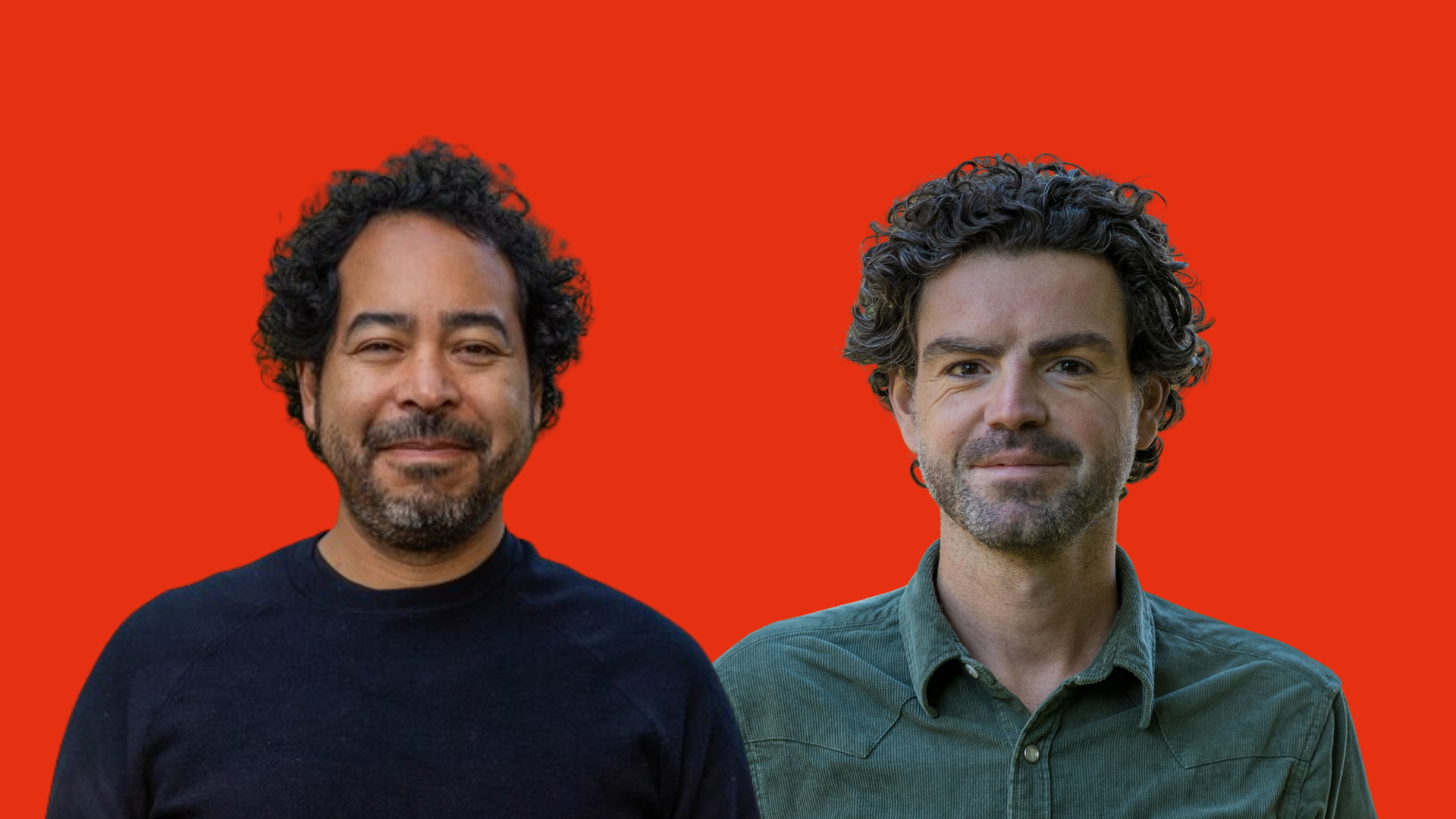
We asked our colleagues Daan Robben and Fernando Hernandez why they are going to COP31, what messages they want to bring to negotiators, and what a positive outcome would look like.
Why are you going to COP31?
Daan Robben: I'm going to COP31 as Both ENDS' lead on locally led climate finance, as part of the Global Alliance for Green and Gender Action (GAGGA) and our PAPeS programme, channelling funding directly to grassroots groups advancing agroecology in Senegal. My work revolves around a simple question: why does climate finance, meant to help people adapt to the climate crisis, so rarely reach them? In our daily work we prove it's possible. In Senegal, the PAPeS Small Grants Fund, hosted by IED Afrique, shows what happens when resources reach grassroots groups in flexible, low-barrier ways.
Yet these are still precisely the groups and initiatives that the international climate finance infrastructure excludes: only 0.1 per cent of climate finance globally goes to initiatives supporting women and the environment, and less than one per cent to youth-led climate action. At COP31, I want to bring that evidence, and the people driving it, straight to the decision-makers.
Fernando Hernandez: I’m going to COP31 because the distance between what climate justice demands and what governments deliver remains dangerously large. This year’s record-breaking heat adds urgency to a crisis already threatening lives, livelihoods and ecosystems. Those who have contributed least continue to bear some of its heaviest consequences.
At Both ENDS, we work to turn climate commitments into accountability and challenge the economic rules that obstruct action. Our COP31 panel brings these questions together with Vanuatu’s Climate Change Minister, Ralph Regenvanu, and Nigerian civil society. Vanuatu’s leadership helped bring climate obligations before the International Court of Justice. Nigerian participants bring the experience of communities living with the consequences of fossil-fuel extraction and fighting for justice. Bringing that leadership and experience into the same conversation is central to why I’m going.
What would be your main message to negotiators?
Daan Robben: Promises about participation are not enough. Women-led and community-based organisations need direct, flexible and long-term funding to keep doing what they already do, which is to deliver climate solutions. PAPeS shows that a small grants mechanism, built on existing agroecology networks and with decision-making power on the ground, is one proven pathway. GAGGA has shown that the initiatives are easily scalable through existing networks of funds.
Negotiations are never just about paper; they are about people, planet and justice, and they need concrete pathways. I want to hold negotiators accountable to decisions that genuinely support those on the frontline, with those same people in the lead.
Fernando Hernandez: My message to other negotiators is to match that leadership by making their economic policies consistent with their climate obligations.
The International Court of Justice’s advisory opinion clarified that states have legal duties to protect the climate system and prevent significant environmental harm. Governments must now translate those obligations into action, including addressing the rules that stand in the way.
Investor–state dispute settlement, or ISDS, allows foreign investors to challenge public-interest measures through international arbitration. The threat of costly claims can discourage governments from taking decisions to protect people and phase out fossil fuels. We are asking them to stop agreeing to new ISDS provisions and work together to remove them from existing treaties.
The Netherlands has a particular responsibility. Having helped build and defend this system, it must now help dismantle it.
How would a positive outcome for COP31 look like to you?
Daan Robben: It would show that governments are ready to move beyond recognising local communities to actually resourcing them. That means locally led adaptation getting a meaningful place in the decisions on climate finance, with the leadership of women-led and community-based organisations recognised as key to adaptation.
In short: success would mean climate finance actually reaching the communities and women who are ahead of the curve in climate solutions, and models like PAPeS and GAGGA (and the principles driving these models) becoming mainstream.
Fernando Hernandez: A positive outcome would give countries a clearer, fairer and properly financed path out of fossil fuels, with wealthy countries taking responsibility for moving faster and supporting others. It would also put the International Court of Justice’s clarification of climate obligations into practice through government decisions that people can scrutinise and hold them accountable for.
For our work, I want governments willing to act together on ISDS to leave COP31 with concrete next steps: commitments to end harmful investment treaties and to make their removal a part of national transition plans and follow-up to Santa Marta.
Ultimately, success must be felt beyond the conference: more resources reaching locally led, gender-just solutions, greater influence for affected communities, and companies held responsible for the damage they cause.
For more information, please contact Both ENDS’ team at COP in Turkey:
Daan Robben: d.robben@bothends.org
Fernando Hernandez Espino: f.hernandez@bothends.org
Join Both ENDS side-events at COP31
Nature Security and Women-Led Resilience in a Changing Climate
Date: Monday 9 November
Time: 14:00–15:00 (TRT)
Location/room: UK Pavilion
------------
Beyond participation: Resourcing Women-Led Climate Solutions in the Face of El Niño
Date: Wednesday, 18 November
Time: 16:45 - 18:15 (TRT)
Location/room: Room 1 - GORDIYON
-----------
Unblocking Climate Action: Ending ISDS to Deliver the Transition Away from Fossil Fuels
Date: Monday 16 November 2026
Time: 16:45–18:15 (TRT)
Location/room: Room 3 - ZERZEVAN
Read more about this subject
-
 News / 25 October 2026
Meet Sarah Adongo: “The soil remembers those who cry and defend it”
By Sarah Adongo, Lawyer, Witness Radio, Uganda
Sarah Adongo is one of the three winners of the 2026 Irene Dankelman Young Ecofeminist Award, presented on 21 October at the UN Biodiversity Conference (CBD COP17) in Yerevan, Armenia. A lawyer working with Witness Radio Uganda, Sarah works with women affected by gender-based violence and communities affected by land dispossession and large-scale investments. In this piece, she shares what the award means to her and why gender and environmental justice must go hand in hand.
-
 Dossier /
The JWH Initiative: supporting young environmental leaders
The JWH Initiative aims to stimulate leadership of young people in environmental organisations by giving small grants to individuals to expand their knowledge, experience and training.
-
 News / 25 October 2026
Meet Yemi Knight: “Your experience is expertise”
By Yemi Knight (they/them), Founder and Executive Director, AnchorBridge Environmental Inc., Barbados
Yemi Knight is one of the three winners of the 2026 Irene Dankelman Young Ecofeminist Award, presented on 21 October at the UN Biodiversity Conference (CBD COP17) in Yerevan, Armenia. Yemi founded AnchorBridge Environmental, a youth-led organisation that combines policy advocacy with climate education across the Caribbean. We asked them what the award means to them, what they are working on, and what they would tell other young ecofeminist leaders.
Yemi is also part of the network of the Joke Waller-Hunter Initiative, powered by Both ENDS. With a JWH grant, Yemi followed courses in Social, Environmental and Economic Impact Assessment and in Risk, Crisis and Disaster Management at the University of the West Indies, Cave Hill Campusc, as well as a Level 1A Spanish course at the Centre for Language Learning at the university’s St. Augustine Campus.
-
 Dossier /
Trade agreements
International trade agreements often have far-reaching consequences not only for the economy of a country, but also for people and the environment. It is primarily the most vulnerable groups who suffer most from these agreements.
-
 Dossier /
International trade and investment with respect for people and planet
The network of international trade and investment treaties is large and complex. The Netherlands alone has signed more than 70 bilateral investment treaties (BITs) and is party to the trade and investment agreements concluded by the EU, like the EU-Mercosur and EU-Indonesia trade deals.
-
 Dossier /
Rights for People, Rules for Corporations – Stop ISDS!
Indigenous communities in Paraguay saw their attempts to regain their ancestral lands thwarted by German investors. In Indonesia, US-based mining companies succeeded to roll back new laws that were meant to boost the country’s economic development and protect its forests. This is the level of impact that investment treaties can have on social, environmental and economic development and rights. Why? Because of the ‘Investor-to-State Dispute Settlement’ clauses that are included in many such treaties.
-
 News / 15 October 2026
ISDS infringement complaint filed with the European Commission
The Netherlands and Portugal join four other EU countries facing such a complaint.
-
 Press release / 15 October 2026
Dutch and Portuguese organisations file EU complaint over investment treaties that let companies and sanctioned Russian oligarchs sue EU countries for compensation
The Netherlands and Portugal join four other EU countries facing such a complaint, as the Global Days of Action against Investor-State Dispute Settlement (ISDS) begin.
-
 Dossier /
Dare to Trust: the power of unconditional funding
At Both ENDS we cherish our long-term relationships with partners in our global network. These relationships are based on equality and built on trust. The trust we have in each other has developed from years of strategic cooperation, including joint advocacy around common agendas, knowledge sharing, networking, and mobilising and sharing resources to advance environmental justice.
-
 Dossier /
Global Alliance for Green and Gender Action (GAGGA)
GAGGA rallies the collective power of the women's rights and environmental justice movements to realize a world where women can and do access their rights to water, food security, and a clean, healthy and safe environment.
-
 News / 5 October 2026
Rural Women's Assembly wins Right Livelihood Award
We are thrilled to share that our partner the Rural Women's Assembly (RWA) is one of this year's Right Livelihood Laureates! The award, often called the "Alternative Nobel Prize", honours RWA for bringing together more than 178,000 women farmers in eleven Southern African countries. Together, these women stand up for their land, their seeds and their right to make decisions about their own lives and bodies.
-
 News / 29 September 2026
Summary - Both ENDS complaint under the EU-New Zealand trade agreement
On 29 September 2026, Both ENDS lodged the first complaint on climate grounds with the European Commission's Single Entry Point. It asks the Commission to examine whether Aotearoa New Zealand has broken two promises both sides made in the EU-New Zealand Free Trade Agreement: not to weaken or set aside environmental laws in order to encourage trade or investment, and to effectively implement the Paris Agreement.
-
Publication / 29 September 2026
-
Publication / 29 September 2026
-
 News / 29 September 2026
Q&A: New Zealand's climate rollback and the EU trade agreement
On 29 September 2026 / 30 September in Aotearoa New Zealand, Both ENDS lodged a complaint with the European Commission under the EU-New Zealand Free Trade Agreement. These are the questions we are asked most often, and our answers. The complaint summary, the case explainer and the key public sources are linked at the end of this page.
-
 News / 29 September 2026
What happens now? A timeline of the SEP Case
What happens now? On 29 September 2026 / 30 September in Aotearoa New Zealand, Both ENDS lodged a formal complaint with the European Commission. It is the first complaint to the EU's Single Entry Point on environmental and climate grounds. It asks the Commission to hold New Zealand to two promises it made in its trade agreement with the EU: not to weaken environmental protection to encourage trade or investment, and not to undermine the Paris Agreement on climate change.
-
 Press release / 29 September 2026
New Zealand faces its first climate complaint under EU trade rules
UTRECHT / WELLINGTON, 29 September 2026 /30 September in Aotearoa New Zealand
Both ENDS, a Dutch environmental justice organisation, has lodged a formal complaint with the European Commission arguing that New Zealand has broken the climate promises it made in its free trade agreement with the European Union. It is the first complaint on environmental and climate grounds under the Commission's Single Entry Point, the mechanism that lets civil society ask the EU to enforce the sustainability commitments in its trade agreements.
-
 News / 10 September 2026
Rutu Foundation receives UNESCO Literacy Prize for multilingual education
Both ENDS’ partner the Rutu Foundation for Intercultural Multilingual Education has been awarded the 2026 UNESCO King Sejong Literacy Prize for its language friendly school programme. This prestigious prize recognises the importance of multilingual education and the right of children to learn in an environment where their home languages are valued.
-
 News / 7 September 2026
Unprecedented criminal conviction in the Mariana disaster case breaks mining industry's cycle of impunity
A Brazilian federal court has, for the first time, criminally convicted a mining company and three of its managers for their role in the 2015 collapse of the Fundão dam, one of the worst environmental disasters in Brazil's history. Our partner Instituto Cordilheira, which represented victims as assistant prosecutors in the case, calls it a historic breakthrough after years of impunity.
-
 Dossier /
Communities Regreen the Sahel
In various countries in the Sahel, vast tracts of land have been restored by the local population by nurturing what spontaneously springs from the soil and protecting the sprouts from cattle and hazards.