




Five years of GAGGA: “Once you understand what gender justice is about, your perspective will change for good”
By
Annelieke Douma and
Tamara Mohr
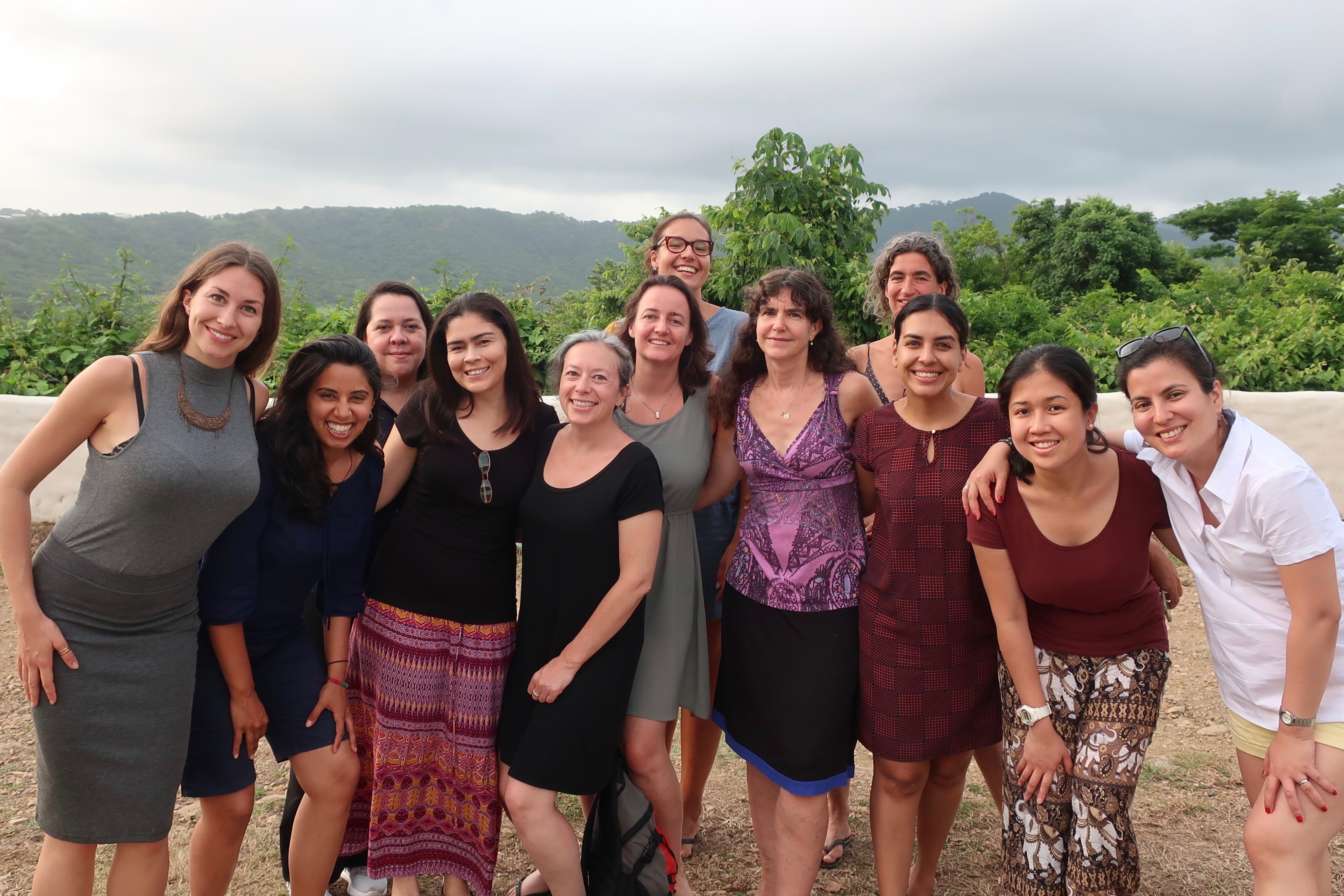
Almost five years ago, the Global Alliance for Green and Gender Action (GAGGA) started its journey to bring together the often still quite separate worlds of environmental justice organisations and the women's rights movement. At Both ENDS, Annelieke Douma and Tamara Mohr have been coordinating the GAGGA programme. Together they look back at five years of learning, connecting and enjoying the fruits of this innovative programme.
Why did you want to be part of GAGGA?
Annelieke: For many years I have been actively involved in Both ENDS' ambition to strengthen the focus on gender justice and women's rights in our work. In 2015, the GAGGA programme was the perfect next step for us to take with two women's funds – FCAM and Mama Cash - which also saw the clear relation between women's rights and environmental justice and the many opportunities to work together and learn from each other.
Tamara: GAGGA was also a great opportunity to put strengthening local organisations right back at the centre of our work. That has always been one of my greatest interests and is also why Both ENDS was originally set up.
What for you is the added value of GAGGA to Both ENDS's work?
Tamara: Building networks is very much a part of Both ENDS work. In this case, that is women's organisations, funds and NGOs. I believe very strongly that strengthening local initiatives contributes to the changes we need. In GAGGA, we can strengthen groups that receive attention and support from very few funds and organisations, but which have a lot of knowledge, capacity and power.
Annelieke: GAGGA allowed Both ENDS and our partners to take a 'deep dive' into exploring and specifically working on the link between environmental justice and women's rights. We got to know the women's rights movement – their values, their beliefs and ways of working – and have started to work with many new organisations. GAGGA supports various national and regional funds which in their turn support over 300 grassroots groups in almost 30 countries. Their local fights and initiatives are central to GAGGA's work.
What have you learned over the years in GAGGA?
Tamara: I have learned that the environmental movement and the women's rights movement are very different. In the environmental movement, we talk about work, what we have to do and how. In the women's rights movement, personal attention is also important. How people are doing and what they are experiencing. You can't just talk about the substance of the work, it's also about people's well-being, and how we take care of each other. There is more attention for culture and rituals.
Annelieke: Indeed. We have learned the importance of being open, of taking time to understand each other, of stepping out of our comfort zone and of creating space for partners to learn from each other and start to work together.
Tamara: Because, without first creating that space and building up mutual trust, you can't work together. It is not simply a matter of introducing an environmental organisation and a women's organisation to each other and letting them learn from each other. These are long-term processes that move forward with small steps. But once you see how important those steps are and really understand what gender justice is about, your perspective will change for good. It has changed me as a person.
Annelieke: We now also take up these lessons learned in GAGGA, and the inclusive way of working, in other programmes and in our conversations with donors and policy makers.
What are you most proud of?
Annelieke: I am very proud of the many GAGGA partners who do incredible and urgent work on climate change, claiming land rights, fighting extractives, or working on ecosystem restoration. And of the concrete results achieved by GAGGA, by creating the space and opportunity for women's rights and environmental justice groups to work together. Examples are WAMA, a network which emerged after a GAGGA meeting, women in Nepal who claimed local climate adaptation budgets, or women's groups in Nigeria who have strengthened their campaign for a thorough clean-up of the Niger Delta.
Tamara: Yes, we have really been able to bring people into contact with each other. People are now using that as a springboard to take the next steps, and are doing so with enormous energy. Fantastic processes are emerging within the GAGGA network, many more than we can see – often we don't hear about them until afterwards. We set something in motion that then grows further without us.
Annelieke: It is wonderful to see how partners have come to really feel part of this Alliance and can't wait to continue.
And luckily, GAGGA will indeed continue. How are you looking forward to GAGGA Women Leading Climate Action?
Annelieke: In the next five years of GAGGA we will focus specifically on climate justice. That will allow us to take ambitious steps towards addressing three key – interrelated – global challenges: growing inequality, environmental degradation and climate change. Not an easy task, but we have built a very solid basis in GAGGA to build on.
Tamara: Together with out partners, we will have to identify where we now really need to bring about change, and how. We have to focus on system change to stop climate change! That is a responsibility for all of us, and we are going to devote a lot of energy to working on it in the coming years.
For more information
Read more about this subject
-
 Dossier /
Global Alliance for Green and Gender Action (GAGGA)
GAGGA rallies the collective power of the women's rights and environmental justice movements to realize a world where women can and do access their rights to water, food security, and a clean, healthy and safe environment.
-
 News / 5 October 2026
Rural Women's Assembly wins Right Livelihood Award
We are thrilled to share that our partner the Rural Women's Assembly (RWA) is one of this year's Right Livelihood Laureates! The award, often called the "Alternative Nobel Prize", honours RWA for bringing together more than 178,000 women farmers in eleven Southern African countries. Together, these women stand up for their land, their seeds and their right to make decisions about their own lives and bodies.
-
 Dossier /
Finance for agroecology
The lion's share of public budgets for climate, agriculture and development still goes to conventional agroindustrial projects that contribute to the current climate, food and biodiversity crises. Both ENDS and our partners are calling for a transition to agroecological practices that are people- and environment-friendly.
-
 News / 27 February 2026
Both ENDS strengthens the resilience of female environmental defenders worldwide thanks to multi-year contribution from the Postcode Lottery
In recent years, Both ENDS has received an additional contribution of €875,000 from the Postcode Lottery for the Autonomy & Resilience Fund (2022–2025), implemented in collaboration with the Global Alliance for Green and Gender Action (GAGGA). This support was essential because female environmental rights defenders around the world are increasingly facing climate change, repression and shrinking civil space. With this contribution, Both ENDS supports female activists and their communities with flexible, trust-based funding, enabling them to develop their own solutions to urgent environmental and climate problems.
-
 Environmentally Just Practice /
Non-Timber Forest Products (NTFPs)
About one in every six people, particularly women, directly rely on forests for their lives and livelihoods, especially for food. This shows how important non-timber forest products (NTFPs) and forests are to ensure community resilience. Not only as a source of food, water and income, but also because of their cultural and spiritual meaning.
-
 News / 5 November 2025
Interview: Both ENDS at COP30 for Climate Justice and Systemic Change
Both ENDS is present at COP30 to advocate for genuine access to climate finance for locally led, gender-just climate solutions and the mechanisms that facilitate this, including those for farmer-led restoration. Furthermore, the organisation participates to ensure the crucial connection between the climate negotiations and the trade and investment frameworks that shape them.
Learn more about the Both ENDS team at COP30 below, and find all the activities and side-events in which Both ENDS will participate.
-
 News / 5 November 2025
Overview of Both ENDS events at COP30 in Belem, Brazil
Both ENDS is present at COP30 to advocate for genuine access to climate finance for locally led, gender-just climate solutions, and for the mechanisms that make these possible, including those supporting farmer-led restoration. The organisation also engages to highlight the crucial connection between climate negotiations and the trade and investment frameworks that shape them.
Below is an overview of the Both ENDS team at COP30 and a detailed look at the activities and side-events in which Both ENDS will participate.
-
 Dossier /
Soy: trade in deforestation
The rising demand for soy is having negative consequences for people and the environment in South America. Both ENDS reminds Dutch actors in the soy industry of their responsibilities and is working with partners on fair and sustainable alternatives.
-
 News / 16 July 2025
Case Study: Women Advocating for Gender and Climate Justice in Burkina Faso
The Women Environmental Programme Burkina Faso (WEP BF or WEP) is leading the way in gender-just climate solutions, putting the power of advocacy directly into the hands of women farmers. “In Burkina Faso, women play a crucial role in food production and natural resource management, yet they continue to face systemic barriers to land ownership,” explains a WEP team member. “Despite legal provisions, deeply ingrained customary norms remain dominant, restricting women’s access to land as user rights only, which need to be mediated through male family members.” Without secure access to land, they face significant obstacles in sustaining their agricultural activities, improving local food security, and fully participating in their communities.
-
 News / 16 July 2025
Case Study: Fighting Environmental Transphobia and Social Fragmentation in Brazil
In the face of environmental transphobia, a form of discrimination where trans and gender-diverse communities are disproportionately impacted by environmental degradation,excluded from climate policies, and often met with stigma and exclusion by environmental justice movements, Grupo Orgulho, Liberdade e Dignidade (GOLD) has emerged as a bold and visionary force for change in Brazil. At the heart of this movement is Débora Sabará ,GOLD’s leader, a travesti activist who has fought tirelessly to place the perspectives andneeds of LGBTIQAPN+ (Lesbian, Gay, Bisexual, Trans, Intersex, Queer, Asexual, Pansexual, Nonbinary and other identities), Indigenous and Afro-Brazilian communities at the center of environmental justice conversations.
-
 News / 16 July 2025
Case Study: Community Paralegals Defending Land Rights from Extractive Industries and Land Grabs in Mozambique
Across Mozambique, land represents more than just territory. It is the cornerstone of livelihoods, culture, and autonomy for many communities. When companies arrive, claiming large portions for mining, oil exploration or agribusiness, residents face significant challenges in asserting their rights. Mozambique’s Land Law (1997) grants communities user rights, ensuring they can occupy and use land for subsistence and cultural purposes.
-
 News / 16 July 2025
The challenges of climate change, gender inequality, and conflict
This FCDO-supported project, part of the GAGGA programme, brought together 6 women-led community-based organisations from around the world to explore how they navigate the combined challenges of climate change, gender inequality, and conflict. Through a Feminist Participatory Action Research approach, the organisations documented strategies ranging from land rights advocacy to climate-resilient agriculture, highlighting how extractive industries, militarisation, and patriarchal systems drive exclusion and insecurity. Their findings are now informing donors and policymakers on the need to support grassroots women’s leadership. In the following interview, the project lead shares more about the research, key insights, and its broader impact.
-
 Blog / 2 July 2025
Women at the frontlines of climate action: local power for global change
By Tamara MohrLast week, GAGGA, the Global Alliance for Green and Gender Action, with Both ENDS as one of the Alliance members, together with FCAM and Mama Cash, organised its Global Meeting in Indonesia. The goal of this meeting was to recognise, celebrate and look ahead at cross-movement and cross-regional connections, to strengthen the collective power of gender, climate and environmental justice movements.
-
 Event / 12 March 2025, 09:30 - 11:15
The Conflict, Gender, Climate Nexus: Localized understanding and policy recommendations
Across the world, women lead efforts to advance peace, gender and environmental justice. From the Philippines to Mozambique, Burkina Faso to Brazil, they face a deadly convergence of violence, environmental destruction, and extractivist land grabs. As corporate interests, state forces or other armed actors expand into their territories, entire communities are displaced, criminalized, or subjected to violent repression. At the same time, worsening climate disasters further erode their means of survival, exacerbating food insecurity, water shortages, forced migration and gendered inequalities.
-
 Video / 17 December 2024
"Change takes time" - on the importance of long-term support for Wetlands without Borders
In this video, Tamara Mohr of Both ENDS talks about our role in supporting the Wetlands without Borders network: "We send funding to smaller organizations, that also work to distribute it to more local organizations. We see in the Wetlands network that this does work, and that organizations also grow this way."
-
 Dossier /
Small Grants Big Impacts
Small grants funds offer an effective, alternative way to channel big money from large donors and funds to local groups and organisations that are striving for a sustainable and just society everywhere around the world.
-
 Event / 15 November 2024, 12:50 - 16:45
#BothENDSatCOP29 Side Events
Both ENDS’ participation at COP29 includes three critical side events that will highlight gender-just climate finance, locally-led adaptation, and multilateral approaches to a just energy transition and industrialisation in the Global South.
-
 News / 1 November 2024
Both ENDS at COP29: advocating for gender just climate finance
On November 11th, the 29th UN Climate Conference will start in Baku, Azerbaijan. Just like previous years, Both ENDS will be there to advocate for local access to climate finance, and to support our partner organisations in their advocacy work. How do we do that, and what are our hopes (and worries) about this 29th edition of the UNFCCC COP? We asked Marius Troost, who will be joining COP29 together with Daan Robben.
-
Publication / 21 October 2024
-
Publication / 16 July 2024


