




Dream or reality?
Dream or reality?
Visions do not only stick to music. They can move the world. The most striking example is probably still Martin Luther King, whose dream raised the greatest emancipation movement in history.
In the Netherlands we are realistic. We do not talk about visions, but prefer scenarios. Dreaming is not our thing, but we are good at planning to achieve optimal results. Lately we intend to listen to visionaries more often than usual. Five years ago for example, a whole movement developed around Cradle to Cradle. The vision of an architect and a chemist portrayed a world in which waste no longer existed and all circular courses in society were closed. Nowadays the Dutch are looking at Paul Pollman for inspiration, who by regarding sustainability as theend goal motivates his Unilever into progressive entrepreneurship.
The visions we know, and which - consciously or unconsciously - move us towards the decisions we make are limited to views of people within the borders of Europe and the US. However, our thoughts and actions in the West affect daily life in developing countries. Therefore, the time has come to seek the views of people from Africa, Latin America and Asia. Those images are also a driving force behind major changes.
Partners of Both ENDS have these visions. Such as M'Bigua who sees a world in which free flowing rivers are the base of societies with sustainable transport systems, vital local economies and water management by communities themselves. Keystone dreams of an India where peace has returned to the great inland forests and where the natural wealth not only delivers great pictures, but also water, food and a healthy environment for everyone - Peace returns to Paradise. Yacouba Sawadogo from Mali realises his vision where farmers improve their income and livelihood through 'zai', a traditional technique in which trees are planted in pits filled with manure. In this way the moisture is held longer,so heavily degraded land becomes suitable for farming.
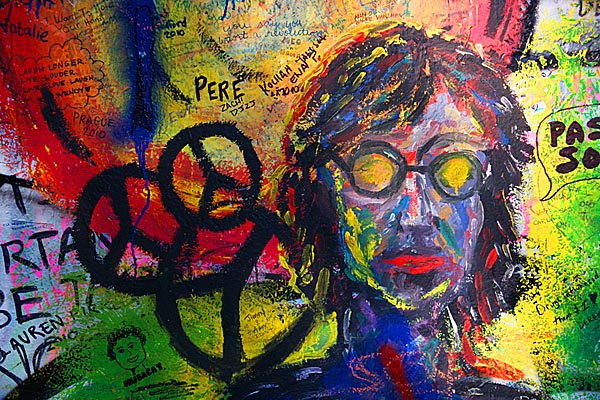
In the following months Both ENDS and Cordaid will look for the views of thinkers and doers from the South. The images that these southern visionaries evoke will inspire and help us in our daily activities into making small steps toward a great world. And to speak with Lennon's words: "I hope one day you'll join us. And the world will be as one."
What will the world look like in 2050?
Envisioning a sustainable world
A world wide discussion on sustainability
Read more about this subject
-
 Blog / 18 February 2022
This is what a fair and sustainable Africa strategy looks like
Minister Liesje Schreinemacher for Foreign Trade and Development Cooperation recently made her first working visit, to Kenya and Uganda. With this visit, the minister made a flying start in honouring the pledge in the new government's coalition agreement to formulate a 'targeted Dutch Africa strategy'. Such a strategy is desperately needed as, too often, our foreign trade is conducted at the expense of people and the environment, including in countries in Africa. The new strategy presents a perfect opportunity to ensure that the 'trade and aid' agendas are closely aligned.
-
 Blog / 16 June 2020
The political and industrial elites in Indonesia grasp their opportunity
In September 2019, the streets of Jakarta were filled with angry demonstrators protesting against the Omnibus Employment Law. The law will ease the rules for mining, make it much more difficult to hold companies liable for criminal acts and severely restrict the power of the national anti-corruption committee. At the moment, such protests are completely impossible in Indonesia because of the COVID-19 crisis and the associated lockdown measures. And Indonesian people already had few other means of exerting influence on decision-making and legislative processes.
-
 Blog / 28 May 2020
South American organisations are pushing back their boundaries
By Eva SchmitzThe Rio de la Plata Basin in South America extends across Argentina, Bolivia, Brazil, Paraguay and Uruguay. The livelihoods of the millions of people who live there – city-dwellers, small farmers and fishers, and indigenous peoples – are under pressure from soya cultivation, mining and logging, and by the construction of dams and ports. The COVID-19 crisis is making the situation even worse.
-
 Blog / 13 May 2020
You can’t eat gold, copper and gas
You can't eat gold, copper and gas
"The virus is spreading quicker than the information" – that was the first we heard in the Netherlands about COVID-19 in many African countries and the measures they were taking to tackle it. While states of emergency were announced, borders were closed and we saw image after image of violent police and army responses, many people outside the big cities did not know that what was going on. When the situation became clearer, serious concerns arose about the consequences of the measures that had been taken: the informal economy coming to a standstill, food shortages and internal migration flows.
-
 Blog / 5 May 2020
Freedom
Today the Netherlands is celebrating freedom. Our freedom goes further than living in peace. We have the freedom to discuss policy to our hearts’ content on, for example, ending the lockdown on television, in the press and on social media. We can do that freely because we know that our rights to freedom of expression are well protected. But how different that is in countries where authoritarian leaders are grasping the crisis as an excuse to throw these rights out with the trash and rule with an iron hand.
-
 Blog / 30 April 2020
Discovery of gas in Mozambique: blessing or curse?
COVID-19is placing our economy under a magnifying glass. Now that a large part of global trade has come to a standstill, the tension between international economic activity and local well-being is becoming more visible. That is very clear in northern Mozambique, where one of the world’s largest gas fields was discovered in 2011. Dutch companies are investing in the processing and transport of the gas.
-
 Blog / 20 April 2020
Call to Minister Kaag: do not waste time and help poor countries through local organisations
The world is turned upside down in this pandemic. Ordinary life is disrupted on our end. Many people suffer from the ‘polder lockdown’, although fortunately we have enough resilience and safety nets to meet our most urgent needs. Unfortunately, outside the Netherlands this all too often lacking. Especially in countries where public health structures are weak and where people are in a total lockdown. Because local communities that are shackled today may be hungry tomorrow. And aid and money does not naturally flow to the most vulnerable citizens there. So extra financial support is urgent.
-
 Blog / 16 April 2020
New faces are needed for a different future
In this time of crisis-driven reflection we can read telling analyses of past and present on all sides which are being translated into agendas for action. Many of the analyses address issues like inequality, climate, the financial sector, health care, education and women’s rights. They talk about ‘what’ and much less about ‘who’ or ‘how’.But a different future can only be built together with everyone, young and old, men and women. This future will not simply happen to us; we ourselves have a hand in it. It is time for new faces around the table, with new voices. It is time for a new future.
-
 Blog / 15 April 2020
Now is the time! Investing in a socially just and sustainable society
After Dutch Minister of Finance Wopke Hoekstra had brought the fury of the Southern European countries down on his head on 26 March by blocking the European emergency fund, the Dutch were suddenly 'small-minded and selfish‘ (Parool) and we should ‘go on holiday somewhere else‘ (RTL News). The tone was set. The difficulties encountered in making agreements on support at European level contrast sharply with the speed with which the welcome support measures for employers, entrepreneurs and companies had been announced in the Netherlands two weeks earlier. We have learned nothing from our own past, while everyone benefits from greater priority for solidarity.
-
 Blog / 14 April 2020
Stop WTO talks until everyone can take full part in them again
The World Trade Organization (WTO) is often seen as an institution in crisis, powerless and no longer relevant, and especially after US president Donald Trump decided in 2019 to pull the plug on one of the WTO’s most important bodies (the one dealing with trade disputes). Now, more than 150 civil society organisations, networks and interest groups from around the world have signed an urgent letter to WTO Director General Roberto Azevedo, because they are seriously concerned about the state of affairs within the organization.
-
 Blog / 13 April 2020
Invest International – a golden opportunity to green our trade relations
Since his previous government, prime minister Mark Rutte has wanted to create a green legacy with Invest-NL and Invest International, two new financial organisations. With the advent of the COVID-19 crisis, these organisations are more important than ever. Aiming to stimulate investment in sustainable and social projects, they will operate at a distance from the government so that they can act quickly and efficiently. With an initial budget of 2.5 billion euros, they will give financial support to companies active in sectors that the market avoids and which are at the heart of the transition. At Both ENDS, we see that as an essential step in closing the door for good on our old polluting lifestyle and putting sustainability at the centre of developments in the energy sector, in the organisation of our transport and mobility system, in how we produce our food and in the design of our cities.
-
 Blog / 19 September 2019
A forgotten opportunity worth 1.5 billion euros
Reward high-risk international business projects investing in a green future and stop support for the international fossil industry
The climate is 'hot'. Everyone is talking about it. 'Everyone needs to do something' calls the government in its recently started public campaign. Good plan. Let's really do something. For a start, we can stop supporting international trade in fossil energy by our own multinationals. That would free up 1.5 billion euros which we could use to combat climate change on an international scale and at the same time give our own innovative businesses a boost. Today's Vergeten Klimaattafel (Forgotten Climate Roundtable) will discuss the opportunities for the Netherlands to have a real impact. And those opportunities are enormous. Because our big money and our influence lie beyond our borders.
-
Blog / 29 January 2019
Make the climate debate a part of our foreign policy
The climate debate in the Netherlands is bogged down in what we can change at home and does not touch on our actions abroad. And that is a missed opportunity. Precisely because our international trade model is both so influential and, at the same time, such a widespread cause of pollution, changes in that policy can have an immediate effect.
-
 News / 7 October 2018
Our Director ranking 52nd on Dutch ‘Sustainable 100’-list
We are very proud that our director Daniëlle Hirsch has been included again in the ‘Sustainable 100’ (an annual ranking list published by Dutch newspaper Trouw), and has gone up more than 40 spots compared to last year! Danielle was included in the list because of the many things she does with her organisation as a whole, but she got the higher ranking for the way she combines her criticism of the destructive role of the Netherlands as a trading nation and large cause of CO2 emissions in the world (often supported by the Dutch government), with a constructive attitude when it comes to finding alternatives and solutions.
-
 Blog / 23 March 2017
Déjà vu: from Famatina via Orissa and Dakota to Groningen
Whenever I see pictures of the people in the Dutch province of Groningen whose houses are collapsing because of gas extraction and who, even if they wanted to move somewhere else, would never be able to sell them, I can't help but think of all the people worldwide who have been experiencing the same problems, sometimes for decades. Every time I see the anger and powerlessness of the people of Groningen, the comparison to the many people we have been working with for many years in many parts of the world comes to my mind.
-
 Blog / 25 November 2016
Celebrate countervailing power!
This is the text of the speech given by Danielle Hirsch on the 'Nacht van de Tegenmacht' (Night of Countervailing Power)
-
 Blog / 11 July 2016
She is just around the corner…
She is just around the corner… -
 Blog / 17 October 2014
‘Africa Works’ with decent finance
‘Africa Works’ with decent finance -
 Blog / 18 April 2014
We want value for climate money
We want value for climate money -
 Blog / 9 December 2013
'The winner takes all'
'The winner takes all'