




Where are the opportunities for Minister Kaag?
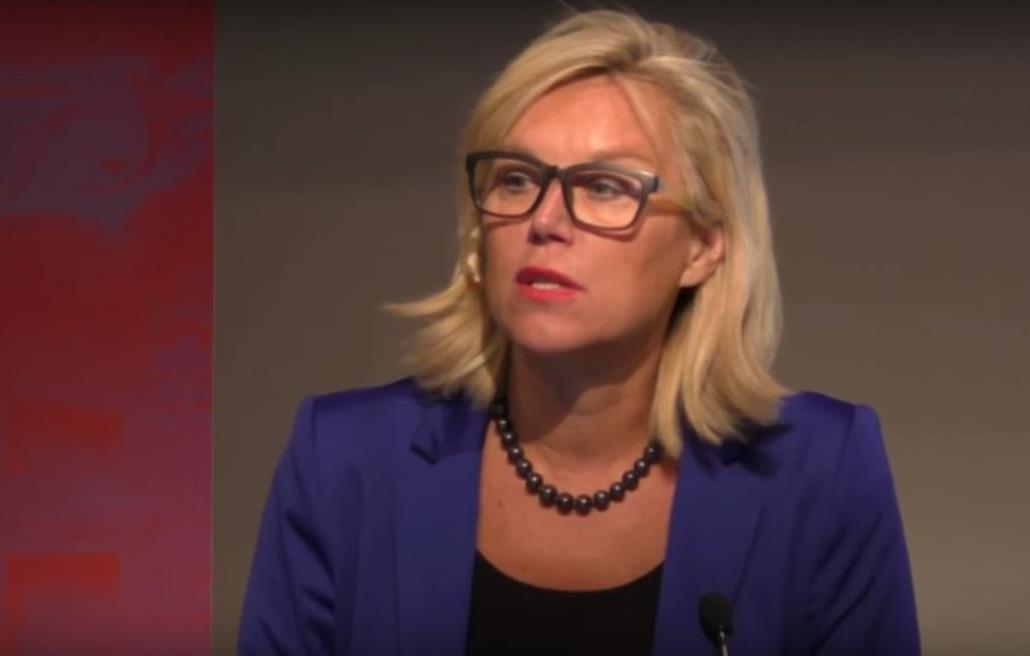
More than six months after the Dutch elections took place, a long period of debates, negotiations and incertainty has finally come to an end. The new coalition of center-rightwing parties was sworn in last Thursday the 26th of October. Having Sigrid Kaag of the liberal-democratic party D66 as the new Minister for Foreign Trade and Development Cooperation in the third Rutte government (Rutte III), we can look forward to where the opportunities lie in the new coalition’s plans to make the world fairer and more sustainable. The Coalition Agreement, which tries to build a bridge between the political centre and the centre-right, is a smart piece of work in terms of reaching compromises. In the current international climate of societies progressively growing apart, that is a striking achievement.
Because the Agreement does not specify very much explicitly, it gives the Minister for Foreign Trade and Development Cooperation a lot of elbow room to make a difference in international policy. That presents the Netherlands – which, as an open economy, has a great impact on people and the natural environment far beyond our own borders – with many opportunities. But there are also serious threats lying in wait.
The Netherlands, its people and its businesses
Minister Kaag is faced with one main challenge: the Coalition Agreement focuses almost exclusively on the Netherlands and its people. Rutte III does not appear willing to recognize that it is now responsible for a Netherlands which – as the world’s 17th largest economy, as a provider of services to the fossil industry and as an essential link in a globally destructive agricultural model – has an enormous impact on people and their living environment throughout the world. Rutte III’s approach threatens to be a continuation of that of previous governments, which also seemed to consciously ignore the Netherlands’ global role and our worldwide impact.
To prevent this policy from leading to further violations of human rights and destruction of the natural environment, it is of the greatest importance that – together with businesses, members of parliament, scientists and civil society organizations – Minister Kaag ensures that existing international agreements on human rights and environmental protection are upheld. As an international diplomat who knows the UN like the back of her hand, she will understand the fundamental importance of global agreements on human rights and the environment.
The minister can ensure that funds provided by the Dutch government comply with international standards. The institutions that bear an important responsibility to safeguard this – the OECD National Contact Points, regional human rights committees, the ICC – must be supported actively and in the long term. The importance of this support is underlined by the fact that Rutte III rightly identifies promoting the rule of law as one of the four spearheads of its policy. The Netherlands will therefore have to continue to invest in strengthening the international legal order, so that businesses and financial institutions can no longer violate human rights with impunity.
Green and sustainable
The Coalition Agreement seems to be responsive to the enormous social pressure to take climate change seriously. As the Netherlands is one of the EU member states that consistently fails to comply with climate agreements, this is in itself an urgent step in the right direction. The reactions from opinion leaders, civil society organizations and businesses show, however, that the words of Rutte III are not convincing.
Despite the surprisingly optimistic ambition to store our climate waste in the ground, it is very striking that the Coalition Agreement does not mention one of the most important keys to achieving sustainability: making our own government budget fossil-free. The fact that there is nothing about this in the Agreement offers opportunities, as the discussion on the 8 billion euros in state support for the fossil sector is just starting to gather momentum. Debates have been planned, motions have been adopted that demand greater transparency in this area, and the Dutch Central Bank (DNB) is increasingly insistent that climate risks have to be made more visible.
So there are certainly opportunities in the coming years to put an end to the billions of euros that the Dutch government provides to the fossil sector in the form of subsidies, tax benefits and export credit insurances. Many of these instruments fall directly under the responsibility of the Minister for Foreign Trade and Development Cooperation. If Minister Kaag makes her budget fossil-free in the coming years, it will give the renewable energy sector and other climate-relevant sectors an enormous boost. And that would considerably reduce the harmful consequences of extracting and transporting oil, coal and gas for people and the environment in vulnerable countries and regions. It would also help Rutte III to fulfil its ambition to achieve the climate goals agreed in Paris.
Human rights and climate funding
Both ENDS is pleased that the government intends to allocate more money to protecting human rights and to strengthening the network of embassies and consulates. These two ambitions are strongly linked: embassies can play a prominent role in supporting civil society actors – organizations and individuals – who defend human rights, especially in respect of the human right to water, food and a safe living environment. Local civil society organizations must be able to contact embassies with suggestions and engage in a dialogue with them to identify violations promptly. Dutch embassies also have an important role to play in informing and supporting investors and businesses in respecting these rights.
Rutte III is making additional funds free to finance climate initiatives in other countries, so that they can prepare themselves for the effects of climate change. That presents an enormous opportunity to change the current international reality of climate funding, which has until now largely been focused on large-scale projects which benefit Western companies and banks at the expense of the people most directly affected by climate change. That money must be used to fund local actors, including municipalities, farmers’ cooperatives, women’s groups and indigenous groups. That can be effectively achieved by allocating money through 'small grants funds'. Only by meeting the actual needs of people themselves in this way will the additional climate funds to be allocated by Rutte III properly supplement existing forms of international climate financing.
Underlying causes of poverty and migration
Rutte III acknowledges that underdevelopment has a great impact on migration flows and rightly states that the underlying causes of migration need to be addressed. Those causes lie mainly in lack of security, erosion of the natural environment and the destruction or expropriation of local living resources, a lack of public infrastructure and good governance, land and water grabbing by developers of large-scale infrastructure, mining and agricultural projects, and the consequences of climate change.
The challenge for Minister Kaag is not to take the Coalition Agreement too literally. At first sight, Rutte III seems to address the underlying causes of migration by providing facilities for migrants in their own regions and by increased border controls. That is, to put it mildly, a very one-sided view of migration, from the small-minded perspective of a Netherlands that does not feel itself to be part of the global community. We feel confident that, with her track record, the new minister will look further than the words of the Coalition Agreement and will generate synergy between the four spearheads of policy – agriculture, water, sexual and reproductive health and rights (SRHR), and promoting the rule of law – and the complex issue of international migration.
Free trade and international investment
The Coalition Agreement continues the line of Rutte’s previous government, by seeing trade as an integral part of foreign policy. Its aim is to ensure ‘fair free trade’. That sounds simple, but it would call for a great change in the Netherlands’ current position. The trade and investment agreements that we currently conclude are everything but ‘fair’, limiting the development of poorer countries by not allowing them to protect their emerging industries. The agreements ensure, as they have been doing since the colonial era, that poor countries continue to supply the rich West only with primary raw materials.
The reality is that, under the current system of trade relations, developing countries will always get the worst deal. To make trade fair, the minister will have to impose binding rules on governments and businesses, so that all parties, as far as possible, have equal opportunities. To achieve this, she will have to, at least, pursue the line set out by the previous government. That means that the negotiations on trade and investment agreements will have to become transparent, that there will have to be thorough discussion on the desirability (or not) of investment agreements, and that efforts must continue to strengthen open dialogue with political and civil society organizations both at home and abroad. In addition, through international diplomacy, resolute steps must be taken to strengthen the international legal system, so that businesses no longer have only rights, but also a binding duty to respect all human rights, including those relating to labour, the environment and self-determination.
Like civil society organizations, the minister will also have to look further than the trade and aid agenda. If Rutte III really wants to promote free trade, it will have to ensure that Dutch and other international companies pay taxes in the countries where they get their raw materials from and where their production and often their markets are located. Only then can the governments in those countries create the public infrastructure required to develop their own economies in the longer term. Rutte III, however, is doing the complete opposite: it is relaxing the rules for businesses to report where they pay taxes and is not doing enough to reduce the key role played by the Netherlands in facilitating tax evasion.
Where are the opportunities?
The ecological and social footprint of the Netherlands’ international trade and investment activities is immense. This Coalition Agreement does not address measures to reduce that footprint, despite there certainly being opportunities to do so.
The soon to be set up INVEST-NL – the new window for risk capital, guarantees, export credit insurance and international financing programmes – is a good example. Around a third of the total of 2.5 billion euros to be set aside for INVEST-NL is expected to be reserved for activities abroad. The minister, who has final responsibility for INVEST-NL’s international activities, will have to take steps, on behalf of Rutte III, to help bring about a genuine transition to a sustainable society. INVEST-NL should not only be made fossil-free, but also impose strict social and environmental rules on investments, and on the provision of credit and cover for investment risks. Such rules are indispensable to ensure that these activities do not have harmful effects on people and the environment in the countries where they take place.
The Coalition Agreement leaves ministers a lot of elbow room, because it does not explicitly mention a number of strategic issues. That presents them, including our new Minister for Foreign Trade and Development Cooperation, with enormous opportunities. To phase out state support for the fossil industry and its related companies, to make INVEST-NL a genuine transition fund with high environmental and human rights standards, and to get climate funds to the people who not only need them the most but who will use them most effectively. Together with our Dutch and international partners, Both ENDS will continue to engage in dialogue with the minister and her colleagues to achieve these ambitions within the new government’s term of office, which is crucial for the climate, environmental and development agenda.
Photo: by SOAS, University of London - YouTube; CISD Annual lecture by Sigrid Kaag, SOAS, University of London Still at 8:03 min, CC BY 3.0, https://commons.wikimedia.org/w/index.php?curid=63507028
Read more about this subject
-
 Dossier /
Finance for agroecology
The lion's share of public budgets for climate, agriculture and development still goes to conventional agroindustrial projects that contribute to the current climate, food and biodiversity crises. Both ENDS and our partners are calling for a transition to agroecological practices that are people- and environment-friendly.
-
 Dossier /
Trade agreements
International trade agreements often have far-reaching consequences not only for the economy of a country, but also for people and the environment. It is primarily the most vulnerable groups who suffer most from these agreements.
-
 Dossier /
Rights for People, Rules for Corporations – Stop ISDS!
Indigenous communities in Paraguay saw their attempts to regain their ancestral lands thwarted by German investors. In Indonesia, US-based mining companies succeeded to roll back new laws that were meant to boost the country’s economic development and protect its forests. This is the level of impact that investment treaties can have on social, environmental and economic development and rights. Why? Because of the ‘Investor-to-State Dispute Settlement’ clauses that are included in many such treaties.
-
 News / 24 March 2026
Statement: Invest in local leadership for tropical forest management and local economies
IUCN-NL, Both ENDS, and 16 other Dutch and international civil society organizations (CSOs), networks, and expert groups are calling on the Dutch government to invest more strongly in locally led forest management and forest-based economies. This should be done within the framework of Dutch international cooperation and its associated policy instruments.
-
 News / 17 February 2026
Civic space at the frontlines: "Build strong coalitions and counter repressive regimes"
Today, we look back on an inspiring event Civic space at the frontlines -
Environmental Defenders and the Role of International Trade and Investment Policy. The panel exist of Michel Forst, UN Special Rapporteur Environmental Defenders under the Aarhus Convention, Suzanne Kröger, Member of Parliament for GroenLinks–PvdA, Dr. Margit van Wessel, Associate Professor at Wageningen University, Anne de Jonghe, policy advisor at Both ENDS, and Jonila Castro, national spokesperson for Kalikasan People's Network for the Environment. With an audience of CSO experts, academics, accountability experts and students we discussed the effects of Dutch economic activity on Environmental Defenders, and what we all can do to support those on the front lines of the fight for the environment and human rights. -
News / 2 February 2026
Response to the D66-VVD-CDA coalition agreement
Coalition: Repair the damage and dare to go further
At Both ENDS, we see a number of cautious steps in the right direction in this coalition agreement. There is a slight emphasis on green issues, renewed attention to women's rights, recognition of the importance of civil society, and discussion of trade agreements with a focus on mutual interests. However, without structural change in how we trade, invest, and cooperate, fine words remain empty shells.
-
 Dossier /
Export Credit Agencies: Who pays the price?
Both ENDS calls on the government only to provide export credit insurance to sustainable projects that cause no social and/or environmental damage in the countries where they take place.
-
 News / 5 November 2025
Another ISDS claim hits the Netherlands: Petrogas sues over solidarity contribution and royalty regulations
SOMO and Both ENDS strongly condemn the newly revealed investor-state dispute settlement (ISDS) case filed by Petrogas, an Omani oil and gas company operating two shallow-water gas fields in the Dutch North Sea, against the Netherlands under the Netherlands-Oman bilateral investment treaty (BIT).
-
 Dossier /
International trade and investment with respect for people and planet
The network of international trade and investment treaties is large and complex. The Netherlands alone has signed more than 70 bilateral investment treaties (BITs) and is party to the trade and investment agreements concluded by the EU, like the EU-Mercosur and EU-Indonesia trade deals.
-
 Blog / 31 March 2025
International cooperation and solidarity are in the interest of both the Netherlands and Africa
Traditional development aid keeps Africa in a state of aid dependency, but development cooperation is essential to break this post-colonial dependency, argues Melvin van der Veen in response to an interview in NRC Handelsblad with the Cameroonian economist Célestin Monga. By breaking off this cooperation on the basis of equality, we are actually stifling the voices of African civil society organisations, indigenous communities, youth and women's movements and human rights defenders, and we are not solving global problems.
-
 News / 18 March 2025
Abuses surrounding TotalEnergies‘ LNG project in Mozambique are piling up; Dutch support irresponsible
On Friday 14 March, the French Public Prosecutor's Office announced that it would launch an official investigation into TotalEnergies’ involvement in involuntary manslaughter during the attacks on Palma, the location of their LNG project. This umpteenth abuse makes it clear that the Netherlands cannot in any way provide public support for this project.
-
 News / 4 March 2025
Feminist March 2025: let's take to the streets for gender justice
Women's rights are under pressure worldwide, and hard-fought rights and freedoms are being dismantled. Whereas until recently the Netherlands was a champion of emancipation, women's rights and gender justice, the current cabinet is breaking with this policy and abandoning millions of women and girls. That is why Both ENDS, together with many other allies, will be taking to the streets on 8 March. It is time to make a strong stand against the dismantling of gender policy and to stand up for gender equality and social justice.
-
 News / 21 February 2025
Cabinet turns its back on international cooperation and solidarity with callous policy letter
Foreign Trade and Development Minister Klever's published policy letter is coldhearted and callous. It places the Netherlands in international isolation and abandons the most vulnerable people worldwide, including many women, farmers, indigenous peoples and youth.
-
 Dossier /
The Climate lawsuit against Shell
Both ENDS is co-plaintiff in the climate lawsuit brought by Milieudefensie (Friends of the Earth The Netherlands) in 2018 against Shell to stop the company from causing harm to the climate. In 2021, the judge ruled in favor of the climate, but unfortunately the company appealed. The court will therefore render its verdict at the end of 2024.
-
 Dossier /
Making pension funds more sustainable
Pension funds have a lot of influence because of their enormous assets. Both ENDS therefore wants pension funds such as the Dutch ABP to withdraw their investments from the fossil industry and to invest sustainably instead.
-
 Blog / 19 November 2024
Building Monitoring, Evaluation and Learning systems based on mutual accountability and trust
Just before summer, on June 27th we participated in a panel discussion on inclusive conservation in a learning event organized by WWF Netherlands. Several organizations joined in a discussion on inclusive, decolonial, rights-based, and community-led approaches in conservation. We discussed the barriers, gaps and opportunities in how power is shared, inclusion promoted, and accountability practiced in our work. The question raised was: as Dutch-based organizations, are we doing enough to really work inclusive? In 2023 Both ENDS started an Examination of Power process to research how power is experienced in our partnerships. I share a couple of practical tips and insights that I feel might benefit the greater conversation around Monitoring, Evaluation and Learning (MEL) in our sector.
-
 Blog / 18 November 2024
The global rise of authoritarian regimes demands global strategies
The global funding landscape for civil society movements is changing, and is increasingly faced with policies that restrict funding streams, limit philanthropic work, and silence critical voices. These are not incidental shifts but part of a broader pattern that erodes the support for those international networks and movements under the guise ‘necessary financial cuts’, ‘aid reform’ or ‘efficiency’.
-
 Press release / 12 November 2024
Ruling climate case Shell: "Shell has an obligation to protect human rights."
The Hague, 12 November 2024 - The court has ruled in Shell's appeal in the Climate Case that Milieudefensie won against Shell in 2021. The Court of Appeal has ruled that the oil and gas giant has a responsibility to reduce its emissions, but has not imposed a reduction obligation.
-
 Press release / 11 November 2024
Both ENDS's response to government letter on future cooperation with civil society organisations
DEN HAAG, 11 November 2024 - Today, the Dutch government published its policy on future cooperation with development organisations, both in the Netherlands and abroad. PVV minister Reinette Klever is putting the axe to this funding: she has decided to cut the budget for aid to international civil society by more than two-thirds: from roughly €1.4 billion to €0.4 billion in the period 2026 to 2030. This has major implications for critical voices at home and abroad, at a time when civic space for organisations around the world is already shrinking. Karin van Boxtel, director of environmental and human rights organisation Both ENDS: ‘This is an unprecedented step in exactly the wrong direction. Civil society organisations are essential for sustainable and social change worldwide. International movements fulfil multiple, indispensable roles: as a watchdog of the rule of law, as a driver of change, and as a counterforce against authoritarian tendencies. The weakening of support for these roles is a telling signal.’
-
 News / 9 November 2024
Why is the Dutch climate case against Shell important to our partners in the Global South?
On November 12th, a new ruling will be issued by the Court of Appeal in The Hague in the climate case against Shell, in which Both ENDS is a co-plaintiff. Ahead of this ruling, we asked our partners why this Dutch lawsuit is important for the Global South.