




Agua es vida: Both ENDS and water governance
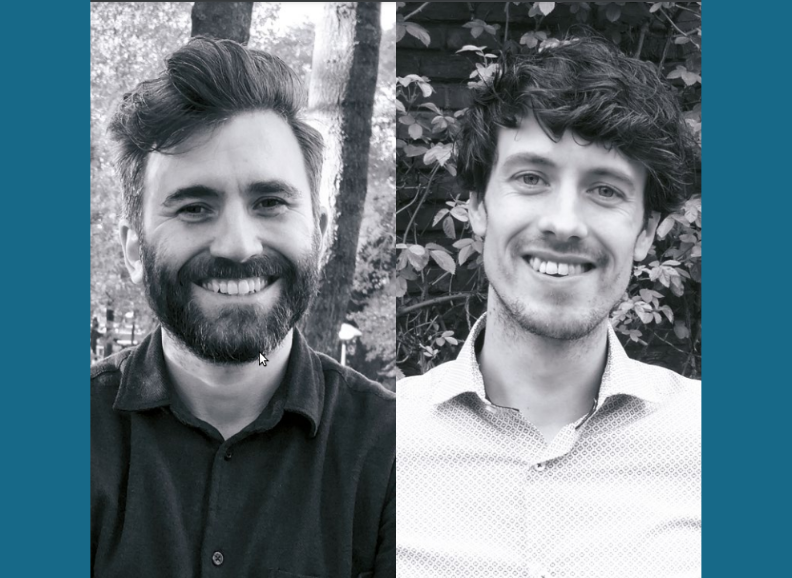
Water is literally life, the lifeblood of ecosystems, of nature, of humans. However, in many places the distribution and use of water is unjust and unsustainable. Water management is generally focused on short-term economic interests, on maximizing the profit of a well-connected few at the expense of people and nature. This dominant view of water and water management has its origins in the European industrial revolution, which became the global norm through colonialism and globalization. But according to Melvin van der Veen and Murtah Shannon, water experts at Both ENDS, this view will have to give way to equitable, sustainable and inclusive water management. Both ENDS cooperates with and supports communities and organisations worldwide who are working to this end.
Water management – in Both ENDS's view – goes far beyond the availability of clean drinking water and sanitation alone. It is also about the use and management of rivers, marines areas and coastal zones, and the right to fish for subsistence. It is about preventing pollution from entering streams, rivers from being closed by dams, or lakes from becoming virtually dry due to excessive industrial water extraction. It is about involving people in decision-making around water resources on which they depend for their livelihoods.
Many of the global injustices in water management result from the huge political and economic interests behind them. Water management is seen primarily through economic, technical and anthropocentric lenses. Market interests and economic growth determine how water is managed. Water management is reduced to a technological issue. Water and nature are seen primarily as resources for people, with no recognition of their intrinsic value. The cultural, context-specific, ecological and human aspects of water management are not considered.
The politics of water
Murtah: "Water management is often presented as value-free, as a world of engineers and hydrologists guided by the latest scientific knowledge. The outcomes of decision-making processes around water are presented as necessary, self-evident and incontrovertible. For example, a new dam will be presented in terms of meeting increasing energy demand; a new dike will be presented as the only way to protect neighbourhoods from flooding. But these interventions are anything but value-free; there are always certain interests and views behind them. The necessity of a dam, for example, rests on the assumption that disrupting river systems and the communities that depend on them is permissible to generate more energy. It all boils down to which interests are the most powerful.
Melvin: "The key question of water management is not what should be done with the water, but who decides what happens to the water? Whose interests are served and whose interests are undermined? And with that, what are the consequences for people and nature? That is the essence of a political perspective on water. Whoever has control over water – governments, businesses – makes the decisions regarding who can or cannot use it. Both in the Netherlands and in other countries, policymakers dealing with water issues must become aware of this."
Supporting local visions on water management
Both ENDS puts this political perspective on water management into practice by working intensively with partner organisations from around the world. Some organisations have a scientific focus, others are more activist. Others arise out of sheer necessity – for example, to support fisherfolk in standing up for their rights when they are suddenly denied access to their fishing grounds or to support communities in developing their own vision for sustainable water management. Both ENDS collaborates with water experts to foster mutual learning and strengthen each other's work. Melvin: "We call this 'mutual capacity development'; this equal cooperation increases the knowledge and strategic clout of both parties."
The organisations that Both ENDS works with are advocating – toward governments and businesses – for water management that has as its starting point the interests and knowledge of residents. They advocate for social, cultural, historical and ecological aspects to be considered when looking for the best solution to water issues. The emphasis is on empowering people who are usually excluded from decision-making processes, such as women and indigenous groups.
Melvin: "There is no blueprint. What works in Mozambique may work completely differently in Bangladesh. You have to be embedded in the local context and know how the institutions work. That is why local expertise is essential. Local experts know the situation on the ground and know what works. In Bangladesh, for example, very clever solutions for regulating and distributing scarce or excess water existed in the past. The trick is to bring those back to the surface."
Future-proof water management
Just, inclusive and sustainable water management requires a different approach and ultimately provides more efficient, future-proof water management. It is tempting for the water sector to take a one-size-fits all approach. Murtah: "Yet practice shows that this approach is often the least future-proof. For example, the Netherlands has funded a series of master plans in various countries, all of which insufficiently understood role of local communities and institutions. As a result, these plans did not even turn out to be feasible. It pays to invest heavily in dialogue with local residents and utilise their knowledge and experience." Governments have a key role to play in this: public agencies are in a position to create space for dialogue, for civic space. Both ENDS is committed to ensuring that government plays its proper role.
Both ENDS supports its partner organisations in advocacy for truly sustainable water management and does so itself in the Netherlands and internationally. Both ENDS brings the local realities of specific communities to the fore. The organisation also acts, where necessary, as a 'watchdog'. Murtah: "That is part of our role. Sometimes you also have to dare to put your finger on the sore spot. At Both ENDS, we always do so with clear objectives and in a constructive manner. After all, you ultimately want to engage in dialogue to find the solution that works for everyone and is truly sustainable in the long run."
The role of the Dutch government
Both ENDS focuses its advocacy efforts on the Netherlands' sphere of influence, including Dutch government policies, investments and the Dutch role in international institutions. For example, the Netherlands – through export credit insurer Atradius DSB – provides guarantees to high-risk projects, including in the water sector, often worth hundreds of millions of euros. Murtah: "These are Dutch public funds that are deployed. Therefore, we think we should have a say in how those funds are used. We have raised the issue with the Dutch Ministry of Finance, as well as Atradius DSB in the Netherlands."
For years, Both ENDS has opposed the way export credit insurance policies are granted. Decisions on whether or not to grant export credit insurance to a project are driven almost entirely by economic or political interests. Moreover, little or no information is made public about the projects, which include land reclamation and port development. Murtah: "As a result, the people affected have no idea where they stand or what to expect. They could suddenly be evicted from their land, their home bulldozed, or they could be prohibited from fishing in places where they and their ancestors have long fished for their livelihoods. And these things can happen without it being clear if they will ever receive any kind of compensation. It is no coincidence that wealthy vneighbourhoods never have to give way to this kind of destructive project."
Beyond technology
The Dutch water sector has a lot of knowledge and expertise, especially in a technical sense. It is rich in data, models and engineers. However, there is much less room for anthropological, geographical, social science expertise. Such knowledge is not taken into account in projects and often not in policy. Local communities, residents and farmers who use the water have that knowledge, but are not given the opportunity to influence decisions. Murtah: "We believe that the water sector, which is ruled by engineers, must realise that its knowledge is incomplete to achieve sustainable water management. Equal knowledge sharing and collaboration is essential. That is where the real opportunity lies!"
The term inclusiveness is increasingly being used in the water sector. Critical academics and organisations such as Both ENDS have contributed to this turnaround, including through interaction among NGOs, policymakers, water experts and scientists on several controversial cases. The bottom line in most cases was that the overly technical focus and top-down approach – conceived on the sidelines without proper knowledge of the local context – often led to unfeasible projects. Melvin: "There really wasn't enough awareness in the water sector that sometimes, against all good intentions, things go wrong. So we are positive about this development. At the same time, huge challenges remain. It is not easy to break an existing system that is built on the top-down approach. For example, the water sector has to deal with restrictions imposed by funders, such as the World Bank."
Pathway to change: the Transformative Water Pact
The UN Water Conference in March 2023 reflects growing international attention and momentum around water. The whole (water) world is watching. For Both ENDS, it is an important moment to once again call for a shift in thinking and action in water management. Murtah: "It is clear that the global water crisis cannot be solved with the current approach. It is necessary to formulate a progressive and alternative vision of water management based on the knowledge and expertise of groups that are usually excluded. That is why we, together with our partners, have developed the Transformative Water Pact together– a concrete agenda that people can commit to at the conference."
This article is published in our magazine World of Water in March 2023. Download the whole magazine.
For more information
Read more about this subject
-
 Environmentally Just Practice /
A Negotiated Approach for Inclusive Water Governance
A Negotiated Approach envisages the meaningful and long-term participation of communities in all aspects of managing the water and other natural resources on which their lives depend. It seeks to achieve healthy ecosystems and equitable sharing of benefits among all stakeholders within a river basin. This inclusive way of working is an essential precondition for the Transformative Practices that are promoted by Both ENDS and partners.
-
Publication / 27 november 2025
-
 News / 27 november 2025
Communities and International Consortium Present Community-Led Plan for Nature-Based Adaptation to Sea-Level Rise in Coastal Bangladesh
Local communities in the southwestern coastal region of Bangladesh—together with an international consortium including Uttaran, CEGIS, and Both ENDS—have presented a community-led plan to confront climate change and accelerating sea-level rise through nature-based adaptation. The People’s Plan for Upscaling Ecosystem-Based Adaptation outlines a scalable strategy rooted in local ownership and generations of lived experience. At its centre is Community-Based Tidal River Management (CBTRM), a proven approach that reduces waterlogging, raises land elevation, and restores ecological balance by working with natural tidal and sediment dynamics.
-
 Dossier /
Wetlands without Borders
With our Wetlands without Borders program, we work towards environmentally sustainable and socially responsible governance of the wetlands system of the La Plata Basin in South America.
-
Letter / 14 november 2025
Letter: TPAC’s report “Final Judgement Detailed Research MTCS’’
A coalition of Malaysian and international NGOs has released a memorandum in response to the recent TPAC report on the Malaysian Timber Certification Scheme (MTCS). The organisations express serious concerns about the independence, quality, and credibility of the assessment carried out by the Timber Procurement Assessment Committee (TPAC).
-
Publication / 9 oktober 2025
-
 Dossier /
Amplifying environmentally just practices
Because of the close relationship with their living environment, local communities often have the best ideas for the sustainable and equitable use and governance of land, water and forests. These environmentally just practices and processes successfully protect and restore ecosystems and address climate change. They are essential in the light of the multiple crises the world faces, but are in dire need of financial and policy support.
-
 News / 10 juli 2025
Both ENDS and Global Witness condemn harassment of anti-reclamation activists in Manila Bay
Global Witness and Both ENDS strongly condemn the reported of harassment and surveillance by the Armed Forces of the Philippines of environmental activists and fishing communities in Navotas, Philippines. Pamalakaya-Pilipinas, a National Federation of Small Fisherfolk Organisation in the Philippines, has received credible reports that the Armed Forces of the Philippines (AFP) are engaged in “red-tagging” their members.
-
Publication / 1 juli 2025
-
 News / 23 juni 2025
Who benefits from better protection of our oceans?
The ocean emerged strengthened from the UN Ocean Conference in Nice. More countries are supporting a ban on deep-sea mining, more marine protected areas are being established, and more pledges are being made to fight pollution. The question now is whether countries will follow through on their commitments. Because the ocean movement faces a camp of powerful interests.
This article was originally posted in Dutch on MO*Magazine.
-
 News / 6 juni 2025
Both ENDS at the UN Ocean Conference: voicing our environmental justice concerns about the “Blue Economy”
Next week, the United Nations Ocean Conference will take place in Nice, France. This conference is focused on the conservation and sustainable use of coasts, seas and marine resources. Both ENDS colleague Murtah Shannon will be attending. We’ve asked him to explain a bit more about his plans.
-
 Dossier /
Inclusive ways to sustainable and healthy food for all
All around the world small-scale farmers are using sustainable and inclusive methods to produce food. Working together with nature and each other, they provide their families and communities with sufficient and healthy food. But their production methods are under pressure from large-scale agriculture and the globally dominant system of industrial food production. Together with our partners, Both ENDS is trying to turn the tide in favour of sustainable, local practices that are mostly known as 'agro-ecological' or 'nature-inclusive'. Why are we focusing on these methods? Agro-ecological practices are climate-proof and inclusive and increase the opportunities for communities around the world to produce their food sustainably.
-
 Blog / 31 maart 2025
International cooperation and solidarity are in the interest of both the Netherlands and Africa
Traditional development aid keeps Africa in a state of aid dependency, but development cooperation is essential to break this post-colonial dependency, argues Melvin van der Veen in response to an interview in NRC Handelsblad with the Cameroonian economist Célestin Monga. By breaking off this cooperation on the basis of equality, we are actually stifling the voices of African civil society organisations, indigenous communities, youth and women's movements and human rights defenders, and we are not solving global problems.
-
 News / 21 maart 2025
Dutch Royal couple visits Thogoto Forest: a green oasis on the outskirts of Nairobi
This week, King Willem-Alexander and Queen Máxima visited Thogoto Forest as part of their state visit to Kenya. They were able to see the impact of the work of our partner MCDI in the area: a restored forest, clean water and farmers who can earn a living by selling their agro-ecological products.
-
 Blog / 28 januari 2025
Sinking promises in Manila
Yesterday, Global Witness published a new report, "Sunk Costs" - in which I had a modest role to play - that comes up with new facts about the disastrous New Manila International Airport project in the Philippines, for which the Dutch dredging multinational Boskalis received Dutch export credit insurance (ekv) of €1.5 billion.
-
Publication / 16 januari 2025
-
 News / 2 december 2024
Ten recommendations for the UNCCD COP16 to strengthen its efforts in combating desertification, land degradation, and drought
For decades, our local partner organisations have been developing and promoting effective ways to combat land degradation, desertification, and drought. This includes regions like the drylands, as well as forests, and wetlands. Supporting these locally-led actions is essential to reversing negative trends. For COP16, Drynet has developed 10 recommendations to strengthen the implementation of the UNCCD. Success at COP16 would mean turning these recommendations into action, fostering inclusive land governance and sustainable land management practices globally. By enabling locally-led actions—particularly those led by women, youth, pastoralists, and Indigenous Peoples—we can build a more resilient future.
-
Publication / 25 november 2024
-
 Blog / 25 november 2024
The Need for Civic Space in Global Policymaking
and Kyra Pohlan
In today’s interconnected world, international forums play a pivotal role in shaping policies and strategies that impact communities and the environment worldwide. These gatherings, whether they focus on climate change, water resources, or biodiversity, are critical venues where decisions are made that affect the lives of billions of people and species. However, for these decisions to be truly inclusive and effective, they must be informed by the voices of those most affected by climate change and environmental degradation.
-
Publication / 24 september 2024




