




Agroecology in Kenya: fighting water pollution while securing food production
About 75% of Kenyans earn all or part of their income from the agriculture sector which accounts for 33% of the country's Gross Domestic Product (GDP). However, agricultural productivity has stagnated in recent years. Various factors have contributed to low agricultural productivity, including an overall decline in soil fertility because of the continuous removal of nutrients by crops; poor farming practices; land degradation and overuse/misuse of synthetic fertilizers that acidify the soil. The solution against these problems is: agroecology.
Agroecology as a solution against water pollution
Violet Matiru from MCDI Kenya (Millennium Community Development Initiatives) explains that "chemicals that are known to be hazardous and critized heavily by many, are still legal in Kenya". These chemicals are problematic because they are "often being used next to rivers and other water sources, polluting those and making them dangerous for different water users."
Information is key
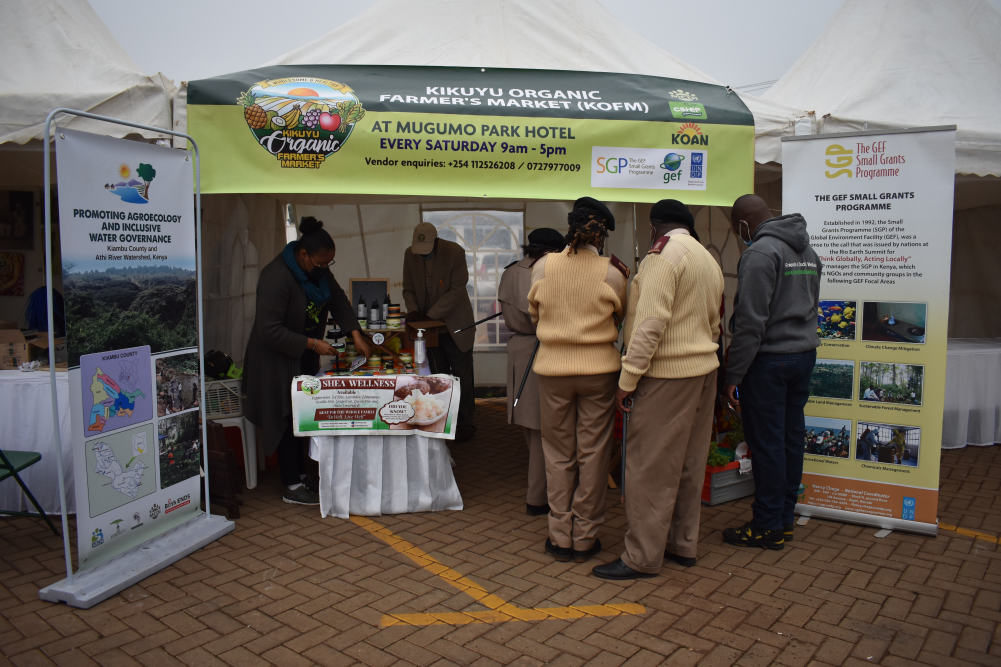
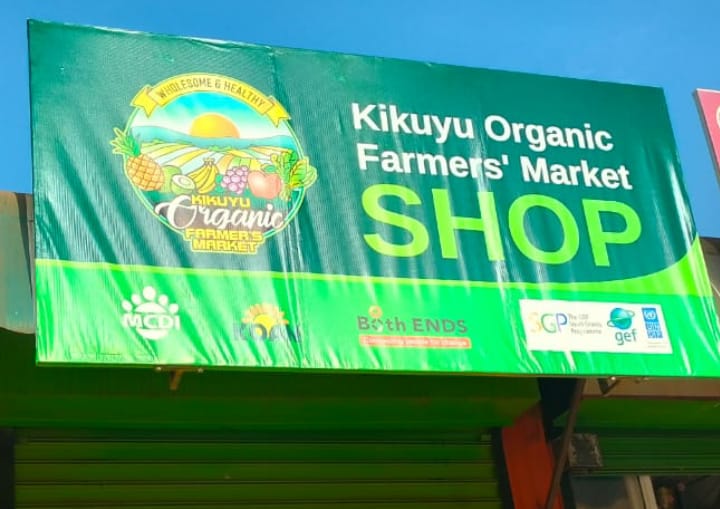
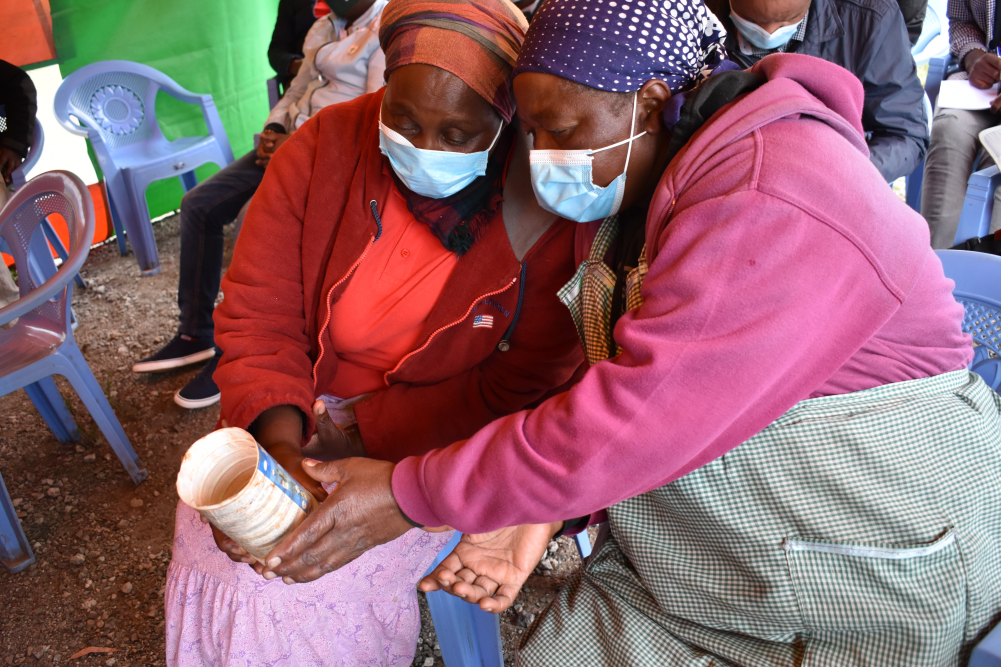
Violet adds that in the effort to create awareness among users, a consortium of Participatory Ecological Land Use Management (PELUM) Kenya, MCDI and Institute for Culture and Ecology (ICE) is organising sessions for farmers to inform them about the potential health issues these chemicals can cause, and what alternatives are available that can considerably reduce pollution risks. Farmers have been and will continue to be trained to use organic alternatives like the creation of compost, use of cattle manure and biological pest control (e.g. using "companion plants" next to crops that help keep away pests). Violet describes that "in the short term, farmers find it easier to use chemicals and when they change to organic production, their yields are likely to decrease in the beginning. But this project focuses on the long run and is meant to support farmers in transitioning to more environmentally sound production methods." The organisations are also supporting the farmers to establish organic farmers markets and shops.
What is agroecology?
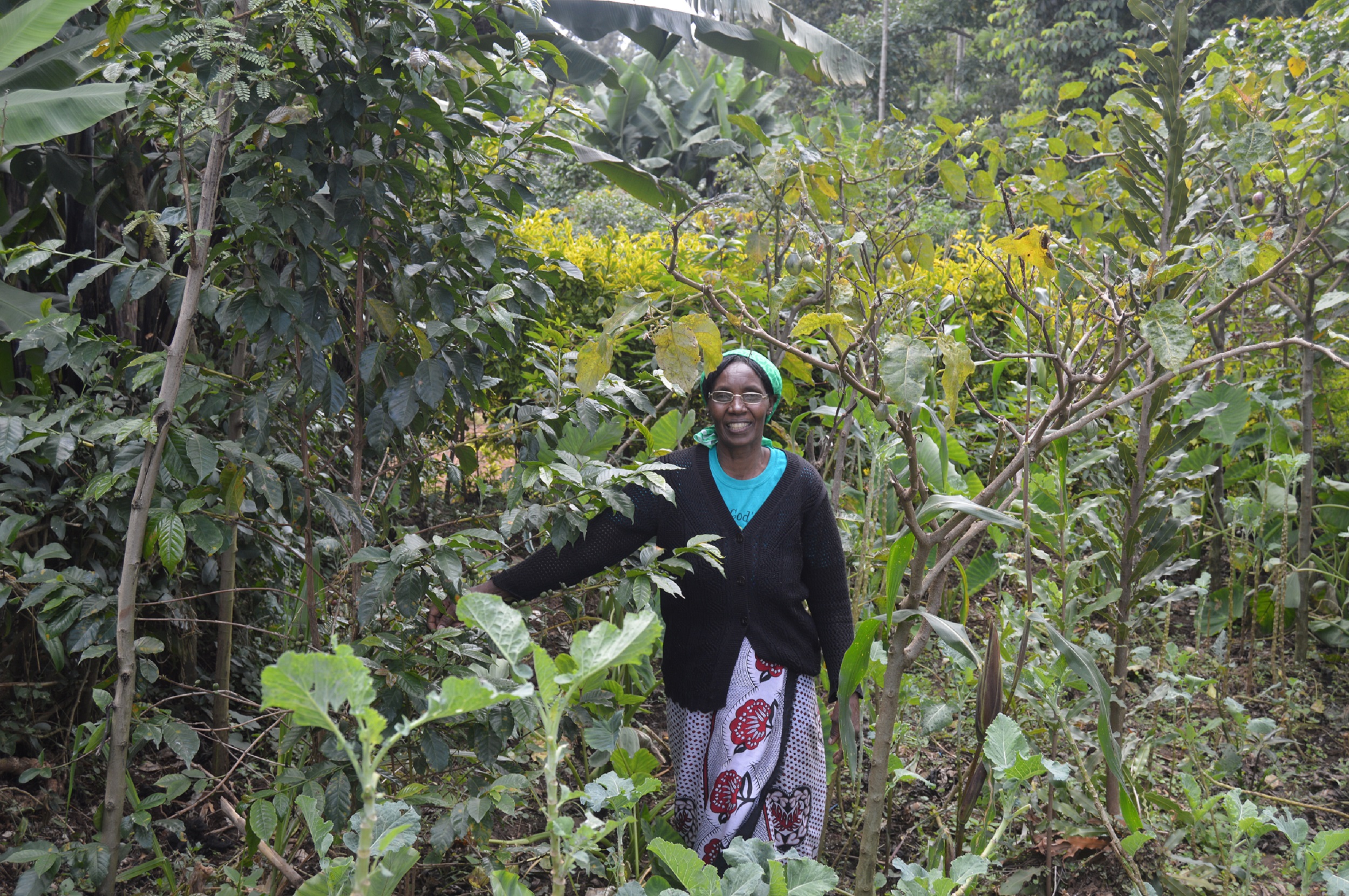
Production methods like those described by Violet are also known as agroecology. It is a collective term used for agricultural practices that aim to reconcile agriculture and local communities with natural processes for the common benefit of nature and livelihoods. Agroecological practices provide a sustainable solution for family farms. This is done by trying to practise several elements which make agroecology effective. Some important elements are, according to the Food and Agriculture Organization (FAO) of the UN, diversification to ensure food security and nutrition, while protecting and enhancing natural resources. Furthermore it's important to share knowledge which can be co-created through participatory processes, as agricultural innovations can then respond better to local challenges. Another element is recycling, which means agricultural production with lower economic and environmental costs. These elements, amongst others, allow family farms to diversify their diet, increase food security and sell surplus products on the local market. At the same time, it enables them to apply better water and soil management practices, maintain biodiversity and increase resilience to climate change.
The difference between agroecology and non organic agriculture
Agroecology has shown to be unique in having a transformative vision, one that stresses the importance of inclusivity, equality and independence on all levels. Unlike climate-smart agriculture for example, agroecology has clearly stated what it does and does not stand for while challenging the power imbalances that currently exist within our food systems. Hence, it is an approach that aims to tackle the structural causes that hamper transformative change.
In Kenya, Both ENDS's partners ICE,-MCDI and PELUM work together to implement activities aimed at enhancing the communities' capacities in sustainable natural resource management, agroecology and water governance.
For more information on the importance of agroecology, click here.
Click here for a documentary on pesticides by local journalists.
Read more about this subject
-
 Environmentally Just Practice /
Agroecology
Agroecology is a diverse set of agricultural practices, a field of science and a social movement. It aims to transform food systems towards greater ecological sustainability, social justice, and resilience. Both ENDS and CSO-partners around the world support farmers and pastoralists practising agroecology, both on the ground and in gathering political and financial support.
-
 Dossier /
Inclusive ways to sustainable and healthy food for all
All around the world small-scale farmers are using sustainable and inclusive methods to produce food. Working together with nature and each other, they provide their families and communities with sufficient and healthy food. But their production methods are under pressure from large-scale agriculture and the globally dominant system of industrial food production. Together with our partners, Both ENDS is trying to turn the tide in favour of sustainable, local practices that are mostly known as 'agro-ecological' or 'nature-inclusive'. Why are we focusing on these methods? Agro-ecological practices are climate-proof and inclusive and increase the opportunities for communities around the world to produce their food sustainably.
-
 Dossier /
Global Alliance for Green and Gender Action (GAGGA)
GAGGA rallies the collective power of the women's rights and environmental justice movements to realize a world where women can and do access their rights to water, food security, and a clean, healthy and safe environment.
-
 Environmentally Just Practice /
A Negotiated Approach for Inclusive Water Governance
A Negotiated Approach envisages the meaningful and long-term participation of communities in all aspects of managing the water and other natural resources on which their lives depend. It seeks to achieve healthy ecosystems and equitable sharing of benefits among all stakeholders within a river basin. This inclusive way of working is an essential precondition for the Transformative Practices that are promoted by Both ENDS and partners.
-
 Dossier /
Communities Regreen the Sahel
In various countries in the Sahel, vast tracts of land have been restored by the local population by nurturing what spontaneously springs from the soil and protecting the sprouts from cattle and hazards.
-
 News / 5 November 2025
Interview: Both ENDS at COP30 for Climate Justice and Systemic Change
Both ENDS is present at COP30 to advocate for genuine access to climate finance for locally led, gender-just climate solutions and the mechanisms that facilitate this, including those for farmer-led restoration. Furthermore, the organisation participates to ensure the crucial connection between the climate negotiations and the trade and investment frameworks that shape them.
Learn more about the Both ENDS team at COP30 below, and find all the activities and side-events in which Both ENDS will participate.
-
Publication / 9 October 2025
-
 Dossier /
International trade and investment with respect for people and planet
The network of international trade and investment treaties is large and complex. The Netherlands alone has signed more than 70 bilateral investment treaties (BITs) and is party to the trade and investment agreements concluded by the EU, like the EU-Mercosur and EU-Indonesia trade deals.
-
 Dossier /
Amplifying environmentally just practices
Because of the close relationship with their living environment, local communities often have the best ideas for the sustainable and equitable use and governance of land, water and forests. These environmentally just practices and processes successfully protect and restore ecosystems and address climate change. They are essential in the light of the multiple crises the world faces, but are in dire need of financial and policy support.
-
 News / 6 October 2025
From Entebbe to Accra: civil society is rewriting the rules of investment
By Fernando Hernández Espino and Bart-Jaap Verbeek
Almost a year after African civil society gathered in Uganda to adopt the Entebbe Declaration, the call to transform international investment governance continues to gain strength. From the 6th to the 9th of October, over 50 civil society organisations from across West Africa, including from Ghana, Senegal, Nigeria, Côte d’Ivoire, Cameroon, Gambia, Sierra Leone, as well as from Kenya and Latin America, are convening in Accra to deepen and operationalise the Declaration’s vision.
-
Publication / 1 July 2025
-
 Environmentally Just Practice /
Analog Forestry
Analog forestry is a transformative approach to the ecological restoration of degraded lands. Natural forests are used as guides to create ecologically sustainable landscapes, which support the social and economical needs of local communities.
-
 News / 9 May 2025
Women’s leadership in agroecology flourishes in Eastern and Southern Africa
On 12 and 13 February 2025, women from Kenya, Uganda, and Zimbabwe gathered in Nairobi for the Africa Women Leaders in Agroecology (AWOLA) Regional Networking Forum. The event marked a significant moment in the leadership programme of PELUM Kenya, which empowers young women in their role as leaders in the agroecological transition. This project was made possible thanks to support from Both ENDS as part of the Fair, Green and Global (FGG) Alliance.
-
 News / 7 April 2025
Food forest Ketelbroek: where food production and biodiversity come together
When Both ENDS-colleagues visit partners, they often go on a "field trip" to see how our joint work affects people and communities. This year, we did the same in the Netherlands. Food forestry pioneer Wouter van Eck demonstrates a group of Both ENDS partners how regenerative agriculture can offer solutions to the climate and biodiversity crises.
-
Publication / 1 April 2025
-
 External link / 28 March 2025
Eerlijke handel en gelijkwaardige relaties: pas dán kan Kenia echt op eigen benen staan
This op-ed is available in Dutch.
-
 Blog / 27 March 2025
Fair trade and equal partnerships: only then can Kenya stand on its own
Several media outlets, including de Volkskrant, focused last week on the shift from “aid” to “trade,” partly in response to the state visit of the Dutch royal couple to Kenya. The idea is that it would be beneficial for Kenya to stand on its own two feet. A beautiful ideal—one I whole heartedly believe in. But this ideal can only become a reality if equality is at the heart of trade and international cooperation.
-
 News / 21 March 2025
Dutch Royal couple visits Thogoto Forest: a green oasis on the outskirts of Nairobi
This week, King Willem-Alexander and Queen Máxima visited Thogoto Forest as part of their state visit to Kenya. They were able to see the impact of the work of our partner MCDI in the area: a restored forest, clean water and farmers who can earn a living by selling their agro-ecological products.
-
Letter / 3 March 2025
Input for FMO’s “investment approach to responsibly managed forest plantations”
Both ENDS has been asked by FMO to comment on its draft investment approach to responsibly managed forest plantations. To follow are a number of observations and recommendations, partially informed by Both ENDS long legacy of working in the forest & land arena, in dialogue with international donors, philanthropic foundations, companies, certification bodies and notably with forest dependent communities and other land users.
-
 Press release / 18 February 2025
Trade deal fueling resource grab? 120+ groups from Europe and Indonesia sound the alarm
Brussels, 18 February 2025 - Over 120 civil society organizations and trade unions from Indonesia and Europe today call on the Indonesian government and the European Union to stop the negotiations for the Indonesia-EU free trade agreement – the Comprehensive Economic Partnership Agreement (CEPA).



