


Delta Dynamics: Dutch Masterplans and the SDGs
Both ENDS is co-organising a double panel discussion 'Delta Dynamics: Dutch Masterplans and the SDGs' on June 26th. This is part of the conference 'Critical Perspectives on Governance by Sustainable Development Goals: Water, Food and Climate (25-26 June 2018)' organized by the Centre for Sustainable Development Studies at the University of Amsterdam. At the sessions Both ENDS' partners from Jakarta and Manila will be presenting.
Trade and aid agenda of the Dutch government
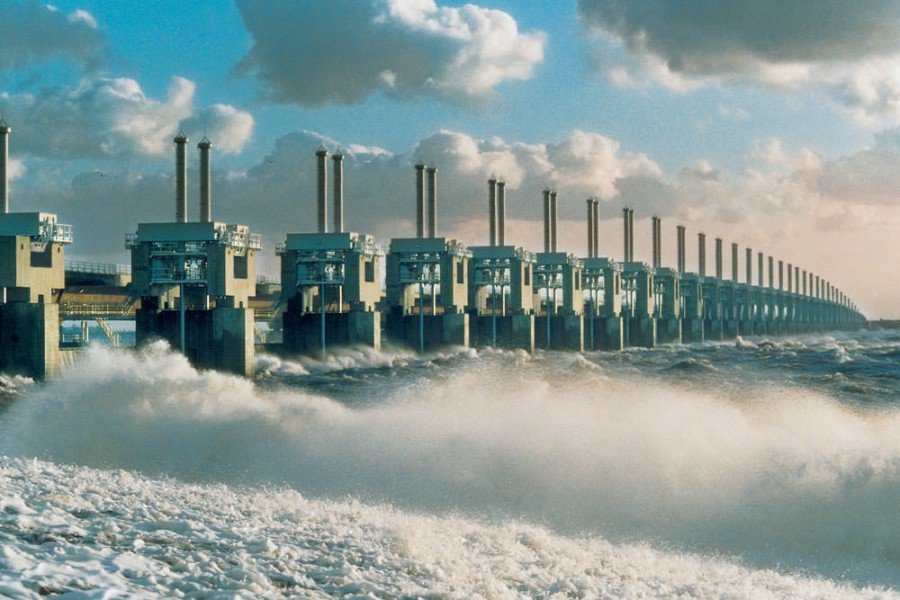
The Netherlands uses its experience in water management to position itself as a centre for delta knowledge and implementation. Through policies such as the International Water Ambition, a consolidated effort of three Dutch ministries, Dutch water expertise is actively promoted around the world as a unique way to combine economic productivity with sustainable development, linking it among others to SDGs 6 (water) and 13 (climate). Today, delta management is one of the key operationalisations of the 'trade and aid' agenda set by the Dutch government.
Dutch Delta Masterplans
One of the ways in which this worldwide promotion of Dutch delta expertise has taken shape is through the development of Dutch (co-)supported 'masterplans for integrated river basin management and safe deltas'. As the new policy document for the Dutch Ministry of Foreign Trade and Development Cooperation has just been presented, this conference comes at a pivotal time to join various actors that are differently connected to these plans in a double session on 'dynamic deltas'. The aim is to bring in experiences and insights from various perspectives to assess how 'Dutch delta masterplans' come about, how they are understood differently by various actors and which effects they generate in relation to SDGs.
The sessions will combine a series of presentations with a fish bowl discussion.
Abstract of Delta Dynamics session
Abstracts of all sessions (June 25th and 26th)
-
 News / 6 november 2026
Both ENDS and partners head to COP31 in Antalya, Türkiye
On Monday 9 November, world leaders, negotiators and civil society meet in Antalya, Türkiye for COP31, the UN climate conference that runs until 20 November. Both ENDS and our partners will be there, pushing for two things: climate finance that actually reaches women-led and community-based organisations, and an end to economic rules that block the move away from fossil fuels.
-
 Dossier /
Finance for agroecology
The lion's share of public budgets for climate, agriculture and development still goes to conventional agroindustrial projects that contribute to the current climate, food and biodiversity crises. Both ENDS and our partners are calling for a transition to agroecological practices that are people- and environment-friendly.
-
 Environmentally Just Practice /
Agroecology
Agroecology is a diverse set of agricultural practices, a field of science and a social movement. It aims to transform food systems towards greater ecological sustainability, social justice, and resilience. Both ENDS and CSO-partners around the world support farmers and pastoralists practising agroecology, both on the ground and in gathering political and financial support.
-
Letter / 3 november 2026
Objection to the proposed FMO financing of Eni Natural Energies Congo SAU
Together with JA! Justica Ambiental and ReCommon Italy, Both ENDS wrote a letter to FMO’s investment team urging them to reject a financing of up to USD 150 million in the IFC-led facility for Eni Natural Energies S.p.A. and its subsidiaries in Angola, the Republic of the Congo and Mozambique.
-
 News / 2 november 2026
Our call to FMO: Put people and climate before Eni’s profits
The Dutch development bank FMO is considering a loan to help Eni natural Energies Congo1 to grow its biofuel business in Africa. Together with our partners, we have asked FMO not to go ahead, for three reasons: Eni is a highly profitable oil and gas company that does not need public development, its biofuel projects in Africa have harmed farmers and put pressure on food supplies, and it uses lawsuits to intimidate its critics.
-
 News / 25 oktober 2026
Meet Sarah Adongo: “The soil remembers those who cry and defend it”
By Sarah Adongo, Lawyer, Witness Radio, Uganda
Sarah Adongo is one of the three winners of the 2026 Irene Dankelman Young Ecofeminist Award, presented on 21 October at the UN Biodiversity Conference (CBD COP17) in Yerevan, Armenia. A lawyer working with Witness Radio Uganda, Sarah works with women affected by gender-based violence and communities affected by land dispossession and large-scale investments. In this piece, she shares what the award means to her and why gender and environmental justice must go hand in hand.
-
 News / 25 oktober 2026
Meet Yemi Knight: “Your experience is expertise”
By Yemi Knight (they/them), Founder and Executive Director, AnchorBridge Environmental Inc., Barbados
Yemi Knight is one of the three winners of the 2026 Irene Dankelman Young Ecofeminist Award, presented on 21 October at the UN Biodiversity Conference (CBD COP17) in Yerevan, Armenia. Yemi founded AnchorBridge Environmental, a youth-led organisation that combines policy advocacy with climate education across the Caribbean. We asked them what the award means to them, what they are working on, and what they would tell other young ecofeminist leaders.
Yemi is also part of the network of the Joke Waller-Hunter Initiative, powered by Both ENDS. With a JWH grant, Yemi followed courses in Social, Environmental and Economic Impact Assessment and in Risk, Crisis and Disaster Management at the University of the West Indies, Cave Hill Campusc, as well as a Level 1A Spanish course at the Centre for Language Learning at the university’s St. Augustine Campus.
-
 Dossier /
International trade and investment with respect for people and planet
The network of international trade and investment treaties is large and complex. The Netherlands alone has signed more than 70 bilateral investment treaties (BITs) and is party to the trade and investment agreements concluded by the EU, like the EU-Mercosur and EU-Indonesia trade deals.
-
 Dossier /
Rights for People, Rules for Corporations – Stop ISDS!
Indigenous communities in Paraguay saw their attempts to regain their ancestral lands thwarted by German investors. In Indonesia, US-based mining companies succeeded to roll back new laws that were meant to boost the country’s economic development and protect its forests. This is the level of impact that investment treaties can have on social, environmental and economic development and rights. Why? Because of the ‘Investor-to-State Dispute Settlement’ clauses that are included in many such treaties.
-
 Press release / 15 oktober 2026
Dutch and Portuguese organisations file EU complaint over investment treaties that let companies and sanctioned Russian oligarchs sue EU countries for compensation
The Netherlands and Portugal join four other EU countries facing such a complaint, as the Global Days of Action against Investor-State Dispute Settlement (ISDS) begin.
-
 Dossier /
Dare to Trust: the power of unconditional funding
At Both ENDS we cherish our long-term relationships with partners in our global network. These relationships are based on equality and built on trust. The trust we have in each other has developed from years of strategic cooperation, including joint advocacy around common agendas, knowledge sharing, networking, and mobilising and sharing resources to advance environmental justice.
-
 News / 7 september 2026
Unprecedented criminal conviction in the Mariana disaster case breaks mining industry's cycle of impunity
A Brazilian federal court has, for the first time, criminally convicted a mining company and three of its managers for their role in the 2015 collapse of the Fundão dam, one of the worst environmental disasters in Brazil's history. Our partner Instituto Cordilheira, which represented victims as assistant prosecutors in the case, calls it a historic breakthrough after years of impunity.
-
 News / 3 september 2026
Restoring Land, Restoring Hope: Both ENDS at UNCCD COP17 in Mongolia
From 17 to 28 August, governments gathered in Ulaanbaatar, Mongolia, for COP17 of the UN Convention to Combat Desertification (UNCCD). At stake was more than how the world responds to land degradation and drought. It was also a question of who gets to shape land restoration, whose knowledge counts, and where the money goes.
-
Letter / 14 juli 2026
Statement on CAO Cambodia Microfinance Case
The independent complaints mechanism of the International Finance Corporation (IFC) and the World Bank Group found that the IFC violated its own Environmental and Social Sustainability Framework by investing in six banks providing microfinance in Cambodia.
-
Publication / 3 juli 2026
-
 Dossier /
Gas in Mozambique
In 2011 one of the world’s largest gas reserves was found in the coastal province of Cabo Delgado, in the north of Mozambique. A total of 35 billion dollars has been invested to extract the gas. Dozens of multinationals and financiers are involved in these rapid developments. It is very difficult for the people living in Cabo Delgado to exert influence on the plans and activities, while they experience the negative consequences. With the arrival of these companies, they are losing their land.
-
Publication / 18 juni 2026
-
Publication / 12 mei 2026
-
 Press release / 12 mei 2026
UN report warns of a growing sand crisis - The Dutch dredging sector plays a key role in global sand extraction
GENEVA/UTRECHT, 12 May 2026 – A new report by the United Nations Environment Programme (UNEP), Sand and Sustainability: An Essential Resource for Nature and Development, warns that global demand for sand is exceeding ecological limits. Large-scale extraction of sand from marine and coastal ecosystems is leading to biodiversity loss, damage to coastal communities and increasing risks in an era of climate change. Dutch dredging companies play a prominent role in this as global market leaders in large-scale sand extraction and land reclamation. “Our analyses show that the dredging sector operates globally within a system in which ecological damage and the consequences for coastal communities are systematically underestimated, whilst transparency and effective oversight are often lacking,” says the Dutch environmental and human rights organisation Both ENDS, which contributed to the report.
-
Publication / 14 april 2026