




Discovery of gas in Mozambique: blessing or curse?
COVID-19is placing our economy under a magnifying glass. Now that a large part of global trade has come to a standstill, the tension between international economic activity and local well-being is becoming more visible. That is very clear in northern Mozambique, where one of the world’s largest gas fields was discovered in 2011. Dutch companies are investing in the processing and transport of the gas.
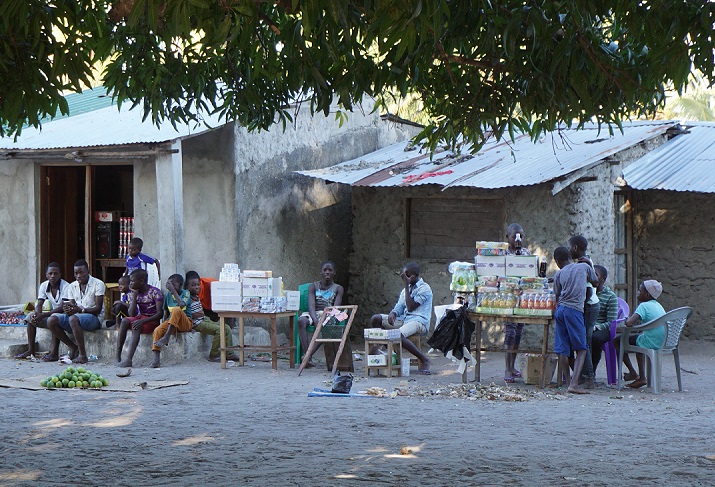
The people who live in the area where the gas was discovered were promised all kinds of benefits. Instead, however, they have lost their land, seen crime increase and have only been able to find low-skilled work. Despite the enormous investments, they have no basic services. This is fertile ground for militant movements like Al-Shabab, whichare growing rapidly. Since 2017, thousands have died and 200,000 people have fled their homes. Under pressure from the coronacrisis, the violence is getting more and more out of hand. In situations like these, COVID-19 aid to Africa can and must be deployed on the basis of a broader development perspective.
There is hope. In the northern province of Cabo Delgado, where the gas was found, a basis has been laid for rolling out broader development plans through consultations between the government, foreign investors and the local population. Local people have organised themselves and are working closely with civil society organisations on the negotiations with companies and government. Unfortunately, this has become more and more difficult in recent years. As a result of rising violence, companies are increasingly turning in upon themselves. The government has sent troops to the area, which has increased the tensions. Journalists are arrested and organisations that work with local people are being accused of recruiting members for the militant movement.
Now that Dutch trade and development minister Sigrid Kaag is taking resolute steps to alleviate the most severe needs in Africa, it is important to look at places like northern Mozambique through a different lens. The Netherlands can use the emergency COVID-19 aid to ensure a better balance between international commercial interests and the interests of the local population.
In concrete terms, that means investing in basic services and improving local food productivity. At the same time, we can reduce lawlessness by strengthening local governance structures and – as a first step – ensuring that our own embassy and companies take them into serious consideration in their decision-making processes. To put a stop to the current Wild West situation, rules on labour and environment must be clear and apply to all companies. That will also enable civil society organisations to perform their binding role more effectively.
Here in the Netherlands, we have first-hand experience of the consequences of a one-dimensional commercial perspective on gas extraction. Let us learn the lessons from our own problems in Groningen and make sure that an uncontrollable situation does not arise in which local residents systematically get the worst deal. If we do that, we can offer the people of Cabo Delgado real added value.
Read more about this subject
-
 Blog / 11 December 2025
Reflections on working on Dutch finance for Mozambique LNG
Last Tuesday, I received a short text message with big news: the minister had just announced that the financing policy for the Mozambique LNG project was stopped. It was a decision that I – along with so many others – have fought for for years. Only now, more than a week later, it is slowly sinking in that we have really won. The years of perseverance, frustration, discussions and investigations have finally led to this result. It still feels a bit surreal.
-
 Blog / 20 May 2020
'Comfortably staying home with the family': three women in Latin American villages about the Covid-19 crisis
"The Covid-19 crisis is affecting everyone, but in different ways. In some countries, people are feeling the consequences less than in others, in cities the problems are completely different to in the countryside, and men are suffering from the restrictions totally differently to women. Some of the organisations that we work with in Latin America talked to rural women about the effects of the crisis on their everyday lives and what they are doing to keep their heads above water. Below is a small selection from these conversations (freely translated from Spanish) to give some idea of the situation women in remote areas are finding themselves in, of the enormous solidarity they are experiencing and of the solutions, which largely lie in stimulating local food production." - Danielle Hirsch
-
Letter / 26 June 2020
Letter to governments over wave of Covid-19 claims in 'corporate courts'
Countries could be facing a wave of cases from transnational corporations suing governments over actions taken to respond to the Covid pandemic using a system known as investor-state dispute settlement, or ISDS. 630 organisations from across the world, representing hundreds of millions of people, are calling on governments in an open letter to urgently take action to shut down this threat.
-
 News / 26 June 2020
630 civil society groups sound alarm over wave of Covid-19 claims in 'corporate courts'
Countries could be facing a wave of cases from transnational corporations suing governments over actions taken to respond to the Covid pandemic using a system known as investor-state dispute settlement, or ISDS. Cases could arise from actions that many governments have taken to save lives, stem the pandemic, protect jobs, counter economic disaster and ensure peoples' basic needs are met. Threats of cases have already been made in Peru over the suspension of charging on toll roads, and law firms are actively advising corporations of the options open to them. 630 organisations from across the world, representing hundreds of millions of people, are calling on governments in an open letter to urgently take action to shut down this threat. The letter below is published today.
-
 News / 19 May 2020
Effective strategy to tackle COVID-19 calls for a global reset
On Monday 11 May, at the government's request, the Advisory Council on International Affairs (AIV) published an emergency advisory report on how the Netherlands can make an effective contribution to the worldwide fight against the Corona virus. Together with companies, scientists and environmental, human rights and development organisations, Both ENDS is today presenting a response to this report, in which we make a number of suggestions for investing in countries and people with insufficient resources to tackle the crisis effectively.
-
 External link / 19 October 2020
Alarm over possible wave COVID19 corporate court cases via ISDS
Countries might face a wave of cases from transnational corporations suing governments over actions taken to respond to the Covid pandemic using a system known as investor-state dispute settlement, or ISDS. In June 2020, 630 organisations already called on governments to urgently take action to shut down this threat. With this video we invigorate this message, as the threat, unfortunately, has not decreased.
-
 Blog / 28 May 2020
South American organisations are pushing back their boundaries
By Eva SchmitzThe Rio de la Plata Basin in South America extends across Argentina, Bolivia, Brazil, Paraguay and Uruguay. The livelihoods of the millions of people who live there – city-dwellers, small farmers and fishers, and indigenous peoples – are under pressure from soya cultivation, mining and logging, and by the construction of dams and ports. The COVID-19 crisis is making the situation even worse.
-
 Blog / 16 June 2020
The political and industrial elites in Indonesia grasp their opportunity
In September 2019, the streets of Jakarta were filled with angry demonstrators protesting against the Omnibus Employment Law. The law will ease the rules for mining, make it much more difficult to hold companies liable for criminal acts and severely restrict the power of the national anti-corruption committee. At the moment, such protests are completely impossible in Indonesia because of the COVID-19 crisis and the associated lockdown measures. And Indonesian people already had few other means of exerting influence on decision-making and legislative processes.
-
 Blog / 13 May 2020
You can’t eat gold, copper and gas
You can't eat gold, copper and gas
"The virus is spreading quicker than the information" – that was the first we heard in the Netherlands about COVID-19 in many African countries and the measures they were taking to tackle it. While states of emergency were announced, borders were closed and we saw image after image of violent police and army responses, many people outside the big cities did not know that what was going on. When the situation became clearer, serious concerns arose about the consequences of the measures that had been taken: the informal economy coming to a standstill, food shortages and internal migration flows.
-
 Blog / 13 April 2020
Invest International – a golden opportunity to green our trade relations
Since his previous government, prime minister Mark Rutte has wanted to create a green legacy with Invest-NL and Invest International, two new financial organisations. With the advent of the COVID-19 crisis, these organisations are more important than ever. Aiming to stimulate investment in sustainable and social projects, they will operate at a distance from the government so that they can act quickly and efficiently. With an initial budget of 2.5 billion euros, they will give financial support to companies active in sectors that the market avoids and which are at the heart of the transition. At Both ENDS, we see that as an essential step in closing the door for good on our old polluting lifestyle and putting sustainability at the centre of developments in the energy sector, in the organisation of our transport and mobility system, in how we produce our food and in the design of our cities.
-
 Blog / 20 April 2020
Call to Minister Kaag: do not waste time and help poor countries through local organisations
The world is turned upside down in this pandemic. Ordinary life is disrupted on our end. Many people suffer from the ‘polder lockdown’, although fortunately we have enough resilience and safety nets to meet our most urgent needs. Unfortunately, outside the Netherlands this all too often lacking. Especially in countries where public health structures are weak and where people are in a total lockdown. Because local communities that are shackled today may be hungry tomorrow. And aid and money does not naturally flow to the most vulnerable citizens there. So extra financial support is urgent.
-
 Blog / 15 April 2020
Now is the time! Investing in a socially just and sustainable society
After Dutch Minister of Finance Wopke Hoekstra had brought the fury of the Southern European countries down on his head on 26 March by blocking the European emergency fund, the Dutch were suddenly 'small-minded and selfish‘ (Parool) and we should ‘go on holiday somewhere else‘ (RTL News). The tone was set. The difficulties encountered in making agreements on support at European level contrast sharply with the speed with which the welcome support measures for employers, entrepreneurs and companies had been announced in the Netherlands two weeks earlier. We have learned nothing from our own past, while everyone benefits from greater priority for solidarity.
-
 Blog / 14 April 2020
Stop WTO talks until everyone can take full part in them again
The World Trade Organization (WTO) is often seen as an institution in crisis, powerless and no longer relevant, and especially after US president Donald Trump decided in 2019 to pull the plug on one of the WTO’s most important bodies (the one dealing with trade disputes). Now, more than 150 civil society organisations, networks and interest groups from around the world have signed an urgent letter to WTO Director General Roberto Azevedo, because they are seriously concerned about the state of affairs within the organization.
-
 Blog / 5 May 2020
Freedom
Today the Netherlands is celebrating freedom. Our freedom goes further than living in peace. We have the freedom to discuss policy to our hearts’ content on, for example, ending the lockdown on television, in the press and on social media. We can do that freely because we know that our rights to freedom of expression are well protected. But how different that is in countries where authoritarian leaders are grasping the crisis as an excuse to throw these rights out with the trash and rule with an iron hand.
-
 Blog / 16 April 2020
New faces are needed for a different future
In this time of crisis-driven reflection we can read telling analyses of past and present on all sides which are being translated into agendas for action. Many of the analyses address issues like inequality, climate, the financial sector, health care, education and women’s rights. They talk about ‘what’ and much less about ‘who’ or ‘how’.But a different future can only be built together with everyone, young and old, men and women. This future will not simply happen to us; we ourselves have a hand in it. It is time for new faces around the table, with new voices. It is time for a new future.
-
 Blog / 11 April 2025
FMO is very pleased with its own success – now the local population still needs to be
The FMO development bank is proud of its results and the opportunities it seizes where commercial banks fail to act. But do the bank's actions really help, ask Anne de Jonghe and Nick Middeldorp.
-
 News / 2 April 2024
The Climate lawsuit against Shell
Milieudefensie (Friends of the Earth Netherlands) and 6 other organisations are confidently heading into Shell’s appeal of the 2021 climate ruling, which will take place on April 2nd in The Hague. In the landmark lawsuit against the oil and gas company, the court decided that Shell must slash its CO2 emissions by 45%, in line with international climate agreements.
-
 Blog / 13 November 2018
The "Dutch hero" came to develop "poor Africa"
Last weekend there was an article in Dutch newspaper De Volkskrant about the Lake Turkana Wind Power Project in Kenya. I was surprised and angry about how the story was presented. How can people be so blind to the perspectives of others? And how can a progressive paper like De Volkskrant devote so much space to such an unnuanced account? This is exactly why such projects lead to conflicts.
-
 Blog / 10 February 2017
Honduras: A free river makes the heart happy
Last month I visited COPINH in Honduras. I stay in their house where I've been before. It has changed.The walls are decorated with colourful paintings, and there are altars for Berta Cáceres, their former leader who was murdered in March 2016. Instead of a simple fence, the building is now being protected by a thick wall with barbed wire. There are security camera's everywhere.
-
 Blog / 22 December 2016
Guatemala: Why the sugar is not so sweet
I'm in green Guatemala. But despite the idyllic scenery, the green covers a lot of problems. This I discovered during a trip to the sugar cane plantations at the coast.