




Amplifying environmentally just practices
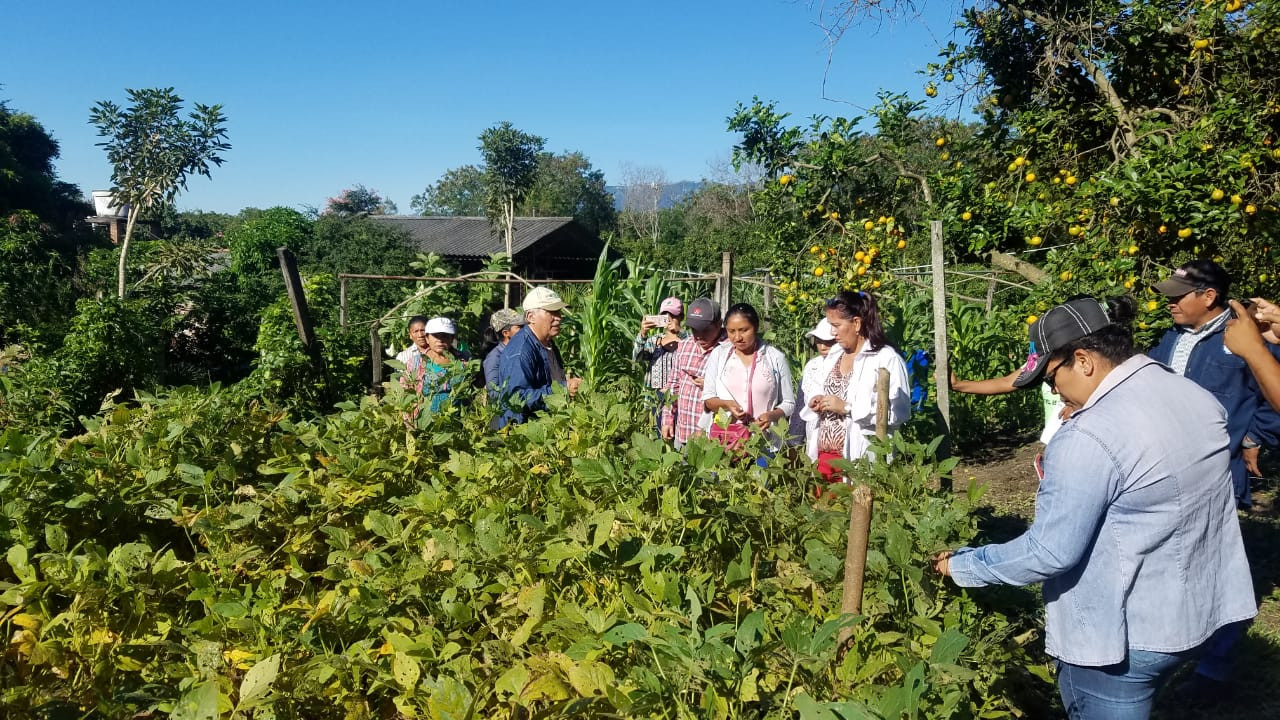
Because of the close relationship with their living environment, local communities often have the best ideas for the sustainable and equitable use and governance of land, water and forests. These environmentally just practices and processes successfully protect and restore ecosystems and address climate change. They are essential in the light of the multiple crises the world faces, but are in dire need of financial and policy support.
Both ENDS has a strong track record working with partners across Latin America, Africa, and Asia working on effective locally-led adaptation and restoration practices based on Indigenous and community knowledge - such as Farmer-Managed Natural Regeneration, Analog Forestry, and Tidal River Basin Management. They are bottom-up and planet-friendly, use and govern the environment and its natural resources in a sustainable, just and inclusive way, and contribute to societal well-being and healthy ecosystems.
Barriers to the upscaling of environmentally just practices
Despite the proven effectiveness of these locally-led practices, most of them still exist under the radar of policymakers, and face multiple barriers that prevent them from becoming widely recognised and more common.
Centralized water governance for example often overlook the context-specific solutions developed by local communities to address water scarcity. Small-scale farmers -particularly women - face insecure land tenure, hindering their ability to make the long-term investments needed to improve their land. Additionally, international trade models often create barriers to seed autonomy, limiting the ability of communities to preserve, exchange, and develop locally adapted seed varieties. And existing climate finance remains largely inaccessible to local groups and organizations engaged in effective climate action.
Supporting environmentally just practices
Both ENDS is committed to nurturing and increasing the visibility of environmentally just practices and processes so that they can grow and catalyse systemic change from the grassroots up. We strengthen, promote and scale these practices via direct financial and institutional support, by facilitating cross-sectoral and cross-regional learning and networking, and by building collective strategies to further implement and promote these initiatives. This way, we build evidence of the net positive benefits of these practices and processes for people and planet. With a whole range of environmentally just practices and processes worldwide, Both ENDS and partners show tangible examples that can inspire and promote a radically different system that places human and environmental well-being at its core.
Advocating for policies that let environmentally just practices thrive
At the same time, we engage in high-level advocacy to bring about systemic change in policies and funding mechanisms to ensure they enable locally-led adaptation initiatives to thrive. We advocate for favourable policies at national and international level, and address the current barriers that prevent local actors—especially in the Global South—from accessing international climate and environmental finance. With our extensive network of local partners, and by playing a dual role as regranter and policy advocate, we can help funders to reach grassroots organizations today, while collectively working towards more inclusive funding structures tomorrow.
Read more about this subject
-
 Dossier /
Export Credit Agencies: Who pays the price?
Both ENDS calls on the government only to provide export credit insurance to sustainable projects that cause no social and/or environmental damage in the countries where they take place.
-
 Dossier /
Trade agreements
International trade agreements often have far-reaching consequences not only for the economy of a country, but also for people and the environment. It is primarily the most vulnerable groups who suffer most from these agreements.
-
 Dossier /
International trade and investment with respect for people and planet
The network of international trade and investment treaties is large and complex. The Netherlands alone has signed more than 70 bilateral investment treaties (BITs) and is party to the trade and investment agreements concluded by the EU, like the EU-Mercosur and EU-Indonesia trade deals.
-
 Dossier /
Fair Green and Global Alliance (FGG)
Together with civil society organisations from all over the world, the Fair Green and Global (FGG) Alliance aims for socially just, inclusive and environmentally sustainable societies in the Netherlands and the Global South.
-
 Dossier /
Advocating for responsible policies of development banks
Development banks should comply with strict environmental and human rights rules to ensure that their projects benefit and do not harm the poorest groups. Both ENDS monitors the banks to make sure they do.
-
 Dossier /
The Climate lawsuit against Shell
Both ENDS is co-plaintiff in the climate lawsuit brought by Milieudefensie (Friends of the Earth The Netherlands) in 2018 against Shell to stop the company from causing harm to the climate. In 2021, the judge ruled in favor of the climate, but unfortunately the company appealed. The court will therefore render its verdict at the end of 2024.
-
 Dossier /
Small Grants Big Impacts
Small grants funds offer an effective, alternative way to channel big money from large donors and funds to local groups and organisations that are striving for a sustainable and just society everywhere around the world.
-
 Dossier /
Investment treaties
Investment treaties must be inclusive, sustainable and fair. That means that they must not put the interests of companies before those of people and their living environment.
-
 Dossier /
Large-scale infrastructure
Large-scale infrastructural projects have detrimental effects on local people and the environment, while their benefits are felt elsewhere. Both ENDS is working to ensure that local people have a greater say in decision-making and is investigating the way these projects are funded.
-
 Dossier /
Green Climate Fund: calling for local access to climate finance
Local organisations and groups must be given access to climate finance from the Green Climate Fund. They know exactly what is happening in their local context and what is required for climate adaptation.
-
 Dossier /
The merits of community-based restoration
Globally, the area that is suffering desertification and land degradation is ever expanding. Unsustainable and often large-scale agricultural practices, including the copious use of pesticides and fertilisers, are a major driver of land degradation, aprocess that is further exacerbated by climate change, causing more erratic rainfall patterns, longer periods of drought and unpredictable growing seasons. This is very problematic not only for the hundreds of millions of people who directly depend on land and water for their livelihoods, but also for life on earth as a whole. It is clear that this process must be stopped and reversed, better sooner than later. But how to go about it?
-
 Dossier /
The JWH Initiative: supporting young environmental leaders
The JWH Initiative aims to stimulate leadership of young people in environmental organisations by giving small grants to individuals to expand their knowledge, experience and training.
-
 Blog / 3 juni 2025
A food forest as an inspiring oasis between monoculture fields
Recently, we visited food forest Ketelbroek with a group of colleagues. This project was initiated by food forest pioneer Wouter van Eck and our own Pieter Jansen. What a beautiful place! Located between monocrop fields of ryegrass, beetroot and potatoes, the food forest is a green oasis. Birdsong fills the air and there is a constant buzz and fluttering all around. Hares, badgers, foxes and wild boars are regular visitors. And let's not forget the beavers.
-
 News / 9 mei 2025
Women’s leadership in agroecology flourishes in Eastern and Southern Africa
On 12 and 13 February 2025, women from Kenya, Uganda, and Zimbabwe gathered in Nairobi for the Africa Women Leaders in Agroecology (AWOLA) Regional Networking Forum. The event marked a significant moment in the leadership programme of PELUM Kenya, which empowers young women in their role as leaders in the agroecological transition. This project was made possible thanks to support from Both ENDS as part of the Fair, Green and Global (FGG) Alliance.
-
 News / 7 april 2025
Food forest Ketelbroek: where food production and biodiversity come together
When Both ENDS-colleagues visit partners, they often go on a "field trip" to see how our joint work affects people and communities. This year, we did the same in the Netherlands. Food forestry pioneer Wouter van Eck demonstrates a group of Both ENDS partners how regenerative agriculture can offer solutions to the climate and biodiversity crises.
-
 News / 21 maart 2025
Dutch Royal couple visits Thogoto Forest: a green oasis on the outskirts of Nairobi
This week, King Willem-Alexander and Queen Máxima visited Thogoto Forest as part of their state visit to Kenya. They were able to see the impact of the work of our partner MCDI in the area: a restored forest, clean water and farmers who can earn a living by selling their agro-ecological products.
-
 News / 13 januari 2025
New partnership with Netherlands Enterprise Agency for resilient food systems in Sahel
The situation in Africa's Sahel is the world's fastest-growing humanitarian crisis. Over 3 million people are fleeing violence. They are ravaged by hunger, disease and increasing drought caused by climate change. Both ENDS and its partners are successfully working on accelerating the resilience of local food systems and communities in the Sahel, based on ‘Farmer Managed Natural Regeneration’ (FMNR). The project, funded by DOB Ecology, will end in mid-2026, but has already been followed up thanks to a new collaboration with the Netherlands Enterprise Agency (RVO).
-
 News / 2 december 2024
Advocating for Local Solutions: Both ENDS at UNCCD COP16 to Champion Sustainable Land Management and Gender Equality
As the United Nations Convention to Combat Desertification (UNCCD) celebrates its 30th anniversary, the global community faces an urgent need to address the escalating challenges of land degradation, desertification and drought. At the forefront of these efforts, Both ENDS has long advocated for inclusive, locally-led solutions to these critical issues. In this interview, Nathalie van Haren and Yordanos Mulder, who will represent Both ENDS at the upcoming UNCCD COP16, share insights into the significance of the conference, the key issues on the agenda, and the crucial role of local communities in shaping effective land governance. They discuss Both ENDS' ongoing work to amplify the voices of marginalised groups and emphasise the importance of sustainable land management practices, particularly those driven by women, youth, and Indigenous Peoples.
-
 News / 1 november 2024
Both ENDS at COP29: advocating for gender just climate finance
On November 11th, the 29th UN Climate Conference will start in Baku, Azerbaijan. Just like previous years, Both ENDS will be there to advocate for local access to climate finance, and to support our partner organisations in their advocacy work. How do we do that, and what are our hopes (and worries) about this 29th edition of the UNFCCC COP? We asked Marius Troost, who will be joining COP29 together with Daan Robben.
-
 News / 10 oktober 2024
Argentina’s Matanza-Riachuelo Biocultural Corridor
The Matanza-Riachuelo River, which runs through the city of Buenos Aires, is known to be one of the most polluted waterways in the world. Yet it also contains many important ecosystems that play a key role in the lives of millions of people, and countless plant and animal species.