Both ENDS





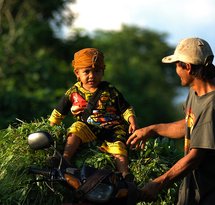
All over the world countries conclude agreements with each other in order to receive access to foreign markets. The Member States of ASEAN (Association of Southeast Asian Nations)* want to establish a common market in 2015 to promote economic growth. Officially ASEAN has formulated the goal of making this growth as sustainable, fair and inclusive as possible. However, in many cases local communities that depend on natural resources such as forests will be the victims of this agreement.
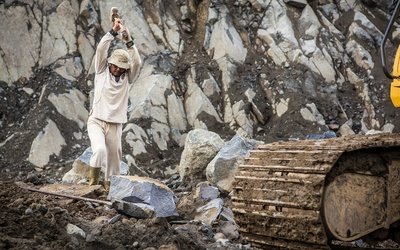
In March the Indonesian government announced that it will terminate the Bilateral Investment Treaty (BIT) with the Netherlands as of July 1st, 2015 (for more information, see the press release of 24 March at the bottom of this post). Several organizations, including Both ENDS, have been raising questions about these controversial international trade agreements for a long time and think they should be drastically revised or even terminated. The Socialist Party and GreenLeft have asked parliamentary questions about the effects of these treaties following Indonesia’s decision. Both ENDS is curious about the answers to these parliamentary questions and about the consequences they will have for Dutch policy in this area.
6 civil society organizations, including Both ENDS have submitted a gender comment on the newly proposed EIB Environmental and Social Framework. The EIB Environmental and Social Standards has to be updated to ensure that due attention to gender specific impacts, risks and related mitigation strategies is integrated in the policy and each standard, as well the assessment needs to specifically address the needs and problems of all genders. A lot of improvements can be made in the integration of gender aspects in policy and standards, in order to prevent violation of the rights of women and girls during project implementation, and tools (widely used by other organisations) and or commitments for their development should be included (inclusive consultations, Gender assessments and analyses, gender impact assessment, Legal Assessment Tool (LAT) for gender-equitable land tenure, gender responsive tools for prevention of violence.
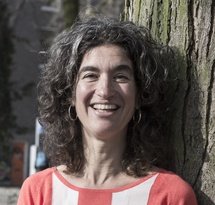
At the end of November EFLAC, the most important gathering of feminists from throughout Latin America and the Caribbean, took place in a park just outside Montevideo, Uruguay. Within Both ENDS, I coordinate the GAGGA programme, in which we promote cooperation between the environmental and women's movements. Our partners Mama Cash and FCAM persuaded me that this meeting was the perfect opportunity to find out whether and, if so, in which way women are interested in the environment. They had prepared me for a very intensive meeting, at which the whole spectrum of emotions would be aroused and expressed. I had no idea what to expect and set off with a completely open mind. And so it came that I spent four days among more than 2,000 women from across the continent.
'At the moment we produce six kilos of gold per year, we cannot meet the demand,' María Luisa Villa of AMICHOCÓ from Colombia says. In the last couple of years, AMICHOCÓ has worked hard to organise small-scale sustainable gold miners and to make certification possible. Under the brand name 'Oro Verde' the Fairtrade Fairmined gold is now available on the market. 'We are ready to expand production, but the preservation of biodiversity and the protection of the rights of ethnic groups remains our priority,' Villa stresses.