Both ENDS





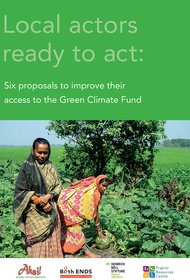
Local organisations and groups must be given access to climate finance from the Green Climate Fund. They know exactly what is happening in their local context and what is required for climate adaptation.
Both ENDS, MamaCash and FCAM are proud to contribute to the 'Adaptation Futures 2016- conference'.
Adaptation Futures is the biennial conference of the Global Programme of Research on Climate Change Vulnerability, Impacts and Adaptation (PROVIA). In 2016 the European Commission and the Government of the Netherlands co-host the fourth edition. Adaptation Futures 2016 is where scholars, practitioners, policymakers and business people from all around the world go to connect, learn and inspire. It highlights adaptation practices and solutions for people, governments and businesses. The programme addresses all sectors and all parts of the world.
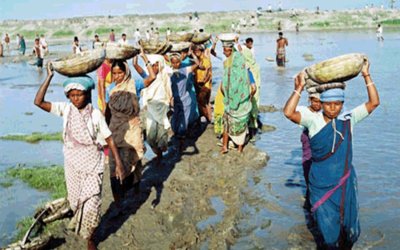
Both ENDS has developed a method to integrate gender issues into managing natural resources like land and water. Partner organisations AMICHOCÓ in Colombia, ANCE in Togo and BARCIK in Bangladesh have been using this method in their areas since 2010. Although women in these and many other areas are doing the same work as men, equal control of the production and management of resources doesn't yet exist. The approach Both ENDS uses is aimed towards expanding awareness of gender relations and the importance of equality by defining the problem and applying practical exercises.
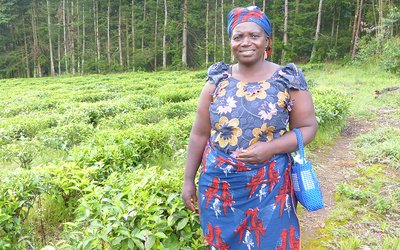
Small grants funds offer an effective, alternative way to channel big money from large donors and funds to local groups and organisations that are striving for a sustainable and just society everywhere around the world.
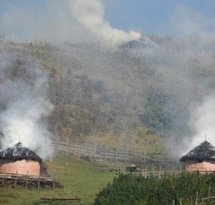
Under the pretext of a ‘Natural Resource Management Project’ funded by the World Bank, the Kenyan Forest Service has, again, started to forcibly evict the indigenous Sengwer people from their ancestral lands in the Kerangany Hills and to burn down their houses. This was documented on March 2nd, by a fact-finding team that was sent to the ground by the World Bank’s own inspection panel.

Both ENDS and partner organisation Amichocó (Colombia), BARCIK (Bangladesh) and ANCE (Togo) acknowledge the important role of gender inequality in our work on environmental and development issues. We jointly set out to test a practical approach to mainstream gender in our work on natural resources management, each in its specific context and based on its specific ambition.