Both ENDS





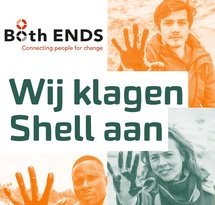
The Hague, April 5, 2019 - Today Friends of the Earth Netherlands will deliver a court summons to Shell to legally compel the company to cease its destruction of the climate, on behalf of more than 30,000 people from 70 countries. A 236 page complaint will be delivered to Shell's International Headquarters in the Hague this afternoon by Friends of the Earth Netherlands, ActionAid NL, Both ENDS, Fossielvrij NL, Greenpeace NL,Young Friends of the Earth NL, Waddenvereniging and a large group of co-plaintiffs.

Today an alliance of more than 150 organisations, trade unions and social movements in countries across Europe is launching a joint programme against unfair trade and investment agreements, and especially against the controversial Investor-to-State-Dispute-Settlement (ISDS) mechanism. Under ISDS, investors can bring complaints against states whose social and environmental legislation pose a threat to their profits.
100+ NGOs launch #Together4Forests urging EU action
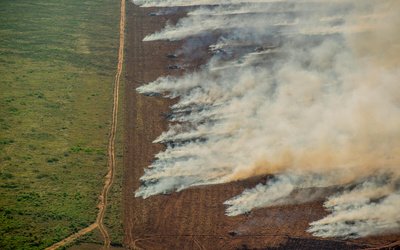
Fires raging in the Amazon are started deliberately to make way for large-scale industrial agriculture – and EU market demand for commodities produced on former-forest land is adding fuel to the fires. Globally, the EU is responsible for over 10% of forest destruction through its consumption of commodities like meat, dairy, soy for animal feed, palm oil, coffee and cacao.
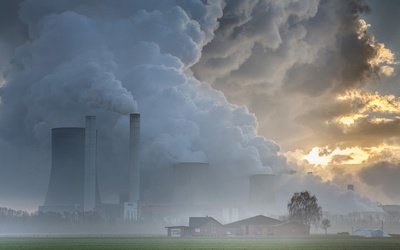
Amsterdam, 23 September 2019 - The world's 5th largest pension fund, with assets of over €430 billion, Dutch ABP is continuing to invest in companies that are on a collision course with the Paris climate goals, such as coal and oil companies.
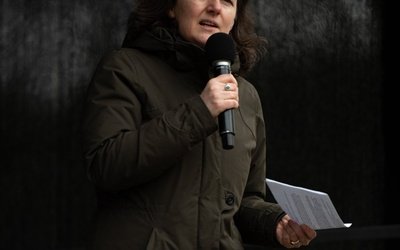
A number of our colleagues at Both ENDS made a lot of noise at various locations around the country today, as part of the national Klimaatalarm (Climate Alarm) campaign. Annelieke Douma gave a short speech in Haarlem on the major role played by the Netherlands in climate change and environmental degradation beyond our borders. She made a number of suggestions that would immediately make Dutch foreign policy a lot more climate-friendly. Below is the text of her speech.
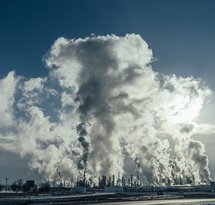
The value of ABP's pension fund investments in fossil fuel companies has fallen by 44% from end of last year to its lowest point on March 16 this year, while the value of the rest of the portfolio decreased by 26%. This impact can be seen in simulations based on the publicly available equity portfolios of Dutch pension funds ABP and Zorg en Welzijn (PFZW), carried out by research agency Profundo on behalf of Both ENDS. The simulations show that the risks of investing in the fossil fuel sector are increasing.
Yesterday, the French President Macron, the President of the World Bank Group, Jim Yong Kim, and the Secretary-General of the United Nations, António Guterres, met with international leaders and committed citizens from around the world in Paris. According to the organisers, the aim of this gathering was to 'address the ecological emergency for our planet' as 'two years to the day after the historic Paris Agreement, it is time for concrete action.'
Amsterdam, 12 February 2019 - Fossil fuel giant Royal Dutch Shell is facing legal action from environmental and human rights organisations if it fails to align its growth plans with global climate goals aimed at averting catastrophic global warming.