




Rural Women's Assembly wins Right Livelihood Award
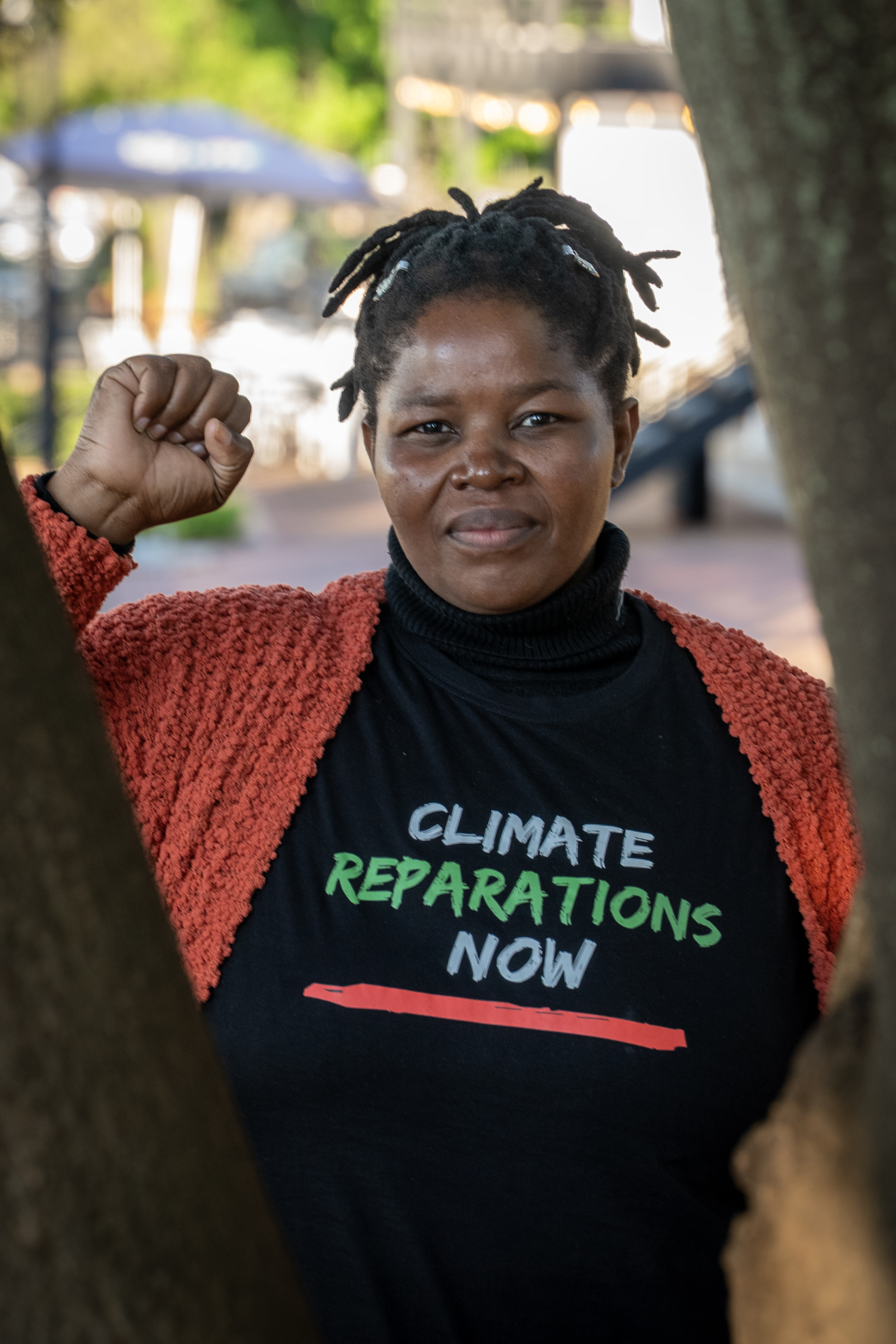
We are thrilled to share that our partner the Rural Women's Assembly (RWA) is one of this year's Right Livelihood Laureates! The award, often called the "Alternative Nobel Prize", honours RWA for bringing together more than 178,000 women farmers in eleven Southern African countries. Together, these women stand up for their land, their seeds and their right to make decisions about their own lives and bodies.
The Right Livelihood Award was founded in 1980 to honour people working for social justice and the environment, with a particular focus on change-makers. The 2026 Laureates were announced on 30 September and will receive the award at a televised ceremony in Stockholm on 1 December. Other Laureates this year are the Georgian Young Lawyers' Association, Jalila Haider and Timnit Gebru.
RWA was founded in 2009 by 250 rural women in Limpopo Province, South Africa. It has since grown into one of the region's largest autonomous platforms for women who have long been excluded from owning land. It now organises across Angola, Eswatini, Lesotho, Madagascar, Malawi, Mauritius, Namibia, South Africa, Tanzania, Zambia and Zimbabwe. RWA does not follow the traditional NGO model. It works through a flat, volunteer-led structure, and roughly 95 per cent of its spending goes straight to member activities.
"We cannot have strong and sufficient agency if we're not organised from below," says Mercia Andrews, RWA's Regional Coordinator.
Both ENDS has worked with RWA for many years. Most recently this was through the Global Alliance for Green and Gender Action, and Dare to Trust, our project with unconditional, trust-based funding. In that project, RWA's Eswatini chapter set up an agroecology demonstration centre and a seed bank for its community of 20,000 seed savers. This award recognises what RWA's members have built over decades: seed systems and grassroots solutions that women hold, protect and pass on.
Feminist agroecology and seed sovereignty matter for environmental justice because they put control over seeds, land and food in the hands of those who sustain them, rather than in the hands of those who profit from them. It is a privilege to support and collaborate with RWA, and we call international actors all over the world to join us in promoting and supporting gender-just climate solutions globally.
Most recently we are working with RWA to document solutions that women are pioneering in the face of extreme heat. Preliminary findings from this research show just how much RWA members are already doing to help their communities adapt: in Namibia and South Africa, women are documenting drought-resistant plants and their medicinal uses, drawing on Indigenous and Traditional Ecological Knowledge to respond to heat-related health challenges.
It also highlights the unequal impacts of extreme heat: women reported symptoms including headaches, exhaustion, dizziness, dehydration and difficulty sleeping, while heat can intensify existing burdens such as water collection, care work and outdoor labour. The first briefing, Extreme Heat, Health and Climate Justice, is out now, with the full report due to be published during the first week of December.
Guardians of land and life
RWA's agroecology and feminist Schools teach sustainable food systems and also take on the patriarchal structures within small-scale farming. The movement runs 24 seed multiplication sites and has documented hundreds of Indigenous seed varieties. In this way it defends farmer-managed seed systems against corporate capture. Its organising has also brought legal change: a 2016 Zambian law requiring equal land allocation to women, and Eswatini's Sexual Offences and Domestic Violence Bill, signed in 2018.
"If we can get control and access over land, the world will be a better place for women," says Zakithi Sibandze, Eswatini Chapter Leader.
On receiving the award, Andrews said: "No single voice moves a mountain; it is the patient, collective weight of thousands of rural women organising together that has shifted what was once thought immovable."
Ole von Uexkull, Executive Director of Right Livelihood, said that as corporations tighten their grip on the world's seed systems, RWA "shows what real resistance looks like."
Read the full press release from Right Livelihood.
Congratulations to the Rural Women's Assembly and all its members.
Read more about this subject
-
 Dossier /
Dare to Trust: the power of unconditional funding
At Both ENDS we cherish our long-term relationships with partners in our global network. These relationships are based on equality and built on trust. The trust we have in each other has developed from years of strategic cooperation, including joint advocacy around common agendas, knowledge sharing, networking, and mobilising and sharing resources to advance environmental justice.
-
 Dossier /
Global Alliance for Green and Gender Action (GAGGA)
GAGGA rallies the collective power of the women's rights and environmental justice movements to realize a world where women can and do access their rights to water, food security, and a clean, healthy and safe environment.
-
 News / 27 februari 2026
Both ENDS strengthens the resilience of female environmental defenders worldwide thanks to multi-year contribution from the Postcode Lottery
In recent years, Both ENDS has received an additional contribution of €875,000 from the Postcode Lottery for the Autonomy & Resilience Fund (2022–2025), implemented in collaboration with the Global Alliance for Green and Gender Action (GAGGA). This support was essential because female environmental rights defenders around the world are increasingly facing climate change, repression and shrinking civil space. With this contribution, Both ENDS supports female activists and their communities with flexible, trust-based funding, enabling them to develop their own solutions to urgent environmental and climate problems.
-
 Environmentally Just Practice /
Non-Timber Forest Products (NTFPs)
About one in every six people, particularly women, directly rely on forests for their lives and livelihoods, especially for food. This shows how important non-timber forest products (NTFPs) and forests are to ensure community resilience. Not only as a source of food, water and income, but also because of their cultural and spiritual meaning.
-
 News / 5 november 2025
Interview: Both ENDS at COP30 for Climate Justice and Systemic Change
Both ENDS is present at COP30 to advocate for genuine access to climate finance for locally led, gender-just climate solutions and the mechanisms that facilitate this, including those for farmer-led restoration. Furthermore, the organisation participates to ensure the crucial connection between the climate negotiations and the trade and investment frameworks that shape them.
Learn more about the Both ENDS team at COP30 below, and find all the activities and side-events in which Both ENDS will participate.
-
 News / 5 november 2025
Overview of Both ENDS events at COP30 in Belem, Brazil
Both ENDS is present at COP30 to advocate for genuine access to climate finance for locally led, gender-just climate solutions, and for the mechanisms that make these possible, including those supporting farmer-led restoration. The organisation also engages to highlight the crucial connection between climate negotiations and the trade and investment frameworks that shape them.
Below is an overview of the Both ENDS team at COP30 and a detailed look at the activities and side-events in which Both ENDS will participate.
-
 News / 16 juli 2025
Case Study: Women Advocating for Gender and Climate Justice in Burkina Faso
The Women Environmental Programme Burkina Faso (WEP BF or WEP) is leading the way in gender-just climate solutions, putting the power of advocacy directly into the hands of women farmers. “In Burkina Faso, women play a crucial role in food production and natural resource management, yet they continue to face systemic barriers to land ownership,” explains a WEP team member. “Despite legal provisions, deeply ingrained customary norms remain dominant, restricting women’s access to land as user rights only, which need to be mediated through male family members.” Without secure access to land, they face significant obstacles in sustaining their agricultural activities, improving local food security, and fully participating in their communities.
-
 News / 16 juli 2025
Case Study: Fighting Environmental Transphobia and Social Fragmentation in Brazil
In the face of environmental transphobia, a form of discrimination where trans and gender-diverse communities are disproportionately impacted by environmental degradation,excluded from climate policies, and often met with stigma and exclusion by environmental justice movements, Grupo Orgulho, Liberdade e Dignidade (GOLD) has emerged as a bold and visionary force for change in Brazil. At the heart of this movement is Débora Sabará ,GOLD’s leader, a travesti activist who has fought tirelessly to place the perspectives andneeds of LGBTIQAPN+ (Lesbian, Gay, Bisexual, Trans, Intersex, Queer, Asexual, Pansexual, Nonbinary and other identities), Indigenous and Afro-Brazilian communities at the center of environmental justice conversations.
-
 News / 16 juli 2025
Case Study: Community Paralegals Defending Land Rights from Extractive Industries and Land Grabs in Mozambique
Across Mozambique, land represents more than just territory. It is the cornerstone of livelihoods, culture, and autonomy for many communities. When companies arrive, claiming large portions for mining, oil exploration or agribusiness, residents face significant challenges in asserting their rights. Mozambique’s Land Law (1997) grants communities user rights, ensuring they can occupy and use land for subsistence and cultural purposes.
-
 News / 16 juli 2025
The challenges of climate change, gender inequality, and conflict
This FCDO-supported project, part of the GAGGA programme, brought together 6 women-led community-based organisations from around the world to explore how they navigate the combined challenges of climate change, gender inequality, and conflict. Through a Feminist Participatory Action Research approach, the organisations documented strategies ranging from land rights advocacy to climate-resilient agriculture, highlighting how extractive industries, militarisation, and patriarchal systems drive exclusion and insecurity. Their findings are now informing donors and policymakers on the need to support grassroots women’s leadership. In the following interview, the project lead shares more about the research, key insights, and its broader impact.
-
 Blog / 2 juli 2025
Women at the frontlines of climate action: local power for global change
By Tamara MohrLast week, GAGGA, the Global Alliance for Green and Gender Action, with Both ENDS as one of the Alliance members, together with FCAM and Mama Cash, organised its Global Meeting in Indonesia. The goal of this meeting was to recognise, celebrate and look ahead at cross-movement and cross-regional connections, to strengthen the collective power of gender, climate and environmental justice movements.
-
 External link / 29 april 2025
 -
 Blog / 23 april 2025
The power of trust
Trust builds trust. That is what I have learned from how Both ENDS works - within our team, with partners in joint strategies and advocacy, and in our relationships with partners as a funder. Trust is the foundation. It is what allows compassion to grow, what gives rise to hope, and what fuels real solidarity. This is especially powerful in contrast to the prevailing global trend of political and international leaders who prioritize hard measures and self-interest, ignoring relations of trust. It is even more reason for us to share what we have experienced when we put trust first.
-
Publication / 1 april 2025
-
 Event / 12 maart 2025, 09:30 - 11:15
The Conflict, Gender, Climate Nexus: Localized understanding and policy recommendations
Across the world, women lead efforts to advance peace, gender and environmental justice. From the Philippines to Mozambique, Burkina Faso to Brazil, they face a deadly convergence of violence, environmental destruction, and extractivist land grabs. As corporate interests, state forces or other armed actors expand into their territories, entire communities are displaced, criminalized, or subjected to violent repression. At the same time, worsening climate disasters further erode their means of survival, exacerbating food insecurity, water shortages, forced migration and gendered inequalities.
-
 News / 24 december 2024
LILAK's Dare to Trust projects: Dreams transformed into actions
LILAK has worked alongside indigenous women communities for over a decade, focusing on building capacity and advocating for rights to land, the environment, and bodily autonomy. Despite gaining recognition and trust from allies, the journey was challenging. Starting with limited resources, LILAK faced resistance, particularly from patriarchal leaders and the state, which often labeled them as adversaries. Nevertheless, they adapted and continued their work, grounded in solidarity and sisterhood.
-
 News / 24 december 2024
Dare to Trust: a journey of culture, renewal, and empowerment of Sengwer women
Historically, the Sengwer community has lived in harmony with their environment, relying on forest resources for sustenance and integrating conservation into their daily lives. However, recent government policies aimed at forest protection have limited their access to these ancestral lands. Although these regulations intend to protect the environment, they often disregard the traditional conservation practices of indigenous communities like the Sengwer, who have been natural stewards of these lands for generations. Faced with these restrictions, the Segerger Women’s Conservation Group intensified their conservation efforts, viewing it as both a cultural duty and a means to safeguard their heritage.
-
 News / 24 december 2024
Fórum Suape empowers women's groups with Dare to Trust-grants
Fórum Suape decided to help several women’s groups in their network. First, they wanted to understand the desires and needs of each group, with the aim of fostering collective thinking and understanding their collective interests and goals. Five groups were selected, one group had difficulty in organizing themselves. They did not move forward and did not receive the money. The other four had wonderful results.
-
 News / 24 december 2024
Dare to Trust: Sowing dreams irrigated with droplets of trust (Colectivo CASA)
Collectivo CASA in Bolivia, with support from Both ENDS and Dare to Trust, found great satisfaction in assisting women defenders with personal and economic needs. This support allowed the women to express their needs and develop a shared vision for their improvement. Although managing funds sustainably posed challenges, the women defenders demonstrated their skills by quickly creating a “Plan for Good Living,” (“Buen Vivir” in Spanish) addressing health, economy, empowerment, and food production.
-
 News / 24 december 2024
NTFP-EP supports grassroots women’s organisations with Dare to Trust-grants
The pilot of Dare to Trust, facilitated by NTFP-EP, was implemented in two grassroots women’s organisations in the Philippines and Cambodia. The Dare to Trust project provided them with the independence to utilize the resources they have and thus handed to them the agency for more grounded and better judgment. By giving more liberty to the communities we are moving them away from bureaucratic processes and power structures, and towards more empowered decision making capabilities.

