




Another ISDS claim hits the Netherlands: Petrogas sues over solidarity contribution and royalty regulations
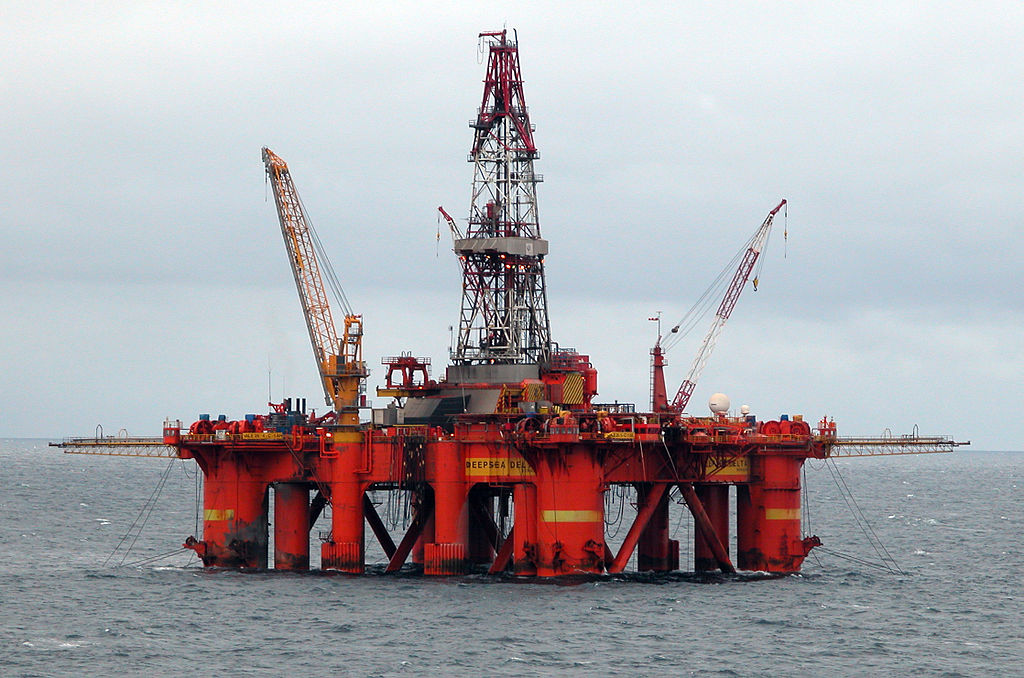
SOMO and Both ENDS strongly condemn the newly revealed investor-state dispute settlement (ISDS) case filed by Petrogas, an Omani oil and gas company operating two shallow-water gas fields in the Dutch North Sea, against the Netherlands under the Netherlands-Oman bilateral investment treaty (BIT).
The case reportedly challenges the Dutch government’s introduction of a temporary solidarity contribution on windfall profits in the oil and gas sector - a measure designed to ensure that energy companies contribute fairly during a period of exceptional profits and social hardship. The contribution was part of a European Union-wide regulation adopted in response to the 2022 energy crisis, when soaring energy prices led to record profits for fossil fuel producers while households and businesses faced rising energy bills.
The case also appears to challenge the new Dutch conditional withholding tax on interest, royalties, and dividends, a measure first introduced in 2021 and extended in 2024. This tax aims to curb tax avoidance and profit shifting by imposing a levy on payments made by Dutch entities to related companies in low-tax jurisdictions or in certain abuse situations. Although Oman itself is not on the Dutch list of low-tax jurisdictions, the inclusion of this measure in Petrogas’s claim suggests that money flows to or through tax havens may be involved.
This case marks yet another instance of a foreign investor bypassing domestic courts and challenging policy decisions through international arbitration.
Bart-Jaap Verbeek, senior researcher SOMO:
“It’s deeply troubling that yet another fossil fuel company is resorting to ISDS to fight fiscal measures meant to protect the public interest. These parallel tribunals allow corporations to sidestep national legal systems and challenge democratically adopted policies. The Dutch government should not have to defend essential measures before secretive arbitration panels designed to protect investors, not citizens.”
Growing trend of ISDS cases
The Petrogas case follows a growing trend of ISDS claims in Europe over similar measures. Oil refiner Klesch Group has launched multiple cases against Germany, Denmark, and the European Union for their implementation of the same EU solidarity contribution, exposing how ISDS mechanisms can be weaponised to contest coordinated public responses to crises such as the energy and cost-of-living crises.
The Netherlands itself is facing at least two other ISDS cases:
- ExxonMobil v. The Netherlands, linked to the closure of the Groningen gas field, and
- Andraous v. The Netherlands, concerning a dispute over the depletion of Ennia Bank, an insurance and pension group in the Dutch Antilles.
Earlier, the Netherlands also faced two high-profile claims by RWE and Uniper over the coal phase-out law, in order to comply with the climate objectives under the Paris Agreement, both of which were later discontinued.
Fernando Hernández:
“These repeated ISDS claims show that the Netherlands is increasingly being targeted for taking necessary climate, fiscal, and social measures. For years, Dutch investment treaties have enabled similar claims against other countries. Now they are coming home to roost. It’s time for the Netherlands to take responsibility and end its support for ISDS once and for all.”
SOMO and Both ENDS call on the Dutch government to stop signing new treaties containing ISDS, terminate outdated treaties, and promote reliance on domestic courts and transparent and accountable judicial processes instead of closed, investor-biased tribunals.
As Europe transitions away from fossil fuels and seeks fair taxation of excess profits, it is imperative that governments retain their ability to act decisively in the public interest without the constant threat of costly investor lawsuits.
Read more about this subject
-
 Dossier /
Trade agreements
International trade agreements often have far-reaching consequences not only for the economy of a country, but also for people and the environment. It is primarily the most vulnerable groups who suffer most from these agreements.
-
Publication / 3 juli 2026
-
 Dossier /
Gas in Mozambique
In 2011 one of the world’s largest gas reserves was found in the coastal province of Cabo Delgado, in the north of Mozambique. A total of 35 billion dollars has been invested to extract the gas. Dozens of multinationals and financiers are involved in these rapid developments. It is very difficult for the people living in Cabo Delgado to exert influence on the plans and activities, while they experience the negative consequences. With the arrival of these companies, they are losing their land.
-
Publication / 18 juni 2026
-
Publication / 12 mei 2026
-
 News / 14 april 2026
New report: Phasing out ISDS in the Netherlands: a roadmap
Today, Both ENDS and SOMO are publishing the report Phasing out ISDS in the Netherlands: a roadmap. In the report, we highlight the Netherlands’ role in the ISDS system and offer practical guidance on phasing out ISDS.
-
 Dossier /
Rights for People, Rules for Corporations – Stop ISDS!
Indigenous communities in Paraguay saw their attempts to regain their ancestral lands thwarted by German investors. In Indonesia, US-based mining companies succeeded to roll back new laws that were meant to boost the country’s economic development and protect its forests. This is the level of impact that investment treaties can have on social, environmental and economic development and rights. Why? Because of the ‘Investor-to-State Dispute Settlement’ clauses that are included in many such treaties.
-
Publication / 14 april 2026
-
 News / 26 maart 2026
New project: Climate Accountability in EU Trade
Through its new project “Climate Accountability in EU Trade: Testing the SEP and DAGs for Climate-Linked FTA Enforcement” Both ENDS, with support from the European Climate Foundation, is exploring how the European complaints mechanism (SEP) and Domestic Advisory Groups (DAGs) can be more effectively used to advance climate accountability. The project runs for 13 months, until end of 2026.
-
 News / 2 februari 2026
Response to the D66-VVD-CDA coalition agreement
Coalition: Repair the damage and dare to go further
At Both ENDS, we see a number of cautious steps in the right direction in this coalition agreement. There is a slight emphasis on green issues, renewed attention to women's rights, recognition of the importance of civil society, and discussion of trade agreements with a focus on mutual interests. However, without structural change in how we trade, invest, and cooperate, fine words remain empty shells.
-
 News / 22 januari 2026
Shell files new arbitration against the Netherlands over Groningen gas field closure
Shell is suing the Netherlands in yet another attempt to evade its responsibility for decades of gas extraction in Groningen. For years, gas production has triggered earthquakes, damaged over a hundred thousand homes, and left residents living in prolonged insecurity, still waiting for repairs, reinforcement, and justice.
-
 Blog / 11 december 2025
Reflections on working on Dutch finance for Mozambique LNG
Last Tuesday, I received a short text message with big news: the minister had just announced that the financing policy for the Mozambique LNG project was stopped. It was a decision that I – along with so many others – have fought for for years. Only now, more than a week later, it is slowly sinking in that we have really won. The years of perseverance, frustration, discussions and investigations have finally led to this result. It still feels a bit surreal.
-
 Dossier /
Export Credit Agencies: Who pays the price?
Both ENDS calls on the government only to provide export credit insurance to sustainable projects that cause no social and/or environmental damage in the countries where they take place.
-
 Press release / 2 december 2025
End of Dutch involvement in controversial gas project in Mozambique in sight after TotalEnergies withdraws from Dutch insurance
THE HAGUE/CABO DELGADO, December 1, 2025 - Today, Minister of Finance Eelco Heinen announced that TotalEnergies is withdrawing from a $640 million Dutch export credit insurance policy for a controversial gas project in Mozambique. Although the Dutch government has been avoiding this decision for years, this move has finally ended part of the Dutch involvement in this disastrous project.
-
 Blog / 25 november 2025
COP30 shows why dismantling ISDS is essential for real climate action
Standing in Belém during COP30, I felt the weight of the moment. We came to the Amazon hoping for decisive progress on phasing out fossil fuels, yet the final outcome fell far short of the ambition science and justice demand. The agreement brought welcome commitments on adaptation finance and global indicators, but it refused to confront the structural forces that make climate action so difficult.
-
 News / 5 november 2025
Interview: Both ENDS at COP30 for Climate Justice and Systemic Change
Both ENDS is present at COP30 to advocate for genuine access to climate finance for locally led, gender-just climate solutions and the mechanisms that facilitate this, including those for farmer-led restoration. Furthermore, the organisation participates to ensure the crucial connection between the climate negotiations and the trade and investment frameworks that shape them.
Learn more about the Both ENDS team at COP30 below, and find all the activities and side-events in which Both ENDS will participate.
-
 News / 5 november 2025
Overview of Both ENDS events at COP30 in Belem, Brazil
Both ENDS is present at COP30 to advocate for genuine access to climate finance for locally led, gender-just climate solutions, and for the mechanisms that make these possible, including those supporting farmer-led restoration. The organisation also engages to highlight the crucial connection between climate negotiations and the trade and investment frameworks that shape them.
Below is an overview of the Both ENDS team at COP30 and a detailed look at the activities and side-events in which Both ENDS will participate.
-
Publication / 16 oktober 2025
-
Publication / 16 oktober 2025
-
 Dossier /
International trade and investment with respect for people and planet
The network of international trade and investment treaties is large and complex. The Netherlands alone has signed more than 70 bilateral investment treaties (BITs) and is party to the trade and investment agreements concluded by the EU, like the EU-Mercosur and EU-Indonesia trade deals.




