




Response from Both ENDS and OxfamNovib to new FMO climate fund
Both ENDS and Oxfam Novib welcome the new SDG Loan Fund launched by FMO. The fund aims to invest more than a billion euros in loans to small and medium-sized enterprises in low- and middle-income countries, in the energy, inclusive financial services and sustainable agriculture sectors. At the same time, both organisations are concerned about the impact of money from the fund on normal people in future recipient countries.
Welcome contribution to climate funding
The fund is a very welcome contribution to the financial efforts required to achieve the targets laid down in the Paris Climate Agreement. According to the International Energy Agency, (IEA), more than 1,000 billion dollars a year are required to pay for the energy transition in developing countries alone, a substantial part of which (around 60%) has to come from private investors. According to the UN Environment Programme (UNEP), almost 400 billion dollars a year are also needed for climate adaptation, to which the FMO SDG fund can also make a contribution. In addition, hundreds of billions of dollars in public funding are also required for both the energy transition and adaptation. Mobilizing private investments does not relieve the Dutch government from the obligation to make more money available itself for climate funding for developing countries.
FMO must put people before profit
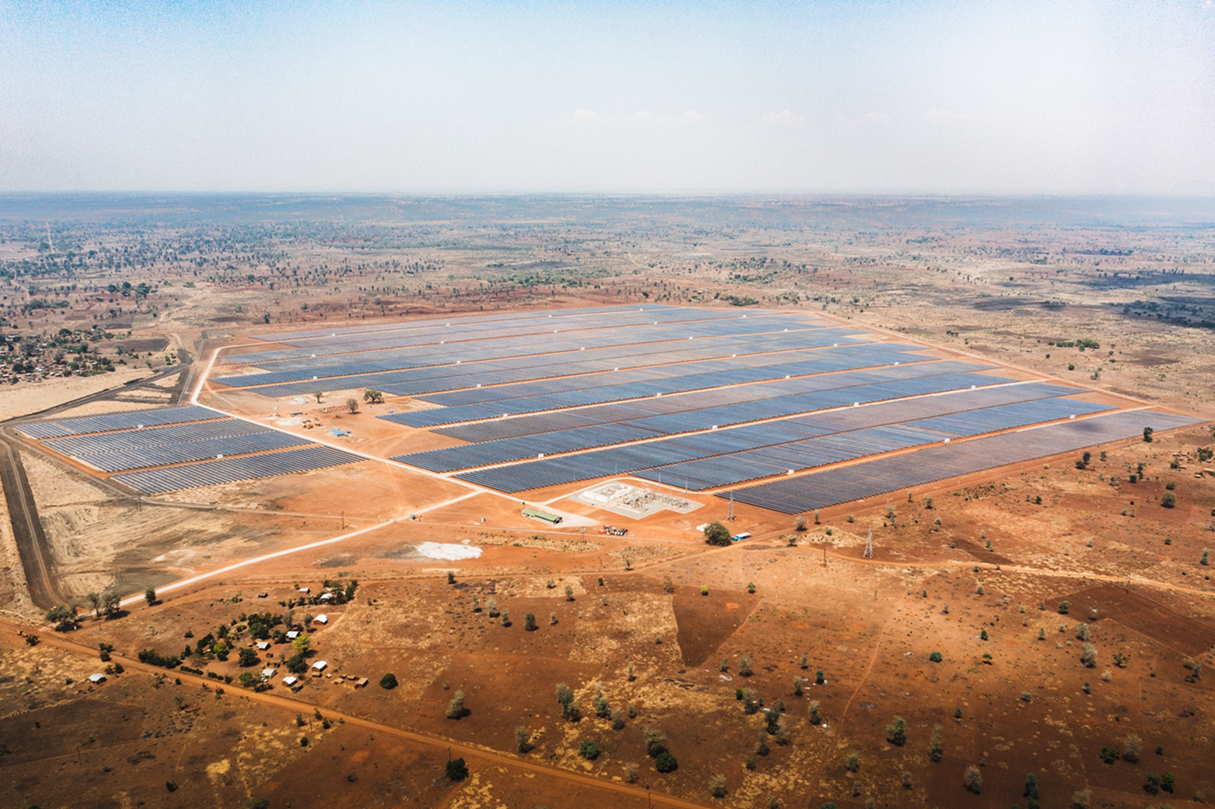
As a development bank, FMO is obliged to give the highest priority to the interests of normal people in future recipient countries of money from the fund. In the recent past, these people have sometimes been the victims of investments by FMO, including investments in clean energy. These include megaprojects like hydroelectric dams or solar parks as a result of which people have been driven from their land, not allowed a fair share of the revenues, or silenced if they expressed criticism. For all the projects and businesses that this climate fund will support, FMO must conduct thorough investigations to ensure that local people also approve of the investments and, if that is the case, that they are involved in the development of the projects.
Greenwashing
“We applaud the fact that, through this fund, FMO is more emphatically committed to financing sustainable initiatives,” says Nick Middeldorp of Both ENDS. “But practice shows that FMO more often supports ‘green’ projects that turn out not to be green.” A selection of some of FMO’s previous investments, such as the Feronia palm oil plantation in Congo and the Barro Blanco dam in Panama, shows that the bank often provides financial support for highly controversial projects.
Also recently, a 'sustainable' initiative in Malawi turned out to have negative impact on local residents: they had to make way for a gigantic solar park.
FMO still investing in fossil projects
FMO likes to present itself as a progressive and sustainable bank, and this new fund is no exception. A growing proportion of FMO’s investments, however, are provided through financial intermediaries. Some of these investments end up in fossil projects, and FMO is not transparent about this.
Real solutions for people and planet
Both ENDS and Oxfam Novib call on FMO to do something radically different with this climate fund. That includes creating space for funding local, bottom-up initiatives that are not owned by wealthy elites in countries characterized by extreme inequality. In addition, FMO must guarantee that investments in fossil fuels, also through financial intermediaries, are a thing of the past. Middeldorp: “The future of our planet demands nothing less.”
Read more about this subject
-
 News / 23 October 2025
TotalEnergies financiers beware: EACOP is eating up money, nature and livelihoods
A new analysis shows that the developers of the East African Crude Oil Pipeline, led by France’s TotalEnergies, are being forced to self-finance the project almost entirely. The analysis, part of a new Finance Risk Updatefrom a coalition of African and International civil society organisations, shows that the companies have abandoned plans to raise 60% of the project’s growing costs from bank loans, and are now on the hook for almost 90% of the costs themselves.
-
 News / 6 October 2025
From Entebbe to Accra: civil society is rewriting the rules of investment
By Fernando Hernández Espino and Bart-Jaap Verbeek
Almost a year after African civil society gathered in Uganda to adopt the Entebbe Declaration, the call to transform international investment governance continues to gain strength. From the 6th to the 9th of October, over 50 civil society organisations from across West Africa, including from Ghana, Senegal, Nigeria, Côte d’Ivoire, Cameroon, Gambia, Sierra Leone, as well as from Kenya and Latin America, are convening in Accra to deepen and operationalise the Declaration’s vision.
-
 News / 9 May 2025
Women’s leadership in agroecology flourishes in Eastern and Southern Africa
On 12 and 13 February 2025, women from Kenya, Uganda, and Zimbabwe gathered in Nairobi for the Africa Women Leaders in Agroecology (AWOLA) Regional Networking Forum. The event marked a significant moment in the leadership programme of PELUM Kenya, which empowers young women in their role as leaders in the agroecological transition. This project was made possible thanks to support from Both ENDS as part of the Fair, Green and Global (FGG) Alliance.
-
Letter / 15 April 2025
African civil society urges Oman against EACOP support as east Africa trade expo kicks off
Just one day before the Oman East Africa Trade and Investment
Expo opens in Muscat on April 16, over 70 civil society organisations (CSOs) from Uganda, Tanzania, the Democratic Republic of Congo, and beyond have published an open letter urging the Government of Oman to refrain from providing financial or diplomatic support for the controversial East African Crude Oil Pipeline (EACOP). -
 Blog / 31 March 2025
International cooperation and solidarity are in the interest of both the Netherlands and Africa
Traditional development aid keeps Africa in a state of aid dependency, but development cooperation is essential to break this post-colonial dependency, argues Melvin van der Veen in response to an interview in NRC Handelsblad with the Cameroonian economist Célestin Monga. By breaking off this cooperation on the basis of equality, we are actually stifling the voices of African civil society organisations, indigenous communities, youth and women's movements and human rights defenders, and we are not solving global problems.
-
 Blog / 27 March 2025
Fair trade and equal partnerships: only then can Kenya stand on its own
Several media outlets, including de Volkskrant, focused last week on the shift from “aid” to “trade,” partly in response to the state visit of the Dutch royal couple to Kenya. The idea is that it would be beneficial for Kenya to stand on its own two feet. A beautiful ideal—one I whole heartedly believe in. But this ideal can only become a reality if equality is at the heart of trade and international cooperation.
-
 News / 25 November 2024
Empowering Civil Society: Shaping investment policies for climate and sustainable development in Africa
From 26-29 November 2024, Both ENDS and its partners will host the Civil Society Forum on Investment Policies, Climate and Sustainable Development Goals in Entebbe, Uganda. Our colleagues Iván and Fernando explain the importance of this event: “Through this event, we aim to provide an in-depth perspective on the impact of current investment policies on climate and environmental issues, with a strong focus on the African continent.”
-
 Video / 18 May 2024
Charity Migwi of Oil Change International
Oil Change International is mainly focused on research, communication, and advocacy. Charity Migwi helps with campaigning to get fossil fuel companies to face out their production of oil and gas. In Africa, for instance Nigeria and Senegal, she works together with communities, especially where the projects are happening to see how they can collaborate and strengthen each other. And they are under pressure of time. Where advocacy takes patience and time, climate change impacts are rising daily. A personal talk about the importance of things that are worth fighting for. At Both ENDS, our aim is to connect people for change.
-
 Blog / 27 February 2024
Partners fighting for rights within natural resource exploration in Uganda
A recent visit to Uganda highlighted the country as the latest example of ethical, environmental and human rights dilemmas brought forth by natural resource exploration.
Under the guise of economic prosperity and energy security, the future of Uganda’s forests, lakes, national parks, and by extension that of the people that depend on these resources, is increasingly endangered. Both ENDS partners in Uganda work with local communities to preserve these natural environments and the livelihoods that come from it.
-
Publication / 25 May 2023
-
 News / 10 November 2022
African women raise their voice ahead of COP27 and call for climate justice
In October 2022, 150 women from 14 African Countries gathered in Port Harcourt, Nigeria for the first African Women's Climate Assembly. The aim of this Assembly was to strengthen and unify women-led struggles against dirty extractives and false solutions to the climate crisis in West and Central Africa, and propose the real development solutions that support women's interests in a good and decent life and livelihoods in a time of climate crisis.
-
 News / 24 February 2022
1,380,000 euros from the Dutch Postcode Lottery for local women’s groups
We are delighted that the Dutch Postcode Lottery has approved our proposal to support an extra project to the tune of 1,380,000 euros! The proposal, for an Autonomy and Resilience Fund (ARF), was submitted by the Global Alliance for Green and Gender Action (GAGGA), which comprises the Fondo Centroamericano de Mujeres (FCAM), Mama Cash and Both ENDS. With the ARF, GAGGA works with Small Grants Funds to help local women's groups become resilient in a changing world in which it is increasingly difficult for them to hold their heads above water. The award of this large sum of money means an enormous boost for many women's organisations, and this is badly needed at a time when economic, climate and health crises are constantly putting the resilience of women, their communities and their living environments around the world to the test!
-
 Blog / 18 February 2022
This is what a fair and sustainable Africa strategy looks like
Minister Liesje Schreinemacher for Foreign Trade and Development Cooperation recently made her first working visit, to Kenya and Uganda. With this visit, the minister made a flying start in honouring the pledge in the new government's coalition agreement to formulate a 'targeted Dutch Africa strategy'. Such a strategy is desperately needed as, too often, our foreign trade is conducted at the expense of people and the environment, including in countries in Africa. The new strategy presents a perfect opportunity to ensure that the 'trade and aid' agendas are closely aligned.
-
 External link / 31 May 2018
Supporting farmer managed natural regeneration to gain ground (Annual Report 2017)
Many people in the desertifying Sahel region have to choose: claim their land back from the desert, or leave their farms behind. In 2017, Both ENDS started a new project here, introducing a method for regreening the landscape: Farmer Managed Natural Regeneration (FMNR). It has proven itself in Niger, where we worked on FMNR for 15 years. By 2017, 15.000 ha of dryland had been regreened.
-
 News / 23 May 2018
African civil society urges AfDB to support sustainable, inclusive and people-centred development
This week, the African Development Bank (AfDB) holds its 2018 Annual Meetings. A large group of African civil society organisations calls on the bank to ensure social and environmental protection, to involve civil society, to pay attention to gender issues and to make sustainable choices in their energy access ambitions.
-
 Event / 14 April 2018, 11:30
Small grants, big impacts: workshop on Africa Day
On the 14th of April, Both ENDS wil host a workshop called 'Small Grants, Big Impacts' on the annual Africa day in Amsterdam. The workshop aims to demonstrate that so called 'small grants funds' effectively deliver (devopment and climate) money where it matters, to people that need it the most. Large development banks, funds, donors and governments could use small grants funds as alternative financing mechanisms to make sure their money benefits people and their environment now and it the far future.
-
Letter / 10 June 2022
Joint submission on FMO’s Position Statement on Financial Intermediaries
Both ENDS, SOMO, Oxfam Novib and Recourse sent in a submission to FMO's public consultation on its Position Statement on Financial Intermediaries. In this position statement, FMO only takes limited responsibility for the consequences of its investments through so-called financial intermediaries. We call upon FMO to publish a position statement that focuses on protecting human rights and the environment and take full responsibility for this.
-
 News / 7 May 2014
Indigenous people file complaint against FMO for funding of Barro Blanco Dam, Panama
Residents belonging to the indigenous Ngäbe-Bugle people living on the traditional indigenous territory surrounding the Barro Blanco dam in Panama, have filed a complaint against the Dutch development bank FMO. The bank has invested $ 25 million in the dam that is currently under construction in the river Tabasará. The Ngäbe-Bugle blame FMO for not adequately following its own social and environmental standards. FMO also violates international agreements relating to indigenous peoples. For Both ENDS, Anouk Franck is closely following FMO’s activities.
-
 News / 23 December 2021
2022 is the year for FMO to make good on its promises and provide financial support only to sustainable development
2021 was a turbulent year for Dutch development bank FMO, to say the least. The bank has been under fire for many years for investments linked to human rights violations and suspected corruption. But in the past year, the Dutch press and media have reported on one new development after the other in ongoing cases involving FMO. Below we give a short summary of these cases and call on FMO to make the promised improvements in 2022.
-
 Press release / 5 December 2022
Groups react with dismay to FMO’s position statement on Financial Intermediaries, pointing to outstanding human rights and climate concerns
On October 13th 2022, FMO published the final version of its Position Statement on Impact and ESG for Financial Intermediaries (FI statement). As civil society groups which have engaged with FMO on this topic for more than four years, we are extremely disappointed with the result. In the statement, FMO does not show sufficient commitment to ensuring its investments into financial intermediaries – which represent the bank's largest investment sector* – do not violate human rights or contribute to environmental harms.

