




Rights for people, rules for corporations: the case of Indonesia
In Indonesia, US-based mining companies succeeded to roll back new laws that were meant to boost the country’s economic development and protect its forests. This is the level of impact that investment treaties can have on social, environmental and economic development and rights. Why? Because of the ‘Investor-to-State Dispute Settlement’ (ISDS) clauses that are included in many such treaties.
For many developing countries, natural resources are an important asset to increase their fiscal revenue and income, and to reduce poverty. The extraction and processing of raw materials creates domestic jobs and the livelihoods of many poor people depend on these activities. However, to ensure that natural resources will contribute to a country's economic development, relevant policies need to be in place. First, such policies should guarantee that the governments of resource-rich countries obtain a 'fair share' of the revenue of natural resource exploitation, instead of all profits flowing abroad with the mining companies. Secondly, governments face the task of implementing a strategic industrial plan that can help to escape the 'dependency curse', which often goes together with the extraction and export of unprocessed raw materials.
In Indonesia, as in many other countries, investment treaties with ISDS have been used by foreign companies as a powerful tool to prevent exactly these two government responsibilities. ISDS has proven to be a powerful tool to challenge and stop laws that protect the environment and to prevent host countries from sharing in the profits of the extractive industries.
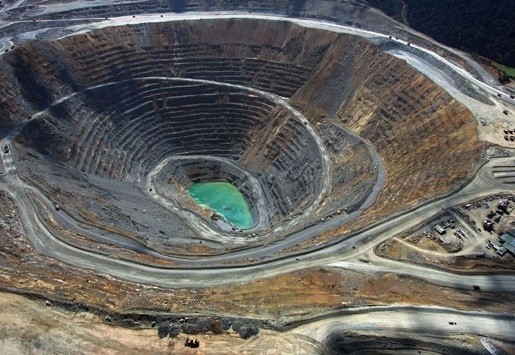
In 1999, the Indonesian government passed a new Forestry Law (4/1999). While the old law from 1967 had focused mainly on timber management, this new law for the first time included policies aimed at forest conservation. Importantly, in response to the devastating environmental impacts of mining activities, the new law forbade open-pit mining in protected forest areas. International mining companies that were already operating in these protected areas immediately inundated the government of Indonesia with legal threats and substantive compensation claims. The government's response was to relax the law, allowing mining companies that had been granted contracts prior to 1999 to continue their open-pit operations in protected forest areas.
Indonesian government hoped to create jobs for own people
Ten years later, a similar situation occurred. The government passed the Mineral and Coal Mining Law (4/2009), aimed at reducing the country's dependency on exports of raw materials and instead encouraging the development of a national processing industry for natural resources. The new law ordered all holders of mining permits to build mineral refinery plants within 5 years. By obliging mining companies to refine and process minerals inside the country prior to export, the government hoped to increase Indonesia's income from extractive industries and to create jobs for the Indonesian workforce.
In December 2013, a more detailed rule for mineral processing prior to export was issued. The Minister of Finance estimated that this would increase state revenues from US$4.9 billion to US$9 billion in just two years. However, only one month later, the Indonesian government already issued two law amendments that watered down the obligations for mining companies. The minimum threshold of mineral concentration for export was decreased (e.g. in the case of iron ore from 90% to 58%) and the obligation to build mineral processing capacities was postponed.
Foreign mining companies threatening to sue Indonesia
These amendments were issued following intense lobbying by two mining companies: Free-port Indonesia and Newmont Mining Corporation*. The first operates in Indonesia's east-ernmost province Papua and is a subsidiary of the US-based Freeport-McMoRan Inc. The second produces approximately 300,000 tonnes of copper concentrate annually in Indonesia. However, for these international heavy-weights, the amendments were not good enough.
In 2014, Newmont filed a case against Indonesia at the International Centre for the Settlement of Investment Disputes. Newmont claimed that the government's plans violated the BIT between Indonesia and the Netherlands. The Netherlands came into the picture because Newmont had set up a so-called 'letterbox company' in the country, which enabled the company to use ISDS against countries with which the Netherlands have a BIT. Dutch BITs have a reputation for being among the most investor-friendly treaties in the world and are therefore often abused by foreign companies and rich individuals who own such letterbox companies.
On 25 August 2014, Newmont withdrew its case but only after it had reached an agreement with the Indonesian government that gave the company special exemptions from the 2009 mining law. Although the terms of the agreement were not disclosed, it has been reported that the export tax that Newmont is required to pay was decreased from 25% to 7.5% . In 2017, instead of sticking to the intention of the 2009 law to ban all export of raw and only partly processed minerals, the Indonesian government issued a regulation that up to today allows the export of partly processed minerals – all to the benefit of the mining giants.
*In 2016, Newmont was acquired by the Indonesian oil and gas company PT Medco Energi Internasional.
This case was highlighted as part of the
'Rights for People, Rules for Corporations – Stop ISDS' campaign week of 14-18 October 2019
Background on the 'Rights for People, Rules for Corporations - Stop ISDS' campaign
More information:
Indonesia for Global Justice (IGJ) published the following report in collaboration with Transnational Institute, Both ENDS en SOMO in Octber 2019:
Also see the case of Paraguay
Read more about this subject
-
 Dossier /
Rights for People, Rules for Corporations – Stop ISDS!
Indigenous communities in Paraguay saw their attempts to regain their ancestral lands thwarted by German investors. In Indonesia, US-based mining companies succeeded to roll back new laws that were meant to boost the country’s economic development and protect its forests. This is the level of impact that investment treaties can have on social, environmental and economic development and rights. Why? Because of the ‘Investor-to-State Dispute Settlement’ clauses that are included in many such treaties.
-
 Dossier /
Investment treaties
Investment treaties must be inclusive, sustainable and fair. That means that they must not put the interests of companies before those of people and their living environment.
-
Publication / 3 juli 2026
-
 Dossier /
Trade agreements
International trade agreements often have far-reaching consequences not only for the economy of a country, but also for people and the environment. It is primarily the most vulnerable groups who suffer most from these agreements.
-
 News / 14 april 2026
New report: Phasing out ISDS in the Netherlands: a roadmap
Today, Both ENDS and SOMO are publishing the report Phasing out ISDS in the Netherlands: a roadmap. In the report, we highlight the Netherlands’ role in the ISDS system and offer practical guidance on phasing out ISDS.
-
Publication / 14 april 2026
-
 Dossier /
Seeking justice for the affected communities of Vale’s mining disasters in Mariana and Brumadinho
In 2015 and 2019, the Brazilian state of Minas Gerais experienced two severe mining tragedies in Mariana and Brumadinho, due to the same mining company: Vale. Since then, the affected communities have been seeking justice, via the criminal punishment of the responsible parties, and a fair compensation for the loss of their loved ones, their homes and their livelihoods. Both ENDS supports local CSOs by amplifying their quest for justice within an international audience and, more specifically, by raising awareness amongst Dutch investors in Vale about the high risks this company’s activities pose for people and the environment.
-
 News / 22 januari 2026
Shell files new arbitration against the Netherlands over Groningen gas field closure
Shell is suing the Netherlands in yet another attempt to evade its responsibility for decades of gas extraction in Groningen. For years, gas production has triggered earthquakes, damaged over a hundred thousand homes, and left residents living in prolonged insecurity, still waiting for repairs, reinforcement, and justice.
-
 Blog / 11 december 2025
Reflections on working on Dutch finance for Mozambique LNG
Last Tuesday, I received a short text message with big news: the minister had just announced that the financing policy for the Mozambique LNG project was stopped. It was a decision that I – along with so many others – have fought for for years. Only now, more than a week later, it is slowly sinking in that we have really won. The years of perseverance, frustration, discussions and investigations have finally led to this result. It still feels a bit surreal.
-
 Blog / 25 november 2025
COP30 shows why dismantling ISDS is essential for real climate action
Standing in Belém during COP30, I felt the weight of the moment. We came to the Amazon hoping for decisive progress on phasing out fossil fuels, yet the final outcome fell far short of the ambition science and justice demand. The agreement brought welcome commitments on adaptation finance and global indicators, but it refused to confront the structural forces that make climate action so difficult.
-
 News / 5 november 2025
Another ISDS claim hits the Netherlands: Petrogas sues over solidarity contribution and royalty regulations
SOMO and Both ENDS strongly condemn the newly revealed investor-state dispute settlement (ISDS) case filed by Petrogas, an Omani oil and gas company operating two shallow-water gas fields in the Dutch North Sea, against the Netherlands under the Netherlands-Oman bilateral investment treaty (BIT).
-
 News / 5 november 2025
Interview: Both ENDS at COP30 for Climate Justice and Systemic Change
Both ENDS is present at COP30 to advocate for genuine access to climate finance for locally led, gender-just climate solutions and the mechanisms that facilitate this, including those for farmer-led restoration. Furthermore, the organisation participates to ensure the crucial connection between the climate negotiations and the trade and investment frameworks that shape them.
Learn more about the Both ENDS team at COP30 below, and find all the activities and side-events in which Both ENDS will participate.
-
 News / 5 november 2025
Overview of Both ENDS events at COP30 in Belem, Brazil
Both ENDS is present at COP30 to advocate for genuine access to climate finance for locally led, gender-just climate solutions, and for the mechanisms that make these possible, including those supporting farmer-led restoration. The organisation also engages to highlight the crucial connection between climate negotiations and the trade and investment frameworks that shape them.
Below is an overview of the Both ENDS team at COP30 and a detailed look at the activities and side-events in which Both ENDS will participate.
-
Publication / 16 oktober 2025
-
Publication / 16 oktober 2025
-
 Dossier /
International trade and investment with respect for people and planet
The network of international trade and investment treaties is large and complex. The Netherlands alone has signed more than 70 bilateral investment treaties (BITs) and is party to the trade and investment agreements concluded by the EU, like the EU-Mercosur and EU-Indonesia trade deals.
-
 News / 6 oktober 2025
From Entebbe to Accra: civil society is rewriting the rules of investment
By Fernando Hernández Espino and Bart-Jaap Verbeek
Almost a year after African civil society gathered in Uganda to adopt the Entebbe Declaration, the call to transform international investment governance continues to gain strength. From the 6th to the 9th of October, over 50 civil society organisations from across West Africa, including from Ghana, Senegal, Nigeria, Côte d’Ivoire, Cameroon, Gambia, Sierra Leone, as well as from Kenya and Latin America, are convening in Accra to deepen and operationalise the Declaration’s vision.
-
 Dossier /
Towards a socially and environmentally just energy transition
To address the climate crisis we need to urgently transition away from fossil fuels towards clean, renewable energy. However, this transition is not only about changing energy sources. It requires an inclusive and fair process that tackles systemic inequalities and demanding consumption patterns, prioritizes environmental and social justice, and which does not repeat mistakes from the past.
-
 Dossier /
Fair Green and Global Alliance (FGG)
Together with civil society organisations from all over the world, the Fair Green and Global (FGG) Alliance aims for socially just, inclusive and environmentally sustainable societies in the Netherlands and the Global South.
-
Publication / 1 juli 2025




