




Recommendations to the foreign financiers of Argentina's lithium rush
To realise the energy transition, large quantities of minerals and metals such as lithium, cobalt and rare earth metals are needed. These raw materials are mainly extracted in countries in the global South, and unfortunately this is almost always accompanied by human rights violations and environmental destruction. Today – also in light of EU Raw Materials Week that is happening this week – Argentinian organisation FARN and Both ENDS publish a joint report on the extraction of lithium in Argentina.
How can we ensure that people and nature are not harmed by the extraction of raw materials for our energy transition? Is it wise to provide export support to companies entering this market? Using the Argentinian case, the report attempts to answer these and other obvious dilemmas surrounding the extraction of transition minerals. Marius Troost is one of the authors of the report and gives us some insight.
Why did FARN and Both ENDS decide this was an urgent matter to touch upon?
Marius: "Making the transition from fossil fuels to renewables is priority number one. Yet we tend to forget that our clean energy supply needs resources as well. These will also have to be extracted somewhere, bearing in mind that mining has a tremendous impact wherever it takes place. We are seeing an increased interest by businesses and governments in securing our so-called 'transition minerals', including interest by Export Credit Agencies (ECAs – see box) from the Global North. With this report, we show which governments and ECAs are already financing the lithium sector in Argentina and the impacts this has on people and environment. "
What is so damaging about lithium extraction?
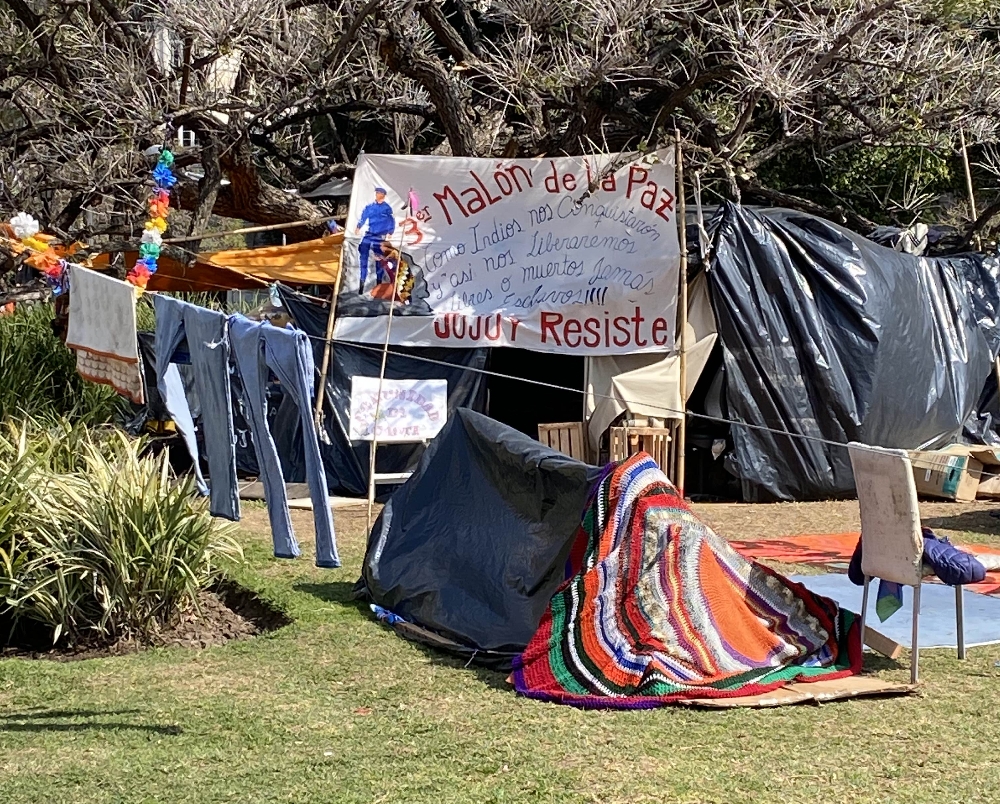
"Lithium extraction requires tremendous amounts of water in places - like the salt flats - where water is extremely scarce. This comes at the cost of drinking water and agriculture. It also has severe impacts for the fragile ecosystems in the area. What's more, lithium mining in Argentina still has a very extractivist character and reinforces the unequal distribution of wealth and the unequal trade balance between North and South"
What is the main conclusion of the report?
"We are already seeing Export Credit Agencies move into the lithium sector in Argentina. Foreign companies active in the sector are supported to undertake their business activities. At this point it's the Canadian and the Korean ECAs, but we will surely see more interest in the future. Unfortunately, the communities of the High Andean wetlands where the lithium extraction is taking place, do not at all benefit. They only suffer the significant environmental impacts and human rights violations."
How can we turn the tide, what should be done internationally?
"First and foremost, the global North should look critically at its own energy and material consumption. I mean: replacing our entire fleet of petrol-powered cars with electric ones is simply not a realistic option, as resources like lithium are limited too and the extraction will come at the cost of communities in the global South. We should really also think about less cars, rather than alternative cars. At the same time, international businesses and governments should take care to guarantee environmental and human rights. They should carefully consult the local communities and respect their 'right to say no' to projects on their land."
Who should definitely read this report?
"The EU is currently working on finalising its Critical Raw Materials Act. And globally, businesses and ECAs are eager to move into the raw materials space. The report has practical recommendations on how to go about this – we hope it will help them make informed policies that use a human rights and environment centred approach."
Export Credit Agencies and Investment Insurance Agencies, commonly known as ECAs, are public agencies that provide government-backed loans, guarantees, credits and insurance to private corporations from their home country.
ECAs make it easier for those corporations to do business abroad, particularly in the financially and politically risky developing world. Most industrialised nations have at least one ECA, which is usually an official or quasi-official branch of their government.
For more information
Read more about this subject
-
 Dossier /
Towards a socially and environmentally just energy transition
To address the climate crisis we need to urgently transition away from fossil fuels towards clean, renewable energy. However, this transition is not only about changing energy sources. It requires an inclusive and fair process that tackles systemic inequalities and demanding consumption patterns, prioritizes environmental and social justice, and which does not repeat mistakes from the past.
-
 Dossier /
Seeking justice for the affected communities of Vale’s mining disasters in Mariana and Brumadinho
In 2015 and 2019, the Brazilian state of Minas Gerais experienced two severe mining tragedies in Mariana and Brumadinho, due to the same mining company: Vale. Since then, the affected communities have been seeking justice, via the criminal punishment of the responsible parties, and a fair compensation for the loss of their loved ones, their homes and their livelihoods. Both ENDS supports local CSOs by amplifying their quest for justice within an international audience and, more specifically, by raising awareness amongst Dutch investors in Vale about the high risks this company’s activities pose for people and the environment.
-
 News / 2 February 2026
Seven years after Brumadinho: impunity allows Vale’s disasters to continue
Seven years ago, the dam owned by mining company Vale collapsed in Brumadinho, Brazil, killing 272 people and severely polluting the surrounding area. While the relatives of the victims commemorate them and fight for justice, the pollution continues.
-
 Dossier /
Gas in Mozambique
In 2011 one of the world’s largest gas reserves was found in the coastal province of Cabo Delgado, in the north of Mozambique. A total of 35 billion dollars has been invested to extract the gas. Dozens of multinationals and financiers are involved in these rapid developments. It is very difficult for the people living in Cabo Delgado to exert influence on the plans and activities, while they experience the negative consequences. With the arrival of these companies, they are losing their land.
-
 Dossier /
Export Credit Agencies: Who pays the price?
Both ENDS calls on the government only to provide export credit insurance to sustainable projects that cause no social and/or environmental damage in the countries where they take place.
-
 Press release / 2 December 2025
End of Dutch involvement in controversial gas project in Mozambique in sight after TotalEnergies withdraws from Dutch insurance
THE HAGUE/CABO DELGADO, December 1, 2025 - Today, Minister of Finance Eelco Heinen announced that TotalEnergies is withdrawing from a $640 million Dutch export credit insurance policy for a controversial gas project in Mozambique. Although the Dutch government has been avoiding this decision for years, this move has finally ended part of the Dutch involvement in this disastrous project.
-
 Dossier /
Rights for People, Rules for Corporations – Stop ISDS!
Indigenous communities in Paraguay saw their attempts to regain their ancestral lands thwarted by German investors. In Indonesia, US-based mining companies succeeded to roll back new laws that were meant to boost the country’s economic development and protect its forests. This is the level of impact that investment treaties can have on social, environmental and economic development and rights. Why? Because of the ‘Investor-to-State Dispute Settlement’ clauses that are included in many such treaties.
-
 Dossier /
Wetlands without Borders
With our Wetlands without Borders program, we work towards environmentally sustainable and socially responsible governance of the wetlands system of the La Plata Basin in South America.
-
Publication / 16 October 2025
-
Publication / 16 October 2025
-
 News / 9 October 2025
Both ENDS launches new strategy: “Connecting people for an environmentally just world”
With great pride, Both ENDS launches today it’s new strategy for the coming 5 years: “Connecting people for an environmentally just world”. This strategy was developed in close collaboration with our partner network, which has always been, and still is, the foundation of our work. Together, we strive for an environmentally just world in which people and ecosystems thrive and all people can live a life of dignity.
-
Publication / 9 October 2025
-
 Dossier /
International trade and investment with respect for people and planet
The network of international trade and investment treaties is large and complex. The Netherlands alone has signed more than 70 bilateral investment treaties (BITs) and is party to the trade and investment agreements concluded by the EU, like the EU-Mercosur and EU-Indonesia trade deals.
-
Publication / 2 October 2025
-
 News / 22 September 2025
EU-Indonesia Trade Deal Threatens Communities and Environment
On September 23th the European Union and Indonesia concluded their negotiations of the EU-Indonesia Comprehensive Economic Partnership Agreement (CEPA), a free trade agreement between the EU and Indonesia. Both ENDS condemns this agreement for favoring corporate interests over those of local communities and the environment.
-
 Dossier /
Soy: trade in deforestation
The rising demand for soy is having negative consequences for people and the environment in South America. Both ENDS reminds Dutch actors in the soy industry of their responsibilities and is working with partners on fair and sustainable alternatives.
-
 Blog / 12 August 2025
Nickel mining for the energy transition: who is accountable for the damage?
Photo blog - In June, I travelled to Indonesia with our partner organization Puanifesto to research the impacts of nickel mining in East Sulawesi. On July 13th, the news broke that the European Union and Indonesia have reached a political agreement on a free trade agreement that was years in the making, called the Comprehensive Economic Partnership Agreement (CEPA). Nickel from Sulawesi is already being used in European cars. This makes it all the more important that we ensure that human and environmental rights are secured in mining and refining operations in Indonesia, before the road is opened to more extraction and exploitation for the European market. The conversations we have had with communities and workers on East Sulawesi show that more binding regulations are necessary to make this happen and ensure an energy transition that is socially and environmentally just.
-
 News / 16 July 2025
Case Study: Community Paralegals Defending Land Rights from Extractive Industries and Land Grabs in Mozambique
Across Mozambique, land represents more than just territory. It is the cornerstone of livelihoods, culture, and autonomy for many communities. When companies arrive, claiming large portions for mining, oil exploration or agribusiness, residents face significant challenges in asserting their rights. Mozambique’s Land Law (1997) grants communities user rights, ensuring they can occupy and use land for subsistence and cultural purposes.
-
 News / 16 July 2025
The challenges of climate change, gender inequality, and conflict
This FCDO-supported project, part of the GAGGA programme, brought together 6 women-led community-based organisations from around the world to explore how they navigate the combined challenges of climate change, gender inequality, and conflict. Through a Feminist Participatory Action Research approach, the organisations documented strategies ranging from land rights advocacy to climate-resilient agriculture, highlighting how extractive industries, militarisation, and patriarchal systems drive exclusion and insecurity. Their findings are now informing donors and policymakers on the need to support grassroots women’s leadership. In the following interview, the project lead shares more about the research, key insights, and its broader impact.
-
 News / 10 July 2025
Shell's Silent Exit: Evading Accountability in the Niger Delta
Following Both ENDS & Kebekatche Women Development & Research Centre participation in Shell’s Annual General Meeting (AGM) and a formal follow-up in writing, the response received from Shell plc raises more questions than it answers.




