




Politicians ask for sustainable export support
Last June, Both ENDS published a report which showed clearly that, through export credit insurance provider Atradius Dutch State Business (ADSB), the Netherlands is supporting the fossil fuel sector on a large scale. Between 2012 and 2015, ADSB provided billions of euros in insurance and guarantees, on behalf of the State of the Netherlands, to fossil-related export projects. This support is completely out of line with the Paris Climate Agreement. On 20 June, members of parliament Lammert van Raan (PvdD) and Sandra Beckerman (SP) submitted questions to the State Secretaries for Finance and for Infrastructure and the Environment.
They asked the state secretaries whether the government is planning to phase out insurances for fossil-related projects and focus more on sustainable energy. The Ministry of Finance answered on 12 July that export credit insurance indeed provides considerable support to the fossil sector but, because export credit insurance does not directly aim at achieving climate goals, the ministry sees no reason to phase it out. The government expects ‘export credit insurance to shift naturally towards sustainable projects in coming years’. ‘Excluding Dutch businesses from fossil-related projects that are going to take place anyway is not going to help the environment,’ the ministry added.
Make export credit insurance Paris proof
The trend towards more sustainable projects is indeed to be expected, but the urgency of the climate problem and the agreements made in Paris to address it call for a much more pro-active approach from governments. The European Commission agrees, as can be seen from its answer to questions from Euro MP Bas Eickhout (European Greens EU) in response to the Both ENDS report: ‘Although the Commission is of the opinion that the export credit activities of the members states are not directly addressed in the Paris Agreement, [each national government] must take due account of the main goals of the agreement in this area, as in all their activities.’ In our own words, governments must make their export credit insurance ‘Paris proof’.
Only support sectors that have to be stimulated
Van Raan and Beckerman were also dissatisfied with the State Secretary of Finance’s answer so, on 21 August, they asked a number of further questions. They called on the Dutch government to use export credit insurance to support economic sectors that we want to stimulate, like renewable energy, and not for sectors that we want to phase out, such as fossil fuels. They also demanded that the ministry be transparent about its support for the fossil sector, draw up a plan for phasing out the use of fossil energy, and report back on the steps it takes. This is in line with the Dik-Faber (CU) and Van Veldhoven (D66) motion, adopted in May 2016, on the contribution of the financial sector to achieving the climate goals.
Both ENDS hopes that the new government will decide to phase out export support for the fossil sector. For more background information, see our special page 'Paris Proof Export Support'

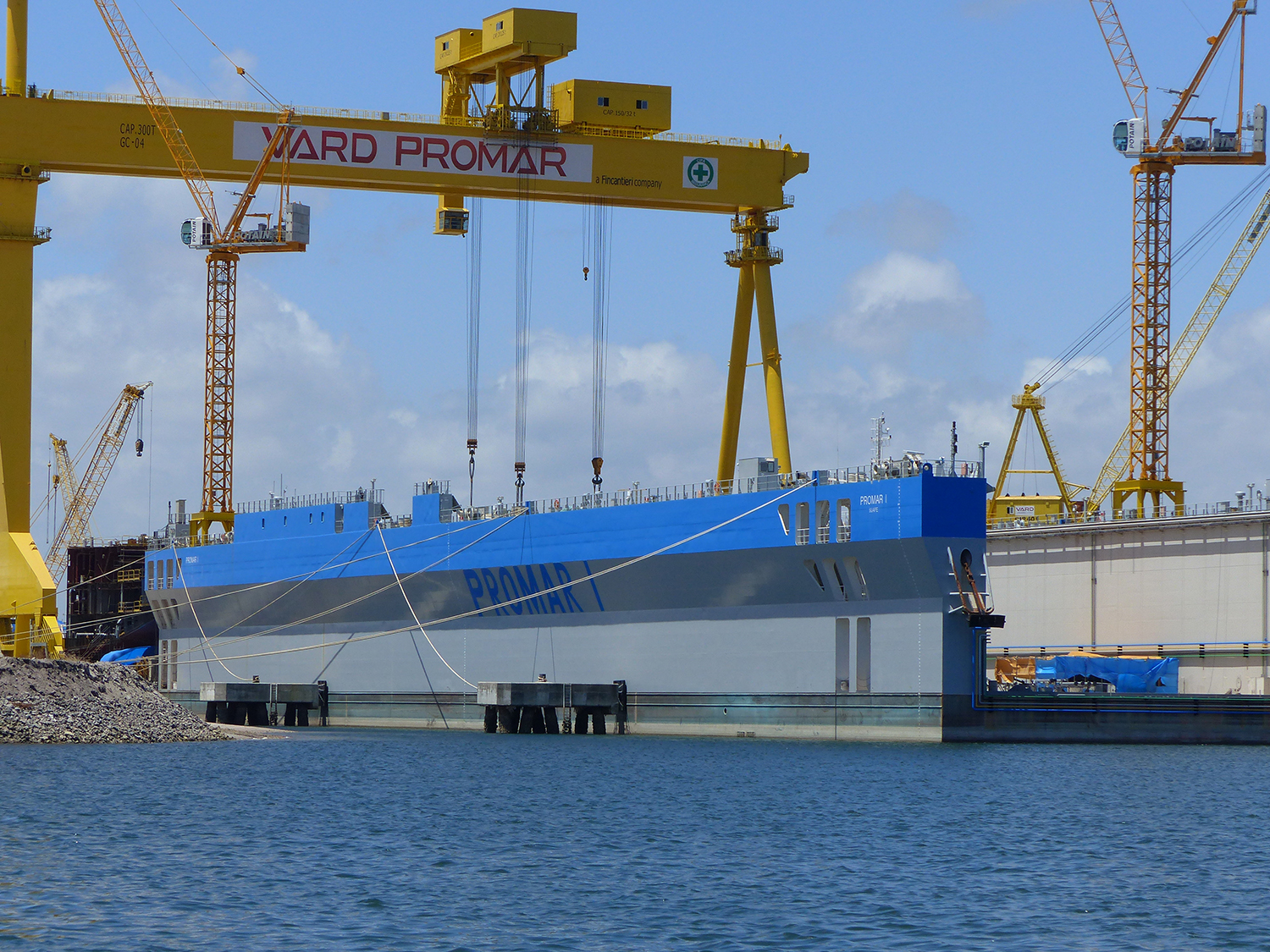
(Photo: Schipyard in Suape harbour (Brazil) where, among others, pipe laying vessels are being produced for the fossil fuel industry)
Read more about this subject
-
 Dossier /
Export Credit Agencies: Who pays the price?
Both ENDS calls on the government only to provide export credit insurance to sustainable projects that cause no social and/or environmental damage in the countries where they take place.
-
 Dossier /
Paris Proof Export Support
Almost two-thirds of the export credit insurances that Atradius DSB provided in the 2012-2018 period went to the fossil energy sector. That is contrary to the climate agreements that the Netherlands signed in Paris.
-
 News / 2 februari 2026
Response to the D66-VVD-CDA coalition agreement
Coalition: Repair the damage and dare to go further
At Both ENDS, we see a number of cautious steps in the right direction in this coalition agreement. There is a slight emphasis on green issues, renewed attention to women's rights, recognition of the importance of civil society, and discussion of trade agreements with a focus on mutual interests. However, without structural change in how we trade, invest, and cooperate, fine words remain empty shells.
-
 Dossier /
Gas in Mozambique
In 2011 one of the world’s largest gas reserves was found in the coastal province of Cabo Delgado, in the north of Mozambique. A total of 35 billion dollars has been invested to extract the gas. Dozens of multinationals and financiers are involved in these rapid developments. It is very difficult for the people living in Cabo Delgado to exert influence on the plans and activities, while they experience the negative consequences. With the arrival of these companies, they are losing their land.
-
 Press release / 2 december 2025
End of Dutch involvement in controversial gas project in Mozambique in sight after TotalEnergies withdraws from Dutch insurance
THE HAGUE/CABO DELGADO, December 1, 2025 - Today, Minister of Finance Eelco Heinen announced that TotalEnergies is withdrawing from a $640 million Dutch export credit insurance policy for a controversial gas project in Mozambique. Although the Dutch government has been avoiding this decision for years, this move has finally ended part of the Dutch involvement in this disastrous project.
-
 Dossier /
Rights for People, Rules for Corporations – Stop ISDS!
Indigenous communities in Paraguay saw their attempts to regain their ancestral lands thwarted by German investors. In Indonesia, US-based mining companies succeeded to roll back new laws that were meant to boost the country’s economic development and protect its forests. This is the level of impact that investment treaties can have on social, environmental and economic development and rights. Why? Because of the ‘Investor-to-State Dispute Settlement’ clauses that are included in many such treaties.
-
 Dossier /
Trade agreements
International trade agreements often have far-reaching consequences not only for the economy of a country, but also for people and the environment. It is primarily the most vulnerable groups who suffer most from these agreements.
-
 News / 5 november 2025
Another ISDS claim hits the Netherlands: Petrogas sues over solidarity contribution and royalty regulations
SOMO and Both ENDS strongly condemn the newly revealed investor-state dispute settlement (ISDS) case filed by Petrogas, an Omani oil and gas company operating two shallow-water gas fields in the Dutch North Sea, against the Netherlands under the Netherlands-Oman bilateral investment treaty (BIT).
-
 Dossier /
International trade and investment with respect for people and planet
The network of international trade and investment treaties is large and complex. The Netherlands alone has signed more than 70 bilateral investment treaties (BITs) and is party to the trade and investment agreements concluded by the EU, like the EU-Mercosur and EU-Indonesia trade deals.
-
 Dossier /
Towards a socially and environmentally just energy transition
To address the climate crisis we need to urgently transition away from fossil fuels towards clean, renewable energy. However, this transition is not only about changing energy sources. It requires an inclusive and fair process that tackles systemic inequalities and demanding consumption patterns, prioritizes environmental and social justice, and which does not repeat mistakes from the past.
-
 Dossier /
Fair Green and Global Alliance (FGG)
Together with civil society organisations from all over the world, the Fair Green and Global (FGG) Alliance aims for socially just, inclusive and environmentally sustainable societies in the Netherlands and the Global South.
-
 News / 21 februari 2025
Cabinet turns its back on international cooperation and solidarity with callous policy letter
Foreign Trade and Development Minister Klever's published policy letter is coldhearted and callous. It places the Netherlands in international isolation and abandons the most vulnerable people worldwide, including many women, farmers, indigenous peoples and youth.
-
 Dossier /
The Climate lawsuit against Shell
Both ENDS is co-plaintiff in the climate lawsuit brought by Milieudefensie (Friends of the Earth The Netherlands) in 2018 against Shell to stop the company from causing harm to the climate. In 2021, the judge ruled in favor of the climate, but unfortunately the company appealed. The court will therefore render its verdict at the end of 2024.
-
 Blog / 28 januari 2025
Sinking promises in Manila
Yesterday, Global Witness published a new report, "Sunk Costs" - in which I had a modest role to play - that comes up with new facts about the disastrous New Manila International Airport project in the Philippines, for which the Dutch dredging multinational Boskalis received Dutch export credit insurance (ekv) of €1.5 billion.
-
 Dossier /
Making pension funds more sustainable
Pension funds have a lot of influence because of their enormous assets. Both ENDS therefore wants pension funds such as the Dutch ABP to withdraw their investments from the fossil industry and to invest sustainably instead.
-
 Blog / 19 november 2024
Building Monitoring, Evaluation and Learning systems based on mutual accountability and trust
Just before summer, on June 27th we participated in a panel discussion on inclusive conservation in a learning event organized by WWF Netherlands. Several organizations joined in a discussion on inclusive, decolonial, rights-based, and community-led approaches in conservation. We discussed the barriers, gaps and opportunities in how power is shared, inclusion promoted, and accountability practiced in our work. The question raised was: as Dutch-based organizations, are we doing enough to really work inclusive? In 2023 Both ENDS started an Examination of Power process to research how power is experienced in our partnerships. I share a couple of practical tips and insights that I feel might benefit the greater conversation around Monitoring, Evaluation and Learning (MEL) in our sector.
-
 Blog / 18 november 2024
The global rise of authoritarian regimes demands global strategies
The global funding landscape for civil society movements is changing, and is increasingly faced with policies that restrict funding streams, limit philanthropic work, and silence critical voices. These are not incidental shifts but part of a broader pattern that erodes the support for those international networks and movements under the guise ‘necessary financial cuts’, ‘aid reform’ or ‘efficiency’.
-
 Press release / 12 november 2024
Ruling climate case Shell: "Shell has an obligation to protect human rights."
The Hague, 12 November 2024 - The court has ruled in Shell's appeal in the Climate Case that Milieudefensie won against Shell in 2021. The Court of Appeal has ruled that the oil and gas giant has a responsibility to reduce its emissions, but has not imposed a reduction obligation.
-
 Press release / 11 november 2024
Both ENDS's response to government letter on future cooperation with civil society organisations
DEN HAAG, 11 November 2024 - Today, the Dutch government published its policy on future cooperation with development organisations, both in the Netherlands and abroad. PVV minister Reinette Klever is putting the axe to this funding: she has decided to cut the budget for aid to international civil society by more than two-thirds: from roughly €1.4 billion to €0.4 billion in the period 2026 to 2030. This has major implications for critical voices at home and abroad, at a time when civic space for organisations around the world is already shrinking. Karin van Boxtel, director of environmental and human rights organisation Both ENDS: ‘This is an unprecedented step in exactly the wrong direction. Civil society organisations are essential for sustainable and social change worldwide. International movements fulfil multiple, indispensable roles: as a watchdog of the rule of law, as a driver of change, and as a counterforce against authoritarian tendencies. The weakening of support for these roles is a telling signal.’
-
 News / 9 november 2024
Why is the Dutch climate case against Shell important to our partners in the Global South?
On November 12th, a new ruling will be issued by the Court of Appeal in The Hague in the climate case against Shell, in which Both ENDS is a co-plaintiff. Ahead of this ruling, we asked our partners why this Dutch lawsuit is important for the Global South.