




Philippines: The People’s Plan for Manila Bay
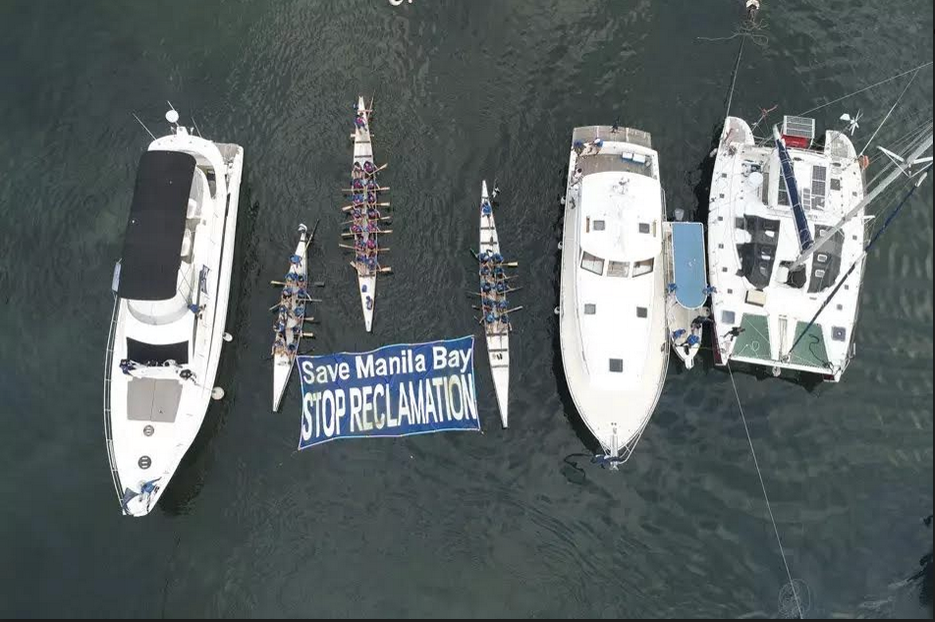
Manila Bay is crucial site for biodiversity and home to over 23 million people, but their wellbeing is at risk due to reclamation projects, which are part of a large-scale top-down masterplan for the bay. It is estimated that more than 11 million people are threatened with displacement due to land reclamations and related disaster risks. As an alternative, Kalikasan is developing a People's Plan.
"If we truly want democracy in environmental governance, we have to empower communities to be able to participate in a fair, level playing field with business and government." – Leon Dulce, Kalikasan
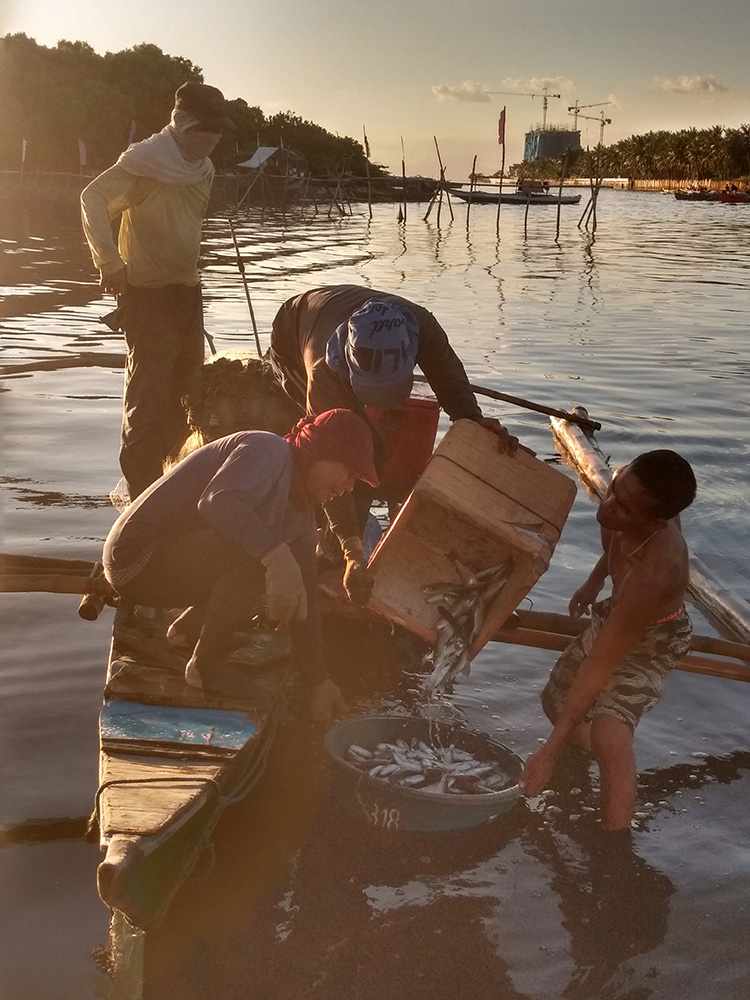
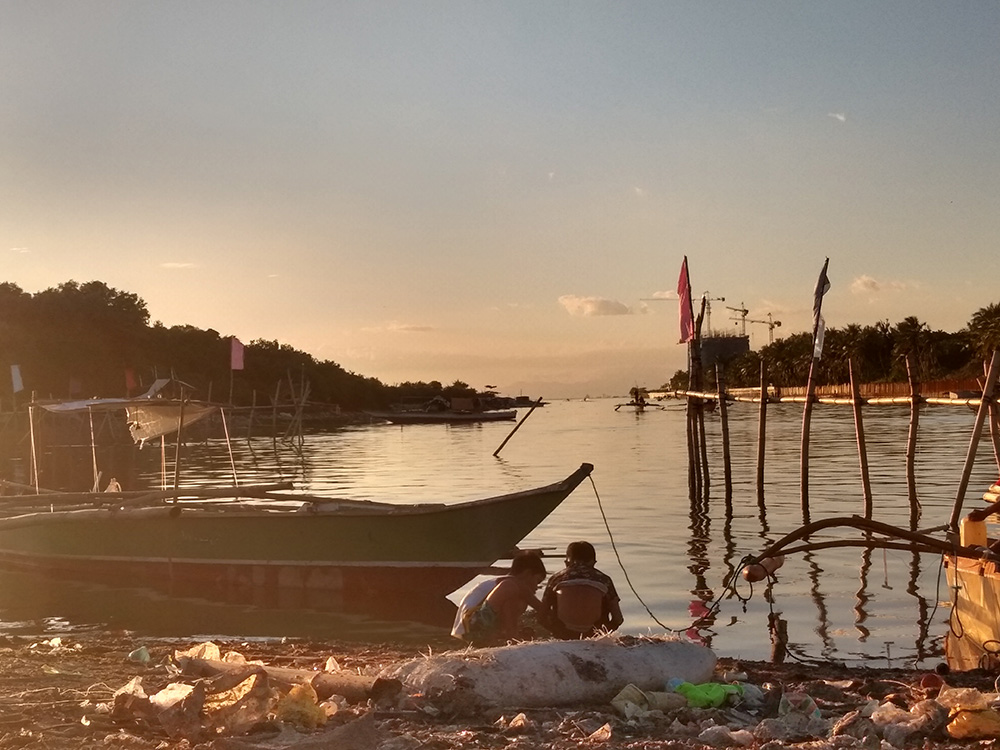
Kalikasan recently completed a study of five communities along Manila Bay assessing the reclamation projects in terms of human rights compliance and their impact on women. They found that projects show no regard for human rights, much less consider local communities' needs, concerns and existing initiatives. Besides that, prioritizing reclamation as a major development initiative also marks a departure from the existing local economies of fisher folks and urban poor communities.
In this context for restricted space for communities to take part in consultations and decision-making, Kalikasan initiated the People's Plan for Manila Bay, to claim the space for meaningful participation. It demonstrates an inspiring alternative to top-down decision-making processes.
The People's Plan for Manila Bay
Both ENDS supports Kalikasan's visionary People's Plan, a participatory environmental governance initiative that aims to empower communities along the bay to play a meaningful role in the management of their ecosystem.
"We work with Both ENDS because a Negotiated Approach enables communities to effectively influence stakeholders who are working in the local areas." – Leon Dulce, Kalikasan
Through citizen science, communities, civil society, and scientists engage in a community-based planning process. They aim to showcase viable land and water uses in coastal areas that support local communities' livelihoods and ensure a healthy ecosystem. Essentially, Kalikasan strengthens communities' ability to negotiate and assert their rights to water and other resources that directly support their livelihoods.
The People's Plan is currently in its development stage and will soon be initiated.
Dutch engineers involved
The Manila Bay master plan (known as the Manila Bay Sustainable Development Master Plan, MBSDMP) is being developed with help from Dutch engineers. Both ENDS is engaged in ongoing dialogues with governmental and private stakeholders in the Netherlands to address grievances by Kalikasan and its constituency. In addition to our advocacy for a safe space for communities to meaningfully participate in the master planning processes, Both ENDS supports Kalikasan's visionary response to develop a plan that is for the people and by the people, which is supported by the framework of a Negotiated Approach.
Read more about this subject
-
 Environmentally Just Practice /
A Negotiated Approach for Inclusive Water Governance
A Negotiated Approach envisages the meaningful and long-term participation of communities in all aspects of managing the water and other natural resources on which their lives depend. It seeks to achieve healthy ecosystems and equitable sharing of benefits among all stakeholders within a river basin. This inclusive way of working is an essential precondition for the Transformative Practices that are promoted by Both ENDS and partners.
-
 News / 17 februari 2026
Civic space at the frontlines: "Build strong coalitions and counter repressive regimes"
Today, we look back on an inspiring event Civic space at the frontlines -
Environmental Defenders and the Role of International Trade and Investment Policy. The panel exist of Michel Forst, UN Special Rapporteur Environmental Defenders under the Aarhus Convention, Suzanne Kröger, Member of Parliament for GroenLinks–PvdA, Dr. Margit van Wessel, Associate Professor at Wageningen University, Anne de Jonghe, policy advisor at Both ENDS, and Jonila Castro, national spokesperson for Kalikasan People's Network for the Environment. With an audience of CSO experts, academics, accountability experts and students we discussed the effects of Dutch economic activity on Environmental Defenders, and what we all can do to support those on the front lines of the fight for the environment and human rights. -
 Event / 26 januari 2026
Civic space at the frontlines
Environmental Defenders and the Role of International Trade and Investment Policy
Both ENDS invites you to an interactive dialogue with experts from the UN, policy, academia, and civil society on environmental defenders and international trade. Together, we will explore how citizens, policymakers, academics, and activists can defend civic space and support those on the frontlines of environmental and human rights struggles. With a focus on the Netherlands’ role in international trade and investment policy, and drawing on the experiences of activists from the Philippines, the event aims to foster solidarity and identify strategic priorities to better protect environmental defenders amid the global crackdown on civic space
-
 News / 27 november 2025
Communities and International Consortium Present Community-Led Plan for Nature-Based Adaptation to Sea-Level Rise in Coastal Bangladesh
Local communities in the southwestern coastal region of Bangladesh—together with an international consortium including Uttaran, CEGIS, and Both ENDS—have presented a community-led plan to confront climate change and accelerating sea-level rise through nature-based adaptation. The People’s Plan for Upscaling Ecosystem-Based Adaptation outlines a scalable strategy rooted in local ownership and generations of lived experience. At its centre is Community-Based Tidal River Management (CBTRM), a proven approach that reduces waterlogging, raises land elevation, and restores ecological balance by working with natural tidal and sediment dynamics.
-
 Dossier /
Wetlands without Borders
With our Wetlands without Borders program, we work towards environmentally sustainable and socially responsible governance of the wetlands system of the La Plata Basin in South America.
-
 Dossier /
Communities Regreen the Sahel
In various countries in the Sahel, vast tracts of land have been restored by the local population by nurturing what spontaneously springs from the soil and protecting the sprouts from cattle and hazards.
-
 Dossier /
Amplifying environmentally just practices
Because of the close relationship with their living environment, local communities often have the best ideas for the sustainable and equitable use and governance of land, water and forests. These environmentally just practices and processes successfully protect and restore ecosystems and address climate change. They are essential in the light of the multiple crises the world faces, but are in dire need of financial and policy support.
-
 News / 10 juli 2025
Both ENDS and Global Witness condemn harassment of anti-reclamation activists in Manila Bay
Global Witness and Both ENDS strongly condemn the reported of harassment and surveillance by the Armed Forces of the Philippines of environmental activists and fishing communities in Navotas, Philippines. Pamalakaya-Pilipinas, a National Federation of Small Fisherfolk Organisation in the Philippines, has received credible reports that the Armed Forces of the Philippines (AFP) are engaged in “red-tagging” their members.
-
 News / 23 juni 2025
Who benefits from better protection of our oceans?
The ocean emerged strengthened from the UN Ocean Conference in Nice. More countries are supporting a ban on deep-sea mining, more marine protected areas are being established, and more pledges are being made to fight pollution. The question now is whether countries will follow through on their commitments. Because the ocean movement faces a camp of powerful interests.
This article was originally posted in Dutch on MO*Magazine.
-
 News / 6 juni 2025
Both ENDS at the UN Ocean Conference: voicing our environmental justice concerns about the “Blue Economy”
Next week, the United Nations Ocean Conference will take place in Nice, France. This conference is focused on the conservation and sustainable use of coasts, seas and marine resources. Both ENDS colleague Murtah Shannon will be attending. We’ve asked him to explain a bit more about his plans.
-
 Dossier /
Inclusive ways to sustainable and healthy food for all
All around the world small-scale farmers are using sustainable and inclusive methods to produce food. Working together with nature and each other, they provide their families and communities with sufficient and healthy food. But their production methods are under pressure from large-scale agriculture and the globally dominant system of industrial food production. Together with our partners, Both ENDS is trying to turn the tide in favour of sustainable, local practices that are mostly known as 'agro-ecological' or 'nature-inclusive'. Why are we focusing on these methods? Agro-ecological practices are climate-proof and inclusive and increase the opportunities for communities around the world to produce their food sustainably.
-
 Blog / 28 januari 2025
Sinking promises in Manila
Yesterday, Global Witness published a new report, "Sunk Costs" - in which I had a modest role to play - that comes up with new facts about the disastrous New Manila International Airport project in the Philippines, for which the Dutch dredging multinational Boskalis received Dutch export credit insurance (ekv) of €1.5 billion.
-
 News / 24 december 2024
LILAK's Dare to Trust projects: Dreams transformed into actions
LILAK has worked alongside indigenous women communities for over a decade, focusing on building capacity and advocating for rights to land, the environment, and bodily autonomy. Despite gaining recognition and trust from allies, the journey was challenging. Starting with limited resources, LILAK faced resistance, particularly from patriarchal leaders and the state, which often labeled them as adversaries. Nevertheless, they adapted and continued their work, grounded in solidarity and sisterhood.
-
 News / 24 december 2024
NTFP-EP supports grassroots women’s organisations with Dare to Trust-grants
The pilot of Dare to Trust, facilitated by NTFP-EP, was implemented in two grassroots women’s organisations in the Philippines and Cambodia. The Dare to Trust project provided them with the independence to utilize the resources they have and thus handed to them the agency for more grounded and better judgment. By giving more liberty to the communities we are moving them away from bureaucratic processes and power structures, and towards more empowered decision making capabilities.
-
 Event / 12 december 2024, 13:00 - 14:30
Exploring new avenues of CSO participation in UNCCD processes
Enhancing inclusivity within UNCCD processes and its implementation by strengthening the involvement of civil society organizations (CSOs) and Indigenous Peoples.
-
 Event / 11 december 2024, 13:00 - 14:30
Making strategic impact: Shifting resources and power to women-led initiatives for Land Degradation Neutrality (LDN)
How donors, foundations and other funders can better support women-led initiatives in achieving Land Degradation Neutrality (LDN), focusing on challenges, collaboration, and opportunities for improved matchmaking.
-
Letter / 9 december 2024
People and the Planet Entebbe Declaration: Reclaiming investment frameworks for people and the planet
The time for change is now. Civil society demands international investment
frameworks that are aligned with economic justice, social and environmental
sustainability, and the needs of communities worldwide. -
 Dossier /
Small Grants Big Impacts
Small grants funds offer an effective, alternative way to channel big money from large donors and funds to local groups and organisations that are striving for a sustainable and just society everywhere around the world.
-
 Event / 4 december 2024, 18:00 - 19:30
Enhancing the role of civil society in the UNCCD to achieve Land Degradation Neutrality (LDN)
Effective local action by land-using communities is at the heart of achieving LDN globally. However, their contributions are often not well recognized or adequately supported by governments and other agencies. Within the UNCCD framework, civil society organisations play a key role in engaging with policymakers in the context of recognizing and supporting these contributions by local communities. The side event will engage participants in a GEF-supported joint Drynet/ IUCN initiative to enhance the capacities of civil society to engage effectively in the achieving Land Degradation Neutrality (LDN) within the UNCCD framework.
-
 News / 2 december 2024
Ten recommendations for the UNCCD COP16 to strengthen its efforts in combating desertification, land degradation, and drought
For decades, our local partner organisations have been developing and promoting effective ways to combat land degradation, desertification, and drought. This includes regions like the drylands, as well as forests, and wetlands. Supporting these locally-led actions is essential to reversing negative trends. For COP16, Drynet has developed 10 recommendations to strengthen the implementation of the UNCCD. Success at COP16 would mean turning these recommendations into action, fostering inclusive land governance and sustainable land management practices globally. By enabling locally-led actions—particularly those led by women, youth, pastoralists, and Indigenous Peoples—we can build a more resilient future.