




Guatemalan women force Development Bank to investigate gender policy violations
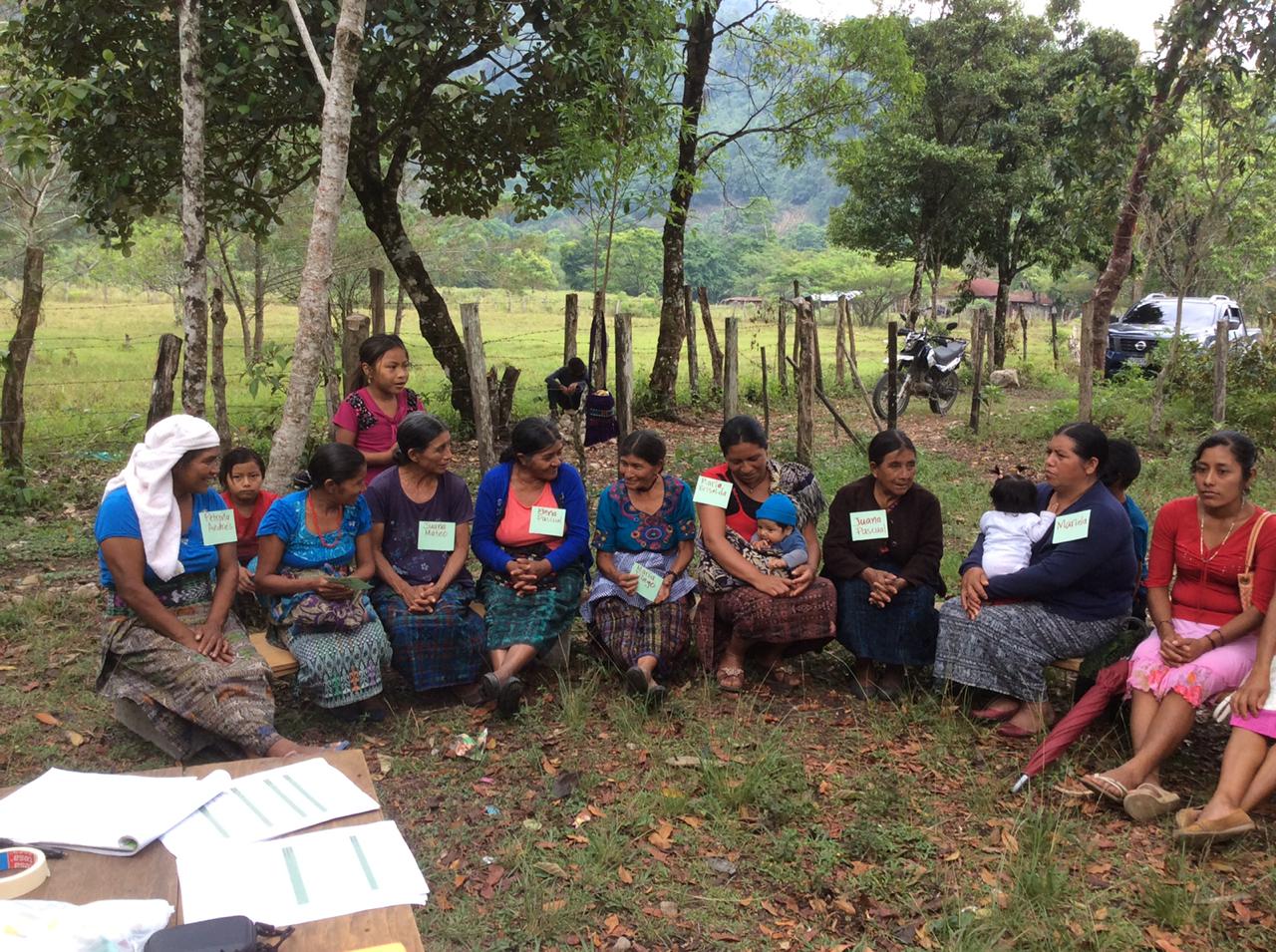
After a complaint filed by women's groups from Ixquisis, Guatemala, the Interamerican Development Bank (IDB) has started an investigation on several policy violations, amongst which the Gender Equality policy. This is a unique chance to create a precedent, because complaints on the IDB's gender policy are very rare. The women from Ixquisis are fighting for their rights with support of the Global Alliance for Green and Gender Action (GAGGA).
The women accuse the IDB of non-compliance with both its Environmental and Social Sustainability Policy and three Operational Policies (on Environment and Safeguards Compliance, on Gender Equality in Development and on Indigenous People) in the approval process for several hydropower projects in their region: the Pojom I, Pojom II and San Andrés dams.
Hydropower projects disrupt communities and the environment
The affected people of the region of Ixquisis are primarily indigenous Mayans including the Chu, Q'anjob'al and Akateko ethnic groups. The construction of the dams has caused severe environmental and social damage, which have affected local people's ability to maintain their traditional lifestyle.
According to the women of Ixquisis, the most severe problem is that the dams have caused water scarcity and pollution. The lack of water has also drastically reduced harvests, lessening the income gained from selling corn, wheat, beans, coffee, sugar cane and other products in the market. Fish, shrimps and snails are no longer abundant. As a result, the conditions of poverty in the area have deepened.
It's the women in the communities that are most negatively effected by the construction of the Pojom II and San Andrés dams. Stomach and skin diseases become more common, especially amongst women, who stand in the polluted water when washing clothes, and children who play in the rivers. This puts even more pressure on the women in the indigenous communities, as they are the ones feeding their families and taking care of ill community members.
The women also feel no longer safe within their own communities. They are afraid to walk alone in the dark, as they are being harassed by the dams' construction workers, and fear revenge. Because the women are at the frontline of the protests against the dams.
Nine affected Mayan communities and allied organizations have been protesting the dams for six years. They have made various efforts before the municipal, departmental and national authorities to express their disagreement over the diversion of the rivers by the company that operates the dams.
From local to global: using international spaces for local matters
However, in Guatemala there is little space for civil society to make their voices heard and influence the government's decision-making. Therefore, the NGO AIDA stepped in to take the women's fight against the dams to the international level. AIDA has been supporting the communities to strengthen the capacity of women and community-based organizations to use accountability mechanisms at international financial institutions to protect their rights and environment, through training and legal support.
In August 2018, the communities represented by AIDA, together with the International Platform Against Impunity and the Plurinational Ancestral Government of Q'anjob'al, Popti, Chuj and Akateko, filed a complaint before IDB's Independent Consultation and Investigation Mechanism (MICI, "Mecanismo Independiente de Consulta e Investigación") to demand the withdrawal of its investment in the project.
The MICI has accepted the complaint after consistent advocacy and information by AIDA and the affected communities, and is now doing a thorough investigation, including a visit to Guatemala at the end of 2019.
How one complaint can eventually lead to policy change
Although the final report will only be published by mid-2020, the fact that this investigation is taking place is already a success. The violation of gender safeguards has not been discussed much at MICI, as very few claims have been brought about it. This presents an opportunity to set a precedent by bringing the issue to its attention, along with violations of the other safeguards. AIDA expects the MICI's findings to align with their complaint, and that the MICI will recommend the IDB to better regulate its projects and comply with its own social and environmental policies. Better implementation of these policies would strengthen protections for affected communities, especially for women, and improve environmental and social sustainability of the IDB's investments.
For the women of Ixquisis, however, what counts is that until now, the Pojom II hydropower project has not yet been built. "So far we've achieved that the river is not stolen from us", as Carla, a local women states.
Linking and learning to empower women and environmental NGO's
An important part of GAGGA is the idea of "Linking and Learning". By providing local groups the opportunity to exchange experiences and knowledge with others, they increase their advocacy capacities and feel stronger by the international solidarity and support.
For the women from Ixquisis, AIDA has been able to broaden their network in and beyond their region. For example, they participated in the Women and Water congress in Nepal and met other Human Rights Defenders in Colombia earlier this year.
Furthermore, this complaint process also has increased AIDA's knowledge on gender issues in large infrastructure projects. They will incorporate a stronger gender perspective in their future environmental and human rights work, and share their experiences with other organizations, regionally and globally. For this, they are working on a report in which they evaluate the effectiveness of the accountability mechanism of the IDB. This report will be a useful resource for the whole GAGGA-network.
For more information
Read more about this subject
-
 Dossier /
Global Alliance for Green and Gender Action (GAGGA)
GAGGA rallies the collective power of the women's rights and environmental justice movements to realize a world where women can and do access their rights to water, food security, and a clean, healthy and safe environment.
-
 Dossier /
Advocating for responsible policies of development banks
Development banks should comply with strict environmental and human rights rules to ensure that their projects benefit and do not harm the poorest groups. Both ENDS monitors the banks to make sure they do.
-
 News / 27 februari 2026
Both ENDS strengthens the resilience of female environmental defenders worldwide thanks to multi-year contribution from the Postcode Lottery
In recent years, Both ENDS has received an additional contribution of €875,000 from the Postcode Lottery for the Autonomy & Resilience Fund (2022–2025), implemented in collaboration with the Global Alliance for Green and Gender Action (GAGGA). This support was essential because female environmental rights defenders around the world are increasingly facing climate change, repression and shrinking civil space. With this contribution, Both ENDS supports female activists and their communities with flexible, trust-based funding, enabling them to develop their own solutions to urgent environmental and climate problems.
-
 News / 2 februari 2026
Response to the D66-VVD-CDA coalition agreement
Coalition: Repair the damage and dare to go further
At Both ENDS, we see a number of cautious steps in the right direction in this coalition agreement. There is a slight emphasis on green issues, renewed attention to women's rights, recognition of the importance of civil society, and discussion of trade agreements with a focus on mutual interests. However, without structural change in how we trade, invest, and cooperate, fine words remain empty shells.
-
 Dossier /
Agua Zarca: indigenous fight against dam costs lives
Indigenous Hondurans are resisting the construction of the Agua Zarca hydrodam. Their fight has cost several lives, including that of Berta Cáceres. After considerable public pressure, Dutch development bank FMO withdrew from the project.
-
 Press release / 13 januari 2026
Investigation: FMO failed to exercise adequate control over project linked to the murder of Berta Cáceres
TEGUCIGALPA/UTRECHT, January 12, 2026 – The murder of indigenous environmental activist Berta Cáceres, which took place almost 10 years ago in Honduras, appears to be the result of an organized criminal operation, in which funds from the Dutch Development Bank FMO were misappropriated to finance illegal activities. This is the conclusion of the investigation report published today by the independent commission set up by the Inter-American Commission on Human Rights, the Honduran state, and the relatives of Berta Cáceres.
For years, FMO was a major financier of the Agua Zarca project. Berta Cáceres, an indigenous leader, fought against this controversial dam and was murdered for that reason in March 2016.
-
 Dossier /
Gas in Mozambique
In 2011 one of the world’s largest gas reserves was found in the coastal province of Cabo Delgado, in the north of Mozambique. A total of 35 billion dollars has been invested to extract the gas. Dozens of multinationals and financiers are involved in these rapid developments. It is very difficult for the people living in Cabo Delgado to exert influence on the plans and activities, while they experience the negative consequences. With the arrival of these companies, they are losing their land.
-
 Dossier /
Indigenous communities threatened by Barro Blanco dam in Panama
The Barro Blanco dam project in Panama, which has Dutch financial support, is causing indigenous lands to disappear under water. Both ENDS is working to protect the rights of indigenous communities living near the dam.
-
 Blog / 1 december 2025
The Long Road to Justice for the Ngäbe of Kiad
In October 2025 I travelled to Kiad, the Indigenous Ngäbe community that led the struggle against the FMO-financed Barro Blanco dam, for one last time. I went there to say my goodbyes, both personally and on behalf of Both ENDS, and to catch a first glimpse on how a community program financed by FMO and DEG – the result of a dialogue process that took several years – is giving a new impulse to the dam-affected communities. But how did we get here?
-
 News / 27 november 2025
Communities and International Consortium Present Community-Led Plan for Nature-Based Adaptation to Sea-Level Rise in Coastal Bangladesh
Local communities in the southwestern coastal region of Bangladesh—together with an international consortium including Uttaran, CEGIS, and Both ENDS—have presented a community-led plan to confront climate change and accelerating sea-level rise through nature-based adaptation. The People’s Plan for Upscaling Ecosystem-Based Adaptation outlines a scalable strategy rooted in local ownership and generations of lived experience. At its centre is Community-Based Tidal River Management (CBTRM), a proven approach that reduces waterlogging, raises land elevation, and restores ecological balance by working with natural tidal and sediment dynamics.
-
 Dossier /
Wetlands without Borders
With our Wetlands without Borders program, we work towards environmentally sustainable and socially responsible governance of the wetlands system of the La Plata Basin in South America.
-
 Environmentally Just Practice /
Non-Timber Forest Products (NTFPs)
About one in every six people, particularly women, directly rely on forests for their lives and livelihoods, especially for food. This shows how important non-timber forest products (NTFPs) and forests are to ensure community resilience. Not only as a source of food, water and income, but also because of their cultural and spiritual meaning.
-
 News / 5 november 2025
Interview: Both ENDS at COP30 for Climate Justice and Systemic Change
Both ENDS is present at COP30 to advocate for genuine access to climate finance for locally led, gender-just climate solutions and the mechanisms that facilitate this, including those for farmer-led restoration. Furthermore, the organisation participates to ensure the crucial connection between the climate negotiations and the trade and investment frameworks that shape them.
Learn more about the Both ENDS team at COP30 below, and find all the activities and side-events in which Both ENDS will participate.
-
 News / 5 november 2025
Overview of Both ENDS events at COP30 in Belem, Brazil
Both ENDS is present at COP30 to advocate for genuine access to climate finance for locally led, gender-just climate solutions, and for the mechanisms that make these possible, including those supporting farmer-led restoration. The organisation also engages to highlight the crucial connection between climate negotiations and the trade and investment frameworks that shape them.
Below is an overview of the Both ENDS team at COP30 and a detailed look at the activities and side-events in which Both ENDS will participate.
-
 News / 27 oktober 2025
New Step in FMO’s Complaint Policy – Civil Society Organizations Call for Further Strengthening
The updated complaint mechanism of the development banks FMO, DEG, and Proparco marks an important step forward. Organizations that participated in the consultation acknowledge the efforts to improve the mechanism. At the same time, they emphasize that much still needs to be done to make the policy truly effective, transparent, and independent.
-
Publication / 2 oktober 2025
-
 Dossier /
Soy: trade in deforestation
The rising demand for soy is having negative consequences for people and the environment in South America. Both ENDS reminds Dutch actors in the soy industry of their responsibilities and is working with partners on fair and sustainable alternatives.
-
 Dossier /
Towards a socially and environmentally just energy transition
To address the climate crisis we need to urgently transition away from fossil fuels towards clean, renewable energy. However, this transition is not only about changing energy sources. It requires an inclusive and fair process that tackles systemic inequalities and demanding consumption patterns, prioritizes environmental and social justice, and which does not repeat mistakes from the past.
-
 News / 16 juli 2025
Case Study: Women Advocating for Gender and Climate Justice in Burkina Faso
The Women Environmental Programme Burkina Faso (WEP BF or WEP) is leading the way in gender-just climate solutions, putting the power of advocacy directly into the hands of women farmers. “In Burkina Faso, women play a crucial role in food production and natural resource management, yet they continue to face systemic barriers to land ownership,” explains a WEP team member. “Despite legal provisions, deeply ingrained customary norms remain dominant, restricting women’s access to land as user rights only, which need to be mediated through male family members.” Without secure access to land, they face significant obstacles in sustaining their agricultural activities, improving local food security, and fully participating in their communities.
-
 News / 16 juli 2025
Case Study: Fighting Environmental Transphobia and Social Fragmentation in Brazil
In the face of environmental transphobia, a form of discrimination where trans and gender-diverse communities are disproportionately impacted by environmental degradation,excluded from climate policies, and often met with stigma and exclusion by environmental justice movements, Grupo Orgulho, Liberdade e Dignidade (GOLD) has emerged as a bold and visionary force for change in Brazil. At the heart of this movement is Débora Sabará ,GOLD’s leader, a travesti activist who has fought tirelessly to place the perspectives andneeds of LGBTIQAPN+ (Lesbian, Gay, Bisexual, Trans, Intersex, Queer, Asexual, Pansexual, Nonbinary and other identities), Indigenous and Afro-Brazilian communities at the center of environmental justice conversations.

