




FPIC needs to move beyond an ‘end of the line-solution’
How can we more effectively implement FPIC-legislation and ensure the fundamental community rights of indigenous peoples are protected? Both ENDS' Wiert Wiertsema explores this question in an article in the newsletter of our partner NTFP-EP.
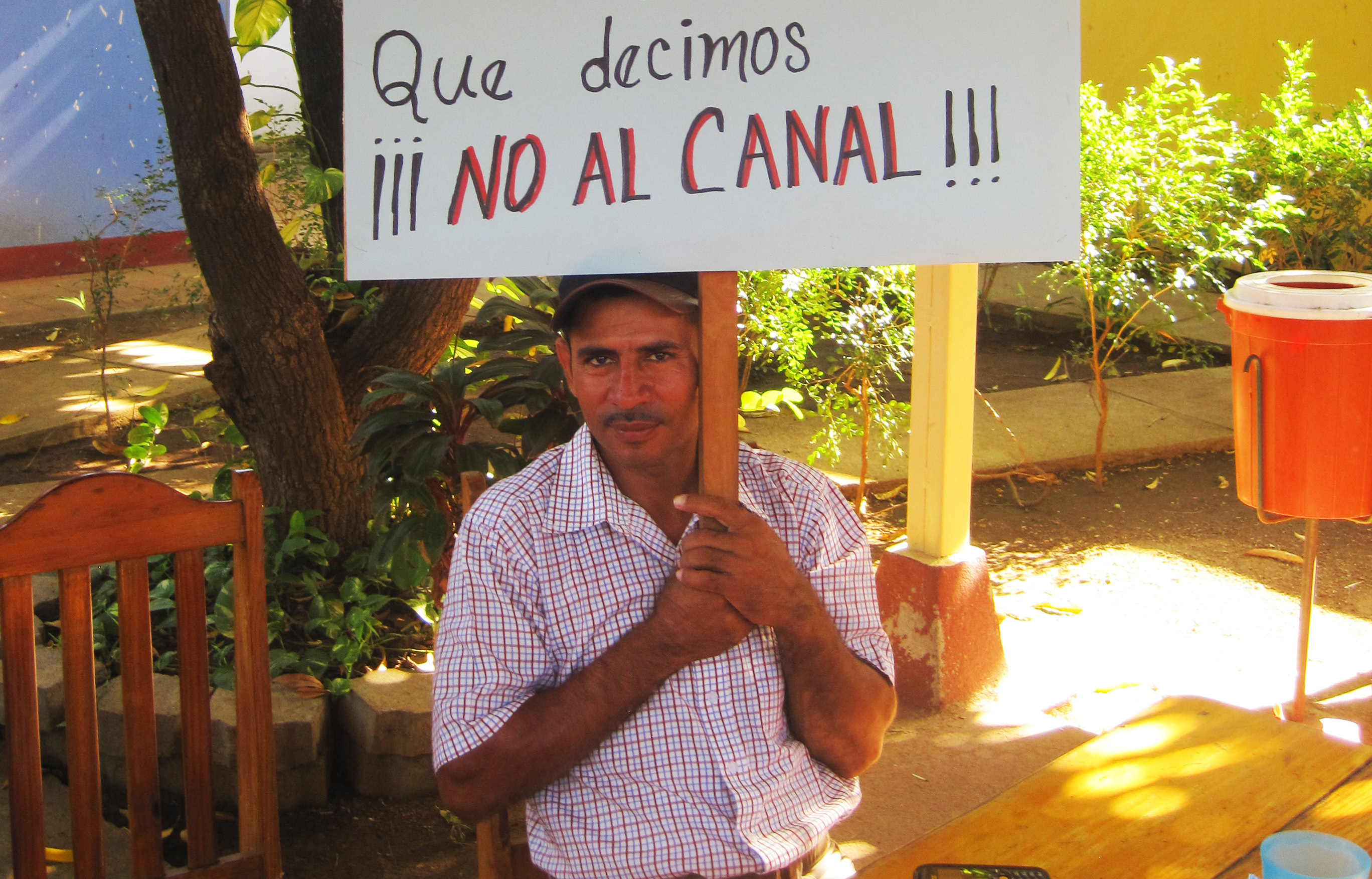
FPIC - Free, Prior and Informed Consent - is the principle recognizing that a community has the right to give or withhold its consent to proposed projects that may affect the lands they customarily own, occupy or otherwise use. FPIC has been embedded in a number of international treaties and convention, but on the ground, it is often not implemented correctly.
In his article in the January edition of Leaf Litter, the newsletter of our partner NTFP-EP, Wiert Wiertsema suggests how to increase the correct implementation of FPIC.
Read the article about FPIC
Read the whole edition of Leaf Litter
For more information
Read more about this subject
-
 Environmentally Just Practice /
Inclusive Land Governance
Both ENDS works with partners around the world to ensure that land is governed fairly and inclusively and managed sustainably with priority for the rights and interests of local communities.
-
 Dossier /
Suape: port expansion threatens paradise
Two projects insured by Atradius DSB in the Brazilian port of Suape have caused serious social problems and environmental damage. Both ENDS is helping the local people to obtain justice.
-
 News / 30 november 2016
Dutch Export Credit Agency did not prevent damaging practices in Suape
Atradius Dutch State Business (Atradius DSB) remains responsible for observing social, environmental and human rights, also after providing export credit insurance. That is the conclusion of the Dutch National Contact Point (NCP) for the OECD Guidelines in its final statement, which was published today. Both ENDS issued a press release about this.
-
Publication / 7 maart 2016
-
 Environmentally Just Practice /
Non-Timber Forest Products (NTFPs)
About one in every six people, particularly women, directly rely on forests for their lives and livelihoods, especially for food. This shows how important non-timber forest products (NTFPs) and forests are to ensure community resilience. Not only as a source of food, water and income, but also because of their cultural and spiritual meaning.
-
 Dossier /
Dare to Trust: the power of unconditional funding
At Both ENDS we cherish our long-term relationships with partners in our global network. These relationships are based on equality and built on trust. The trust we have in each other has developed from years of strategic cooperation, including joint advocacy around common agendas, knowledge sharing, networking, and mobilising and sharing resources to advance environmental justice.
-
 Dossier /
Inclusive ways to sustainable and healthy food for all
All around the world small-scale farmers are using sustainable and inclusive methods to produce food. Working together with nature and each other, they provide their families and communities with sufficient and healthy food. But their production methods are under pressure from large-scale agriculture and the globally dominant system of industrial food production. Together with our partners, Both ENDS is trying to turn the tide in favour of sustainable, local practices that are mostly known as 'agro-ecological' or 'nature-inclusive'. Why are we focusing on these methods? Agro-ecological practices are climate-proof and inclusive and increase the opportunities for communities around the world to produce their food sustainably.
-
 News / 24 december 2024
NTFP-EP supports grassroots women’s organisations with Dare to Trust-grants
The pilot of Dare to Trust, facilitated by NTFP-EP, was implemented in two grassroots women’s organisations in the Philippines and Cambodia. The Dare to Trust project provided them with the independence to utilize the resources they have and thus handed to them the agency for more grounded and better judgment. By giving more liberty to the communities we are moving them away from bureaucratic processes and power structures, and towards more empowered decision making capabilities.
-
 Press release / 8 augustus 2022
Indigenous knowledge and languages crucial in the fight against climate change
Amsterdam, 8 August 2022 – In most countries around the world, the extensive knowledge of Indigenous peoples on nature, food, health, cultural traditions and Indigenous languages receives insufficient appreciation and attention in education and policy. The Indigenous-Led Education (ILED) Network believes that this must change. To mark the International Day of the World's Indigenous Peoples on 9 August, the ILED Network is calling for more support for the transfer of this Indigenous knowledge, which also plays a major role in resolving the biodiversity and climate crises.
-
 News / 18 maart 2022
International Forests Day: the importance of forests for livelihoods and a healthy environment
Today is International Day of Forests. An ever more important day, as the amount of forest and forested area's on this globe is shrinking at a fast pace. One the main causes is our ever increasing demand for products such as soy and palm oil from area's that have been deforested for their cultivation. The current proposed EU-deforestation law to prevent this, is not strict enough and does not include the protection of other crucial natural areas such as grasslands, savannas and swamps, as well as the human rights of the millions of people living in these area's. During these past few weeks we therefore participated in the campaign #Together4Forests, calling on citizens to send a letter to their own responsible ministers. The campaign paid off: almost 54,000 letters were sent to European ministers across the European Union, demanding a strict forest law that guarantees the import of only deforestation-free products in Europe.
To celebrate this International Day of Forests, we would like to emphasise the great value of forests and other natural areas, directly or indirectly, for the livelihoods of at least 2 billion people. Below, we selected some examples that show how, throughout the world, local communities use many different ways to collect and produce food and other natural products in a sustainable way, while protecting and restoring the forests and forested area's they are so dependent upon.
-
 News / 17 september 2021
Beyond trees: the importance of Non-Timber Forest Products for communities
About one in every six people, particularly women, directly rely on forests for their lives and livelihoods, especially for food. This shows how important non-timber forest products (NTFPs) and forests are to ensure community resilience. Not only as a source of food, water and income, but also because of their cultural and spiritual meaning.
-
 External link / 20 juli 2021
Women’s rights and Non-Timber Forest Products (Annual Report 2020)
As a source of food, water and income, and for their cultural and spiritual meaning, forests and Non-Timber Forest Products (NTFPs) help ensure community resilience. Both ENDS has a long history of collaboration with partners such as the Non-Timber Forest Products Exchange Programme (NTFP-EP) and Keystone Foundation, which support forest communities in promoting the NTFP concept for forest conservation and livelihood enhancement.
-
 Dossier /
Fighting for improvements in the production of palm oil
The production of palm oil is causing social and environmental problems worldwide. Both ENDS is working to make the sector fairer and more sustainable and is promoting alternatives for palm oil.
-
 External link / 29 mei 2019
Women say “no” to mining (Annual Report 2018)
Mining often has a huge and devastating impact on the environment, including water, air and forests. It can profoundly affect nearby communities, not only by harming local ecosystems, but also by exacerbating or provoking societal tension. In many places across the globe, women are leading resistance to mining and the 'extractivist' model.
-
Publication / 22 december 2015
-
 Dossier /
Export Credit Agencies: Who pays the price?
Both ENDS calls on the government only to provide export credit insurance to sustainable projects that cause no social and/or environmental damage in the countries where they take place.
-
 Dossier /
Paris Proof Export Support
Almost two-thirds of the export credit insurances that Atradius DSB provided in the 2012-2018 period went to the fossil energy sector. That is contrary to the climate agreements that the Netherlands signed in Paris.
-
 News / 6 januari 2022
How the mangroves in Suape are growing back
"The mangroves were choking, gasping for air. When the dam was partially opened, they could finally breathe again. It was the breath that the animals, the fish in the rivers, the crabs, shrimps and oysters had all been craving."
On the northeast coast of Brazil, activities have been underway since 2007 to develop and extend the port of Suape. The port is being developed partly to support oil drilling along the Brazilian coast. The project is controversial because of the disastrous impact it is having on the natural environment, the rivers, the mangroves, marine life and the people who have lived in the region for many generations. Together with Fórum Suape, specially set up to combat the development of the port, Both Ends has been working for almost ten years to protect the rights of local communities in and around Suape. Now there has been a breakthrough – literally. In August of last year, a controversial dam in the Rio Tatuoca that was destroying the mangroves and the aquatic life in the area was partially dismantled. We spoke to Mariana Vidal,* project coordinator at Fórum Suape, about how that came about and what changes have taken place in the area since.
-
 News / 30 juni 2020
Extra export support from the government must stimulate green growth
Almost 40 civil society organisations and networks from around the world, including Both ENDS, today sent a letter to Dutch Minister for Foreign Trade and Development Cooperation Sigrid Kaag and State Secretary for Finance Hans Vijlbrief. They are asking the ministers to ensure that the expansion of export credit insurance as a result of the Corona crisis contributes to a green recovery.
-
Letter / 29 juni 2020
Letter: Extra export support from the government must stimulate green growth
Almost 40 civil society organisations and networks from around the world, including Both ENDS, today sent a letter to Dutch Minister for Foreign Trade and Development Cooperation Sigrid Kaag and State Secretary for Finance Hans Vijlbrief. They are asking the ministers to ensure that the expansion of export credit insurance as a result of the Corona crisis contributes to a green recovery.


