




Amsterdam Declaration: towards 100% sustainable palm oil
Both ENDS has, as a member of the RSPO, participated in a dialogue with the Ministry of Foreign Affairs. The Netherlands is the largest importer of palm oil in Europe and wants to promote sustainable trade and production chains.
Therefore, we asked the Dutch Minister for Foreign Trade and Development Cooperation Ploumen to promote certified sustainable palm oil during the Dutch presidency of the European Union in the first half of 2016.
Amsterdam Declaration on sustainable palm oil
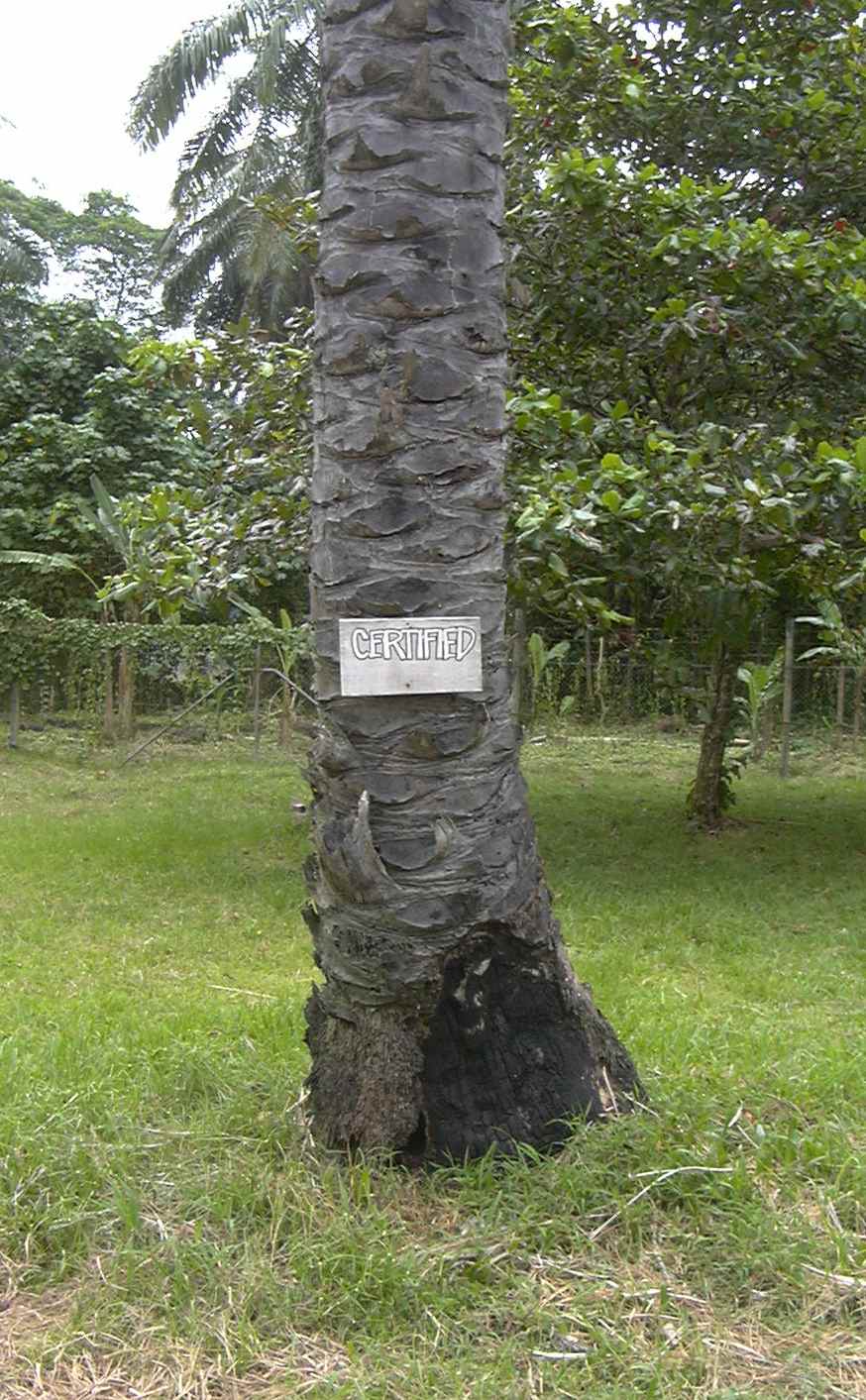
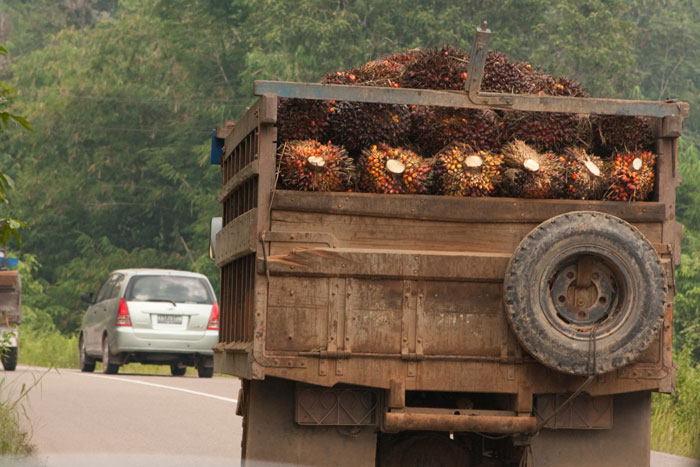
The Netherlands subsequently organised a conference in December 2015 in Amsterdam, where the 'Amsterdam Declaration' was signed by six countries (Denmark, France, Germany, the Netherlands, Norway and the United Kingdom). By signing this declaration, the countries, as well as companies, commit to 100% certified palm oil. Paul Wolvekamp: "The positive thing about this is that now also governments are willing to take responsibility for making the palm oil chain more sustainable."
Read more about this subject
-
 Dossier /
Fighting for improvements in the production of palm oil
The production of palm oil is causing social and environmental problems worldwide. Both ENDS is working to make the sector fairer and more sustainable and is promoting alternatives for palm oil.
-
 News / 2 February 2026
Response to the D66-VVD-CDA coalition agreement
Coalition: Repair the damage and dare to go further
At Both ENDS, we see a number of cautious steps in the right direction in this coalition agreement. There is a slight emphasis on green issues, renewed attention to women's rights, recognition of the importance of civil society, and discussion of trade agreements with a focus on mutual interests. However, without structural change in how we trade, invest, and cooperate, fine words remain empty shells.
-
 Dossier /
Export Credit Agencies: Who pays the price?
Both ENDS calls on the government only to provide export credit insurance to sustainable projects that cause no social and/or environmental damage in the countries where they take place.
-
 Dossier /
Rights for People, Rules for Corporations – Stop ISDS!
Indigenous communities in Paraguay saw their attempts to regain their ancestral lands thwarted by German investors. In Indonesia, US-based mining companies succeeded to roll back new laws that were meant to boost the country’s economic development and protect its forests. This is the level of impact that investment treaties can have on social, environmental and economic development and rights. Why? Because of the ‘Investor-to-State Dispute Settlement’ clauses that are included in many such treaties.
-
 Dossier /
Trade agreements
International trade agreements often have far-reaching consequences not only for the economy of a country, but also for people and the environment. It is primarily the most vulnerable groups who suffer most from these agreements.
-
 News / 5 November 2025
Another ISDS claim hits the Netherlands: Petrogas sues over solidarity contribution and royalty regulations
SOMO and Both ENDS strongly condemn the newly revealed investor-state dispute settlement (ISDS) case filed by Petrogas, an Omani oil and gas company operating two shallow-water gas fields in the Dutch North Sea, against the Netherlands under the Netherlands-Oman bilateral investment treaty (BIT).
-
 Dossier /
International trade and investment with respect for people and planet
The network of international trade and investment treaties is large and complex. The Netherlands alone has signed more than 70 bilateral investment treaties (BITs) and is party to the trade and investment agreements concluded by the EU, like the EU-Mercosur and EU-Indonesia trade deals.
-
 Dossier /
Fair Green and Global Alliance (FGG)
Together with civil society organisations from all over the world, the Fair Green and Global (FGG) Alliance aims for socially just, inclusive and environmentally sustainable societies in the Netherlands and the Global South.
-
 News / 21 February 2025
Cabinet turns its back on international cooperation and solidarity with callous policy letter
Foreign Trade and Development Minister Klever's published policy letter is coldhearted and callous. It places the Netherlands in international isolation and abandons the most vulnerable people worldwide, including many women, farmers, indigenous peoples and youth.
-
 Dossier /
The Climate lawsuit against Shell
Both ENDS is co-plaintiff in the climate lawsuit brought by Milieudefensie (Friends of the Earth The Netherlands) in 2018 against Shell to stop the company from causing harm to the climate. In 2021, the judge ruled in favor of the climate, but unfortunately the company appealed. The court will therefore render its verdict at the end of 2024.
-
 Dossier /
Making pension funds more sustainable
Pension funds have a lot of influence because of their enormous assets. Both ENDS therefore wants pension funds such as the Dutch ABP to withdraw their investments from the fossil industry and to invest sustainably instead.
-
 Blog / 19 November 2024
Building Monitoring, Evaluation and Learning systems based on mutual accountability and trust
Just before summer, on June 27th we participated in a panel discussion on inclusive conservation in a learning event organized by WWF Netherlands. Several organizations joined in a discussion on inclusive, decolonial, rights-based, and community-led approaches in conservation. We discussed the barriers, gaps and opportunities in how power is shared, inclusion promoted, and accountability practiced in our work. The question raised was: as Dutch-based organizations, are we doing enough to really work inclusive? In 2023 Both ENDS started an Examination of Power process to research how power is experienced in our partnerships. I share a couple of practical tips and insights that I feel might benefit the greater conversation around Monitoring, Evaluation and Learning (MEL) in our sector.
-
 Blog / 18 November 2024
The global rise of authoritarian regimes demands global strategies
The global funding landscape for civil society movements is changing, and is increasingly faced with policies that restrict funding streams, limit philanthropic work, and silence critical voices. These are not incidental shifts but part of a broader pattern that erodes the support for those international networks and movements under the guise ‘necessary financial cuts’, ‘aid reform’ or ‘efficiency’.
-
 Press release / 12 November 2024
Ruling climate case Shell: "Shell has an obligation to protect human rights."
The Hague, 12 November 2024 - The court has ruled in Shell's appeal in the Climate Case that Milieudefensie won against Shell in 2021. The Court of Appeal has ruled that the oil and gas giant has a responsibility to reduce its emissions, but has not imposed a reduction obligation.
-
 Press release / 11 November 2024
Both ENDS's response to government letter on future cooperation with civil society organisations
DEN HAAG, 11 November 2024 - Today, the Dutch government published its policy on future cooperation with development organisations, both in the Netherlands and abroad. PVV minister Reinette Klever is putting the axe to this funding: she has decided to cut the budget for aid to international civil society by more than two-thirds: from roughly €1.4 billion to €0.4 billion in the period 2026 to 2030. This has major implications for critical voices at home and abroad, at a time when civic space for organisations around the world is already shrinking. Karin van Boxtel, director of environmental and human rights organisation Both ENDS: ‘This is an unprecedented step in exactly the wrong direction. Civil society organisations are essential for sustainable and social change worldwide. International movements fulfil multiple, indispensable roles: as a watchdog of the rule of law, as a driver of change, and as a counterforce against authoritarian tendencies. The weakening of support for these roles is a telling signal.’
-
 News / 9 November 2024
Why is the Dutch climate case against Shell important to our partners in the Global South?
On November 12th, a new ruling will be issued by the Court of Appeal in The Hague in the climate case against Shell, in which Both ENDS is a co-plaintiff. Ahead of this ruling, we asked our partners why this Dutch lawsuit is important for the Global South.
-
 News / 21 October 2024
Disappointment over failure to submit National Biodiversity Strategy and Action Plan
We are deeply disappointed and frustrated that the Dutch government has not submitted its National Biodiversity Strategy and Action Plan (NBSAP) for the CBD COP16 in Cali. This disregard for international agreements undermines the concerted global effort to address the urgent biodiversity crisis.
-
 External link / 20 July 2021
Protecting forests: a global fight at all levels (Annual Report 2020)
Systemic change is urgently needed to protect the Earth's forests and the rights of forest peoples. Deforestation and forest degradation are driven by global demand for products like palm oil and soy. Tackling the problem requires not reduced demand and better policies and practices at international levels, but also improved recognition of community land rights – a key focus of our work with partners in 2020.
-
 Press release / 8 July 2021
After Shell ruling, banks, pension funds and insurance companies now have to take action
Civil society organisations send urgent letter on climate to financial sector
Amsterdam, 8 July 2021 – The Shell ruling has consequences for the financiers of major climate polluters. That is the message in a letter from a number of civil society organisations, including Oxfam Novib, Eerlijke Geldwijzer, Milieudefensie, Greenpeace and Both ENDS, to the biggest banks, pension funds and insurance companies in the Netherlands. In the letter, they call on the financial institutions to reduce CO2 emissions from loans and investments in line with the 1.5 degrees goal laid down in the Paris climate agreement.
-
 News / 27 May 2021
Friday May 28: international day at the Wake for the Climate
During the formation of a new Dutch government after the general elections in March, a group of concerned citizens is holding a wake in front of the Prime Minister's residence to remind the political leaders of the climate crisis. On Friday May 28, they will pay attention to the international aspect, initiated by Cordaid, Oxfam Novib, Care, ActionAid, WECF, Hivos and Tearfund. Both ENDS is happy to support the initiative.