




South American organisations are pushing back their boundaries
By
Eva Schmitz
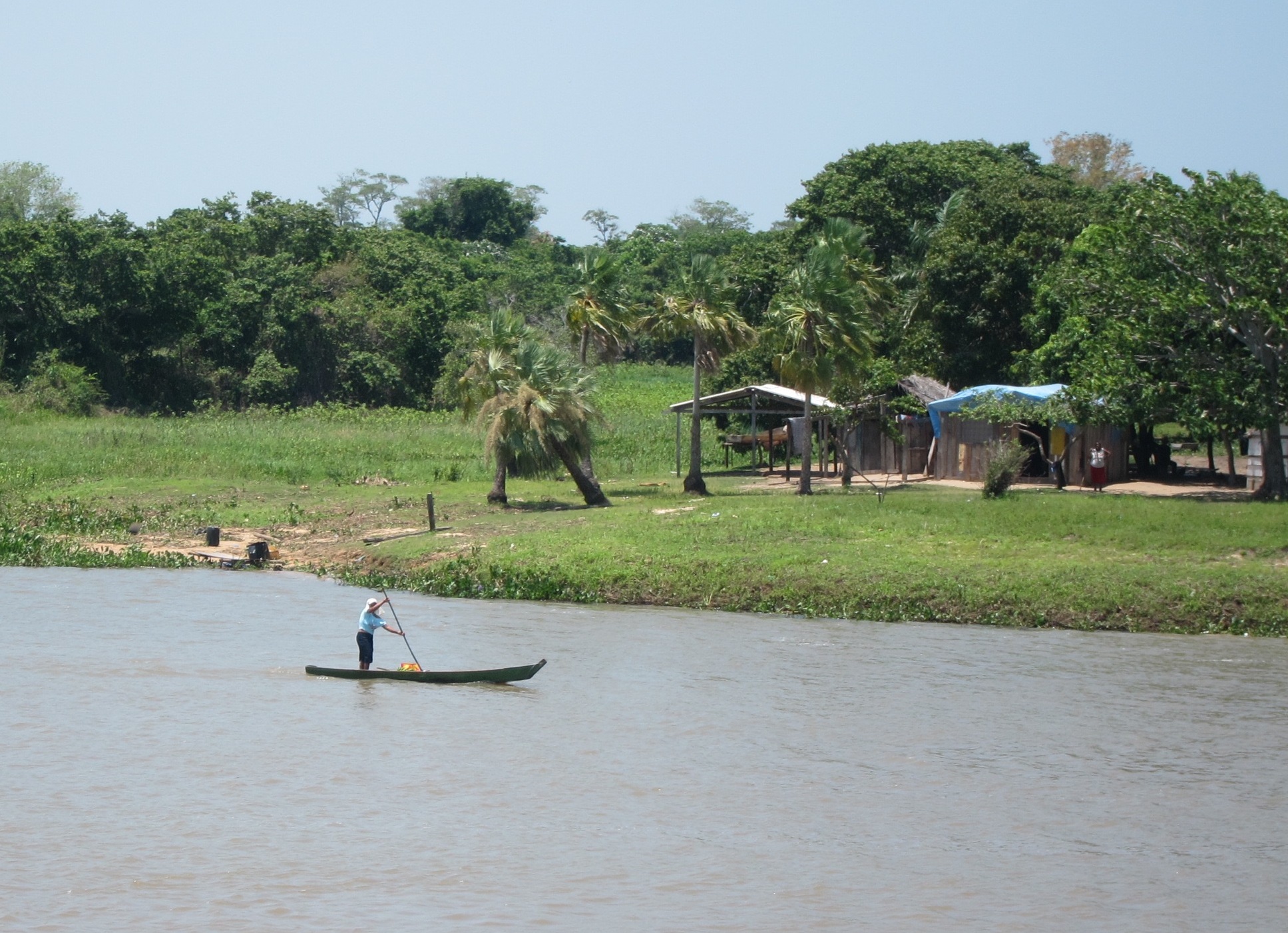
The Rio de la Plata Basin in South America extends across Argentina, Bolivia, Brazil, Paraguay and Uruguay. The livelihoods of the millions of people who live there – city-dwellers, small farmers and fishers, and indigenous peoples – are under pressure from soya cultivation, mining and logging, and by the construction of dams and ports. The COVID-19 crisis is making the situation even worse.
Local nature and human rights organisations are proving indispensable in some countries now that governments are failing to respond effectively to the crisis. The humanitarian aid that these organisations offer remote communities is often the only support they receive.
The countries in the La Plata basin have different ways of dealing with the COVID-19 crisis. In Argentina and Paraguay, the governments responded quickly and seem to have the outbreak reasonably under control. In Bolivia, the reaction reflects the chaotic political situation caused by the sudden departure of president Evo Morales. In Santa Cruz, the epicentre of the outbreak and the economic centre of the country, the situation is out of control and the weak health system is in danger of collapsing.
The situation in Brazil is alarming, to say the least; the newspapers report daily on the rapidly rising number of deaths. President Bolsonaro is playing down the severity of the pandemic and is the only world leader, besides the dictators of Turkmenistan and Belarus, who denies that threat it poses. Organisations in the state of Mato Grosso, where the virus is spreading freely despite the low population density, say that people are living in fear of their lives. In remote areas like this, the rules are completely unclear because local and central governments are sending out conflicting messages.
In spite of the varying approaches, there is one painful similarity between these countries: COVID-19 is exacerbating social differences. Throughout the whole region of the basin, the crisis is hitting the poor the hardest. They work in the informal sector and cannot work from home. Remote communities very quickly had no access to basic services like water and health care, and have seen their food reserves dwindling quickly. Hunger made itself felt after only two weeks of lockdown. In some areas, the government provides a basic living benefit but, for people in remote communities it costs them as much to travel to the city and collect the benefit as the amount of the benefit itself.
In the meantime, governments continue to invest in projects that further erode the living environments of many of these people: upstream in the Pantanal wetland area, the construction of small dams continues unabated, as does the construction and expansion of controversial ports. That earlier led to resistance from local people, but now that they are preoccupied fulfilling their basic daily needs, governments seem to have a free hand.
Civil society organisations, cooperatives and women's groups are doing what they can to alleviate need. Hugo Olmedo of CODES in Paraguay tells us how the organisation's telephones have been red hot since the start of the lockdown. People are confined in remote areas and do not know what to do to survive. CODES has provided thousands of local communities with food, sanitation, new seed for their gardens and information on the outbreak.
In Brazil, too, civil society organisations have responded quickly. the 'Rede Pantaneiros' – a network of leaders from various communities in the Pantanal – are providing water, food and information.
This crisis is clearly illustrating the importance of flexible organisations that are close to local communities, especially in countries where government policy is not responding adequately to acute crisis. They are able to provide support more quickly and effectively than the government or international organisations. They are also very aware that not only short term aid is required, but that investments need to be made in sustainable and local food production to make local communities more self-sufficient.
Read more about this subject
-
 Dossier /
Wetlands without Borders
With our Wetlands without Borders program, we work towards environmentally sustainable and socially responsible governance of the wetlands system of the La Plata Basin in South America.
-
 News / 27 February 2026
Both ENDS strengthens the resilience of female environmental defenders worldwide thanks to multi-year contribution from the Postcode Lottery
In recent years, Both ENDS has received an additional contribution of €875,000 from the Postcode Lottery for the Autonomy & Resilience Fund (2022–2025), implemented in collaboration with the Global Alliance for Green and Gender Action (GAGGA). This support was essential because female environmental rights defenders around the world are increasingly facing climate change, repression and shrinking civil space. With this contribution, Both ENDS supports female activists and their communities with flexible, trust-based funding, enabling them to develop their own solutions to urgent environmental and climate problems.
-
 Dossier /
Soy: trade in deforestation
The rising demand for soy is having negative consequences for people and the environment in South America. Both ENDS reminds Dutch actors in the soy industry of their responsibilities and is working with partners on fair and sustainable alternatives.
-
 News / 24 June 2025
Indigenous communities in Panama obtain recognition and partial mitigation measures by Development Banks FMO and DEG in relation to the Barro Blanco dam
Both ENDS and SOMO welcome the signing of the agreement of understanding between four Indigenous Ngäbe communities in Panama and the European development banks FMO and DEG on June 17th 2025. The arrangement includes a community development program that, together with a public statement issued by the banks, aims to recognize and mitigate some of the negative impacts caused by the Barro Blanco hydropower dam. We wish to congratulate the community-based organisation Movimiento 10 de Abril (M10) for its perseverance to seek justice for the affected communities, and we acknowledge the commitment of FMO and DEG to pursue a solution to their long-standing dispute with the communities arising from their partial financing of the hydropower project since 2011.
-
 Video / 17 December 2024
"Change takes time" - on the importance of long-term support for Wetlands without Borders
In this video, Tamara Mohr of Both ENDS talks about our role in supporting the Wetlands without Borders network: "We send funding to smaller organizations, that also work to distribute it to more local organizations. We see in the Wetlands network that this does work, and that organizations also grow this way."
-
 News / 10 October 2024
Argentina’s Matanza-Riachuelo Biocultural Corridor
The Matanza-Riachuelo River, which runs through the city of Buenos Aires, is known to be one of the most polluted waterways in the world. Yet it also contains many important ecosystems that play a key role in the lives of millions of people, and countless plant and animal species.
-
 News / 19 June 2024
Recognition for PROBIOMA from the Chamber of Deputies of the Plurinational State of Bolivia
PROBIOMA have received recognition from the Chamber of Deputies of the Plurinational State of Bolivia. The presentation of this tribute took place at the Museum of Natural History Noel Kempff Mercado, in the framework of the Environment Day.
-
Publication / 25 March 2024
-
Publication / 16 October 2023
-
Publication / 23 June 2023
-
 News / 15 June 2023
Biocultural corridors to restore the La Plata Basin
Even a region like the South American La Plata Basin, known for it's majestic rivers and wetlands, is struggling with drought. A group of organisations united in the Wetlands without Borders network strive to turn the tide.
-
 News / 14 June 2023
Both ENDS’s partners combat land degradation and drought
For decades, the local partner organisations of Both ENDS have been developing and promoting ways to fight land degradation, desertification and drought in their surroundings. And this accounts not only for regions like the Sahel, but also for forests and wetlands. To celebrate the UNCCD's Desertification and Drought Day 2023, we'd like to show a few examples of how our partners restore ecosystems to serve the well-being of people and the environment.
-
Publication / 23 May 2023
-
 Dossier /
Large-scale infrastructure
Large-scale infrastructural projects have detrimental effects on local people and the environment, while their benefits are felt elsewhere. Both ENDS is working to ensure that local people have a greater say in decision-making and is investigating the way these projects are funded.
-
Publication / 10 October 2022
-
 News / 26 August 2022
Fires in the Paraná Delta show urgent need for a Wetlands Law
In Argentina, the wetlands of the Paraná Delta are burning. The fires, caused by human activity and aggrevated by climate change, clearly show the wetlands need protection. The Argentinian organisations that form part of the Wetlands without Borders programme are therefore calling for a strong "Ley de Humedales", a Wetlands Law.
-
 External link / 24 August 2022
A growing movement for agroecology (Annual Report 2021)
Fundamentally changing the current food and agricultural system towards greater ecological sustainability, social justice, and resilience is a top priority for Both ENDS and our partners worldwide. Together, we are contributing to the growing global movement for agroecology. As part of the Wetlands without Borders programme, partners across the La Plata Basin region of South America further expanded the agroecological practices as a key strategy to strengthen livelihoods, fight deforestation, and conserve the region's vitally important wetlands.
-
Publication / 23 August 2022
-
 External link / 15 June 2022
Open letter to Trade Ministers at the World Trade Organization (WTO)
Joint CSO call to all WTO Trade Ministers to not accept the current draft of Ministerial Decision on the TRIPS Agreement and demand a real Waiver
-
 News / 13 June 2022
The WTO and intellectual property rights: what it means for us
Intellectual property law is regulated at various levels around the world. At the international level, intellectual property rights are mainly laid down within the World Trade Organization (WTO) and in trade agreements. But what does this in practice mean for us? With this infographic, we've visualized what happens when a holder of intellectual property rights - usually a big company - thinks his rights are being violated.




