




Small local organisations in Mongolia bring hope in difficult times
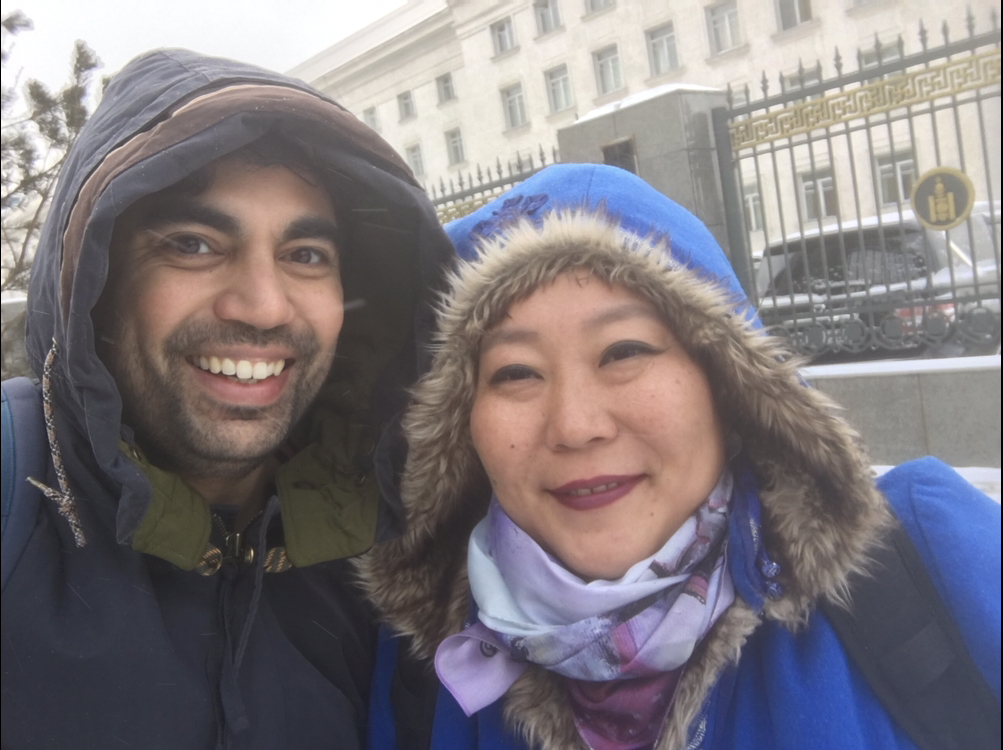
"How many layers of clothing are you wearing? One? No, that's not enough. You should wear your ski pants over your jeans, and change your shoes for snowboots." And there you are, on day 1 of your trip to Mongolia. I had already heard that Mongolia is very cold at the end of November, and with -22 degrees that seemed to be all true.
At Both ENDS I work on the 'Global Alliance for Green and Gender Action' (GAGGA) program, which aims to create synergy between environmental and women's movements. In this context I visited our partners OT Watch (a national environmental NGO) and MONES (a national women's fund) and spoke with various grassroots women's organisations.
Mongolia in short
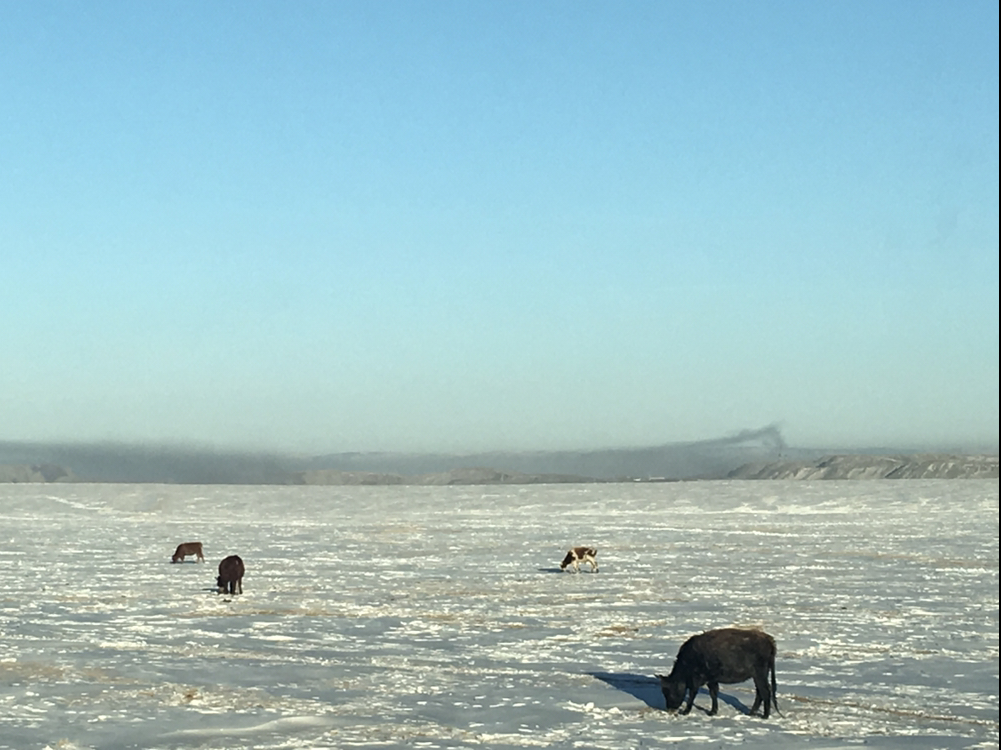
The country has a population of around three million, half of which resides in the capital Ulaanbaatar. The other half is spread out through the country and mostly nomadic. To compare Mongolia to the Netherlands: the latter fits about 37 times in the former; the vastness of the country is incredible. In the South, one finds the Gobi desert, while the North and West are cold and mountainous. Large parts of the country is steppe. The northern part has most lakes and rivers, you will only find a few in the South. The soil contains large amounts of minerals and therefore mining, next to agriculture, is an important source of income.
Issues
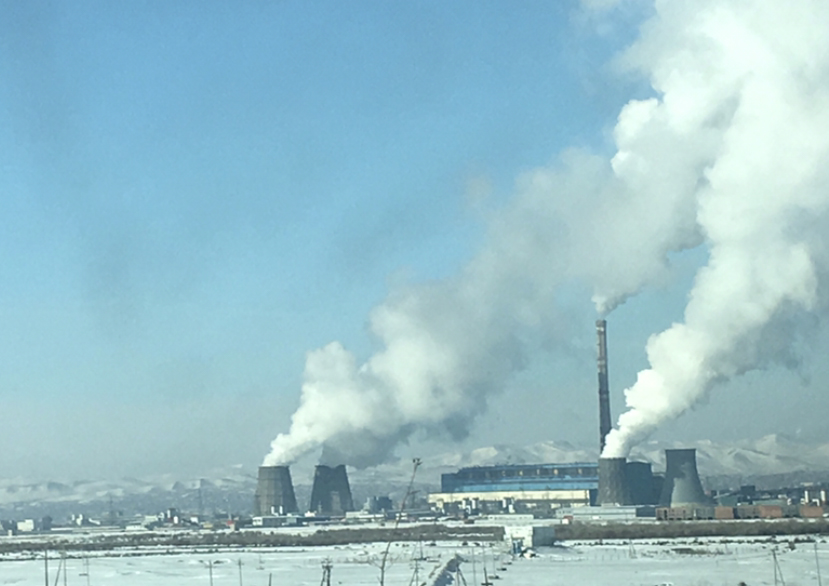
A number of rivers have dried up due to climate change. As mining requires large amounts of water each day, rivers further away are being drained or diverted (and polluted). A complicating factor is that several parliamentarians or their family members have shares in mining companies, as a result of which the parliament may not always act decisively. Corruption is not uncommon. West of Ulaanbaatar there are three large power plants, contributing to the large amounts of smog. But so is the Ger district, which is not connected to the central energy grid. Here, people burn coal inside their houses to keep warm, which causes many health problems. People from the NGO 'Moms and Dads against Smog' told me that the amount of smog is five times as large as in Beijing.
Impact on women
Smog affects everyone living in it, but women are hit harder by it than men. The winter season lasts six long months, so heating (and therefore burning coal) is required for six months. During this period the smog is worse and the number of stillbirths and miscarriages is three times higher than in summer. In addition, it is usually the women who take leave of absence or cannot work at all, to care for sick children or the elderly: smog-related diseases such as pneumonia are not unusual.
Together with OT Watch I visited Baganuur, a small city next to a coalmine, and we spoke to a few members of the local women's alliance. They told us about the possible expansion of the mine and the construction of a power plant next to it. They are – and with good reason - afraid that the large influx of (male) labor migrants might cause all kinds of violations of women's rights. Unfortunately, previous examples have shown that there is a chance of an increase in (sexual) violence against women and prostitution. The women also worry about the lack of information about these projects that can have a major impact on their lives.
Global Alliance for Green and Gender Action
Through GAGGA we support the Mongolian women's Fund MONES, a 'small grants fund' which provides small amounts of money to local grassroots-organisations that stand up for women's rights and environmental justice. I was very impressed with the large positive impact small grants can provide to local people. For example, the 'Mongolian Women's Employment Support Federation' focuses on people living on / around one of the garbage dumps of Ulaanbaatar. These people search for food and products that can be returned / recycled. Basic needs such as water, electricity, heating are lacking, there is little access to information and many of the people living there are undocumented. Some get traumatised by what they find: it happens that stillborn fetus are put in a rubbish bag and end up on the garbage dump. Mongolian Women's Employment Support Federation informs these people about their rights, helps them with training and speaks with companies involved, in hopes that some people can be employed by them.
Small Grants, Big Impacts
When I spoke to employees of 'Moms and Dads against Smog', another small local organisation, I realised how much organisations like these get done with very few resources. Especially, considering that this organisation was only established in January 2017, after a concerned mom sent out a Facebook-message about the smog in Ulaanbaatar. This message (with a little help from MONES) led to a protest of about 2000 people on the largest square of Ulaanbaatar, when it was minus 20 degrees Celsius. The protest was widely picked up by national media and the NGO was allowed to speak during a meeting on air pollution with, among others, the prime minister and the minister of environment. The organisation is now trying to persuade the government to invest more in health care and to properly implement and monitor the national air pollution program.
Although I sometimes heard heartbreaking stories, these kind of positive stories gave me new courage and inspiration. MONES will continue to work on joint projects between women and environmental groups in 2018, knowledge and capacity building and Both ENDS will of course continue to support this in all possible ways.
Read more about this subject
-
 Dossier /
Global Alliance for Green and Gender Action (GAGGA)
GAGGA rallies the collective power of the women's rights and environmental justice movements to realize a world where women can and do access their rights to water, food security, and a clean, healthy and safe environment.
-
 News / 5 oktober 2026
Rural Women's Assembly wins Right Livelihood Award
We are thrilled to share that our partner the Rural Women's Assembly (RWA) is one of this year's Right Livelihood Laureates! The award, often called the "Alternative Nobel Prize", honours RWA for bringing together more than 178,000 women farmers in eleven Southern African countries. Together, these women stand up for their land, their seeds and their right to make decisions about their own lives and bodies.
-
Publication / 29 september 2026
-
 News / 7 september 2026
Unprecedented criminal conviction in the Mariana disaster case breaks mining industry's cycle of impunity
A Brazilian federal court has, for the first time, criminally convicted a mining company and three of its managers for their role in the 2015 collapse of the Fundão dam, one of the worst environmental disasters in Brazil's history. Our partner Instituto Cordilheira, which represented victims as assistant prosecutors in the case, calls it a historic breakthrough after years of impunity.
-
Letter / 14 juli 2026
Statement on CAO Cambodia Microfinance Case
The independent complaints mechanism of the International Finance Corporation (IFC) and the World Bank Group found that the IFC violated its own Environmental and Social Sustainability Framework by investing in six banks providing microfinance in Cambodia.
-
Publication / 3 juli 2026
-
Publication / 12 mei 2026
-
 Press release / 12 mei 2026
UN report warns of a growing sand crisis - The Dutch dredging sector plays a key role in global sand extraction
GENEVA/UTRECHT, 12 May 2026 – A new report by the United Nations Environment Programme (UNEP), Sand and Sustainability: An Essential Resource for Nature and Development, warns that global demand for sand is exceeding ecological limits. Large-scale extraction of sand from marine and coastal ecosystems is leading to biodiversity loss, damage to coastal communities and increasing risks in an era of climate change. Dutch dredging companies play a prominent role in this as global market leaders in large-scale sand extraction and land reclamation. “Our analyses show that the dredging sector operates globally within a system in which ecological damage and the consequences for coastal communities are systematically underestimated, whilst transparency and effective oversight are often lacking,” says the Dutch environmental and human rights organisation Both ENDS, which contributed to the report.
-
 Dossier /
Rights for People, Rules for Corporations – Stop ISDS!
Indigenous communities in Paraguay saw their attempts to regain their ancestral lands thwarted by German investors. In Indonesia, US-based mining companies succeeded to roll back new laws that were meant to boost the country’s economic development and protect its forests. This is the level of impact that investment treaties can have on social, environmental and economic development and rights. Why? Because of the ‘Investor-to-State Dispute Settlement’ clauses that are included in many such treaties.
-
Publication / 14 april 2026
-
 News / 26 maart 2026
New project: Climate Accountability in EU Trade
Through its new project “Climate Accountability in EU Trade: Testing the SEP and DAGs for Climate-Linked FTA Enforcement” Both ENDS, with support from the European Climate Foundation, is exploring how the European complaints mechanism (SEP) and Domestic Advisory Groups (DAGs) can be more effectively used to advance climate accountability. The project runs for 13 months, until end of 2026.
-
 News / 27 februari 2026
Both ENDS strengthens the resilience of female environmental defenders worldwide thanks to multi-year contribution from the Postcode Lottery
In recent years, Both ENDS has received an additional contribution of €875,000 from the Postcode Lottery for the Autonomy & Resilience Fund (2022–2025), implemented in collaboration with the Global Alliance for Green and Gender Action (GAGGA). This support was essential because female environmental rights defenders around the world are increasingly facing climate change, repression and shrinking civil space. With this contribution, Both ENDS supports female activists and their communities with flexible, trust-based funding, enabling them to develop their own solutions to urgent environmental and climate problems.
-
 Dossier /
Seeking justice for the affected communities of Vale’s mining disasters in Mariana and Brumadinho
In 2015 and 2019, the Brazilian state of Minas Gerais experienced two severe mining tragedies in Mariana and Brumadinho, due to the same mining company: Vale. Since then, the affected communities have been seeking justice, via the criminal punishment of the responsible parties, and a fair compensation for the loss of their loved ones, their homes and their livelihoods. Both ENDS supports local CSOs by amplifying their quest for justice within an international audience and, more specifically, by raising awareness amongst Dutch investors in Vale about the high risks this company’s activities pose for people and the environment.
-
 News / 2 februari 2026
Seven years after Brumadinho: impunity allows Vale’s disasters to continue
Seven years ago, the dam owned by mining company Vale collapsed in Brumadinho, Brazil, killing 272 people and severely polluting the surrounding area. While the relatives of the victims commemorate them and fight for justice, the pollution continues.
-
 Dossier /
Wetlands without Borders
With our Wetlands without Borders program, we work towards environmentally sustainable and socially responsible governance of the wetlands system of the La Plata Basin in South America.
-
 Environmentally Just Practice /
Non-Timber Forest Products (NTFPs)
About one in every six people, particularly women, directly rely on forests for their lives and livelihoods, especially for food. This shows how important non-timber forest products (NTFPs) and forests are to ensure community resilience. Not only as a source of food, water and income, but also because of their cultural and spiritual meaning.
-
 News / 5 november 2025
Interview: Both ENDS at COP30 for Climate Justice and Systemic Change
Both ENDS is present at COP30 to advocate for genuine access to climate finance for locally led, gender-just climate solutions and the mechanisms that facilitate this, including those for farmer-led restoration. Furthermore, the organisation participates to ensure the crucial connection between the climate negotiations and the trade and investment frameworks that shape them.
Learn more about the Both ENDS team at COP30 below, and find all the activities and side-events in which Both ENDS will participate.
-
 News / 5 november 2025
Overview of Both ENDS events at COP30 in Belem, Brazil
Both ENDS is present at COP30 to advocate for genuine access to climate finance for locally led, gender-just climate solutions, and for the mechanisms that make these possible, including those supporting farmer-led restoration. The organisation also engages to highlight the crucial connection between climate negotiations and the trade and investment frameworks that shape them.
Below is an overview of the Both ENDS team at COP30 and a detailed look at the activities and side-events in which Both ENDS will participate.
-
Publication / 16 oktober 2025
-
Publication / 16 oktober 2025




