




Nickel mining for the energy transition: who is accountable for the damage?
Photo blog - In June, I travelled to Indonesia with our partner organization Puanifesto to research the impacts of nickel mining in East Sulawesi. On July 13th, the news broke that the European Union and Indonesia have reached a political agreement on a free trade agreement that was years in the making, called the Comprehensive Economic Partnership Agreement (CEPA). Nickel from Sulawesi is already being used in European cars. This makes it all the more important that we ensure that human and environmental rights are secured in mining and refining operations in Indonesia, before the road is opened to more extraction and exploitation for the European market. The conversations we have had with communities and workers on East Sulawesi show that more binding regulations are necessary to make this happen and ensure an energy transition that is socially and environmentally just.
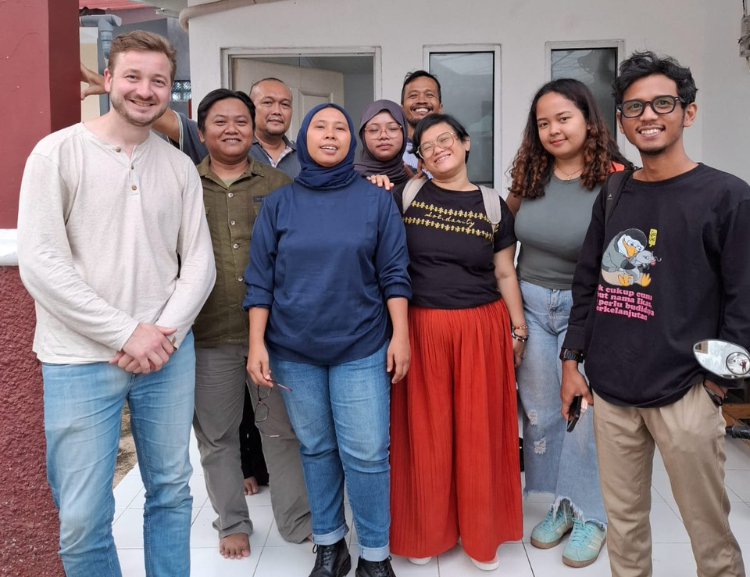
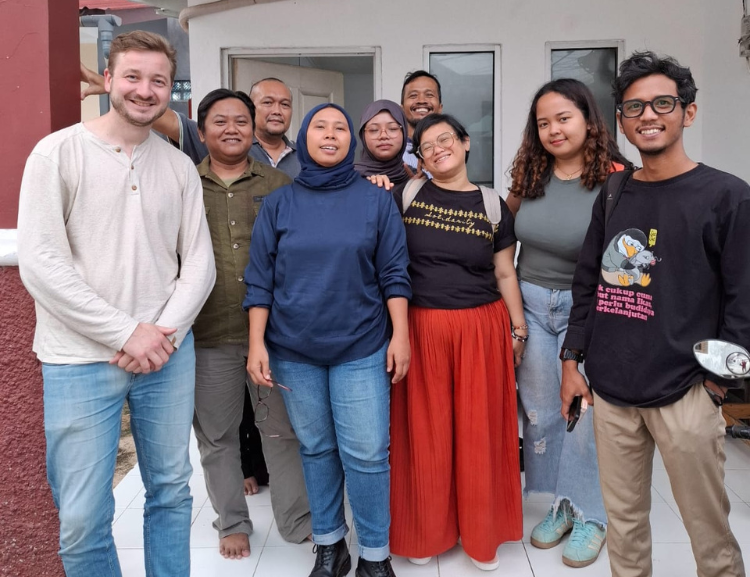
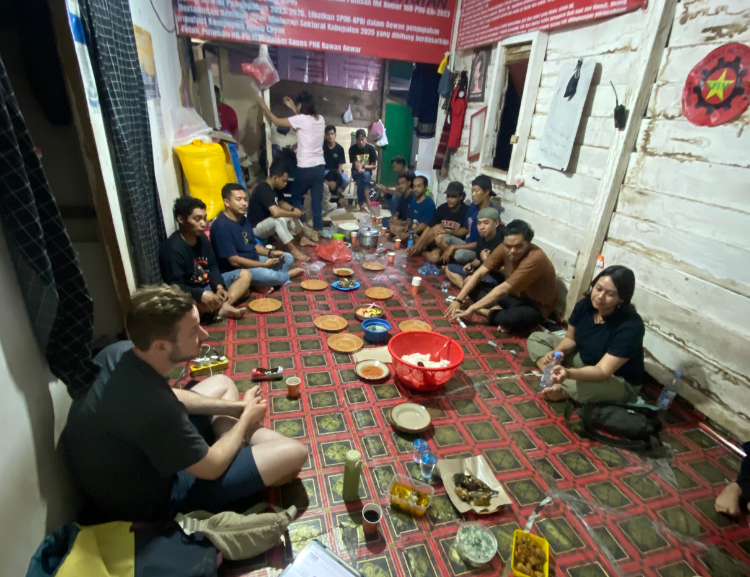
Marius with members of the Indonesian Coalition for Economic Justice (MKE)
Because of the energy transition, recent years have witnessed a steep increase in the resources needed to produce these technologies. This includes the metals and minerals used for solar panels, windmills and electric vehicles such as copper, lithium and nickel. Inevitably, this is putting strain on the regions and communities where these resources are mined. If we want to make our energy transition also a just transition, we need to ensure that this does not come at the expense of local communities and ecosystems.
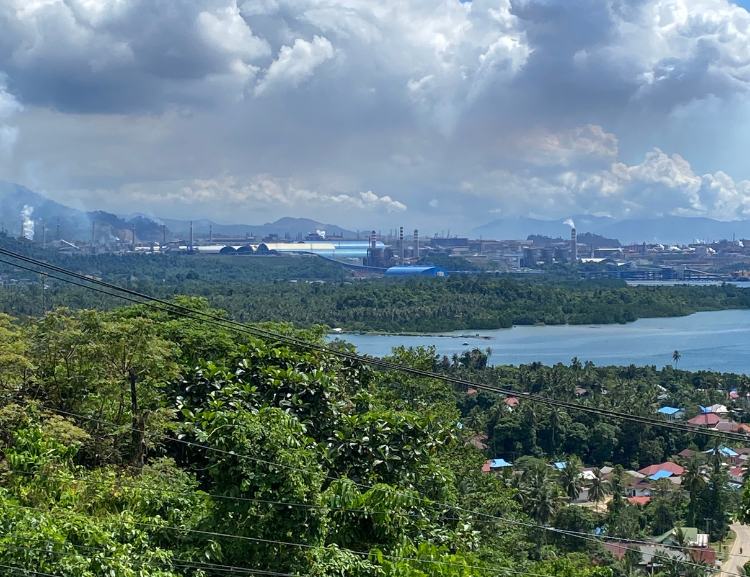
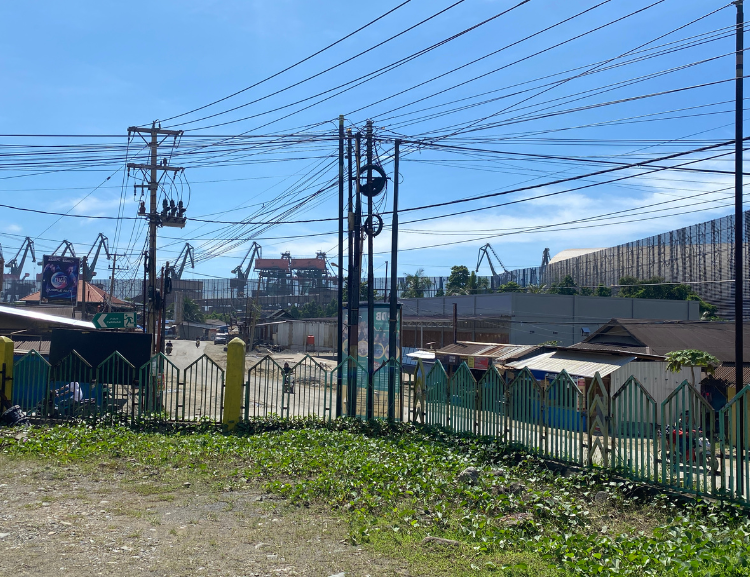
Marius visited Morowali region, a hotspot for nickel mining
By some estimates, Indonesia supplies over a fourth of the world resource supply. It has the largest nickel reserves in the world, as well as large quantities of bauxite and cobalt – all of which are key resources for the energy transition. For our research, we visited Morowali Industrial Park (IMIP), Indonesia’s largest nickel industrial area, and Indonesia Huabao Industrial Park (IHIP), both in Morowali regency on East Sulawesi.
Impacts on people and the environment
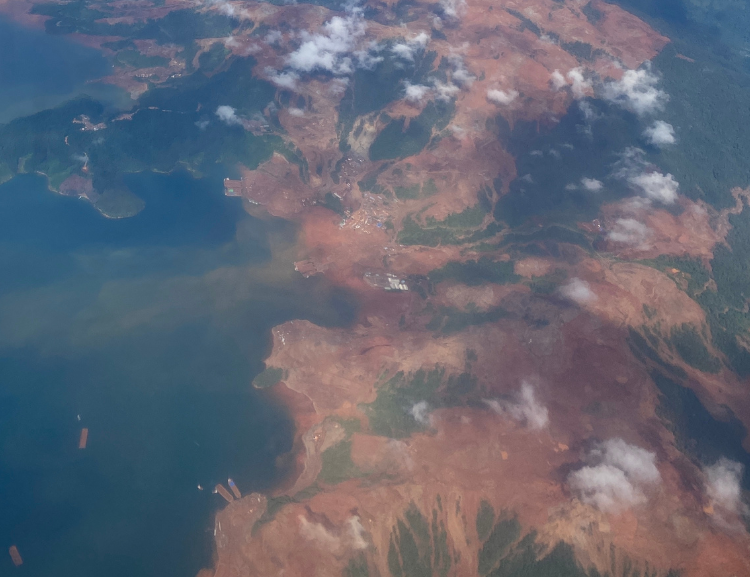
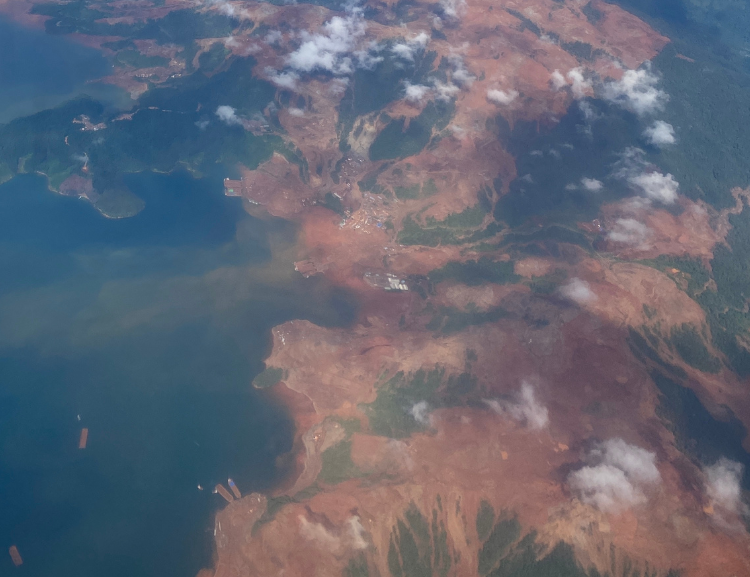
Nickel mining leads to large-scale deforestation
Per definition, mining is an activity with a large ecological footprint; large tracts of land are cleared and destroyed to make room for the mines. This often goes hand in hand with deforestation and a loss of biodiversity, which is evident from the air above Morowali; one can clearly see the scars on the landscape left by the deforestation of the rainforest to facilitate the mining. The extraction of raw materials also involves the use of chemicals to separate raw materials from the ore. After extraction, residual products remain in the form of leftover rock and so-called tailings. If these are not stored carefully, there is a risk that they will mix with surface water or cause flooding and landslides.
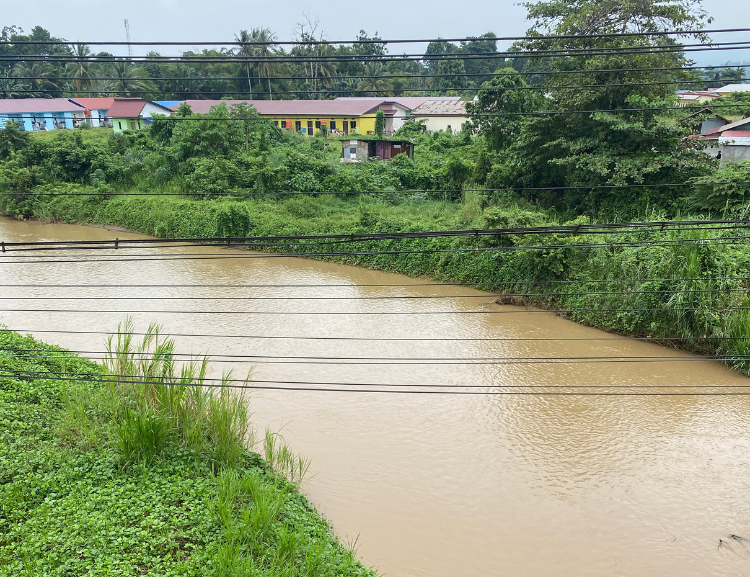
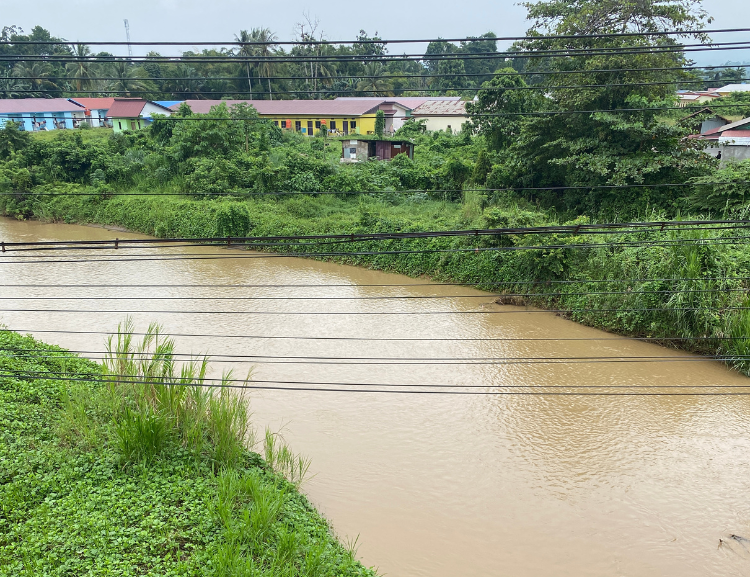
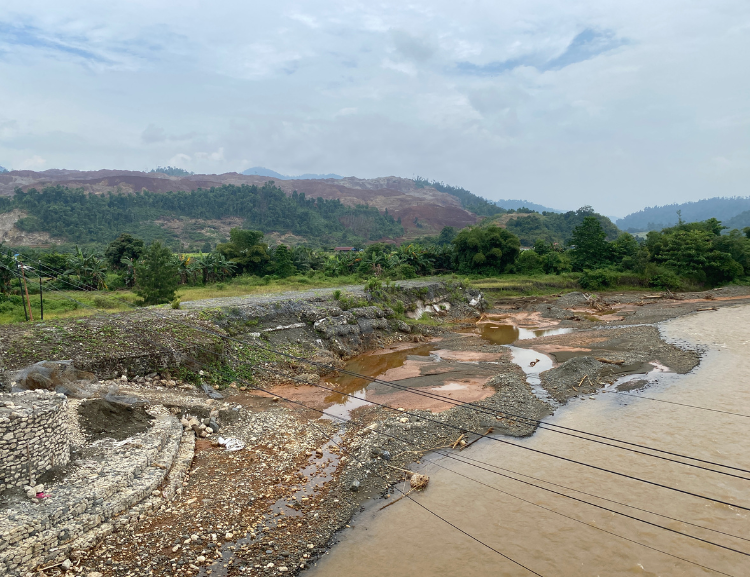
The rivers are murky and brown from mixing with the tailings from the mines
In Morowali, this is clearly visible: the rivers running into the ocean are murky and brown from mixing with the tailings from the mines, and landslides are common. The polluted water then endangers the health of humans and animals, especially given that there are kids swimming and bathing in these very same rivers.
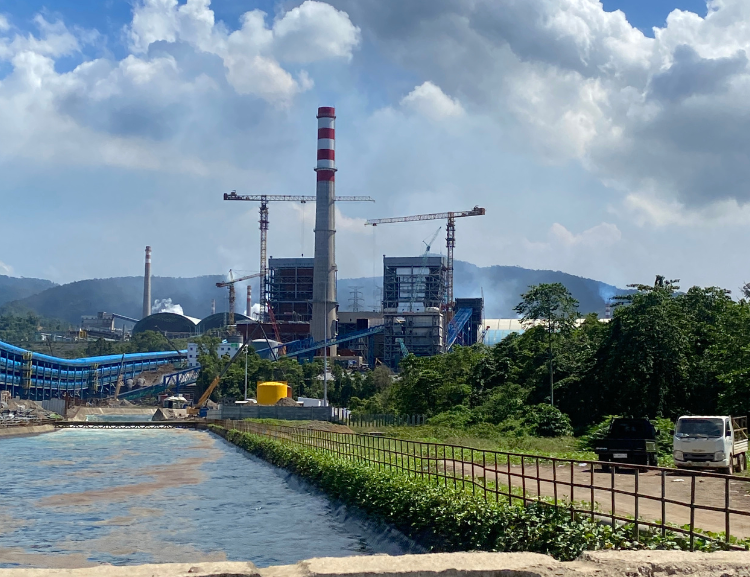
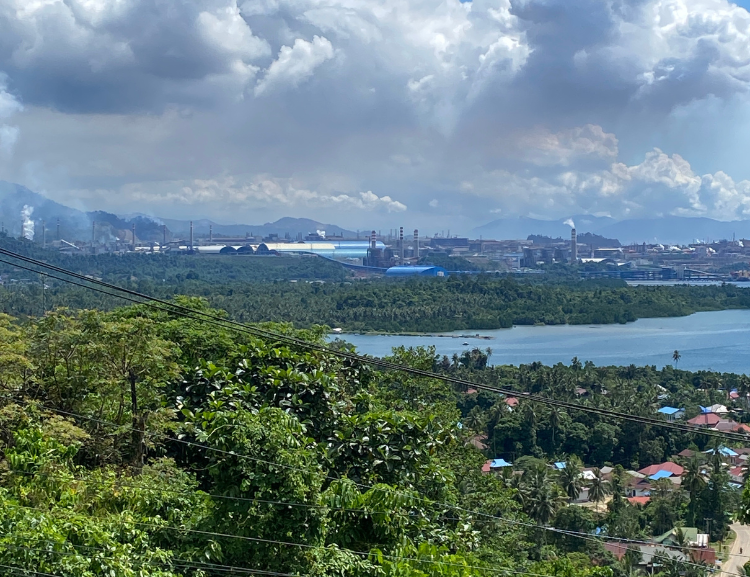
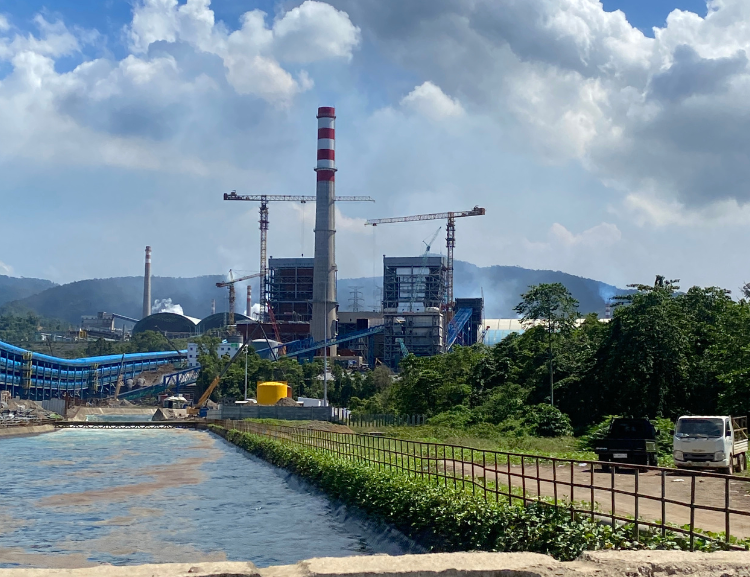
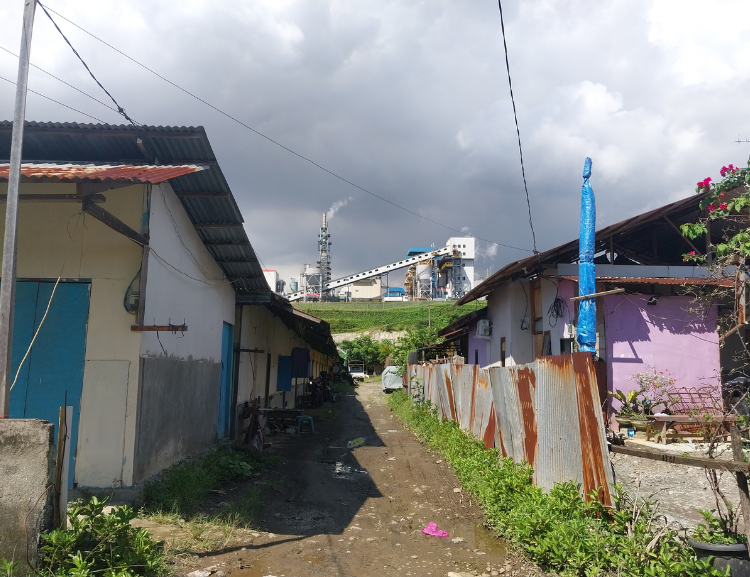
Nickel refining is a dirty business; smoking chimneys are everywhere
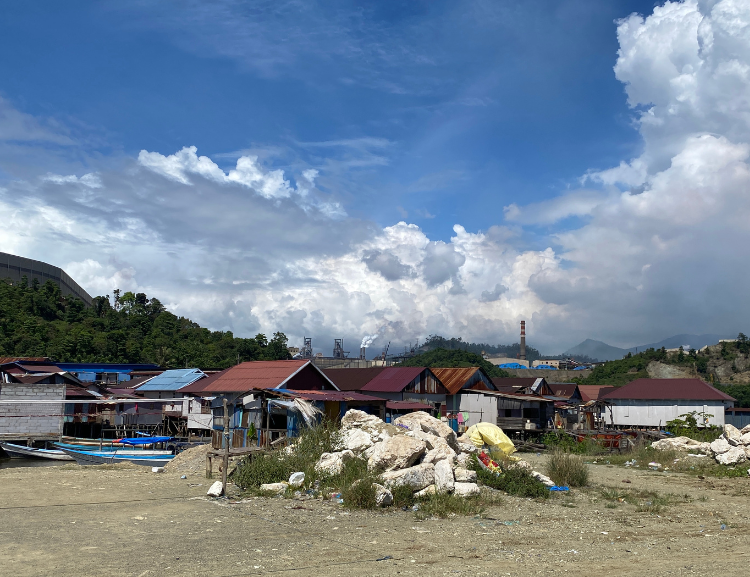
The nickel refining process is a dirty business in its own right. While travelling through the region, the scale of the industrial developments become clear: to power the nickel smelters, polluting coal-fired power plants are being built by the dozens. Everywhere you look, there are smoking chimneys and gigantic open-air coal storages. Communities sometimes live only tens of meters away from the smoke-belching power plants, causing an epidemic of respiratory problems among its residents. Chronic lung problems are prevalent in the region, many of them among children. What’s more, these power plants are a disaster for the climate because of their enormous CO2 emissions, completely negating Indonesia’s gains in reducing its nationwide emissions.
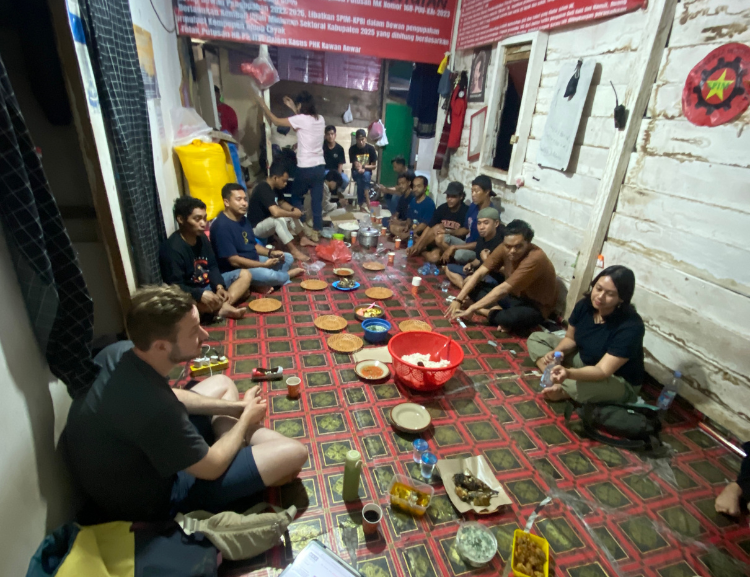
Meeting with members of labour union SPIM
Meanwhile, workers in the nickel industry work in these dangerous conditions every day. Morowali provides hundreds of thousands of workplaces in the nickel industry. We were able to meet with SPIM, the labour union for IMIP industrial park and speak to over a dozen workers over a three hour meeting. They are well aware of the dangers they face, but many of them do not have an alternative and a dangerous job is better than no job at all. They told us about the heat and smoke they have to work in, often without adequate protective equipment. This regularly leads to workplace accidents, even fatal ones. According to one of the workers, they work “with one leg in the factory, one leg in the grave”.
Who is accountable?
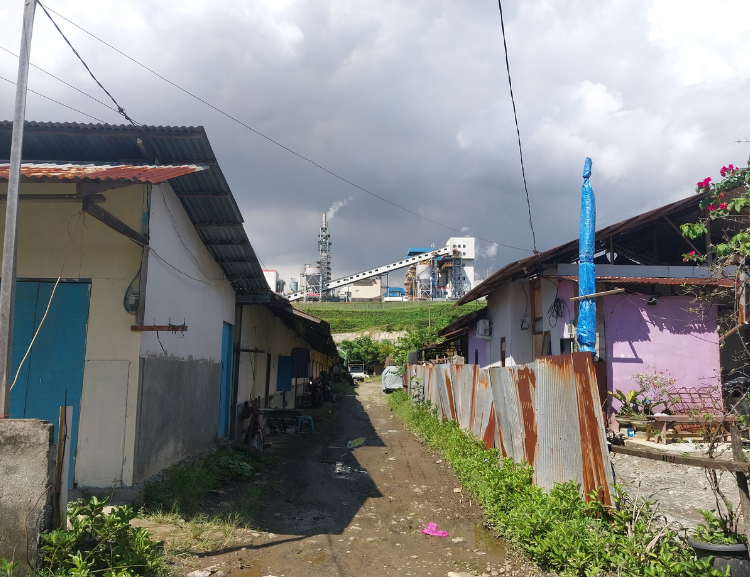
Affected communities have nowhere to turn
Yet, the affected communities and workers who want to address the environmental problems and human rights violations they face, have nowhere to turn. The vast majority of companies active in the nickel mining and processing in Indonesia is from China. The nickel is then shipped to China for processing into, for instance, batteries for electric vehicles. These batteries (by the well-known Chinese firm CATL, for example) are then used in various European cars, like Volkswagen and Mercedes. According to the workers and affected communities, it is very challenging to get Chinese companies to take responsibility for the negative impacts of the mining and refining activities.
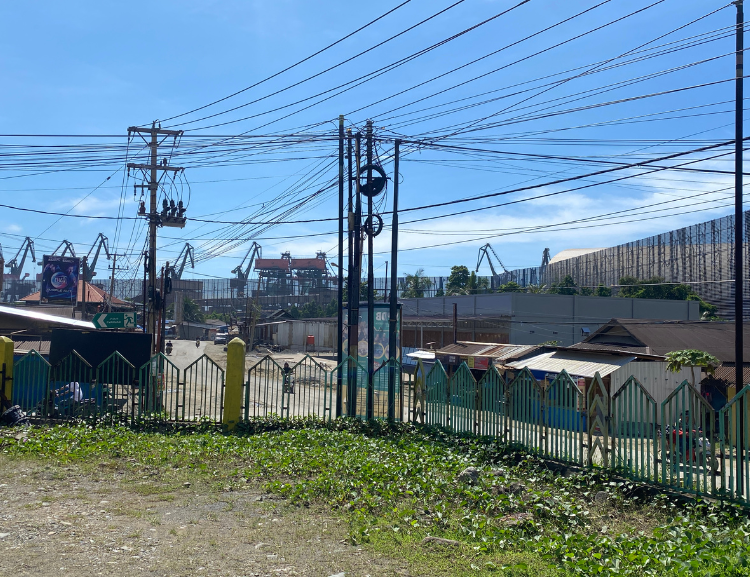
Indonesia's nickel mining projects are classified as "National Strategic Projects", for which governance is transferred to the national government. Subnational governments are sidelined
Neither can they turn to their subnational or local governments. This is because Indonesia’s nickel mining projects are oftentimes classified as “National Strategic Projects”, for which governance is transferred to the national government. Subnational governments are sidelined, making it impossible for them to say no to potentially harmful projects in their region. As the national government applies exceptions to environmental laws and regulations to projects that receive this classification, they have become rather controversial. It opens the door to all kinds of abuses both at the social and environmental level. In the end, communities affected by the nickel industry have nowhere to turn. They find themselves in a Wild West, where human and environmental rights are brushed aside to maximize production.
“Change requires sacrifices”
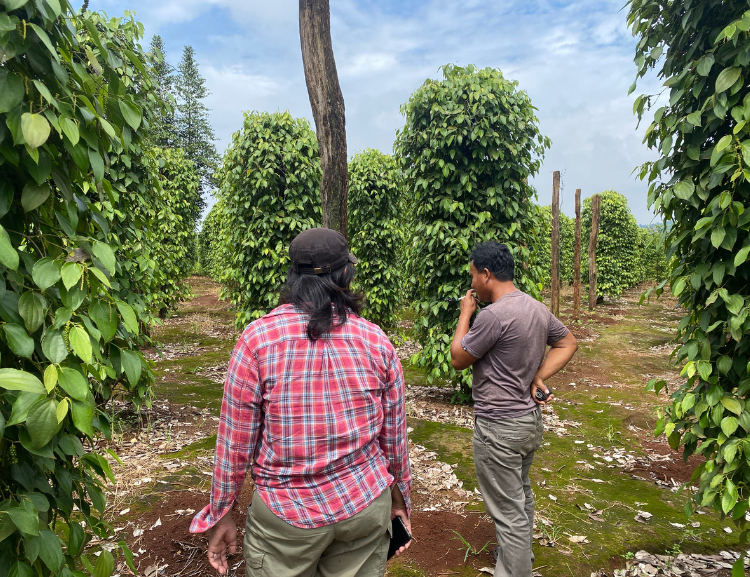
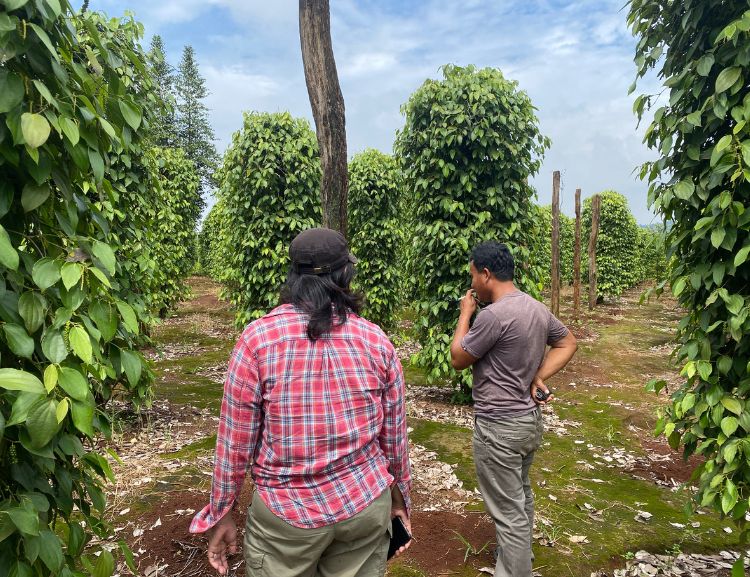
This pepper farmer had land taken away for nickel mining and now educates other farmers about their legal rights
Despite all this, the answers to the question ‘do you see the mining industry as having a positive or negative impact on you’ were not all what I had expected. Even farmers who had lived in Morowali before the mining boom, did see some benefits along with the obvious negative impacts. A pepper farmer who had had a part of her land taken away for mining purposes, said that the recent influx of workers in her town had given her the opportunity to rent out rooms. Other farmers had opened stalls and shops along the main street. A former farmer, now in the town’s supervisory board, observed “we want Indonesia to stop selling only raw materials, we need to industrialize” and said that “any change requires some sacrifices”. That means a lot, coming from someone who lives only two hundred meters from an enormous coal-fired power plant. Other former farmers, however, suffer only the negative consequences: having lost their land and therefore their livelihoods, local communities have to resort to other ways for providing themselves. This has had profound consequences, particularly on women. Some women end up working dangerous, low-paid jobs in the nickel industry and their very limited economic choices have led to a significant rise in prostitution in the region as well.
There’s no just energy transition without regulation
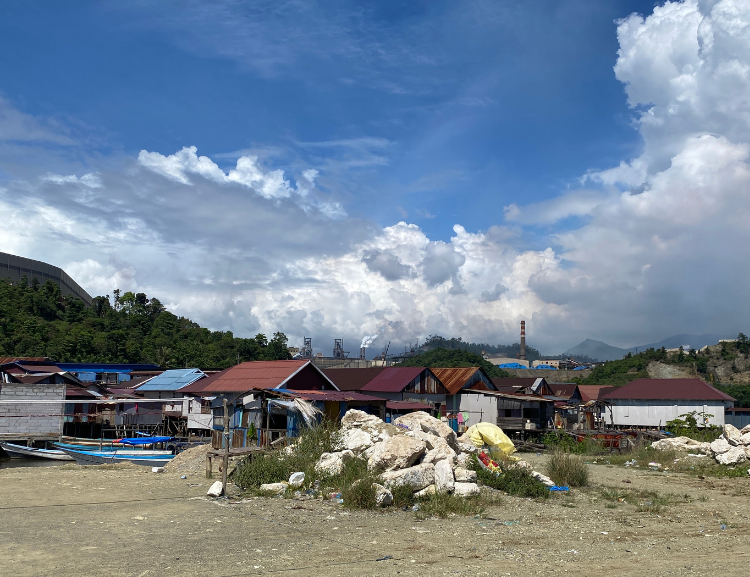
The nickel industry operates with little concern for the local environment
What everybody agreed about, is that oversight and regulation of the mining industry is wholly inadequate. Corporations operate in a lawless environment with little concern for health, human rights and the local environment. Unfortunately, the EU-Indonesia free trade agreement that is now close to conclusion, will only make things worse. The EU has made it clear that it wants to get access to Indonesia’s resources, meaning demand for resources like nickel will increase. This will accelerate the already destructive extraction and exploitation and put additional strain on communities and the environment.
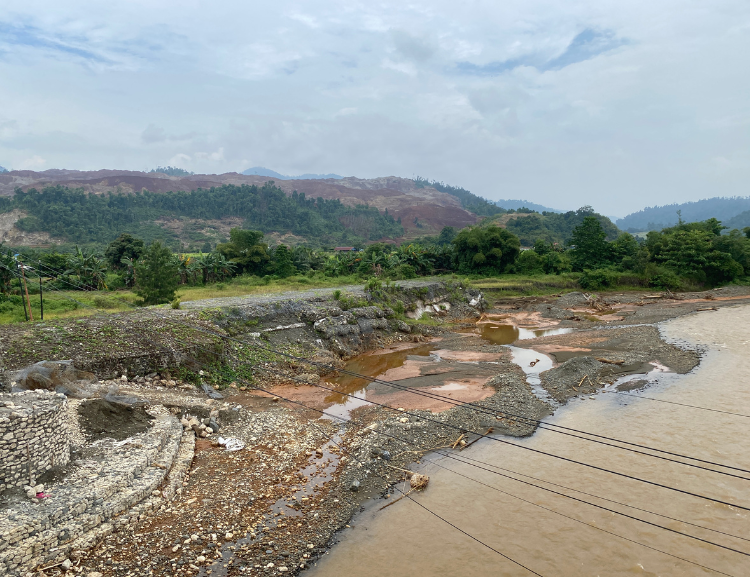
Binding regulations are needed to prevent the unlimited destruction of the environment
It is key that measures are taken to guarantee that social and environmental standards are respected, in the form of binding provisions in trade agreements that make it possible to hold corporations accountable in the event of abuses. Shockingly, these binding clauses are absent in the EU-Indonesia CEPA. It also once again shows the importance of due diligence legislation in the EU, committing European businesses to prevent abuses in their value chain. To make matters worse, this legislation is at risk of being completely undermined by the Omnibus proposal.
Don’t sign the EU-Indonesia CEPA
We find ourselves at a critical juncture. If we want to get the energy transition right, we have to make absolutely sure that clean energy technologies do not exacerbate environmental and human rights violations in the places where resources are extracted, as is the case in Morowali. This requires guard rails in the form of rules and regulation, otherwise this high-speed train will run off the track very soon. In the case of the EU-Indonesia CEPA this means: not signing the agreement, unless binding and functioning measures are taken to hold corporations and governments accountable for the negative impacts of increased resource extraction in Indonesia. This is the message we at Both ENDS, together with our partner network, will be transmitting to European member states and the Indonesian government.

For a just energy transition, we have to make sure that clean energy technologies do not exacerbate environmental and human rights violations in the places where resources are extracted
For more information

Read more about this subject
-
 Dossier /
Towards a socially and environmentally just energy transition
To address the climate crisis we need to urgently transition away from fossil fuels towards clean, renewable energy. However, this transition is not only about changing energy sources. It requires an inclusive and fair process that tackles systemic inequalities and demanding consumption patterns, prioritizes environmental and social justice, and which does not repeat mistakes from the past.
-
 Dossier /
International trade and investment with respect for people and planet
The network of international trade and investment treaties is large and complex. The Netherlands alone has signed more than 70 bilateral investment treaties (BITs) and is party to the trade and investment agreements concluded by the EU, like the EU-Mercosur and EU-Indonesia trade deals.
-
 Dossier /
Global Alliance for Green and Gender Action (GAGGA)
GAGGA rallies the collective power of the women's rights and environmental justice movements to realize a world where women can and do access their rights to water, food security, and a clean, healthy and safe environment.
-
 Dossier /
Seeking justice for the affected communities of Vale’s mining disasters in Mariana and Brumadinho
In 2015 and 2019, the Brazilian state of Minas Gerais experienced two severe mining tragedies in Mariana and Brumadinho, due to the same mining company: Vale. Since then, the affected communities have been seeking justice, via the criminal punishment of the responsible parties, and a fair compensation for the loss of their loved ones, their homes and their livelihoods. Both ENDS supports local CSOs by amplifying their quest for justice within an international audience and, more specifically, by raising awareness amongst Dutch investors in Vale about the high risks this company’s activities pose for people and the environment.
-
 News / 2 February 2026
Seven years after Brumadinho: impunity allows Vale’s disasters to continue
Seven years ago, the dam owned by mining company Vale collapsed in Brumadinho, Brazil, killing 272 people and severely polluting the surrounding area. While the relatives of the victims commemorate them and fight for justice, the pollution continues.
-
 Environmentally Just Practice /
A Negotiated Approach for Inclusive Water Governance
A Negotiated Approach envisages the meaningful and long-term participation of communities in all aspects of managing the water and other natural resources on which their lives depend. It seeks to achieve healthy ecosystems and equitable sharing of benefits among all stakeholders within a river basin. This inclusive way of working is an essential precondition for the Transformative Practices that are promoted by Both ENDS and partners.
-
 Dossier /
Rights for People, Rules for Corporations – Stop ISDS!
Indigenous communities in Paraguay saw their attempts to regain their ancestral lands thwarted by German investors. In Indonesia, US-based mining companies succeeded to roll back new laws that were meant to boost the country’s economic development and protect its forests. This is the level of impact that investment treaties can have on social, environmental and economic development and rights. Why? Because of the ‘Investor-to-State Dispute Settlement’ clauses that are included in many such treaties.
-
 Dossier /
Wetlands without Borders
With our Wetlands without Borders program, we work towards environmentally sustainable and socially responsible governance of the wetlands system of the La Plata Basin in South America.
-
Publication / 16 October 2025
-
Publication / 16 October 2025
-
 News / 9 October 2025
Both ENDS launches new strategy: “Connecting people for an environmentally just world”
With great pride, Both ENDS launches today it’s new strategy for the coming 5 years: “Connecting people for an environmentally just world”. This strategy was developed in close collaboration with our partner network, which has always been, and still is, the foundation of our work. Together, we strive for an environmentally just world in which people and ecosystems thrive and all people can live a life of dignity.
-
Publication / 9 October 2025
-
 News / 6 October 2025
From Entebbe to Accra: civil society is rewriting the rules of investment
By Fernando Hernández Espino and Bart-Jaap Verbeek
Almost a year after African civil society gathered in Uganda to adopt the Entebbe Declaration, the call to transform international investment governance continues to gain strength. From the 6th to the 9th of October, over 50 civil society organisations from across West Africa, including from Ghana, Senegal, Nigeria, Côte d’Ivoire, Cameroon, Gambia, Sierra Leone, as well as from Kenya and Latin America, are convening in Accra to deepen and operationalise the Declaration’s vision.
-
Publication / 2 October 2025
-
 News / 23 September 2025
With the undemocratic splitting of the EU-Mercosur deal, Europe is missing the chance to lead on fair trade
Recently, many newspapers have written about Brussels’ rush to finalize the trade agreement between the EU and the South American Mercosur countries. According to the European Commission, national parliaments do not need to approve it because the trade part and the “political” part have been separated. This “splitting” means that the trade part can be approved as an EU-only decision by the European Council and the European Parliament, while national parliaments are sidelined and the political-cooperation part is postponed. Both ENDS and its partners are deeply concerned and are calling on the Dutch government to vote against this outdated agreement.
-
 News / 22 September 2025
EU-Indonesia Trade Deal Threatens Communities and Environment
On September 23th the European Union and Indonesia concluded their negotiations of the EU-Indonesia Comprehensive Economic Partnership Agreement (CEPA), a free trade agreement between the EU and Indonesia. Both ENDS condemns this agreement for favoring corporate interests over those of local communities and the environment.
-
 News / 11 September 2025
EU-Mercosur: Small GDP Gain, Big Question Marks for Farmers and Democracy
A recent report by Wageningen Economic Research (WER) on the economic consequences of the trade agreement between the EU and Mercosur confirms what civil society organizations, policymakers, and trade unions have been signaling for years: this agreement does not offer a balanced perspective for farmers and the environment. Instead, it increases power inequalities and shifts burdens onto (small-scale) farmers. Moreover, the deal risks reinforcing unsustainable practices that complicate the climate transition and addressing environmental challenges in both the EU and Mercosur countries.
-
 Dossier /
Soy: trade in deforestation
The rising demand for soy is having negative consequences for people and the environment in South America. Both ENDS reminds Dutch actors in the soy industry of their responsibilities and is working with partners on fair and sustainable alternatives.
-
 News / 17 July 2025
Both ENDS Calls on AIIB to Halt Forced Evictions in Mandalika
Together with Indonesian CSOs Both ENDS is calling on the Asian Infrastructure Investment Bank (AIIB) to intervene and direct its client, the Indonesia Tourism Development Corporation (ITDC), and its borrower, the Government of Indonesia, to immediately halt this week's ongoing forced evictions in Tanjung Aan Beach and surrounding areas in Mandalika, Lombok.
-
 Blog / 17 July 2025
A disaster for farmers: here and there
The trade agreement with South America is harmful to farmers, the climate, and biodiversity, on both sides of the Atlantic. It’s time to take this deal off the table once and for all, argues Fernando Hernandez, Senior Policy Officer for Trade and Investment at Both ENDS.




