


Indigenous people file complaint against FMO for funding of Barro Blanco Dam, Panama
Residents belonging to the indigenous Ngäbe-Bugle people living on the traditional indigenous territory surrounding the Barro Blanco dam in Panama, have filed a complaint against the Dutch development bank FMO. The bank has invested $ 25 million in the dam that is currently under construction in the river Tabasará. The Ngäbe-Bugle blame FMO for not adequately following its own social and environmental standards. FMO also violates international agreements relating to indigenous peoples. For Both ENDS, Anouk Franck is closely following FMO’s activities.
Which standards are at issue?
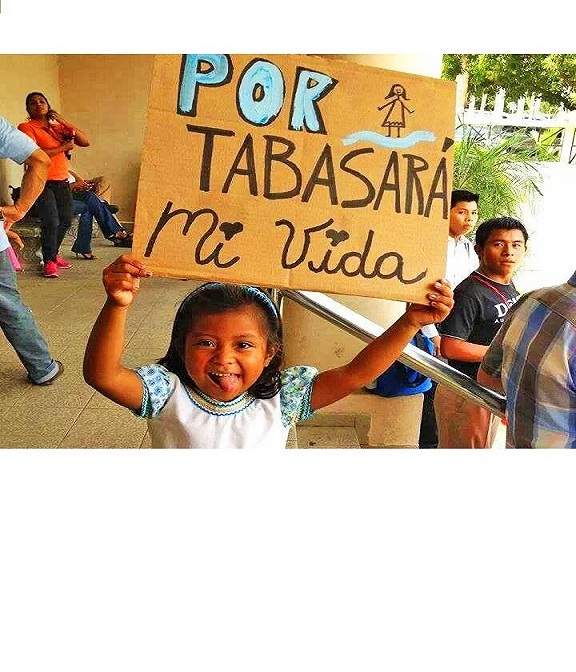
Anouk Franck : An operation of this size obliges the FMO to ask permission from local residents on the basis of sufficient information . This is called free, prior and informed consent. It is a right that is enshrined in the UN Declaration on the Rights of Indigenous Peoples. Part of the Ngäbe-Bugle people, represented by the environmental and human rights organization M-10, claims this right was violated during the planning and construction of the Barro Blanco dam. This has all sorts of consequences. The reservoir of the dam, which will be used for generating electricity, is part of traditional indigenous territory (‘comarca’, in the native language). This means that homes, schools, and places of religious, cultural and archaeological importance will be inundated when the dam starts to operate. A number of Ngäbe-Bugle is forced to move from the land on which they have been living for generations. The dam will convert the Tabasará River from a running river to a stagnant lake ecosystem, resulting in significant changes to the Ngöbe’s diet and landscape.
So FMO does have standards, but is not complying with them?
Anouk Franck: "Yes, the problem is the implementation of the standards, which is insufficient. The rights of the Ngäbe-Bugle are violated, despite the fact that we have been talking with FMO about this case for years, but now after all the rights of Ngäbe-Bugle violated. A development bank that takes its standards on human rights seriously should not be involved in this project. And certainly not the FMO, that wants to distinguish itself as a responsible bank with the sale of sustainability bonds."
What is the situation at the moment for the Ngäbe-Bugle?
Anouk Franck: The dam is nearing completion. This means that the forced eviction of the families from their land is getting closer. They have created an encampment on their land in a final attempt to hold back security forces and the employees and machinery of the construction company. The situation is tense and teargas has been used against the protesters. Previous clashes between protesting Ngäbe and Panamanian security forces have resulted in a number of deaths and injuries.. We believe FMO should not be involved in these injustices and call on the bank to withdraw from the project."
3 March 2014: Parliamentary questions about construction Barro Blanco dam in Panama
18 Feb. 2014: Situation tense for indigenous Ngäbe people near Barro Blanco dam
14 Feb. 2014: Filing a complaint with the FMO?
19 juni 2013: Will VN-rapporteur James Anaya investigate Barro Blanco dam in Panama?
Read more about this subject
-
 Dossier /
Indigenous communities threatened by Barro Blanco dam in Panama
The Barro Blanco dam project in Panama, which has Dutch financial support, is causing indigenous lands to disappear under water. Both ENDS is working to protect the rights of indigenous communities living near the dam.
-
 Dossier /
Green Climate Fund: calling for local access to climate finance
Local organisations and groups must be given access to climate finance from the Green Climate Fund. They know exactly what is happening in their local context and what is required for climate adaptation.
-
 Dossier /
Finance for agroecology
The lion's share of public budgets for climate, agriculture and development still goes to conventional agroindustrial projects that contribute to the current climate, food and biodiversity crises. Both ENDS and our partners are calling for a transition to agroecological practices that are people- and environment-friendly.
-
Letter / 3 November 2026
Objection to the proposed FMO financing of Eni Natural Energies Congo SAU
Together with JA! Justica Ambiental and ReCommon Italy, Both ENDS wrote a letter to FMO’s investment team urging them to reject a financing of up to USD 150 million in the IFC-led facility for Eni Natural Energies S.p.A. and its subsidiaries in Angola, the Republic of the Congo and Mozambique.
-
 News / 2 November 2026
Our call to FMO: Put people and climate before Eni’s profits
The Dutch development bank FMO is considering a loan to help Eni natural Energies Congo1 to grow its biofuel business in Africa. Together with our partners, we have asked FMO not to go ahead, for three reasons: Eni is a highly profitable oil and gas company that does not need public development, its biofuel projects in Africa have harmed farmers and put pressure on food supplies, and it uses lawsuits to intimidate its critics.
-
Publication / 3 July 2026
-
Publication / 10 April 2026
-
 News / 10 April 2026
Both ENDS: strengthened FMO complaints mechanism is a step forward, but major gaps remain
Both ENDS welcomes the strengthened Independent Complaints Mechanism (ICM) of development finance institutions FMO, DEG and Proparco as an important step forward in accountability. Working directly with communities affected by development projects, we see daily how essential it is that people can access justice when they are harmed in the name of development. For many communities, this mechanism is one of the few avenues through which harm can be formally recognised and addressed in relation to these development banks.
-
 Dossier /
Agua Zarca: indigenous fight against dam costs lives
Indigenous Hondurans are resisting the construction of the Agua Zarca hydrodam. Their fight has cost several lives, including that of Berta Cáceres. After considerable public pressure, Dutch development bank FMO withdrew from the project.
-
 Press release / 13 January 2026
Investigation: FMO failed to exercise adequate control over project linked to the murder of Berta Cáceres
TEGUCIGALPA/UTRECHT, January 12, 2026 – The murder of indigenous environmental activist Berta Cáceres, which took place almost 10 years ago in Honduras, appears to be the result of an organized criminal operation, in which funds from the Dutch Development Bank FMO were misappropriated to finance illegal activities. This is the conclusion of the investigation report published today by the independent commission set up by the Inter-American Commission on Human Rights, the Honduran state, and the relatives of Berta Cáceres.
For years, FMO was a major financier of the Agua Zarca project. Berta Cáceres, an indigenous leader, fought against this controversial dam and was murdered for that reason in March 2016.
-
 Blog / 1 December 2025
The Long Road to Justice for the Ngäbe of Kiad
In October 2025 I travelled to Kiad, the Indigenous Ngäbe community that led the struggle against the FMO-financed Barro Blanco dam, for one last time. I went there to say my goodbyes, both personally and on behalf of Both ENDS, and to catch a first glimpse on how a community program financed by FMO and DEG – the result of a dialogue process that took several years – is giving a new impulse to the dam-affected communities. But how did we get here?
-
 News / 27 October 2025
New Step in FMO’s Complaint Policy – Civil Society Organizations Call for Further Strengthening
The updated complaint mechanism of the development banks FMO, DEG, and Proparco marks an important step forward. Organizations that participated in the consultation acknowledge the efforts to improve the mechanism. At the same time, they emphasize that much still needs to be done to make the policy truly effective, transparent, and independent.
-
Publication / 9 October 2025
-
 Dossier /
Fair Green and Global Alliance (FGG)
Together with civil society organisations from all over the world, the Fair Green and Global (FGG) Alliance aims for socially just, inclusive and environmentally sustainable societies in the Netherlands and the Global South.
-
 News / 24 June 2025
Indigenous communities in Panama obtain recognition and partial mitigation measures by Development Banks FMO and DEG in relation to the Barro Blanco dam
Both ENDS and SOMO welcome the signing of the agreement of understanding between four Indigenous Ngäbe communities in Panama and the European development banks FMO and DEG on June 17th 2025. The arrangement includes a community development program that, together with a public statement issued by the banks, aims to recognize and mitigate some of the negative impacts caused by the Barro Blanco hydropower dam. We wish to congratulate the community-based organisation Movimiento 10 de Abril (M10) for its perseverance to seek justice for the affected communities, and we acknowledge the commitment of FMO and DEG to pursue a solution to their long-standing dispute with the communities arising from their partial financing of the hydropower project since 2011.
-
 Dossier /
Advocating for responsible policies of development banks
Development banks should comply with strict environmental and human rights rules to ensure that their projects benefit and do not harm the poorest groups. Both ENDS monitors the banks to make sure they do.
-
 Blog / 11 April 2025
FMO is very pleased with its own success – now the local population still needs to be
The FMO development bank is proud of its results and the opportunities it seizes where commercial banks fail to act. But do the bank's actions really help, ask Anne de Jonghe and Nick Middeldorp.
-
Letter / 3 March 2025
Input for FMO’s “investment approach to responsibly managed forest plantations”
Both ENDS has been asked by FMO to comment on its draft investment approach to responsibly managed forest plantations. To follow are a number of observations and recommendations, partially informed by Both ENDS long legacy of working in the forest & land arena, in dialogue with international donors, philanthropic foundations, companies, certification bodies and notably with forest dependent communities and other land users.
-
Publication / 16 January 2025
-
Letter / 22 July 2024
Joint Call to Action: International Civil Society Demands Justice for Berta Cáceres' Murder Victims in Honduras
This is a joint call to action by international civil society organizations to call upon the Honduran authorities to ensure there is justice for the victims of the murder on Berta Caceres. Eight years and four months have passed since the crime against Berta and the Honduran justice system has not confirmed the sentences of those convicted and has not prosecuted the intellectual authors. We are extremely concerned that independent administration of justice and international agreements on human rights are not being upheld.