




The palm oil dream: too good to be true
In 2005, a palm oil company approached the villagers of Kiungkang in West-Kalimantan, Indonesia, with offers to convert their farms to oil palm smallholdings. Many farmers agreed to the proposal because of the high monthly incomes promised by the company that they could earn from the oil palms. Unfortunately, the palm oil dream turned out to be an illusion.
In Kiungkang, the smallholder arrangement meant that the palm oil company whose concession surrounds the village, PT SML, planted oil palms on 100% of the land of farmers. The company incorporated 80% of this land into its own plantation, and the remaining 20% was left to be managed and harvested by the smallholders. The company would then buy the palm kernel harvested by the farmers on their 20% of the land. Depending on the size of their smallholding, farmers were told they could earn as much as 9 million Rupiah (± € 600) a month, almost twice the average income in Indonesia. A very promising prospect!
Smallholder incomes: not enough to live on
But when Both ENDS staff Roos Nijpels and Michael Rice visited the village with our partner organisation Link-AR Borneo, the smallholders told them a very different story. The farmers were obliged to sell their palm kernel to PT SML at rates determined by the company. Smallholders were also required to enter into unnecessary credit arrangements at high interest rates with PT SML to finance the planting of oil palms on their land. Smallholders were also obliged to buy fertilizer and pesticide from the company, pay for transport of their palm kernel to the processing mill, as well as a monthly “management fee”.
The company deducts these ‘costs’ from the farmers’ income. In the end, most smallholders receive only a fraction - often no more than 10% - of what they were initially promised, falling far below the average national income and even below the poverty line. The impact on their livelihoods is dramatic. Some farmers have been forced to find work labouring on the company’s plantation because their smallholding does not provide enough income to feed their families and they can no longer grow enough food because their farm has been replaced by the oil palms.
Environmental impacts of palm oil plantations
But the impacts are not only financial. The villagers showed Roos and Michael the empty plots of land that used to be rice paddies. They have been abandoned since the watershed dried out and the land became too contaminated from pesticide and fertilizer run-off to grow food. In one part of Kiungkang, the water is no longer safe to drink or use for washing.
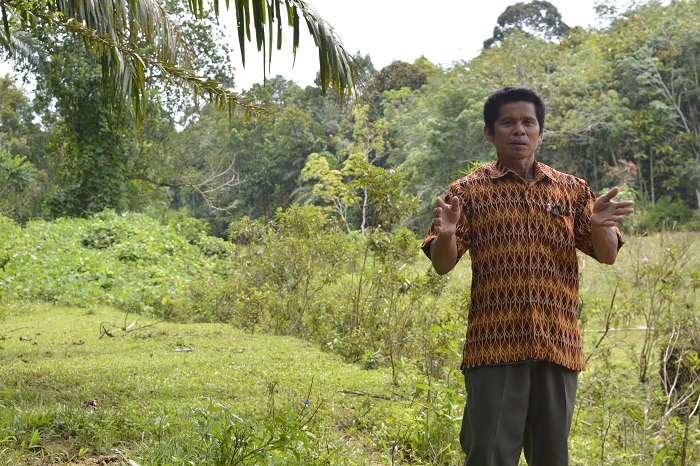
Farmer and village-council representative Abang explains in this short video the consequences of palm oil in his village:
While there is disagreement within the village about what has to be done, the shared attitude is that the arrival of the palm oil company turned the lives of the villagers upside down. Nevertheless, many villagers are afraid to protest against the company because they now depend on working on the palm oil plantation and can’t afford to lose their jobs. The government doesn’t help them; the letters that informed their representatives of the problems caused by the oil palm plantation have been ignored for years.
Looking for solutions
Both ENDS and Link-AR Borneo are now looking into the options offered by the RSPO’s Complaints System. Although PT SML is not a member of the RSPO (Round Table on Sustainable Palm Oil), it is understood that they supply to RSPO-member Wilmar International, the world’s largest palm oil producer and a major supplier of companies like Unilever. Verifying that supply-chain link is not always easy, which is why it is important that local organisations like Link-AR Borneo support communities to investigate the options available for raising their concerns.
In Kiungkang, Link-AR Borneo is also helping smallholders understand and review their agreements with PT SML to see whether there are any possibilities to renegotiate or terminate the arrangements. Many smallholders are kept in the dark about the formal nature of their relationship with the company and what their options are.
Offering alternatives
At the same time, it is important to offer alternative livelihoods that decrease the community’s dependence on palm oil. Therefore, a key focus of Link-AR Borneo’s work, supported by Both ENDS, is strengthening the economic resilience of rural communities by promoting trade in non-timber forest products (NTFPs) and social-forestry practices.
We do this through the NTFP-Exchange Program and our Rich Forests initiative, which emphasise the need for community capacity-building and empowerment, especially for women, to bolster the role of alternative, sustainable livelihoods for rural and forest-dwelling communities. At the same time, Both ENDS works with local organisations to ensure that forest areas from which NTFPs are derived are protected, conserved, and managed in a sustainable way.
The problems around palm oil in pictures
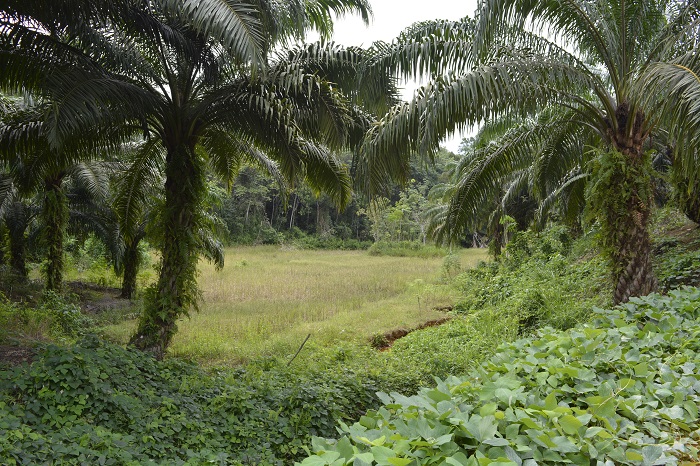
Abandoned rice paddy in between the oil palms

Chemicals from the plantation have polluted the water

The bill from a palmoil smallholding. Of the gross income (pendapatan kotor) of more than 1,1 million rupiah the farmer should get in two parts, only a net income (pendapatan bersih) of 113 thousand rupiah (about € 7,50) remains after all costs have been deducted
The solution in pictures: NTFPs
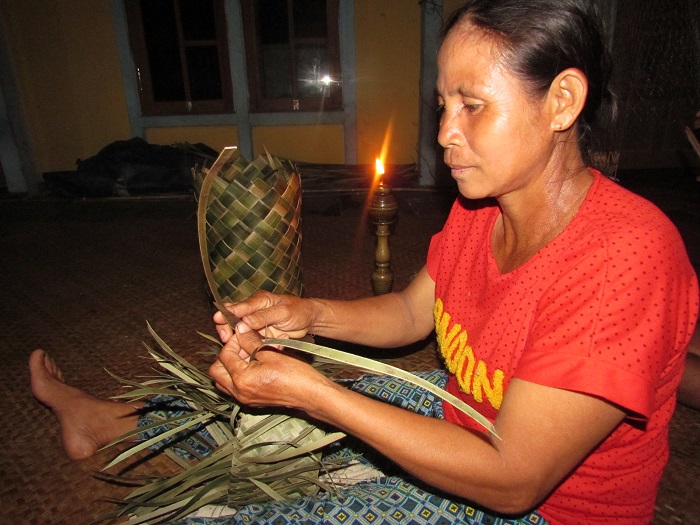
production of handicraft
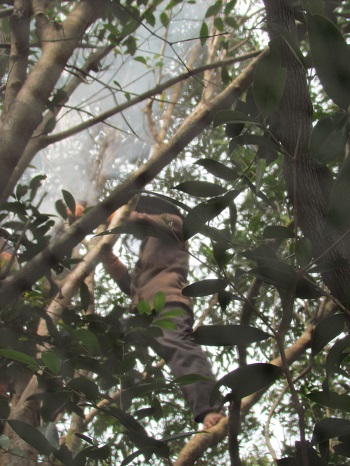
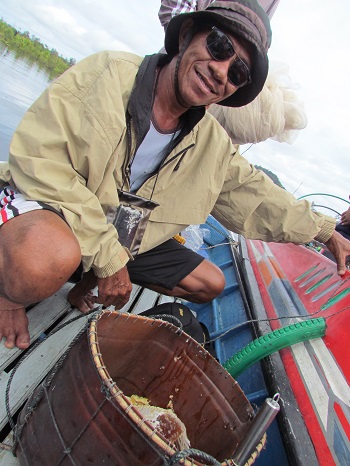
harvesting of wild honey high up in the trees (l) and the 'beekeeper' with his harvest on the boat (r)

honey
Read more about this subject
-
 Dossier /
Fighting for improvements in the production of palm oil
The production of palm oil is causing social and environmental problems worldwide. Both ENDS is working to make the sector fairer and more sustainable and is promoting alternatives for palm oil.
-
 Dossier /
Communities Regreen the Sahel
In various countries in the Sahel, vast tracts of land have been restored by the local population by nurturing what spontaneously springs from the soil and protecting the sprouts from cattle and hazards.
-
Publication / 3 juli 2026
-
Publication / 18 juni 2026
-
 Dossier /
Rights for People, Rules for Corporations – Stop ISDS!
Indigenous communities in Paraguay saw their attempts to regain their ancestral lands thwarted by German investors. In Indonesia, US-based mining companies succeeded to roll back new laws that were meant to boost the country’s economic development and protect its forests. This is the level of impact that investment treaties can have on social, environmental and economic development and rights. Why? Because of the ‘Investor-to-State Dispute Settlement’ clauses that are included in many such treaties.
-
 News / 24 maart 2026
Statement: Invest in local leadership for tropical forest management and local economies
IUCN-NL, Both ENDS, and 16 other Dutch and international civil society organizations (CSOs), networks, and expert groups are calling on the Dutch government to invest more strongly in locally led forest management and forest-based economies. This should be done within the framework of Dutch international cooperation and its associated policy instruments.
-
 Dossier /
Global Alliance for Green and Gender Action (GAGGA)
GAGGA rallies the collective power of the women's rights and environmental justice movements to realize a world where women can and do access their rights to water, food security, and a clean, healthy and safe environment.
-
 Environmentally Just Practice /
A Negotiated Approach for Inclusive Water Governance
A Negotiated Approach envisages the meaningful and long-term participation of communities in all aspects of managing the water and other natural resources on which their lives depend. It seeks to achieve healthy ecosystems and equitable sharing of benefits among all stakeholders within a river basin. This inclusive way of working is an essential precondition for the Transformative Practices that are promoted by Both ENDS and partners.
-
 Dossier /
Wetlands without Borders
With our Wetlands without Borders program, we work towards environmentally sustainable and socially responsible governance of the wetlands system of the La Plata Basin in South America.
-
Publication / 17 november 2025
-
 Environmentally Just Practice /
Non-Timber Forest Products (NTFPs)
About one in every six people, particularly women, directly rely on forests for their lives and livelihoods, especially for food. This shows how important non-timber forest products (NTFPs) and forests are to ensure community resilience. Not only as a source of food, water and income, but also because of their cultural and spiritual meaning.
-
Letter / 14 november 2025
Letter: TPAC’s report “Final Judgement Detailed Research MTCS’’
A coalition of Malaysian and international NGOs has released a memorandum in response to the recent TPAC report on the Malaysian Timber Certification Scheme (MTCS). The organisations express serious concerns about the independence, quality, and credibility of the assessment carried out by the Timber Procurement Assessment Committee (TPAC).
-
 Press release / 13 november 2025
Global Alliance Urges Dutch Government to Reconsider Endorsement of Controversial Timber Certification Scheme
A coalition of Malaysian and international NGOs has released a memorandum in response to the recent TPAC report on the Malaysian Timber Certification Scheme (MTCS). The organizations express serious concerns about the independence, quality, and credibility of the assessment carried out by the Timber Procurement Assessment Committee (TPAC).
-
Publication / 16 oktober 2025
-
Publication / 16 oktober 2025
-
 Dossier /
Amplifying environmentally just practices
Because of the close relationship with their living environment, local communities often have the best ideas for the sustainable and equitable use and governance of land, water and forests. These environmentally just practices and processes successfully protect and restore ecosystems and address climate change. They are essential in the light of the multiple crises the world faces, but are in dire need of financial and policy support.
-
 News / 22 september 2025
EU-Indonesia Trade Deal Threatens Communities and Environment
On September 23th the European Union and Indonesia concluded their negotiations of the EU-Indonesia Comprehensive Economic Partnership Agreement (CEPA), a free trade agreement between the EU and Indonesia. Both ENDS condemns this agreement for favoring corporate interests over those of local communities and the environment.
-
 Dossier /
Soy: trade in deforestation
The rising demand for soy is having negative consequences for people and the environment in South America. Both ENDS reminds Dutch actors in the soy industry of their responsibilities and is working with partners on fair and sustainable alternatives.
-
 News / 9 september 2025
Simplification Must Not Mean Weakening: Why the EUDR and other Environmental Legislation Must Stay Strong
Both ENDS warns that the current debate on “simplification” of EU environmental law must not become an excuse to weaken or postpone urgently needed safeguards. In earlier contributions to the drafting of the EU Deforestation Regulation (EUDR), Both ENDS relayed the voices of local and Indigenous forest-dependent peoples, who consistently urged the EU to take responsibility for the massive deforestation linked to European imports. They underlined how this deforestation destroys biodiversity, undermines climate stability, and erodes their rights, livelihoods and cultures.
-
 Blog / 12 augustus 2025
Nickel mining for the energy transition: who is accountable for the damage?
Photo blog - In June, I travelled to Indonesia with our partner organization Puanifesto to research the impacts of nickel mining in East Sulawesi. On July 13th, the news broke that the European Union and Indonesia have reached a political agreement on a free trade agreement that was years in the making, called the Comprehensive Economic Partnership Agreement (CEPA). Nickel from Sulawesi is already being used in European cars. This makes it all the more important that we ensure that human and environmental rights are secured in mining and refining operations in Indonesia, before the road is opened to more extraction and exploitation for the European market. The conversations we have had with communities and workers on East Sulawesi show that more binding regulations are necessary to make this happen and ensure an energy transition that is socially and environmentally just.




