




International Women's day is still urgently needed
Today is International Women's Day. A day originating from women's strikes against poor working conditions in the textile industry, some 100 years ago. Since then, a lot has improved for women but, unfortunately, men and women obviously still don’t have equal rights. In 1949, Simone de Beauvoir already warned that ‘women’s rights will never be vested. You have to stay vigilant your whole life’. Recent developments such as the tightening of abortion laws in some countries confirm this view and show that even in the ‘free West’ women’s rights are still far from self-evident.
Keeping up the fight for equal rights for women is a task for all of us, primarily from a moral point of view. But if we want to tackle poverty, improve food security and protect the environment, it’s also essential that women have the same rights as men. Why? And how does this work exactly? We asked our colleagues, Sabina Voogd, Daan Robben and Annelieke Douma.
Women are leaders in sustainable development
"The statistics are still alarming", says Annelieke. "Two-thirds of the world's poor are women or girls, women earn 10% of the global income and occupy only 10% of parliamentary seats. One out of every three women are victims of physical or sexual violence. These are just a few facts in a long range, showing the huge inequality. But at the same time, in our work we see how important women are in achieving sustainable development, especially in poor countries. It is mainly women who stand up against polluting industries and who fight hardest to protect their environment. Often they have the best knowledge on biodiversity and traditional crops, on water and on the sustainable use of their land. Therefore, it’s important that women have a say in how water, forest and land is managed, that they occupy leadership positions and that they can use their knowledge and generate new sustainable solutions. This will not only help women, but the entire world. "
Give women land rights for food security
Sabina: "Globally, especially in poorer countries, women produce most of the food, both for domestic use and for local and regional markets. Men often work in large-scale agriculture for exports. We frequently talk about ‘local small-holder farmers’, but in general these are female farmers. Unfortunately, the land these women use to grow their crops on usually is not formally theirs. This means they can simply be evicted from this land, which obviously has a direct impact on women themselves, on their families and relatives and on local food production. Because women have a key role in their families and in the community, it's crucial they get official land titles to the land they work on. Women often know very well how to produce sustainably, so that not only they and their neighbors, but also generations long after them can still live off this land."
Women against climate change
Female farmers have to deal with the increasing consequences of climate change, such as droughts and floods. This reduces food production, and puts under pressure the water sources which they depend on for the maintenance of their families. "These women often have very practical, sustainable solutions", says Daan. "But they have difficulties bringing them into practice because they lack the resources and the influence. 'Climate money' from the international community is allocated to large projects via large institutions. The question here is if cutting corners will yield the best results. The people who really bear the brunt of climate change are often not reached and don’t benefit from large climate projects. In fact, these projects can even cause harm and damage, for example, if people are evicted from their land. So who profits from such a project? Certainly not the poorest. 'Climate money', in our view, should therefore be designated to those who need it most and who come up with viable and sustainable initiatives. And yes, in general these are women, who are still seriously underrepresented at all decision-making and implementation levels. High time to ensure that they get access to international climate money, and that they be given a say in how it’s spent! "
Both ENDS and women’s rights
As an environmental organisation we can only achieve our ambition of sustainable development if we take into account the challenges women face. The environmental movement has great opportunities to strengthen women who work the land, who provide solutions to food problems and who come up with realistic plans for adapting to climate change. Both ENDS ensures that women's groups have a voice at the negotiating table of, for example, the Green Climate Fund of the United Nations. We support and build innovative financing mechanisms, so-called "small grants funds" which can channel international climate money directly to women's groups. We also work with women's organisations who oppose destructive large-scale mining, infrastructure or agricultural projects. We support them in their campaigns and connect them with the actors that are involved or might have influence, such as Dutch and international policy makers and financial institutions.
We hope the fight that International Women’s day symbolically stands for, will be won some day. But as long as the position of women and men is still not equal everywhere in the world, we will continue to celebrate International Women's Day!
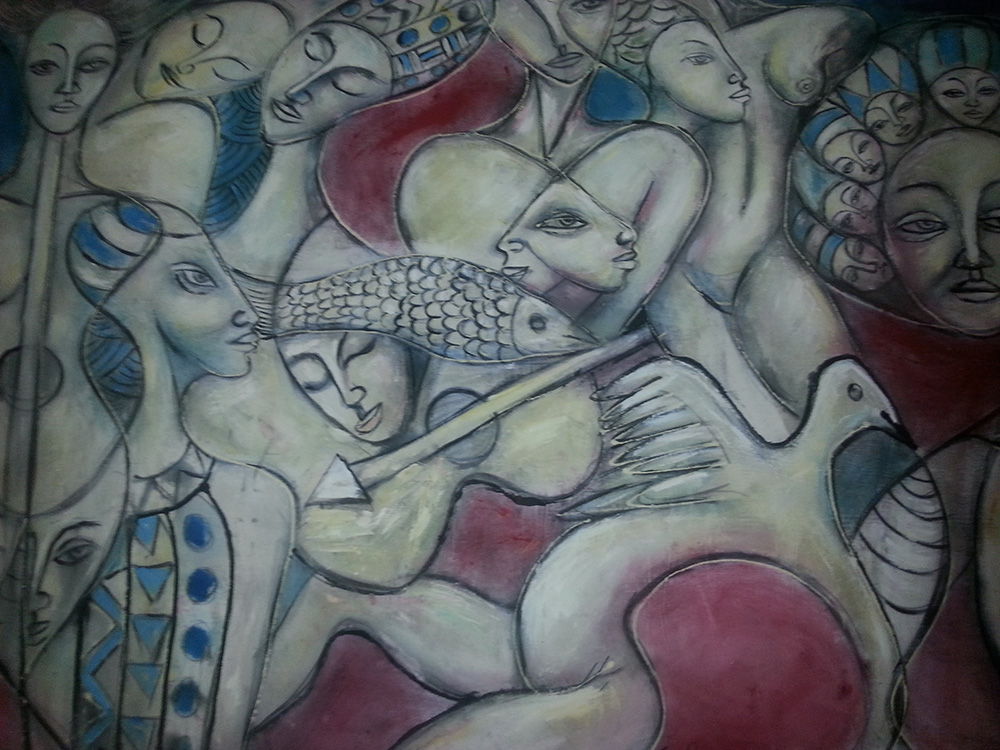
(Image: Cecil Cooper)
For more information
Read more about this subject
-
 Dossier /
Green Climate Fund: calling for local access to climate finance
Local organisations and groups must be given access to climate finance from the Green Climate Fund. They know exactly what is happening in their local context and what is required for climate adaptation.
-
 Dossier /
Global Alliance for Green and Gender Action (GAGGA)
GAGGA rallies the collective power of the women's rights and environmental justice movements to realize a world where women can and do access their rights to water, food security, and a clean, healthy and safe environment.
-
 Dossier /
Communities Regreen the Sahel
In various countries in the Sahel, vast tracts of land have been restored by the local population by nurturing what spontaneously springs from the soil and protecting the sprouts from cattle and hazards.
-
Letter / 14 July 2026
Statement on CAO Cambodia Microfinance Case
The independent complaints mechanism of the International Finance Corporation (IFC) and the World Bank Group found that the IFC violated its own Environmental and Social Sustainability Framework by investing in six banks providing microfinance in Cambodia.
-
 News / 6 July 2026
Strengthening Women's Land Rights Across the Rio Conventions
From 29 June – 2 July 2026, Tamara Mohr, GAGGA coordinator at Both ENDS participated in the 4th convening of the Women's Land Rights Initiative (WLRI) in Nairobi, Kenya.Hosted by the Robert Bosch Stiftung, TMG Research and the Huairou Commission, the event brought together grassroots organisations, (inter)national NGOs, government institutions and donors from around the world.
-
Publication / 3 July 2026
-
 Dossier /
Finance for agroecology
The lion's share of public budgets for climate, agriculture and development still goes to conventional agroindustrial projects that contribute to the current climate, food and biodiversity crises. Both ENDS and our partners are calling for a transition to agroecological practices that are people- and environment-friendly.
-
 Dossier /
Trade agreements
International trade agreements often have far-reaching consequences not only for the economy of a country, but also for people and the environment. It is primarily the most vulnerable groups who suffer most from these agreements.
-
 News / 27 February 2026
Both ENDS strengthens the resilience of female environmental defenders worldwide thanks to multi-year contribution from the Postcode Lottery
In recent years, Both ENDS has received an additional contribution of €875,000 from the Postcode Lottery for the Autonomy & Resilience Fund (2022–2025), implemented in collaboration with the Global Alliance for Green and Gender Action (GAGGA). This support was essential because female environmental rights defenders around the world are increasingly facing climate change, repression and shrinking civil space. With this contribution, Both ENDS supports female activists and their communities with flexible, trust-based funding, enabling them to develop their own solutions to urgent environmental and climate problems.
-
 News / 2 February 2026
Response to the D66-VVD-CDA coalition agreement
Coalition: Repair the damage and dare to go further
At Both ENDS, we see a number of cautious steps in the right direction in this coalition agreement. There is a slight emphasis on green issues, renewed attention to women's rights, recognition of the importance of civil society, and discussion of trade agreements with a focus on mutual interests. However, without structural change in how we trade, invest, and cooperate, fine words remain empty shells.
-
 Dossier /
Export Credit Agencies: Who pays the price?
Both ENDS calls on the government only to provide export credit insurance to sustainable projects that cause no social and/or environmental damage in the countries where they take place.
-
 Environmentally Just Practice /
Non-Timber Forest Products (NTFPs)
About one in every six people, particularly women, directly rely on forests for their lives and livelihoods, especially for food. This shows how important non-timber forest products (NTFPs) and forests are to ensure community resilience. Not only as a source of food, water and income, but also because of their cultural and spiritual meaning.
-
 News / 5 November 2025
Interview: Both ENDS at COP30 for Climate Justice and Systemic Change
Both ENDS is present at COP30 to advocate for genuine access to climate finance for locally led, gender-just climate solutions and the mechanisms that facilitate this, including those for farmer-led restoration. Furthermore, the organisation participates to ensure the crucial connection between the climate negotiations and the trade and investment frameworks that shape them.
Learn more about the Both ENDS team at COP30 below, and find all the activities and side-events in which Both ENDS will participate.
-
 News / 5 November 2025
Overview of Both ENDS events at COP30 in Belem, Brazil
Both ENDS is present at COP30 to advocate for genuine access to climate finance for locally led, gender-just climate solutions, and for the mechanisms that make these possible, including those supporting farmer-led restoration. The organisation also engages to highlight the crucial connection between climate negotiations and the trade and investment frameworks that shape them.
Below is an overview of the Both ENDS team at COP30 and a detailed look at the activities and side-events in which Both ENDS will participate.
-
 Dossier /
International trade and investment with respect for people and planet
The network of international trade and investment treaties is large and complex. The Netherlands alone has signed more than 70 bilateral investment treaties (BITs) and is party to the trade and investment agreements concluded by the EU, like the EU-Mercosur and EU-Indonesia trade deals.
-
 Dossier /
Amplifying environmentally just practices
Because of the close relationship with their living environment, local communities often have the best ideas for the sustainable and equitable use and governance of land, water and forests. These environmentally just practices and processes successfully protect and restore ecosystems and address climate change. They are essential in the light of the multiple crises the world faces, but are in dire need of financial and policy support.
-
Publication / 2 October 2025
-
 News / 16 July 2025
Case Study: Women Advocating for Gender and Climate Justice in Burkina Faso
The Women Environmental Programme Burkina Faso (WEP BF or WEP) is leading the way in gender-just climate solutions, putting the power of advocacy directly into the hands of women farmers. “In Burkina Faso, women play a crucial role in food production and natural resource management, yet they continue to face systemic barriers to land ownership,” explains a WEP team member. “Despite legal provisions, deeply ingrained customary norms remain dominant, restricting women’s access to land as user rights only, which need to be mediated through male family members.” Without secure access to land, they face significant obstacles in sustaining their agricultural activities, improving local food security, and fully participating in their communities.
-
 News / 16 July 2025
Case Study: Fighting Environmental Transphobia and Social Fragmentation in Brazil
In the face of environmental transphobia, a form of discrimination where trans and gender-diverse communities are disproportionately impacted by environmental degradation,excluded from climate policies, and often met with stigma and exclusion by environmental justice movements, Grupo Orgulho, Liberdade e Dignidade (GOLD) has emerged as a bold and visionary force for change in Brazil. At the heart of this movement is Débora Sabará ,GOLD’s leader, a travesti activist who has fought tirelessly to place the perspectives andneeds of LGBTIQAPN+ (Lesbian, Gay, Bisexual, Trans, Intersex, Queer, Asexual, Pansexual, Nonbinary and other identities), Indigenous and Afro-Brazilian communities at the center of environmental justice conversations.
-
 News / 16 July 2025
Case Study: Community Paralegals Defending Land Rights from Extractive Industries and Land Grabs in Mozambique
Across Mozambique, land represents more than just territory. It is the cornerstone of livelihoods, culture, and autonomy for many communities. When companies arrive, claiming large portions for mining, oil exploration or agribusiness, residents face significant challenges in asserting their rights. Mozambique’s Land Law (1997) grants communities user rights, ensuring they can occupy and use land for subsistence and cultural purposes.


