




Press release Both ENDS and SOMO: construction of Barro Blanco dam finally suspended
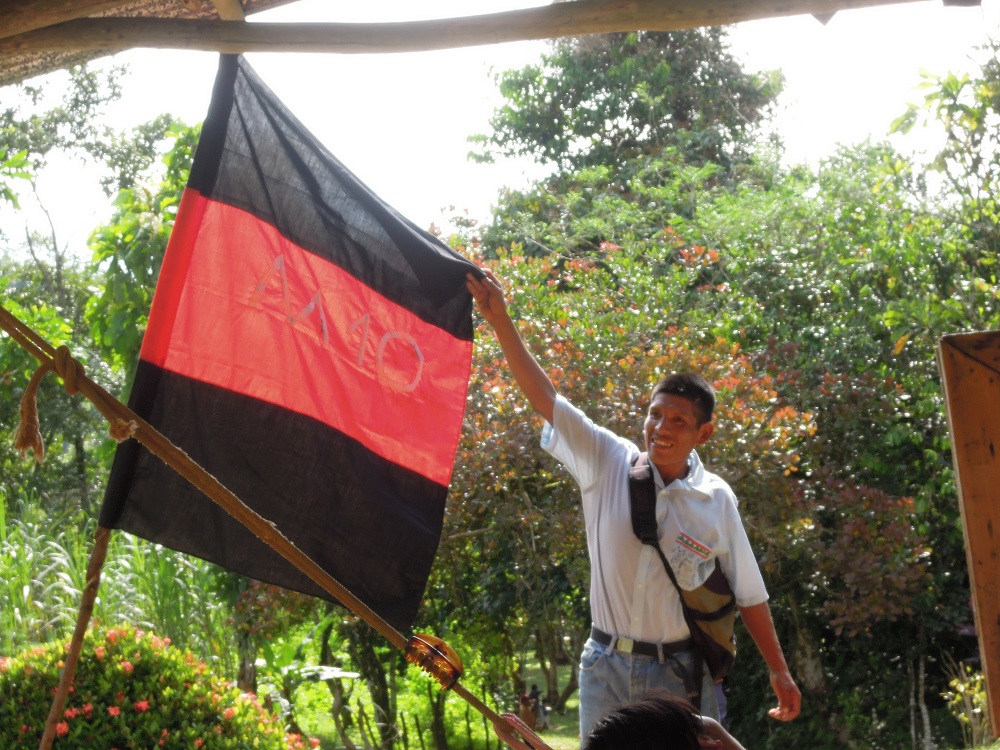
Following years of community protest the construction of the Barro Blanco dam in Panama is finally suspended. This was publicly announced by Panama’s Environmental Agency ANAM yesterday. The suspension of the project has been a request of the Ngöbe community, represented by the Movimiento 10 de Abril (M-10), for years. The dam is projected to flood homes, schools, and religious, archaeological, and cultural sites in the indigenous traditional territory, and convert the Tabasará River from a running river to a stagnant lake ecosystem. The suspension of the project is just in time, as the dam’s construction is near to completion,
Better late than never
The M-10 is satisfied that steps are finally taken to address their concerns. “We have been intimidated and some of our members were even sued in the court, but we have always persisted in claiming our right to be consulted on projects in our territory” said Manolo Miranda, representing the M-10. Both ENDS is pleased with this decisio, as we have been closely involved in this case for years. We support M10 in several ways, and we have been showing one of the major investors in the project, the Dutch development bank FMO, its responsibilities. This bank must adhere to its own, but also to international social and environmental regulations, and has not done so in this case. Together with the Dutch organization SOMO we therefore M10 in 2014 helped to file a complaint with the FMO. The handling of this complaint will certainly be influenced by current trends.
Read the full press release
More information:
7 May 2014: Indigenous people file complaint against FMO for funding of Barro Blanco dam, Panama
3 March 2014: Parliamentary questions about construction Barro Blanco dam in Panama
18 Feb. 2014: Situation tense for indigenous Ngäbe people near Barro Blanco dam
14 Feb. 2014: Filing a complaint with the FMO?
19 June 2013: Will UN-rapporteur Anaya investigate Barro Blanco dam in Panama?
Facebook page M-10
Website 'Human Rights and Grievance Mechanisms'
Read more about this subject
-
 Dossier /
Indigenous communities threatened by Barro Blanco dam in Panama
The Barro Blanco dam project in Panama, which has Dutch financial support, is causing indigenous lands to disappear under water. Both ENDS is working to protect the rights of indigenous communities living near the dam.
-
Publication / 3 July 2026
-
 Dossier /
Finance for agroecology
The lion's share of public budgets for climate, agriculture and development still goes to conventional agroindustrial projects that contribute to the current climate, food and biodiversity crises. Both ENDS and our partners are calling for a transition to agroecological practices that are people- and environment-friendly.
-
Publication / 10 April 2026
-
 News / 10 April 2026
Both ENDS: strengthened FMO complaints mechanism is a step forward, but major gaps remain
Both ENDS welcomes the strengthened Independent Complaints Mechanism (ICM) of development finance institutions FMO, DEG and Proparco as an important step forward in accountability. Working directly with communities affected by development projects, we see daily how essential it is that people can access justice when they are harmed in the name of development. For many communities, this mechanism is one of the few avenues through which harm can be formally recognised and addressed in relation to these development banks.
-
 News / 22 January 2026
Shell files new arbitration against the Netherlands over Groningen gas field closure
Shell is suing the Netherlands in yet another attempt to evade its responsibility for decades of gas extraction in Groningen. For years, gas production has triggered earthquakes, damaged over a hundred thousand homes, and left residents living in prolonged insecurity, still waiting for repairs, reinforcement, and justice.
-
 Dossier /
Agua Zarca: indigenous fight against dam costs lives
Indigenous Hondurans are resisting the construction of the Agua Zarca hydrodam. Their fight has cost several lives, including that of Berta Cáceres. After considerable public pressure, Dutch development bank FMO withdrew from the project.
-
 Press release / 13 January 2026
Investigation: FMO failed to exercise adequate control over project linked to the murder of Berta Cáceres
TEGUCIGALPA/UTRECHT, January 12, 2026 – The murder of indigenous environmental activist Berta Cáceres, which took place almost 10 years ago in Honduras, appears to be the result of an organized criminal operation, in which funds from the Dutch Development Bank FMO were misappropriated to finance illegal activities. This is the conclusion of the investigation report published today by the independent commission set up by the Inter-American Commission on Human Rights, the Honduran state, and the relatives of Berta Cáceres.
For years, FMO was a major financier of the Agua Zarca project. Berta Cáceres, an indigenous leader, fought against this controversial dam and was murdered for that reason in March 2016.
-
 Blog / 1 December 2025
The Long Road to Justice for the Ngäbe of Kiad
In October 2025 I travelled to Kiad, the Indigenous Ngäbe community that led the struggle against the FMO-financed Barro Blanco dam, for one last time. I went there to say my goodbyes, both personally and on behalf of Both ENDS, and to catch a first glimpse on how a community program financed by FMO and DEG – the result of a dialogue process that took several years – is giving a new impulse to the dam-affected communities. But how did we get here?
-
 News / 5 November 2025
Another ISDS claim hits the Netherlands: Petrogas sues over solidarity contribution and royalty regulations
SOMO and Both ENDS strongly condemn the newly revealed investor-state dispute settlement (ISDS) case filed by Petrogas, an Omani oil and gas company operating two shallow-water gas fields in the Dutch North Sea, against the Netherlands under the Netherlands-Oman bilateral investment treaty (BIT).
-
 News / 27 October 2025
New Step in FMO’s Complaint Policy – Civil Society Organizations Call for Further Strengthening
The updated complaint mechanism of the development banks FMO, DEG, and Proparco marks an important step forward. Organizations that participated in the consultation acknowledge the efforts to improve the mechanism. At the same time, they emphasize that much still needs to be done to make the policy truly effective, transparent, and independent.
-
Publication / 9 October 2025
-
 News / 6 October 2025
From Entebbe to Accra: civil society is rewriting the rules of investment
By Fernando Hernández Espino and Bart-Jaap Verbeek
Almost a year after African civil society gathered in Uganda to adopt the Entebbe Declaration, the call to transform international investment governance continues to gain strength. From the 6th to the 9th of October, over 50 civil society organisations from across West Africa, including from Ghana, Senegal, Nigeria, Côte d’Ivoire, Cameroon, Gambia, Sierra Leone, as well as from Kenya and Latin America, are convening in Accra to deepen and operationalise the Declaration’s vision.
-
 Dossier /
Fair Green and Global Alliance (FGG)
Together with civil society organisations from all over the world, the Fair Green and Global (FGG) Alliance aims for socially just, inclusive and environmentally sustainable societies in the Netherlands and the Global South.
-
 News / 2 July 2025
 -
 News / 24 June 2025
Indigenous communities in Panama obtain recognition and partial mitigation measures by Development Banks FMO and DEG in relation to the Barro Blanco dam
Both ENDS and SOMO welcome the signing of the agreement of understanding between four Indigenous Ngäbe communities in Panama and the European development banks FMO and DEG on June 17th 2025. The arrangement includes a community development program that, together with a public statement issued by the banks, aims to recognize and mitigate some of the negative impacts caused by the Barro Blanco hydropower dam. We wish to congratulate the community-based organisation Movimiento 10 de Abril (M10) for its perseverance to seek justice for the affected communities, and we acknowledge the commitment of FMO and DEG to pursue a solution to their long-standing dispute with the communities arising from their partial financing of the hydropower project since 2011.
-
 Dossier /
Advocating for responsible policies of development banks
Development banks should comply with strict environmental and human rights rules to ensure that their projects benefit and do not harm the poorest groups. Both ENDS monitors the banks to make sure they do.
-
 Blog / 11 April 2025
FMO is very pleased with its own success – now the local population still needs to be
The FMO development bank is proud of its results and the opportunities it seizes where commercial banks fail to act. But do the bank's actions really help, ask Anne de Jonghe and Nick Middeldorp.
-
Letter / 3 March 2025
Input for FMO’s “investment approach to responsibly managed forest plantations”
Both ENDS has been asked by FMO to comment on its draft investment approach to responsibly managed forest plantations. To follow are a number of observations and recommendations, partially informed by Both ENDS long legacy of working in the forest & land arena, in dialogue with international donors, philanthropic foundations, companies, certification bodies and notably with forest dependent communities and other land users.
-
Publication / 16 January 2025




