




TotalEnergies financiers beware: EACOP is eating up money, nature and livelihoods
A new analysis shows that the developers of the East African Crude Oil Pipeline, led by France’s TotalEnergies, are being forced to self-finance the project almost entirely. The analysis, part of a new Finance Risk Updatefrom a coalition of African and International civil society organisations, shows that the companies have abandoned plans to raise 60% of the project’s growing costs from bank loans, and are now on the hook for almost 90% of the costs themselves.
A new analysis shows that the developers of the East African Crude Oil Pipeline, led by France’s TotalEnergies, are being forced to self-finance the project almost entirely. The analysis, part of a new Finance Risk Updatefrom a coalition of African and International civil society organisations, shows that the companies have abandoned plans to raise 60% of the project’s growing costs from bank loans, and are now on the hook for almost 90% of the costs themselves.
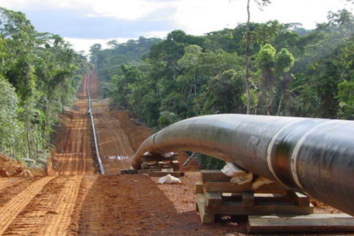
The EACOP is under construction from Hoima in Uganda to the port of Tanga in Tanzania. While a recent “first tranche” of lending for the project was recently finalised, the analysis of EACOP Ltd.’s recent financial disclosures indicates this amounts to only $755 million in total. This means the project companies now need to finance the whole remainder of the project’s $5.6 billion total price tag themselves. This means Total and its partners (The China National Offshore Energy Corporation (CNOOC), and the national oil companies of Uganda and Tanzania) look set to sink more than three times their originally planned contribution of $1.4 billion into the project.
Mounting Costs for Total and Partners
The EACOP has been rejected by almost all of Total’s biggest bankers, based on its extreme risks to communities and the region’s rich nature. Over 40 commercial banks have made clear they will not finance the project directly. As a result of the decision to self-finance the project, Total and its bankers and investors are far more exposed to the accelerating risks to communities, nature and climate being caused by the oil pipeline than was previously thought.
Environmental and Human Impacts Mount
The pipeline has been describedby the project companies as over 60% complete. However, analysis of satellite imagery by EarthInsight showsless than 40% of the pipeline has been laid. The same analysis also shows roads cleared for the pipeline reaching the Victoria Nile riverbank, signalling an imminent, high-risk crossing of this river in an area that overlaps with protected wetlands and the Murchison Falls National Park. Well pads which will feed the pipeline are being constructed in the National Park, with tragic consequences for local people as vibrations from drilling rigs cause elephants to move to surrounding communities. The elephants are destroying cropland, and have killed at least five peoplein the area in 2023 and 2024.
The new Finance Risk Update, which details these impacts for financiers exposed to Total and CNOOC, is the sixth in a series which has been produced by a coalition of civil society groups led by BankTrack. It is endorsed by Africa Institute for Energy Governance (AFIEGO), Both ENDS, EarthInsight, Environment Governance Institute EGI-Uganda, Inclusive Development International, Just Share and Reclaim Finance.
Bondholders Now Exposed
As the project becomes more expensive for Total, its financiers become more exposed to its risks. Several banks including Citi, BBVA, Deutsche Bank, JPMorgan Chase, MUFG, Royal Bank of Canada, Société Générale, and Wells Fargo underwrote bonds for TotalEnergies in March and June 2025 – money which may fund the construction of the EACOP, despite the banks’ commitments not to finance the project directly. The briefing warns that any additional bond issuances by the company could be critical sources of financing for EACOP.
More information
- The EACOP Finance Risk Update can be downloaded here.
- Read the full briefing.
For more information
Read more about this subject
-
 Blog / 27 februari 2024
Partners fighting for rights within natural resource exploration in Uganda
A recent visit to Uganda highlighted the country as the latest example of ethical, environmental and human rights dilemmas brought forth by natural resource exploration.
Under the guise of economic prosperity and energy security, the future of Uganda’s forests, lakes, national parks, and by extension that of the people that depend on these resources, is increasingly endangered. Both ENDS partners in Uganda work with local communities to preserve these natural environments and the livelihoods that come from it.
-
 News / 15 april 2024
Statement of International Civil Society Organisations in response to the abduction of Stephen Kwikiriza, community environmental defender in Uganda
Update Monday June 10: On the evening of June 9 Stephen has been found abandoned on the side of the road. His condition is bad, after having suffered severe beatings, mistreatment and abuse through the week. He is alive, safe and reconnecting with his family. We thank everyone that has shared the solidarity statement. This international pressure helped in ensuring his release.
June 8: This is a joint statement by over 115 international civil society organisations to call upon the Ugandan authorities to ensure the immediate and unconditional release of Stephen Kwikiriza, who has been held incommunicado since his abduction by plain clothed officers in Kampala on 4 June 2024.
-
Letter / 15 april 2025
African civil society urges Oman against EACOP support as east Africa trade expo kicks off
Just one day before the Oman East Africa Trade and Investment
Expo opens in Muscat on April 16, over 70 civil society organisations (CSOs) from Uganda, Tanzania, the Democratic Republic of Congo, and beyond have published an open letter urging the Government of Oman to refrain from providing financial or diplomatic support for the controversial East African Crude Oil Pipeline (EACOP). -
 Dossier /
Communities Regreen the Sahel
In various countries in the Sahel, vast tracts of land have been restored by the local population by nurturing what spontaneously springs from the soil and protecting the sprouts from cattle and hazards.
-
 News / 10 juli 2025
Shell's Silent Exit: Evading Accountability in the Niger Delta
Following Both ENDS & Kebekatche Women Development & Research Centre participation in Shell’s Annual General Meeting (AGM) and a formal follow-up in writing, the response received from Shell plc raises more questions than it answers.
-
 News / 4 juni 2025
Demanding Shell’s Accountability for decades of pollution in Niger Delta
Both ENDS and our Nigerian partner Kebetkache Women Development & Research Centre attended Shell’s Annual General Meeting (AGM), on May 20th, in London, to demand transparency and accountability for Shell Plc’s opaque divesment in the Niger Delta.
-
 News / 20 mei 2025
Both ENDS and partners demand Shell to clean up the Niger Delta before divesting
At the Annual General Meeting (AGM) of Shell in London, community leaders from the Niger Delta and international allies, including Both ENDS, are confronting Shell with a clear demand: Shell must take full responsibility for decades of pollution and human suffering in Nigeria’s Niger Delta before divesting from its on-shore oil operations.
-
 News / 25 maart 2025
Urgent call to Shell: Don’t leave the Niger Delta without cleaning up decades of pollution
Last week, Shell reported that it officially completed the sale of its on-shore oil assets in the Niger Delta, leaving behind a vast oil pollution caused by 70 years of oil extraction in the region.
-
Letter / 16 december 2024
Urgent call to halt all divestments in the Niger Delta, including Shell's refused sale of SPDC shares
The proposed sale of Shell’s shares in the Shell Petroleum Development Company (SPDC) to the Renaissance consortium, alongside similar divestments by TotalEnergies and other oil companies, threatens the Niger Delta and its people environmental and social well-being for generations to come.
-
 News / 18 juni 2024
Impact of oil extraction on women's health in Bayelsa
In the context of Shell's imminent divestment from onshore oil industry in the Niger Delta, Both ENDS partner Kebetkache publishes a new report showing severe health and environmental challenges faced by the women of Otuabagi in the Niger Delta due to Shell's crude oil exploration. -
 Blog / 27 mei 2022
Divest from EACOP before it’s too late
and Abigail Kyomuhendo*
This week the annual shareholder meeting (AGM) of TotalEnergies took place. Whilst the shareholders celebrated their profits, Ugandan people were being evicted from their lands, thousands of kilometers away, for Total's East African Crude Oil Pipeline (EACOP). -
Letter / 22 september 2022
Letter to Dutch investors in TotalEnergies about EACOP project
A coalition of 13 Dutch organisations calls on investors like banks, pension funds and insurers to divest from TotalEnergies because of its EACOP project in Uganda and Tanzania. This new pipeline is causing human rights abuses, increased poverty, environmental pollution and climate change, and also TotalEnergies is using loopholes in the tax system to avoid taxes.
The letters has been send, among others, to the banks ABN AMRO, ING and Van Lanschot Kempen, pension funds ABP, BPL, PFZW, PMT and PNO media and the insurers Aegon, Allianz and Nationale Nederlanden. Together, the Dutch investors own shares and obligations worth more than 2.1 billion euros.
-
 Blog / 30 september 2024
Of EACOP and tales of a defender in development
The Joke Waller-Hunter (JWH) Initiative creates opportunities for young people in the environmental sector in developing countries to unfold their full potential. By providing small grants to individuals to expand their knowledge, experience and training, the Initiative aims to strengthen environmental Civil Society Organisations capacity and efficiency. Grantee Brighton Aryampa wrote a column for Monitor about his journey to becoming a Human Rights Defender, and his work battling the EACOP.
-
 News / 6 oktober 2025
From Entebbe to Accra: civil society is rewriting the rules of investment
By Fernando Hernández Espino and Bart-Jaap Verbeek
Almost a year after African civil society gathered in Uganda to adopt the Entebbe Declaration, the call to transform international investment governance continues to gain strength. From the 6th to the 9th of October, over 50 civil society organisations from across West Africa, including from Ghana, Senegal, Nigeria, Côte d’Ivoire, Cameroon, Gambia, Sierra Leone, as well as from Kenya and Latin America, are convening in Accra to deepen and operationalise the Declaration’s vision.
-
 News / 9 mei 2025
Women’s leadership in agroecology flourishes in Eastern and Southern Africa
On 12 and 13 February 2025, women from Kenya, Uganda, and Zimbabwe gathered in Nairobi for the Africa Women Leaders in Agroecology (AWOLA) Regional Networking Forum. The event marked a significant moment in the leadership programme of PELUM Kenya, which empowers young women in their role as leaders in the agroecological transition. This project was made possible thanks to support from Both ENDS as part of the Fair, Green and Global (FGG) Alliance.
-
 Blog / 31 maart 2025
International cooperation and solidarity are in the interest of both the Netherlands and Africa
Traditional development aid keeps Africa in a state of aid dependency, but development cooperation is essential to break this post-colonial dependency, argues Melvin van der Veen in response to an interview in NRC Handelsblad with the Cameroonian economist Célestin Monga. By breaking off this cooperation on the basis of equality, we are actually stifling the voices of African civil society organisations, indigenous communities, youth and women's movements and human rights defenders, and we are not solving global problems.
-
 Blog / 27 maart 2025
Fair trade and equal partnerships: only then can Kenya stand on its own
Several media outlets, including de Volkskrant, focused last week on the shift from “aid” to “trade,” partly in response to the state visit of the Dutch royal couple to Kenya. The idea is that it would be beneficial for Kenya to stand on its own two feet. A beautiful ideal—one I whole heartedly believe in. But this ideal can only become a reality if equality is at the heart of trade and international cooperation.
-
 News / 25 november 2024
Empowering Civil Society: Shaping investment policies for climate and sustainable development in Africa
From 26-29 November 2024, Both ENDS and its partners will host the Civil Society Forum on Investment Policies, Climate and Sustainable Development Goals in Entebbe, Uganda. Our colleagues Iván and Fernando explain the importance of this event: “Through this event, we aim to provide an in-depth perspective on the impact of current investment policies on climate and environmental issues, with a strong focus on the African continent.”
-
 Video / 18 mei 2024
Charity Migwi of Oil Change International
Oil Change International is mainly focused on research, communication, and advocacy. Charity Migwi helps with campaigning to get fossil fuel companies to face out their production of oil and gas. In Africa, for instance Nigeria and Senegal, she works together with communities, especially where the projects are happening to see how they can collaborate and strengthen each other. And they are under pressure of time. Where advocacy takes patience and time, climate change impacts are rising daily. A personal talk about the importance of things that are worth fighting for. At Both ENDS, our aim is to connect people for change.
-
 News / 13 december 2023
Response from Both ENDS and OxfamNovib to new FMO climate fund
Both ENDS and Oxfam Novib welcome the new SDG Loan Fund launched by FMO. The fund aims to invest more than a billion euros in loans to small and medium-sized enterprises in low- and middle-income countries, in the energy, inclusive financial services and sustainable agriculture sectors. At the same time, both organisations are concerned about the impact of money from the fund on normal people in future recipient countries.