




Strengthening social movements for inclusive water governance in Bangladesh
For generations, the people of Bangladesh’ flood-prone deltas have shaped their natural environment to support agricultural production. They used temporary embankments to keep tidal waters out of the floodplains for most of the year and let the rivers flow freely during monsoon season, allowing the sediment to settle on the floodplains as an important part of the delta formation process.
In the 1960s, permanent dikes were constructed along the country’s entire coast, disrupting the tidal ecosystem. The riverbed of many rivers completely silted up, while the land inside the polders gradually sunk below the riverbeds due to a lack of sedimentation. As a result, monsoon (rain) water became trapped within the polders, leading to severe waterlogging affecting the lives and livelihoods of over 2 million people throughout the southwest coastal zone during the last decades.
Massive grassroots resistance movements sprung up to demand change. One group even broke open a dike, resulting in a lawsuit for destroying government property. Local organisation and Both ENDS’ partner Uttaran stepped in to support the people’s quest for ecosystem restoration and social justice. Drawing from Uttaran’s experiences, programme development specialist Zahid Shashoto provides insights into the vital role NGOs can play in strengthening social movements.
Empowering people through institution building
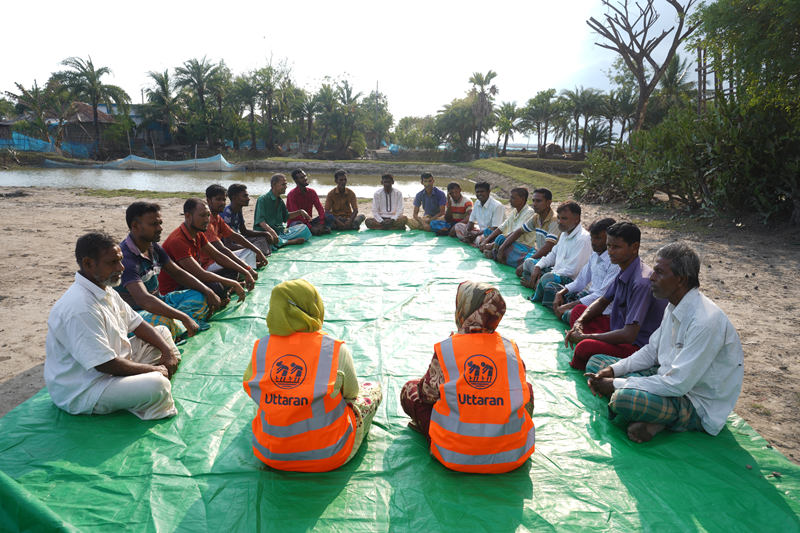
The people demanded a return to indigenous tidal river management (TRM), but destroying the dikes themselves only created additional problems, including legal charges and increased distrust and miscommunication between formal water governance actors and past caretakers from the communities. Uttaran’s approach focuses on empowering people by strengthening their institutions. The NGO supports informal bottom-up movements to organise themselves into paani (water) committees and outline their demands in clear action plans. This levels the playing field and places the communities in a stronger position to negotiate their demands with the government. “We don’t want to act as a bridge between the community and the government”, Zahid emphasises. “There was something that people needed, that people were fighting for, and we started supporting them.”
Knowledge is key
According to Zahid, one of the most impactful roles of Uttaran and partner NGOs has been to exchange knowledge and information with the paani committees. Uttaran regularly organises meetings to inform communities about government policies and plans, while partner organisation CEGIS conducts environmental impact assessments to help people understand the potential impact of proposed water management interventions. Reports are summarised and translated into Bangla to make the information understandable and accessible, enabling community members to make informed decisions about their water resources. At the same time, the paani committees share knowledge and information obtained from their communities with Uttaran and CEGIS, for example problems related to the maintenance of infrastructure and the impacts of floods.
Inclusive and participatory decision-making
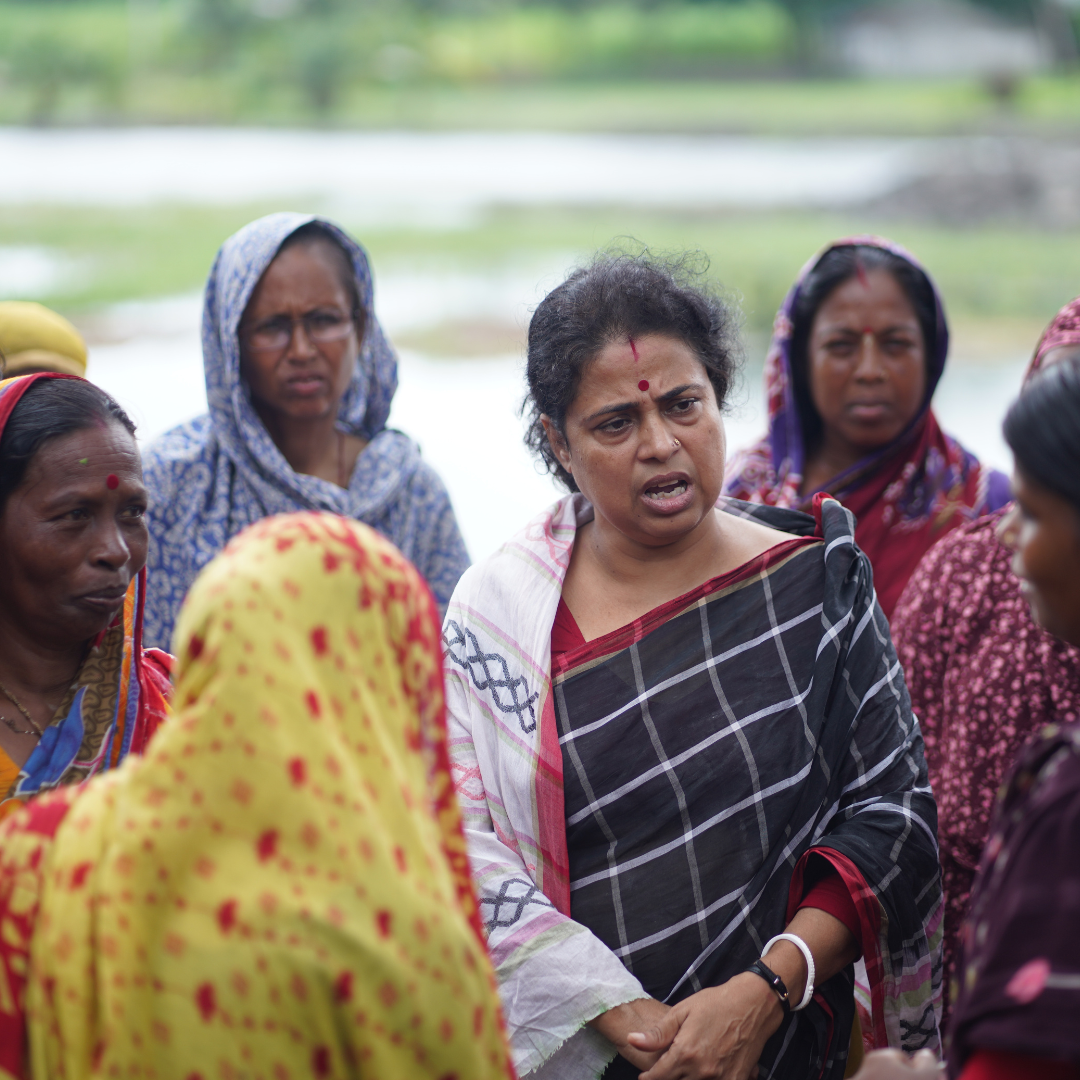
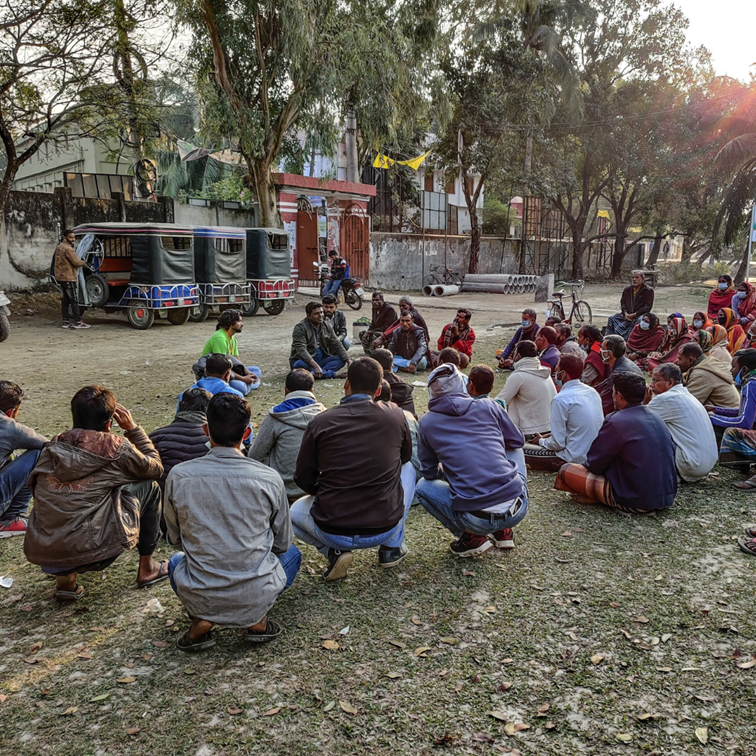
Waterlogging can be resolved by selectively opening dikes and closing them again after several years when natural sedimentation has raised the land level inside the polder and improved the navigability of the river – a technique similar to the Dutch “wisselpolders” which have been gaining attention in recent years. However, it is crucial to take into account the needs of local residents. Adequate compensation and alternative livelihood options should be provided to prevent conflicts and ensure social justice. Uttaran strengthens the capacities of paani committees to facilitate inclusive and participatory processes to understand local realities and engage community members in designing socially acceptable solutions. Paani committee members travel to villages along their river catchment to organise a mix of public gatherings and private meetings for specific socio-economic groups, such as women or youth. The process enables paani committees to formulate People’s Plans of Action that address community needs and ensure no group is left behind.
Vertical structures for effective advocacy
Finally, Zahid emphasises the importance of building vertical structures. Uttaran has helped create a network of paani committees at different levels, from small committees at the village level, larger committees at the wetland and river basin levels, to a central paani committee at the regional level. The expansive network has strengthened the communities’ collective voice in advocating for their demands at higher levels of government.
Through the tireless efforts of the paani committees, Uttaran and partner organisations, waterlogging has been resolved in the Kapotakkho river basin – a testament to the power of community-driven change. This case demonstrates the potential for civil society organisations to strengthen social movements and shape a more sustainable, equitable and democratic water governance model for Bangladesh and beyond.
Read more about this subject
-
 Environmentally Just Practice /
A Negotiated Approach for Inclusive Water Governance
A Negotiated Approach envisages the meaningful and long-term participation of communities in all aspects of managing the water and other natural resources on which their lives depend. It seeks to achieve healthy ecosystems and equitable sharing of benefits among all stakeholders within a river basin. This inclusive way of working is an essential precondition for the Transformative Practices that are promoted by Both ENDS and partners.
-
Publication / 3 juli 2026
-
Publication / 12 mei 2026
-
 News / 24 maart 2026
Statement: Invest in local leadership for tropical forest management and local economies
IUCN-NL, Both ENDS, and 16 other Dutch and international civil society organizations (CSOs), networks, and expert groups are calling on the Dutch government to invest more strongly in locally led forest management and forest-based economies. This should be done within the framework of Dutch international cooperation and its associated policy instruments.
-
 Dossier /
Global Alliance for Green and Gender Action (GAGGA)
GAGGA rallies the collective power of the women's rights and environmental justice movements to realize a world where women can and do access their rights to water, food security, and a clean, healthy and safe environment.
-
 News / 27 februari 2026
Both ENDS strengthens the resilience of female environmental defenders worldwide thanks to multi-year contribution from the Postcode Lottery
In recent years, Both ENDS has received an additional contribution of €875,000 from the Postcode Lottery for the Autonomy & Resilience Fund (2022–2025), implemented in collaboration with the Global Alliance for Green and Gender Action (GAGGA). This support was essential because female environmental rights defenders around the world are increasingly facing climate change, repression and shrinking civil space. With this contribution, Both ENDS supports female activists and their communities with flexible, trust-based funding, enabling them to develop their own solutions to urgent environmental and climate problems.
-
Publication / 27 november 2025
-
 News / 27 november 2025
Communities and International Consortium Present Community-Led Plan for Nature-Based Adaptation to Sea-Level Rise in Coastal Bangladesh
Local communities in the southwestern coastal region of Bangladesh—together with an international consortium including Uttaran, CEGIS, and Both ENDS—have presented a community-led plan to confront climate change and accelerating sea-level rise through nature-based adaptation. The People’s Plan for Upscaling Ecosystem-Based Adaptation outlines a scalable strategy rooted in local ownership and generations of lived experience. At its centre is Community-Based Tidal River Management (CBTRM), a proven approach that reduces waterlogging, raises land elevation, and restores ecological balance by working with natural tidal and sediment dynamics.
-
 Dossier /
Wetlands without Borders
With our Wetlands without Borders program, we work towards environmentally sustainable and socially responsible governance of the wetlands system of the La Plata Basin in South America.
-
Letter / 14 november 2025
Letter: TPAC’s report “Final Judgement Detailed Research MTCS’’
A coalition of Malaysian and international NGOs has released a memorandum in response to the recent TPAC report on the Malaysian Timber Certification Scheme (MTCS). The organisations express serious concerns about the independence, quality, and credibility of the assessment carried out by the Timber Procurement Assessment Committee (TPAC).
-
Publication / 9 oktober 2025
-
 Dossier /
Amplifying environmentally just practices
Because of the close relationship with their living environment, local communities often have the best ideas for the sustainable and equitable use and governance of land, water and forests. These environmentally just practices and processes successfully protect and restore ecosystems and address climate change. They are essential in the light of the multiple crises the world faces, but are in dire need of financial and policy support.
-
Publication / 1 juli 2025
-
 News / 23 juni 2025
Who benefits from better protection of our oceans?
The ocean emerged strengthened from the UN Ocean Conference in Nice. More countries are supporting a ban on deep-sea mining, more marine protected areas are being established, and more pledges are being made to fight pollution. The question now is whether countries will follow through on their commitments. Because the ocean movement faces a camp of powerful interests.
This article was originally posted in Dutch on MO*Magazine.
-
 Dossier /
Inclusive ways to sustainable and healthy food for all
All around the world small-scale farmers are using sustainable and inclusive methods to produce food. Working together with nature and each other, they provide their families and communities with sufficient and healthy food. But their production methods are under pressure from large-scale agriculture and the globally dominant system of industrial food production. Together with our partners, Both ENDS is trying to turn the tide in favour of sustainable, local practices that are mostly known as 'agro-ecological' or 'nature-inclusive'. Why are we focusing on these methods? Agro-ecological practices are climate-proof and inclusive and increase the opportunities for communities around the world to produce their food sustainably.
-
 News / 21 maart 2025
Dutch Royal couple visits Thogoto Forest: a green oasis on the outskirts of Nairobi
This week, King Willem-Alexander and Queen Máxima visited Thogoto Forest as part of their state visit to Kenya. They were able to see the impact of the work of our partner MCDI in the area: a restored forest, clean water and farmers who can earn a living by selling their agro-ecological products.
-
Publication / 16 januari 2025
-
 News / 2 december 2024
Ten recommendations for the UNCCD COP16 to strengthen its efforts in combating desertification, land degradation, and drought
For decades, our local partner organisations have been developing and promoting effective ways to combat land degradation, desertification, and drought. This includes regions like the drylands, as well as forests, and wetlands. Supporting these locally-led actions is essential to reversing negative trends. For COP16, Drynet has developed 10 recommendations to strengthen the implementation of the UNCCD. Success at COP16 would mean turning these recommendations into action, fostering inclusive land governance and sustainable land management practices globally. By enabling locally-led actions—particularly those led by women, youth, pastoralists, and Indigenous Peoples—we can build a more resilient future.
-
Publication / 25 november 2024
-
 Blog / 25 november 2024
The Need for Civic Space in Global Policymaking
and Kyra Pohlan
In today’s interconnected world, international forums play a pivotal role in shaping policies and strategies that impact communities and the environment worldwide. These gatherings, whether they focus on climate change, water resources, or biodiversity, are critical venues where decisions are made that affect the lives of billions of people and species. However, for these decisions to be truly inclusive and effective, they must be informed by the voices of those most affected by climate change and environmental degradation.




