




Using Philanthropy, Advocacy and More to Shift Power
(This interview was published on January 18th in Inside Philantrophy)
Most people in philanthropy don't enter the sector because they have dreams of working in a financial institution. But that's exactly what they're doing. The philanthropic sector as we know it today was deliberately designed by the robber barons of the early 19th century as a response to extreme wealth inequality they created through exploitative labor practices in the oil, steel and shipping industries. Whether to genuinely make amends for the harms they created or to engage in reputation washing, the industrialists cornered the market on philanthropy, guarding against legal challenges to its tax shelter functionality and curtailing regulatory legislation that could induce democratic decision-making. Today, the value of philanthropy stands at about $2.3 trillion, which is 3% of the global economy.
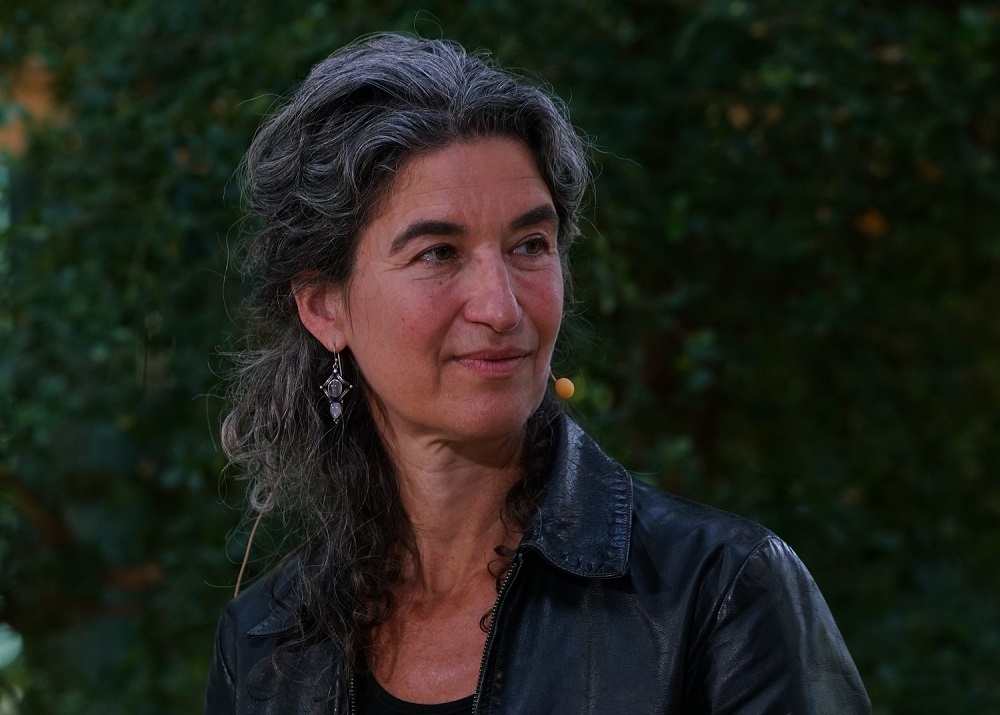
When Both ENDS Director Danielle Hirsch came to philanthropy, she did so with clarity about its intention and power as a vehicle to move money. Both ENDS is a Netherlands-based organization that is challenging power dynamics in philanthropy in a number of ways, acting as a fundraiser, a regrantor, an ecosystem builder and an advocate for responsible investing by government donors, private foundations and individual wealth holders. As director of the organization, Hirsch has spent the last two decades ceding funding decisions to grassroots leaders in the global environmental movement. I spoke to her about how Both ENDS works from the principles of interdependence and distributed leadership, why discomfort is a sign of progress, and the benefits of being a self-managing organization.
You came to philanthropy with an explicit understanding of its economic and political power. Tell me how that happened
When I graduated from secondary school, I didn't know what to do. So I figured, let's study economics, because if I'm an economist, people will take me seriously. The neoliberal perspective was dominant at the time, and while sitting in class, I would think, "This is not like the world I see around me." I couldn't figure out what that meant, but I knew it wasn't going to work for me.
I left school and started to plan a trip with a friend to travel for three months in China, but then the Tiananmen Square protests happened, so I went to Israel instead, and worked on a moshav, where I met a Mexican guy who asked me to travel back home with him. I thought, "Why not?" It turned out that he lived in one of the biggest slums in the world at the time, and that's where I learned what economics is really about, from the perspective of not-so-rich people in the Global South.
I learned that it's nice to have data, and to know the costs and benefits according to the market, but the influence of powerful people counts, too. If you want to do good work, you need to understand the politics and power dynamics, not just the numbers. Because you need to be able to interpret the numbers in the context of a story about what's happening.
Eventually, I came back to the Netherlands to finish my degree in economics. Afterward, I worked everywhere — Kenya, Paraguay, Chile, Bangladesh, Kazakhstan — and did a lot of different things with different kinds of stakeholders, but I really liked working with local organizations and civil society, because they acted most outside of the box and were able to come up with the most useful solutions. I identify most with that attitude: Let's try things and do something different.
I can see why Both ENDS appealed to you — because it's a funder, but not in the traditional way philanthropy is practiced
I came to Both ENDS as a volunteer in 1995, then became a staff member, and then the director. The organization was started in the '80s by a group of civil servants who were frustrated that so-called "developing" countries had no political influence at the global level around environmental rights. Civil society was too weak in those countries to push for a discussion about forests or coastal zones. It was clear that to strengthen civil society organizations, you need financing. So they started a project to finance environmental movements in the Global South.
Both ENDS has never been a grantmaker in the traditional sense. We've always seen financing as one part of a bigger agenda to share power and jointly influence governments or companies to become more sustainable. As a Dutch organization with a strong financial and administrative structure, we can manage a lot of funds. We are a regrantor, and decisions on where the funding goes is decentralized. This means our staff don't decide who gets money and the grassroots organizations we finance are part of a bigger strategy that we have developed together. That strategy includes raising funds together, which means the decisions on where the money will go are made before Both ENDS ever receives any funds from a donor.
What does being both a funder and a strategic partner to grassroots organizations look like in practice?
We start from the principle that all the organizations in the global environmental movement have unique strengths and we need each other to change the world. From that principle of interdependence, we determine what our main contribution to the network should be. For Both ENDS, we have three strengths. One is that we can access money. We raise and manage funds because that isn't the priority of most organizations we work with. Second, our partners often face challenges that are created by Dutch actors. As a Dutch organization, we can influence the Dutch government and companies that have a negative impact on people and nature globally. Our third asset is a diverse network and a bird's-eye view, which allows us to connect people who can then work together to make a bigger voice and impact.
How do you approach power-sharing?
We check with our partners to ask about things like, "should we be more participatory?" For now, they've told us, "No, we've given you a strategic mandate; don't bother us with the nitty gritty of the decisions you take day-by-day." There is a trust relationship and a mutual way of working. What we do together is only possible because of the knowledge we share with each other and the ways we divide up the work. They tell us to do certain influencing or fundraising, and we trust them to move the money to the places it should be going in the movements. We, of course, report to each other to make sure we're on the same course, and we challenge each other when things don't work well.
We have a high level of investment in the human relationships, and we are deliberate and transparent about how we hold our power. When you are a funder, you cannot feel guilty because of your privilege and deny what you are. You have to have conviction in what you're doing and keep examining your power. You cannot deny that it exists. And if you want to share your power, then you have to change. We are currently working with a consultant to more deeply examine the different elements of power in our work. For example, we may hold the money, but our partners hold our reputation. So it's complicated and can be confusing, but we're committed to learning and continuing to experiment.
One of the ways you're experimenting is by becoming a self-managed organization that has redistributed decision-making power throughout the organization. How has that affected your leadership?
Both ENDS used to be an organization that had far more ambition than resources, and we were always fighting to survive. When you have too few people and are doing too much, you keep going without questioning what you're doing and if it actually works. When we suddenly got a lot of funding from the Dutch government, that's when the organization started to implode.
I now know that we didn't have the right infrastructure. I'm not a very structural person. I live in chaos and was in denial for a long time. But five staff came to me one day and said, "You're going to do something now because this is unacceptable." I was a bit pissed off because I still didn't get it. We have a lot of money, so what's the problem? I went to a coach who told me, "Danielle, it's part of your job to make sure the organization functions. If you don't want to do that, fine, but you'll have to leave the position."
With a consultant guiding us, my staff and I co-created a process for reorganization and to support everyone individually to build their leadership. Now, we have delegated responsibilities where nine people take decisions at the process level — areas like operations and finance — and the rest of our work is done in project formations with functional roles. Anyone can apply to do a role that interests them, even if they don't have experience in that area. It's up to the organization to support team members to learn what they're interested in learning.
As the director, you feel responsible for things working out, and it's a challenge to let go, but I never feel like I'm in this alone. I'm constantly delegating decisions. I see people flourish and the organization is very dynamic. I'm not always comfortable with the role I'm in, but I am totally convinced it is the way it should be done. As someone with power, if you don't feel uncomfortable with the steps you're taking, I don't think it's a significant change.
Many in philanthropy are discovering that there is a need to look more closely at where the money comes from, how it's invested, and whether those things are at odds with the impact a funder seeks to make. Why should people in the sector be informed about how financial systems operate?
The power of philanthropy is not only money. The power of philanthropy is your position in society next to other powerful actors, which gives you a higher degree of influence to push them to change. Something that is often overlooked is that funders are not just funders. They don't just give money. Philanthropic institutions are also money holders and actors in financial systems that create and maintain wealth inequality.
Five years ago, we led a campaign to get Dutch philanthropy to divest from fossil fuels. We hoped they would not just divest but also speak publicly about why they divested. We had some success with the first part but did not achieve the second. When we talked to large banks about where their clients have investments, they would tell us how they were able to influence wealthy people to divest from fossil fuels, but they didn't want to make those achievements public. Why not? Fortunately, there are leaders in Dutch society who are speaking out. For example, the biggest Dutch pension fund, ABP — which has €461 billion in assets and is one of the biggest in the world — has committed to fully divesting by 2023. That will remove €16 billion from fossil fuels and, hopefully, create a safer space for other people with influence to become a more active part of this very necessary public conversation.
Mandy Van Deven is a philanthropy consultant who supports organizational and field learning, provides strategic advice to individual wealth holders and philanthropic institutions, and designs and implements funding initiatives that advance gender, racial, economic, and climate justice and fortify the infrastructure for narrative power.
Read more about this subject
-
Letter / 9 december 2024
People and the Planet Entebbe Declaration: Reclaiming investment frameworks for people and the planet
The time for change is now. Civil society demands international investment
frameworks that are aligned with economic justice, social and environmental
sustainability, and the needs of communities worldwide. -
 Dossier /
Small Grants Big Impacts
Small grants funds offer an effective, alternative way to channel big money from large donors and funds to local groups and organisations that are striving for a sustainable and just society everywhere around the world.
-
 News / 1 april 2022
Well-deserved recognition for small grants funds!
We are exited about the news that Ms MacKenzie Scott decided to entrust substantial funding to a wide range of small grants funds from Both ENDS' partner networks*. These small grants funds are unique as they are set up and led by people, often activists themselves, from the country or region in which the fund is based. Most mainstream conventional funders admit they have difficulties reaching community based organisations and grassroots groups themselves. Small grants funds know better than anyone how to reach local communities, who to support and what kind of financial as well as non-financial support is most needed. Thus, they bridge a wide funding gap. Both ENDS applauds this recognition of the important role of these funds in the funding landscape. We hope this encourages more funders to join!
-
Publication / 8 november 2019
-
 Event / 14 april 2018, 11:30
Small grants, big impacts: workshop on Africa Day
On the 14th of April, Both ENDS wil host a workshop called 'Small Grants, Big Impacts' on the annual Africa day in Amsterdam. The workshop aims to demonstrate that so called 'small grants funds' effectively deliver (devopment and climate) money where it matters, to people that need it the most. Large development banks, funds, donors and governments could use small grants funds as alternative financing mechanisms to make sure their money benefits people and their environment now and it the far future.
-
Publication / 11 oktober 2017
-
 Event / 20 juni 2018, 09:15 - 11:00
Adaptation Futures - Session on Small grants, big impacts
The Green Climate Fund aims to support transformational pathways to climate-resilient development, intends to reach those most vulnerable, and commits to a gender-sensitive approach. This session presents an important way of putting these commitments into practice: by engaging small grants funds. These funds can provide the much needed channel between large international institutions and local communities adapting to climate change, and assure financing reaches women and men to contribute to transformative climate action. But how to make this shift in how financing is delivered? The audience will be actively engaged in the discussion to come to concrete suggestions to strengthen local access and gender responsiveness of climate finance.
-
 News / 7 november 2011
Results of five years of small grants
Small grants are a relatively new phenomenon, especially when they are fundraised and managed by local foundations. Both ENDS promotes small grants funds such as CASA, as they are able to cater directly to the demands and needs of local organisations that stay invisible for international donors and private foundations. For an example of the impressive reach and effectiveness of small grants, please check out CASA's first Five Year Report
-
 News / 3 september 2012
Small grants: little bureacracy, big impact
By supporting small grants funds in the Global South, Both ENDS effectively helps people and organisations in their peaceful struggles to keep the bond between them and nature alive. Alliance, the leading magazine for philanthropy and social investment worldwide, published an article on Both ENDS’ policy in its September edition.
-
 News / 26 juli 2011
Small Grants, two days for a brighter future
Replanting a watershed with trees made possible by a micro loan of € 1000: ten years later, this investment still ensures that an entire community has clean drinking water. This small success was further discussed last April at 'Small Grants', a two-day event organized by Both ENDS.
-
 News / 2 september 2016
Small grant leads to big award for Gilbert Adum
Gilbert Adum, co-founder of Save the Frogs Ghana, won one of this year's Whitley Awards and will receive a grant of £ 35.000 to continue his efforts for the conservation of frogs in Ghana. In 2012, Gilbert already received a young leaders grant from the Joke Waller Hunter Initiative (JWHI), which is managed by Both ENDS.
-
 News / 2 december 2024
Ten recommendations for the UNCCD COP16 to strengthen its efforts in combating desertification, land degradation, and drought
For decades, our local partner organisations have been developing and promoting effective ways to combat land degradation, desertification, and drought. This includes regions like the drylands, as well as forests, and wetlands. Supporting these locally-led actions is essential to reversing negative trends. For COP16, Drynet has developed 10 recommendations to strengthen the implementation of the UNCCD. Success at COP16 would mean turning these recommendations into action, fostering inclusive land governance and sustainable land management practices globally. By enabling locally-led actions—particularly those led by women, youth, pastoralists, and Indigenous Peoples—we can build a more resilient future.
-
 Dossier /
Communities Regreen the Sahel
In various countries in the Sahel, vast tracts of land have been restored by the local population by nurturing what spontaneously springs from the soil and protecting the sprouts from cattle and hazards.
-
 Event / 12 december 2024, 13:00 - 14:30
Exploring new avenues of CSO participation in UNCCD processes
Enhancing inclusivity within UNCCD processes and its implementation by strengthening the involvement of civil society organizations (CSOs) and Indigenous Peoples.
-
 Event / 11 december 2024, 13:00 - 14:30
Making strategic impact: Shifting resources and power to women-led initiatives for Land Degradation Neutrality (LDN)
How donors, foundations and other funders can better support women-led initiatives in achieving Land Degradation Neutrality (LDN), focusing on challenges, collaboration, and opportunities for improved matchmaking.
-
 Event / 4 december 2024, 18:00 - 19:30
Enhancing the role of civil society in the UNCCD to achieve Land Degradation Neutrality (LDN)
Effective local action by land-using communities is at the heart of achieving LDN globally. However, their contributions are often not well recognized or adequately supported by governments and other agencies. Within the UNCCD framework, civil society organisations play a key role in engaging with policymakers in the context of recognizing and supporting these contributions by local communities. The side event will engage participants in a GEF-supported joint Drynet/ IUCN initiative to enhance the capacities of civil society to engage effectively in the achieving Land Degradation Neutrality (LDN) within the UNCCD framework.
-
 News / 2 december 2024
Advocating for Local Solutions: Both ENDS at UNCCD COP16 to Champion Sustainable Land Management and Gender Equality
As the United Nations Convention to Combat Desertification (UNCCD) celebrates its 30th anniversary, the global community faces an urgent need to address the escalating challenges of land degradation, desertification and drought. At the forefront of these efforts, Both ENDS has long advocated for inclusive, locally-led solutions to these critical issues. In this interview, Nathalie van Haren and Yordanos Mulder, who will represent Both ENDS at the upcoming UNCCD COP16, share insights into the significance of the conference, the key issues on the agenda, and the crucial role of local communities in shaping effective land governance. They discuss Both ENDS' ongoing work to amplify the voices of marginalised groups and emphasise the importance of sustainable land management practices, particularly those driven by women, youth, and Indigenous Peoples.
-
 News / 2 december 2024
Both ENDS at UNCCD COP16
Since 1994, Both ENDS has been advocating for inclusive governance in addressing desertification, land degradation, and drought, ensuring local communities have a strong voice in global discussions. As a member of Drynet, a network of over 20 civil society organisations, we champion the inclusion of women, youth, and Indigenous Peoples in land governance and highlight the importance of locally-led initiatives. Our work promotes gender equality, agroecology, and sustainable land management. This landing page serves as a comprehensive hub for all information and updates related to the UNCCD COP16 and Both ENDS' efforts to drive positive change. Here, you’ll find key resources, initiatives, and insights into how locally-led solutions can shape the future of land governance and environmental sustainability.
-
Publication / 8 november 2019
-
 Dossier /
Green Climate Fund: calling for local access to climate finance
Local organisations and groups must be given access to climate finance from the Green Climate Fund. They know exactly what is happening in their local context and what is required for climate adaptation.



