




Well-deserved recognition for small grants funds!
We are exited about the news that Ms MacKenzie Scott decided to entrust substantial funding to a wide range of small grants funds from Both ENDS' partner networks*. These small grants funds are unique as they are set up and led by people, often activists themselves, from the country or region in which the fund is based. Most mainstream conventional funders admit they have difficulties reaching community based organisations and grassroots groups themselves. Small grants funds know better than anyone how to reach local communities, who to support and what kind of financial as well as non-financial support is most needed. Thus, they bridge a wide funding gap. Both ENDS applauds this recognition of the important role of these funds in the funding landscape. We hope this encourages more funders to join!
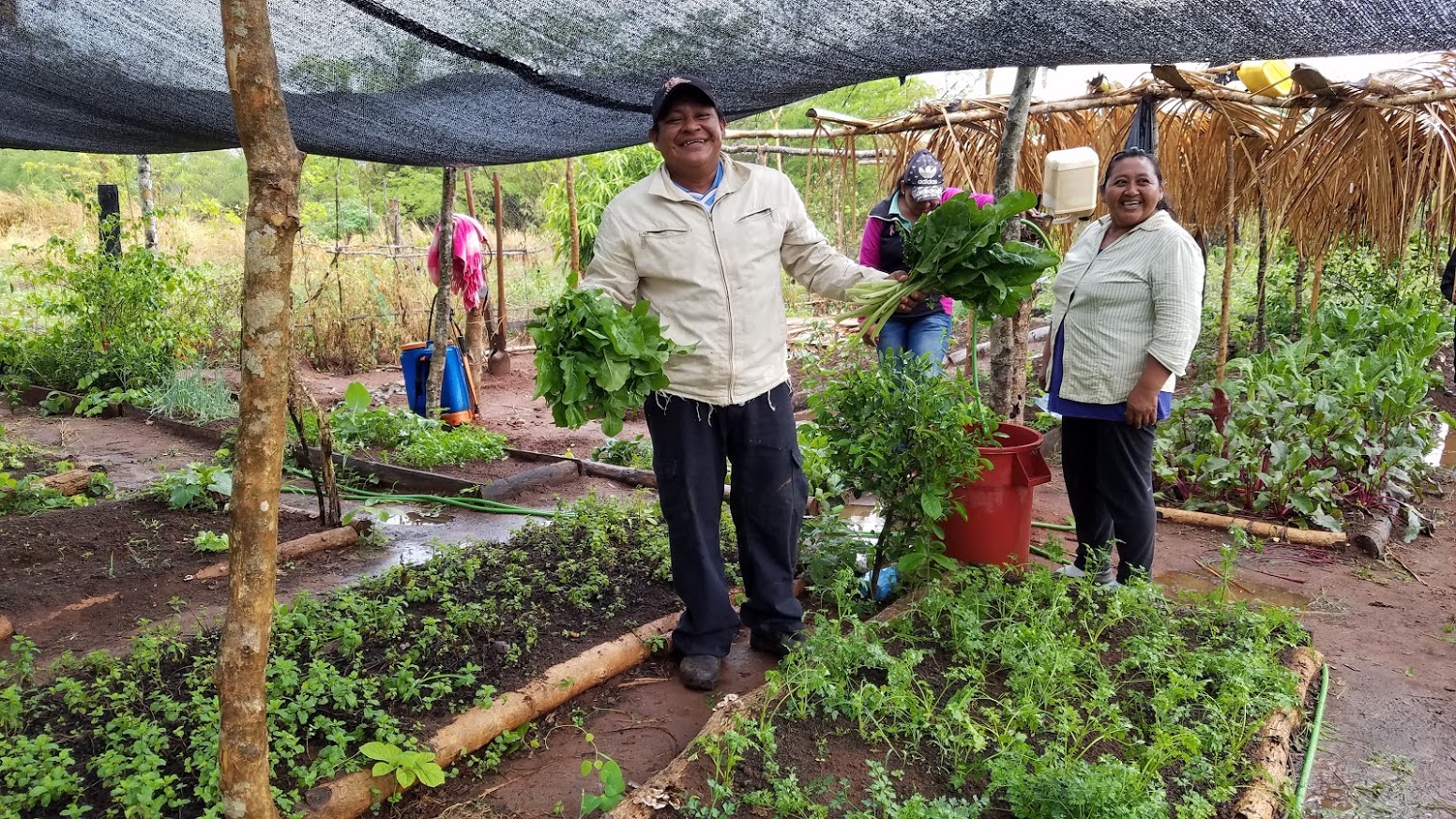
Small grants funds support community-based, inclusive approaches to environmental conservation and restoration. They assist genuine sustainable socio-economic development – rooted in respect of human rights, womens rights in particular, and the needs and aspirations of young people. They assist young women and men to help build resilient communities in the face of abating climate change and threat of destructive external interventions from mining, mono-culture plantations and ill-designed infra projects.
Low threshold accessibility
These funds are agile and well informed about local conditions and they offer low threshold accessibility to grassroots groups quickly, when the need and momentum is there. This, whilst maintaining accountability about the allocated funds. They are able to award small grants at the right time, to the right organisations. Small grant funds on average provide grants between 1,000 and 15,000 euros, with an average of 5,000 euros. Such financial support is often also accompanied by capacity strengthening and networking building activities. Small grants funds work on a basis of trust and help achieve shifting decision-making power to grassroots organisations.
Establishing and strengthening small grants funds
This is why, over the course of 25 years, Both ENDS has invested in both the establishment and strengthening of environmental justice small grants funds in the Global South. Moreover, since 2015, through the Global Alliance for Green Gender Action (GAGGA), an alliance by FCAM, Mama Cash, Both ENDS and the Dutch Ministry of Foreign Affairs, over 20 environmental Justice and women's rights funds are supported as an effective and inclusive avenue to reach their own social, ecology and climate objectives.
Indispensable for development funding
Small grants funds are thus an indispensable part of the global system of funding for development, equality and environmental and climate justice. Both ENDS, GAGGA and our small grants fund counterparts are contributing to a growing body of evidence that these funds are able to reach those local groups.
Within diverse coalitions we are in continuous dialogue with both private foundations and bilateral and multilateral agencies to increase funding for small grants funds. In partnership with the National Postcode Lottery and other funders such as Porticus, the Netherlands ministry of Foreign Affairs and other partners, Both ENDS will continue to support and promote small grants funds.
-------------------------------------------------------------------------
* Such as Prospera, Fondo Centroamericano de Mujeres, Fondo de Mujeres Del Sur, FRIDA (The Young Feminist Fund), Mama Cash, Urgent Action Fund for Women's Human Rights, Fondo ELAS, Fundo Casa Socioambiental (CASA), Micronesia Conservation Trust, Samdhana Institute and Women's Fund Asia.
For more information
Read more about this subject
-
 Dossier /
Small Grants Big Impacts
Small grants funds offer an effective, alternative way to channel big money from large donors and funds to local groups and organisations that are striving for a sustainable and just society everywhere around the world.
-
 Dossier /
Global Alliance for Green and Gender Action (GAGGA)
GAGGA rallies the collective power of the women's rights and environmental justice movements to realize a world where women can and do access their rights to water, food security, and a clean, healthy and safe environment.
-
 Dossier /
Communities Regreen the Sahel
In various countries in the Sahel, vast tracts of land have been restored by the local population by nurturing what spontaneously springs from the soil and protecting the sprouts from cattle and hazards.
-
Letter / 14 July 2026
Statement on CAO Cambodia Microfinance Case
The independent complaints mechanism of the International Finance Corporation (IFC) and the World Bank Group found that the IFC violated its own Environmental and Social Sustainability Framework by investing in six banks providing microfinance in Cambodia.
-
 News / 6 July 2026
Strengthening Women's Land Rights Across the Rio Conventions
From 29 June – 2 July 2026, Tamara Mohr, GAGGA coordinator at Both ENDS participated in the 4th convening of the Women's Land Rights Initiative (WLRI) in Nairobi, Kenya.Hosted by the Robert Bosch Stiftung, TMG Research and the Huairou Commission, the event brought together grassroots organisations, (inter)national NGOs, government institutions and donors from around the world.
-
Publication / 3 July 2026
-
 Dossier /
Finance for agroecology
The lion's share of public budgets for climate, agriculture and development still goes to conventional agroindustrial projects that contribute to the current climate, food and biodiversity crises. Both ENDS and our partners are calling for a transition to agroecological practices that are people- and environment-friendly.
-
Publication / 12 May 2026
-
Publication / 14 April 2026
-
 News / 9 April 2026
Minister Sjoerdsma hosts roundtable conversations with civil society
This week, Minister Sjoerdsma organized roundtable conversations with civil society organizations – a valuable initiative that brings together Dutch civil society voices to address critical challenges faced by democratic societies.
-
 News / 24 March 2026
Statement: Invest in local leadership for tropical forest management and local economies
IUCN-NL, Both ENDS, and 16 other Dutch and international civil society organizations (CSOs), networks, and expert groups are calling on the Dutch government to invest more strongly in locally led forest management and forest-based economies. This should be done within the framework of Dutch international cooperation and its associated policy instruments.
-
 News / 27 February 2026
Both ENDS strengthens the resilience of female environmental defenders worldwide thanks to multi-year contribution from the Postcode Lottery
In recent years, Both ENDS has received an additional contribution of €875,000 from the Postcode Lottery for the Autonomy & Resilience Fund (2022–2025), implemented in collaboration with the Global Alliance for Green and Gender Action (GAGGA). This support was essential because female environmental rights defenders around the world are increasingly facing climate change, repression and shrinking civil space. With this contribution, Both ENDS supports female activists and their communities with flexible, trust-based funding, enabling them to develop their own solutions to urgent environmental and climate problems.
-
Publication / 27 November 2025
-
 News / 27 November 2025
Communities and International Consortium Present Community-Led Plan for Nature-Based Adaptation to Sea-Level Rise in Coastal Bangladesh
Local communities in the southwestern coastal region of Bangladesh—together with an international consortium including Uttaran, CEGIS, and Both ENDS—have presented a community-led plan to confront climate change and accelerating sea-level rise through nature-based adaptation. The People’s Plan for Upscaling Ecosystem-Based Adaptation outlines a scalable strategy rooted in local ownership and generations of lived experience. At its centre is Community-Based Tidal River Management (CBTRM), a proven approach that reduces waterlogging, raises land elevation, and restores ecological balance by working with natural tidal and sediment dynamics.
-
 Blog / 25 November 2025
COP30 shows why dismantling ISDS is essential for real climate action
Standing in Belém during COP30, I felt the weight of the moment. We came to the Amazon hoping for decisive progress on phasing out fossil fuels, yet the final outcome fell far short of the ambition science and justice demand. The agreement brought welcome commitments on adaptation finance and global indicators, but it refused to confront the structural forces that make climate action so difficult.
-
 Dossier /
Wetlands without Borders
With our Wetlands without Borders program, we work towards environmentally sustainable and socially responsible governance of the wetlands system of the La Plata Basin in South America.
-
 Environmentally Just Practice /
Non-Timber Forest Products (NTFPs)
About one in every six people, particularly women, directly rely on forests for their lives and livelihoods, especially for food. This shows how important non-timber forest products (NTFPs) and forests are to ensure community resilience. Not only as a source of food, water and income, but also because of their cultural and spiritual meaning.
-
 News / 5 November 2025
Interview: Both ENDS at COP30 for Climate Justice and Systemic Change
Both ENDS is present at COP30 to advocate for genuine access to climate finance for locally led, gender-just climate solutions and the mechanisms that facilitate this, including those for farmer-led restoration. Furthermore, the organisation participates to ensure the crucial connection between the climate negotiations and the trade and investment frameworks that shape them.
Learn more about the Both ENDS team at COP30 below, and find all the activities and side-events in which Both ENDS will participate.
-
 News / 5 November 2025
Overview of Both ENDS events at COP30 in Belem, Brazil
Both ENDS is present at COP30 to advocate for genuine access to climate finance for locally led, gender-just climate solutions, and for the mechanisms that make these possible, including those supporting farmer-led restoration. The organisation also engages to highlight the crucial connection between climate negotiations and the trade and investment frameworks that shape them.
Below is an overview of the Both ENDS team at COP30 and a detailed look at the activities and side-events in which Both ENDS will participate.
-
Publication / 9 October 2025




