




Bangladesh: Involving communities for free rivers
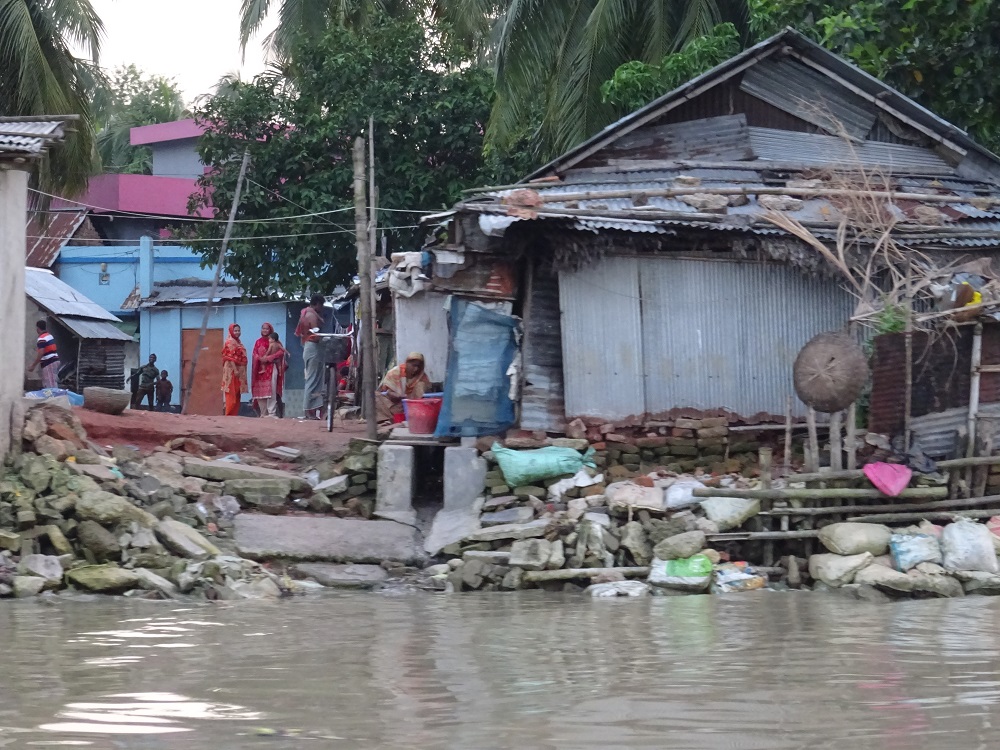
Tidal rivers in the southwest coastal area of Bangladesh have been dying since flood plains were replaced by Dutch-style polders in the 70s. Rivers are silted up, and during monsoon season water gets trapped within embankments. Every year, this situation of waterlogging inflicts adverse consequences particularly on women, as they take care of the household in waterlogged conditions in the absence of men who travel to the city in search of temporary work. NGO Uttaran is advocating for a change in policy and practice.
"People in southwest Bangladesh don't want to leave, but they are because of severe waterlogging. It is still in our hands to solve it. But if we don't start now, the place might be unliveable within 15 years." – Jahin Shams Sakkhar, Uttaran
A man-made problem
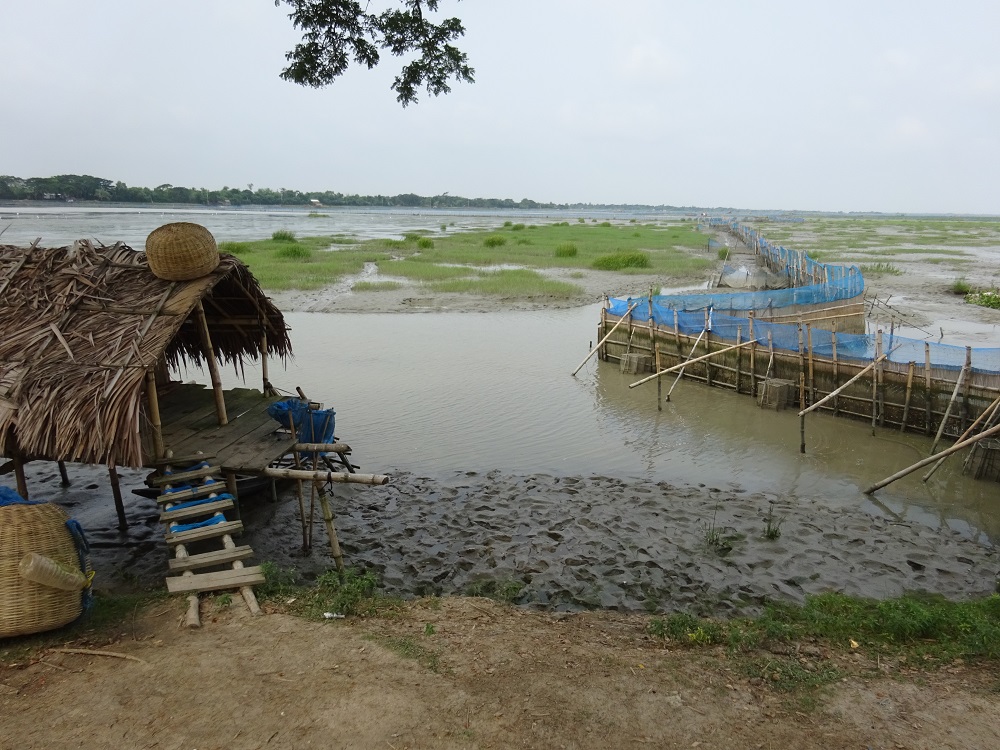
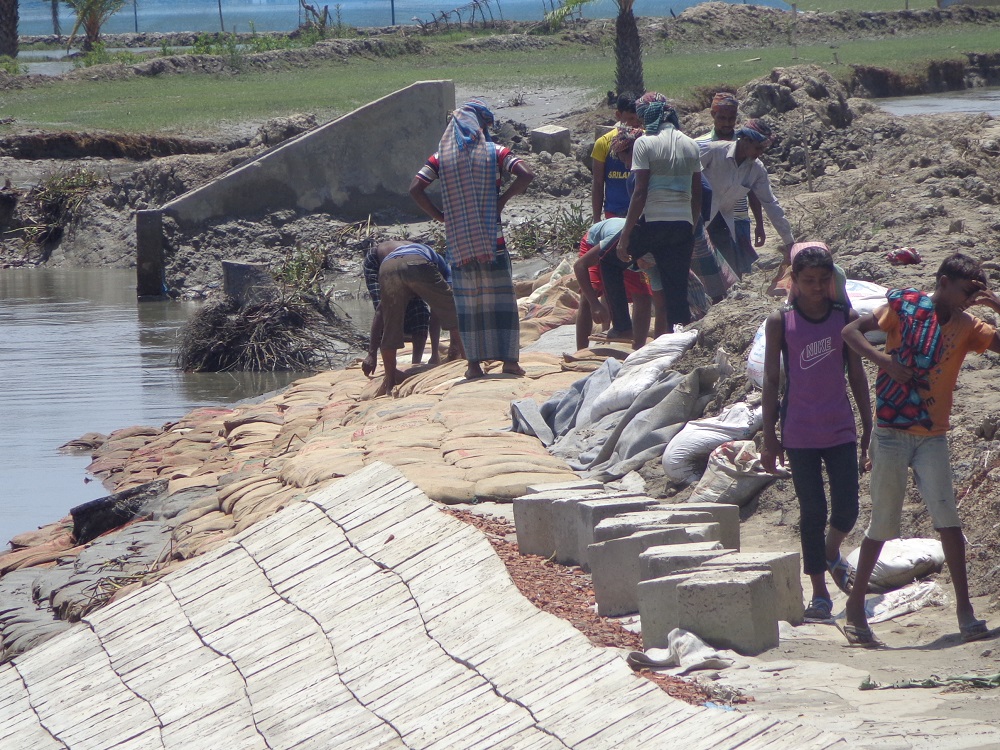
The yearly phenomenon of waterlogging can be attributed to the archetypical Dutch polders constructed in the 70s. Initially, the polders provided protection from floods and increased the agricultural yield. But many tidal rivers soon clogged up due to the high amounts of sediments that were brought in with each tide and settled on the riverbed instead of the floodplains. This resulted in a substantial raise of upstream river beds beyond the land level of the polders. Without sufficient (functional) water pumps, water within the polders is now trapped within the embankments for long periods of time. As a consequence, large areas are waterlogged for several months during monsoon season.
An ingenious and indigenous solution
Uttaran advocates for the ecological restoration of tidal rivers using Tidal River Management (TRM). This nature-based approach is inspired by indigenous practices: local communities used to flood the plains in a controlled way, resulting in a new layer of fertile soil and enhancing the river basin's drainage capacity. In their advocacy for TRM, Uttaran supports local communities as rightful and knowledgeable actors in the management of tidal river basin.
In 2018, the Bangladesh Delta Plan (BDP2100) was adopted by Parliament. Despite its limited participatory process, it does recognise TRM as a solution to waterlogging and as an effective adaptation measure for climate change. Undoubtedly, this can be attributed to continuous advocacy led by Uttaran, together with Paani (Water) Committees, civil society actors, and local political leaders.
A 'window of opportunity'
The mention of TRM in the BDP can be considered a 'window of opportunity' to meaningfully discuss possibilities to tackle waterlogging. Both ENDS supports Uttaran to play a crucial role in ensuring that the implementation of the BDP builds on the existing, self-motivated local action of communities. Negotiations about the implementation of TRM should now carefully be facilitated at appropriate levels. These processes of dialogue and negotiations should ensure an equitable share for the active and meaningful participation of particularly women, landless people, and other typically marginalised groups within society. The role of Uttaran, as a non-partisan civil society actor, is indispensable in ensuring that these processes are inclusive, and that the eventual decision results in an equitable share of benefits.
Both ENDS and Uttaran advocate for a holistic and inclusive approach to Tidal River Management. This approach should improve the living conditions of the approximately 20 million inhabitants in the region, and contribute to a healthy tidal river basin in which biodiversity thrives.
"Uttaran has promoted indigenous knowledge and successfully managed to ensure local knowledge is taken seriously by the national government. We believe Both ENDS does the same; they bring forward the ideas of local grassroots organizations and present them in front of a global audience." – Jahin Shams Sakkhar, Uttaran
For more information
Read more about this subject
-
 Environmentally Just Practice /
A Negotiated Approach for Inclusive Water Governance
A Negotiated Approach envisages the meaningful and long-term participation of communities in all aspects of managing the water and other natural resources on which their lives depend. It seeks to achieve healthy ecosystems and equitable sharing of benefits among all stakeholders within a river basin. This inclusive way of working is an essential precondition for the Transformative Practices that are promoted by Both ENDS and partners.
-
 News / 3 September 2026
Restoring Land, Restoring Hope: Both ENDS at UNCCD COP17 in Mongolia
From 17 to 28 August, governments gathered in Ulaanbaatar, Mongolia, for COP17 of the UN Convention to Combat Desertification (UNCCD). At stake was more than how the world responds to land degradation and drought. It was also a question of who gets to shape land restoration, whose knowledge counts, and where the money goes.
-
 News / 6 July 2026
Strengthening Women's Land Rights Across the Rio Conventions
From 29 June – 2 July 2026, Tamara Mohr, GAGGA coordinator at Both ENDS participated in the 4th convening of the Women's Land Rights Initiative (WLRI) in Nairobi, Kenya.Hosted by the Robert Bosch Stiftung, TMG Research and the Huairou Commission, the event brought together grassroots organisations, (inter)national NGOs, government institutions and donors from around the world.
-
Publication / 3 July 2026
-
 Dossier /
Gas in Mozambique
In 2011 one of the world’s largest gas reserves was found in the coastal province of Cabo Delgado, in the north of Mozambique. A total of 35 billion dollars has been invested to extract the gas. Dozens of multinationals and financiers are involved in these rapid developments. It is very difficult for the people living in Cabo Delgado to exert influence on the plans and activities, while they experience the negative consequences. With the arrival of these companies, they are losing their land.
-
 Dossier /
Finance for agroecology
The lion's share of public budgets for climate, agriculture and development still goes to conventional agroindustrial projects that contribute to the current climate, food and biodiversity crises. Both ENDS and our partners are calling for a transition to agroecological practices that are people- and environment-friendly.
-
Publication / 12 May 2026
-
 Press release / 12 May 2026
UN report warns of a growing sand crisis - The Dutch dredging sector plays a key role in global sand extraction
GENEVA/UTRECHT, 12 May 2026 – A new report by the United Nations Environment Programme (UNEP), Sand and Sustainability: An Essential Resource for Nature and Development, warns that global demand for sand is exceeding ecological limits. Large-scale extraction of sand from marine and coastal ecosystems is leading to biodiversity loss, damage to coastal communities and increasing risks in an era of climate change. Dutch dredging companies play a prominent role in this as global market leaders in large-scale sand extraction and land reclamation. “Our analyses show that the dredging sector operates globally within a system in which ecological damage and the consequences for coastal communities are systematically underestimated, whilst transparency and effective oversight are often lacking,” says the Dutch environmental and human rights organisation Both ENDS, which contributed to the report.
-
Publication / 14 April 2026
-
 News / 9 April 2026
Minister Sjoerdsma hosts roundtable conversations with civil society
This week, Minister Sjoerdsma organized roundtable conversations with civil society organizations – a valuable initiative that brings together Dutch civil society voices to address critical challenges faced by democratic societies.
-
 News / 24 March 2026
Statement: Invest in local leadership for tropical forest management and local economies
IUCN-NL, Both ENDS, and 16 other Dutch and international civil society organizations (CSOs), networks, and expert groups are calling on the Dutch government to invest more strongly in locally led forest management and forest-based economies. This should be done within the framework of Dutch international cooperation and its associated policy instruments.
-
 News / 19 March 2026
Winners of the ILED ‘Women Are Educators Award’ announced
Our partner organisation ILED (Indigenous-led Education Network) announced the seven winners of the ILED ‘Women Are Educators Award’ this month. These are women who play extraordinary roles in passing on knowledge, whether in formal or informal educational settings.
-
 Dossier /
Global Alliance for Green and Gender Action (GAGGA)
GAGGA rallies the collective power of the women's rights and environmental justice movements to realize a world where women can and do access their rights to water, food security, and a clean, healthy and safe environment.
-
 News / 27 February 2026
Both ENDS strengthens the resilience of female environmental defenders worldwide thanks to multi-year contribution from the Postcode Lottery
In recent years, Both ENDS has received an additional contribution of €875,000 from the Postcode Lottery for the Autonomy & Resilience Fund (2022–2025), implemented in collaboration with the Global Alliance for Green and Gender Action (GAGGA). This support was essential because female environmental rights defenders around the world are increasingly facing climate change, repression and shrinking civil space. With this contribution, Both ENDS supports female activists and their communities with flexible, trust-based funding, enabling them to develop their own solutions to urgent environmental and climate problems.
-
News / 2 February 2026
Response to the D66-VVD-CDA coalition agreement
Coalition: Repair the damage and dare to go further
At Both ENDS, we see a number of cautious steps in the right direction in this coalition agreement. There is a slight emphasis on green issues, renewed attention to women's rights, recognition of the importance of civil society, and discussion of trade agreements with a focus on mutual interests. However, without structural change in how we trade, invest, and cooperate, fine words remain empty shells.
-
Publication / 27 November 2025
-
 News / 27 November 2025
Communities and International Consortium Present Community-Led Plan for Nature-Based Adaptation to Sea-Level Rise in Coastal Bangladesh
Local communities in the southwestern coastal region of Bangladesh—together with an international consortium including Uttaran, CEGIS, and Both ENDS—have presented a community-led plan to confront climate change and accelerating sea-level rise through nature-based adaptation. The People’s Plan for Upscaling Ecosystem-Based Adaptation outlines a scalable strategy rooted in local ownership and generations of lived experience. At its centre is Community-Based Tidal River Management (CBTRM), a proven approach that reduces waterlogging, raises land elevation, and restores ecological balance by working with natural tidal and sediment dynamics.
-
 Dossier /
Wetlands without Borders
With our Wetlands without Borders program, we work towards environmentally sustainable and socially responsible governance of the wetlands system of the La Plata Basin in South America.
-
 Environmentally Just Practice /
Non-Timber Forest Products (NTFPs)
About one in every six people, particularly women, directly rely on forests for their lives and livelihoods, especially for food. This shows how important non-timber forest products (NTFPs) and forests are to ensure community resilience. Not only as a source of food, water and income, but also because of their cultural and spiritual meaning.
-
Letter / 14 November 2025
Letter: TPAC’s report “Final Judgement Detailed Research MTCS’’
A coalition of Malaysian and international NGOs has released a memorandum in response to the recent TPAC report on the Malaysian Timber Certification Scheme (MTCS). The organisations express serious concerns about the independence, quality, and credibility of the assessment carried out by the Timber Procurement Assessment Committee (TPAC).




