




Women's Human Rights to Water, Food and a Healthy Environment
Globally, unsustainable economic development and the run on natural resources put communities dependent on these resources under immense pressure. Women suffer disproportionally from the negative impacts of large-scale development projects. This 4-pager aims to shed some light on the question why, and on possible ways to turn the tide and enable women to claim their human rights to water, food and a healthy environment.
Read the full publication

Women's Human Rights to Water, Food and a Healthy Environment

For more information
Read more about this subject
-
 External link / 31 mei 2018
A human rights perspective on women and the environment (Annual Report 2017)
Although the human rights to water, food and a healthy environment have been incorporated in international legal instruments, in many countries these rights are violated on a massive scale. Women suffer disproportionally, because it is mostly still their role to feed the family and fetch water, but also because they lack decision-making power over the use of natural resources.
-
Publication / 14 februari 2016
-
 Video / 3 november 2017
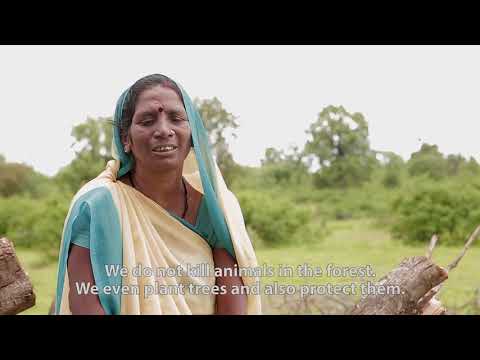
Reality of Mine: India
This short video takes you to Panna, India, where traditional adivasi women successfully oppose forced evictions. The three part series 'Reality of Mine' gives a voice to women affected by mining in India, Kenya and South Africa. With the support of international NGOs Both ENDS and ActionAid, they have begun to stand up for their rights.
-
 Video / 31 mei 2016
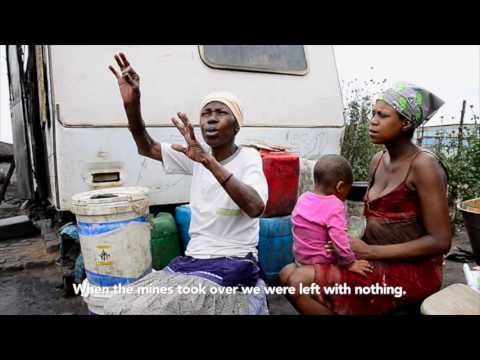
Women's rights undermined in South Africa
The population of the informal settlement Masakhane, South Africa is highly affected by the pollution and environmental damage caused by the the coal-fired Duvha power station. Before the mining and power station developments, families had access to and control over the land, even if they did not own it. Farming used to be the main source of livelihood. Today, mining companies and investors own most of the land, and as a direct consequence people have lost a lot of their farming and grazing land. This video shows testimonies of victims and their efforts to turn the tide.
-
 Video / 3 november 2017
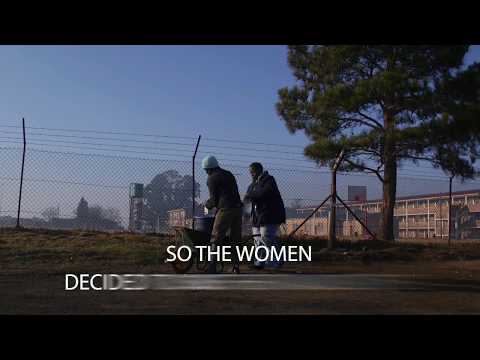
Reality of Mine: South Africa
In this video we see Maria Mkhatswa, who is claiming the right of her people to have access to clean water, like they had years ago, when the coal mining industry had not yet polluted the whole area. The three part series 'Reality of Mine' gives a voice to women affected by mining in India, Kenya and South Africa. With the support of international NGOs Both ENDS and ActionAid, they have begun to stand up for their rights.
-
 Video / 3 november 2017
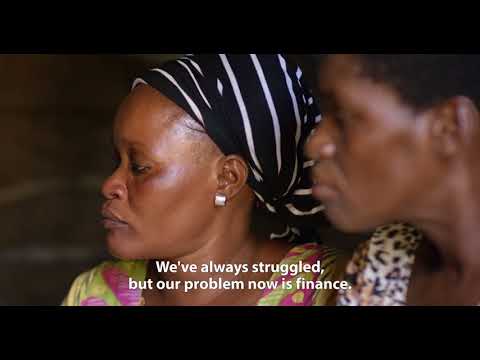
Reality of Mine: Kenya
In this video, Trivinia Mwanga Mwamburi from Kenya takes you with in her fight to get the land back which was taken from her because of the expansion of large scale salt mines. The three part series 'Reality of Mine' gives a voice to women affected by mining in India, Kenya and South Africa. With the support of international NGOs Both ENDS and ActionAid, they have begun to stand up for their rights.
-
 Press release / 8 augustus 2022
Indigenous knowledge and languages crucial in the fight against climate change
Amsterdam, 8 August 2022 – In most countries around the world, the extensive knowledge of Indigenous peoples on nature, food, health, cultural traditions and Indigenous languages receives insufficient appreciation and attention in education and policy. The Indigenous-Led Education (ILED) Network believes that this must change. To mark the International Day of the World's Indigenous Peoples on 9 August, the ILED Network is calling for more support for the transfer of this Indigenous knowledge, which also plays a major role in resolving the biodiversity and climate crises.
-
 News / 3 maart 2015
Sengwer people evicted for controversial - World Bank funded - project in Kenya
Under the pretext of a ‘Natural Resource Management Project’ funded by the World Bank, the Kenyan Forest Service has, again, started to forcibly evict the indigenous Sengwer people from their ancestral lands in the Kerangany Hills and to burn down their houses. This was documented on March 2nd, by a fact-finding team that was sent to the ground by the World Bank’s own inspection panel.
-
 Event / 5 maart 2023, 13:00
Feminist March
On Sunday March 5 Both ENDS will be joining the Feminist March (called Women's March before). It starts at 1 PM at De Dam in Amsterdam.
With our block "Feminists for Climate Justice" we'll gather in front of Madame Tussauds.
-
 External link / 20 juli 2021
Women’s rights and Non-Timber Forest Products (Annual Report 2020)
As a source of food, water and income, and for their cultural and spiritual meaning, forests and Non-Timber Forest Products (NTFPs) help ensure community resilience. Both ENDS has a long history of collaboration with partners such as the Non-Timber Forest Products Exchange Programme (NTFP-EP) and Keystone Foundation, which support forest communities in promoting the NTFP concept for forest conservation and livelihood enhancement.
-
 Event / 20 juni 2018, 09:15 - 11:00
Adaptation Futures - Session on Small grants, big impacts
The Green Climate Fund aims to support transformational pathways to climate-resilient development, intends to reach those most vulnerable, and commits to a gender-sensitive approach. This session presents an important way of putting these commitments into practice: by engaging small grants funds. These funds can provide the much needed channel between large international institutions and local communities adapting to climate change, and assure financing reaches women and men to contribute to transformative climate action. But how to make this shift in how financing is delivered? The audience will be actively engaged in the discussion to come to concrete suggestions to strengthen local access and gender responsiveness of climate finance.
-
 Dossier /
Fair Green and Global Alliance (FGG)
Together with civil society organisations from all over the world, the Fair Green and Global (FGG) Alliance aims for socially just, inclusive and environmentally sustainable societies in the Netherlands and the Global South.
-
 Dossier /
Global Alliance for Green and Gender Action (GAGGA)
GAGGA rallies the collective power of the women's rights and environmental justice movements to realize a world where women can and do access their rights to water, food security, and a clean, healthy and safe environment.
-
 News / 11 november 2024
Kenya Terminates Bilateral Investment Treaty with the Netherlands
The government of Kenya has officially terminated its bilateral investment treaty (BIT) with the Netherlands, marking a significant win for economic justice and environmental protection. Kenya’s decision reflects a growing global trend of rethinking outdated treaties that often prioritize corporate interests over public welfare. The Dutch Minister for Foreign Trade and Development recently confirmed that Kenya unilaterally ended the treaty in December 2023, rendering it inoperative from 11 June 2024. Kenya now joins South Africa, Tanzania, and Burkina Faso as the fourth African country to terminate its BIT with the Netherlands.
-
Publication / 24 september 2024
-
Publication / 29 oktober 2024
-
Publication / 29 juni 2017
-
Publication / 4 november 2022
-
Publication / 26 november 2020
-
Letter / 19 oktober 2022
Both ENDS' input to the 'Consultation Feminist Foreign Policy' of Ministry of Foreign AffairsZa
In May 2022, Minister Hoekstra of Foreign Affairs and Minister Schreinemacher for International Trade and Development Cooperation announced that also The Netherlands will work towards implementing a Feminist Foreign Policy (FFP). This means that within its Foreign Policy, the Netherlands will pay more attention to inclusivity in general and specifically to women's rights and gender equality, including LGBTIQ+. This feminist lens will be central to all aspects of foreign policy; security, trade, diplomacy and international cooperation.
To foster an inclusive process and acquire insights in what a Dutch FFP should look like, the Ministry of Foreign Affairs opened an internet consultation. Both ENDS welcomes the FFP and therefore gladly shares its input and suggestions.


