


New report: EU-Mercosur trade agreement a disaster for people and the environment
The EU-Mercosur trade agreement leads to environmental destruction, violation of the land rights of farmers and indigenous people and the loss of industrial jobs in the Mercosur countries. It also creates unfair competition for European farmers. The Handel Anders! coalition is calling for an alternative agreement to improve the political cooperation between the EU and the Mercosur countries and is making proposals for just and sustainable international trade rules. That is the core message of new publication presented today in the Nieuwspoort in The Hague.
For the publication, the authors (from organisations including Both ENDS, the Dutch trade union federation FNV and Platform ABC) interviewed various representatives from the Mercosur countries (Argentina, Brazil, Paraguay and Uruguay), including indigenous leaders, scientists and people affiliated to civil society organisations and trade unions. That makes the publication unique.
Disastrous consequences
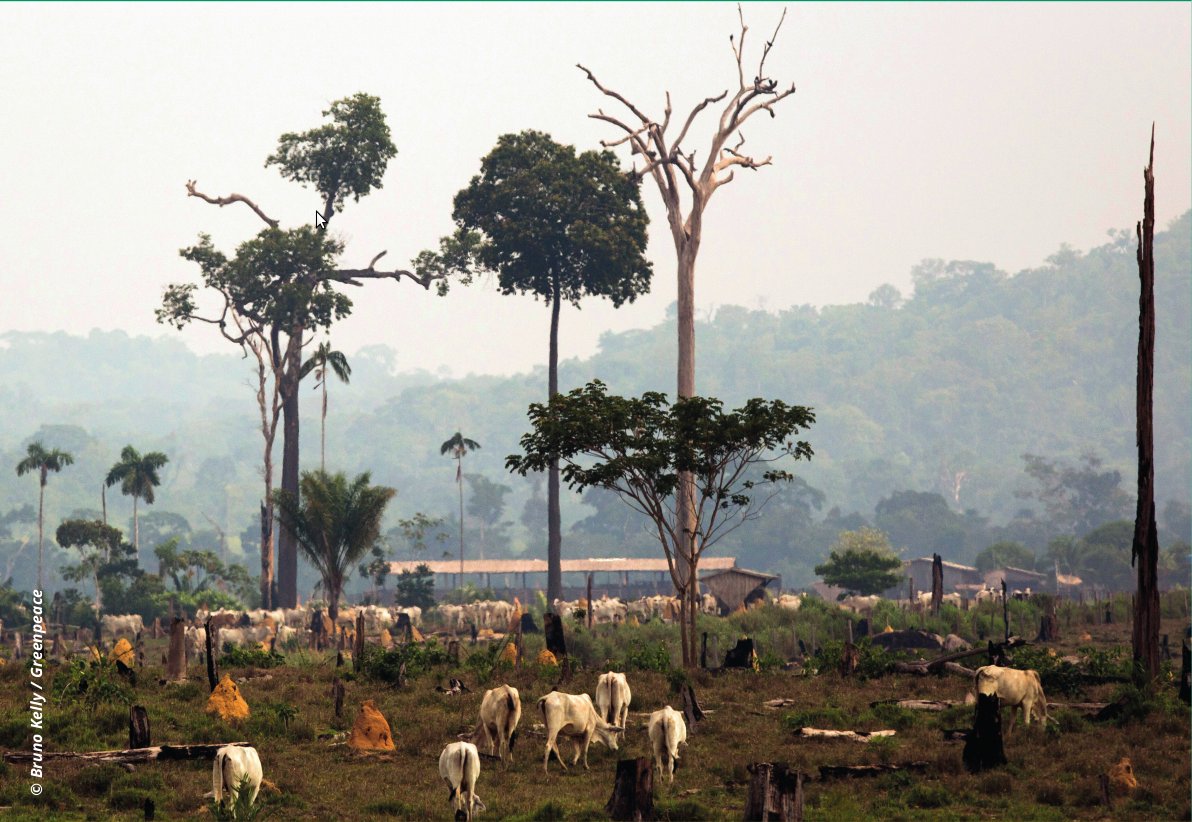
In the publication, Handel Anders! describes the consequences of the deal for agriculture, the climate and environment, indigenous peoples, and the economy and employment in the Mercosur countries. "The consequences are downright disastrous," says Sara Murawski, co-author of the report. "The EU-Mercosur agreement promotes trade in products like soya, meat and sugar, which leads to deforestation, environmental destruction and human rights violations. Large agricultural companies in the Mercosur countries are causing widespread enforced relocation of indigenous communities. Furthermore, the agreement promotes more low-productivity jobs in sectors like agriculture and mining and furthers de-industrialisation in the Mercosur countries."
EU countries are also suffering from the consequences of the EU-Mercosur agreement. It creates unequal competition for European farmers and livestock holders by allowing the import of products produced according to (much) lower standards. That exposes family businesses even more to the race to the bottom on the global market, which mainly benefits multinationals.
Towards fair and sustainable cooperation
The Handel Anders! coalition is therefore making proposals for a new cooperation agreement, based on the sustainable development of local industries, science and decent jobs in the Mercosur countries. The coalition is calling for greater European self-reliance through market protection and regulation of the EU market in agricultural products. That will assure EU farmers of a fair price for their products and end dumping in the Global South. According to the coalition, the EU must ultimately stop importing products from the Mercosur countries completely if it leads to environmental destruction, violation of land rights and the emission of greenhouse gases.
The publication will be presented today during the Latin America Debat (organised by a consortium of NGOs and trade unions) from 14:30 in the Nieuwspoort, in The Hague.
Read more about this subject
-
 Dossier /
Trade agreements
International trade agreements often have far-reaching consequences not only for the economy of a country, but also for people and the environment. It is primarily the most vulnerable groups who suffer most from these agreements.
-
 Dossier /
International trade and investment with respect for people and planet
The network of international trade and investment treaties is large and complex. The Netherlands alone has signed more than 70 bilateral investment treaties (BITs) and is party to the trade and investment agreements concluded by the EU, like the EU-Mercosur and EU-Indonesia trade deals.
-
 News / 15 October 2026
ISDS infringement complaint filed with the European Commission
The Netherlands and Portugal join four other EU countries facing such a complaint.
-
 Press release / 15 October 2026
Dutch and Portuguese organisations file EU complaint over investment treaties that let companies and sanctioned Russian oligarchs sue EU countries for compensation
The Netherlands and Portugal join four other EU countries facing such a complaint, as the Global Days of Action against Investor-State Dispute Settlement (ISDS) begin.
-
 News / 29 September 2026
Summary - Both ENDS complaint under the EU-New Zealand trade agreement
On 29 September 2026, Both ENDS lodged the first complaint on climate grounds with the European Commission's Single Entry Point. It asks the Commission to examine whether Aotearoa New Zealand has broken two promises both sides made in the EU-New Zealand Free Trade Agreement: not to weaken or set aside environmental laws in order to encourage trade or investment, and to effectively implement the Paris Agreement.
-
Publication / 29 September 2026
-
 News / 29 September 2026
Q&A: New Zealand's climate rollback and the EU trade agreement
On 29 September 2026 / 30 September in Aotearoa New Zealand, Both ENDS lodged a complaint with the European Commission under the EU-New Zealand Free Trade Agreement. These are the questions we are asked most often, and our answers. The complaint summary, the case explainer and the key public sources are linked at the end of this page.
-
 Press release / 29 September 2026
New Zealand faces its first climate complaint under EU trade rules
UTRECHT / WELLINGTON, 29 September 2026 /30 September in Aotearoa New Zealand
Both ENDS, a Dutch environmental justice organisation, has lodged a formal complaint with the European Commission arguing that New Zealand has broken the climate promises it made in its free trade agreement with the European Union. It is the first complaint on environmental and climate grounds under the Commission's Single Entry Point, the mechanism that lets civil society ask the EU to enforce the sustainability commitments in its trade agreements.
-
Publication / 3 July 2026
-
Publication / 18 June 2026
-
 News / 22 January 2026
Shell files new arbitration against the Netherlands over Groningen gas field closure
Shell is suing the Netherlands in yet another attempt to evade its responsibility for decades of gas extraction in Groningen. For years, gas production has triggered earthquakes, damaged over a hundred thousand homes, and left residents living in prolonged insecurity, still waiting for repairs, reinforcement, and justice.
-
 News / 5 November 2025
Another ISDS claim hits the Netherlands: Petrogas sues over solidarity contribution and royalty regulations
SOMO and Both ENDS strongly condemn the newly revealed investor-state dispute settlement (ISDS) case filed by Petrogas, an Omani oil and gas company operating two shallow-water gas fields in the Dutch North Sea, against the Netherlands under the Netherlands-Oman bilateral investment treaty (BIT).
-
Publication / 16 October 2025
-
Publication / 16 October 2025
-
 News / 23 September 2025
With the undemocratic splitting of the EU-Mercosur deal, Europe is missing the chance to lead on fair trade
Recently, many newspapers have written about Brussels’ rush to finalize the trade agreement between the EU and the South American Mercosur countries. According to the European Commission, national parliaments do not need to approve it because the trade part and the “political” part have been separated. This “splitting” means that the trade part can be approved as an EU-only decision by the European Council and the European Parliament, while national parliaments are sidelined and the political-cooperation part is postponed. Both ENDS and its partners are deeply concerned and are calling on the Dutch government to vote against this outdated agreement.
-
 News / 22 September 2025
EU-Indonesia Trade Deal Threatens Communities and Environment
On September 23th the European Union and Indonesia concluded their negotiations of the EU-Indonesia Comprehensive Economic Partnership Agreement (CEPA), a free trade agreement between the EU and Indonesia. Both ENDS condemns this agreement for favoring corporate interests over those of local communities and the environment.
-
 News / 11 September 2025
EU-Mercosur: Small GDP Gain, Big Question Marks for Farmers and Democracy
A recent report by Wageningen Economic Research (WER) on the economic consequences of the trade agreement between the EU and Mercosur confirms what civil society organizations, policymakers, and trade unions have been signaling for years: this agreement does not offer a balanced perspective for farmers and the environment. Instead, it increases power inequalities and shifts burdens onto (small-scale) farmers. Moreover, the deal risks reinforcing unsustainable practices that complicate the climate transition and addressing environmental challenges in both the EU and Mercosur countries.
-
 Dossier /
Towards a socially and environmentally just energy transition
To address the climate crisis we need to urgently transition away from fossil fuels towards clean, renewable energy. However, this transition is not only about changing energy sources. It requires an inclusive and fair process that tackles systemic inequalities and demanding consumption patterns, prioritizes environmental and social justice, and which does not repeat mistakes from the past.
-
 Blog / 17 July 2025
A disaster for farmers: here and there
The trade agreement with South America is harmful to farmers, the climate, and biodiversity, on both sides of the Atlantic. It’s time to take this deal off the table once and for all, argues Fernando Hernandez, Senior Policy Officer for Trade and Investment at Both ENDS.
-
 News / 5 June 2025
Op-ed: New trading partners, but not on the same terms
Since President Trump's trade war and tariffs, international trade has once again been thrust into the spotlight. In Europe and the Netherlands, there are growing calls for new free trade agreements to be concluded as quickly as possible, as reflected in recent opinions in FD and de Volkskrant. But that is the wrong reflex, writes our colleague Marius Troost.




