




Reflection on policy note "Investing in Global Prospects"
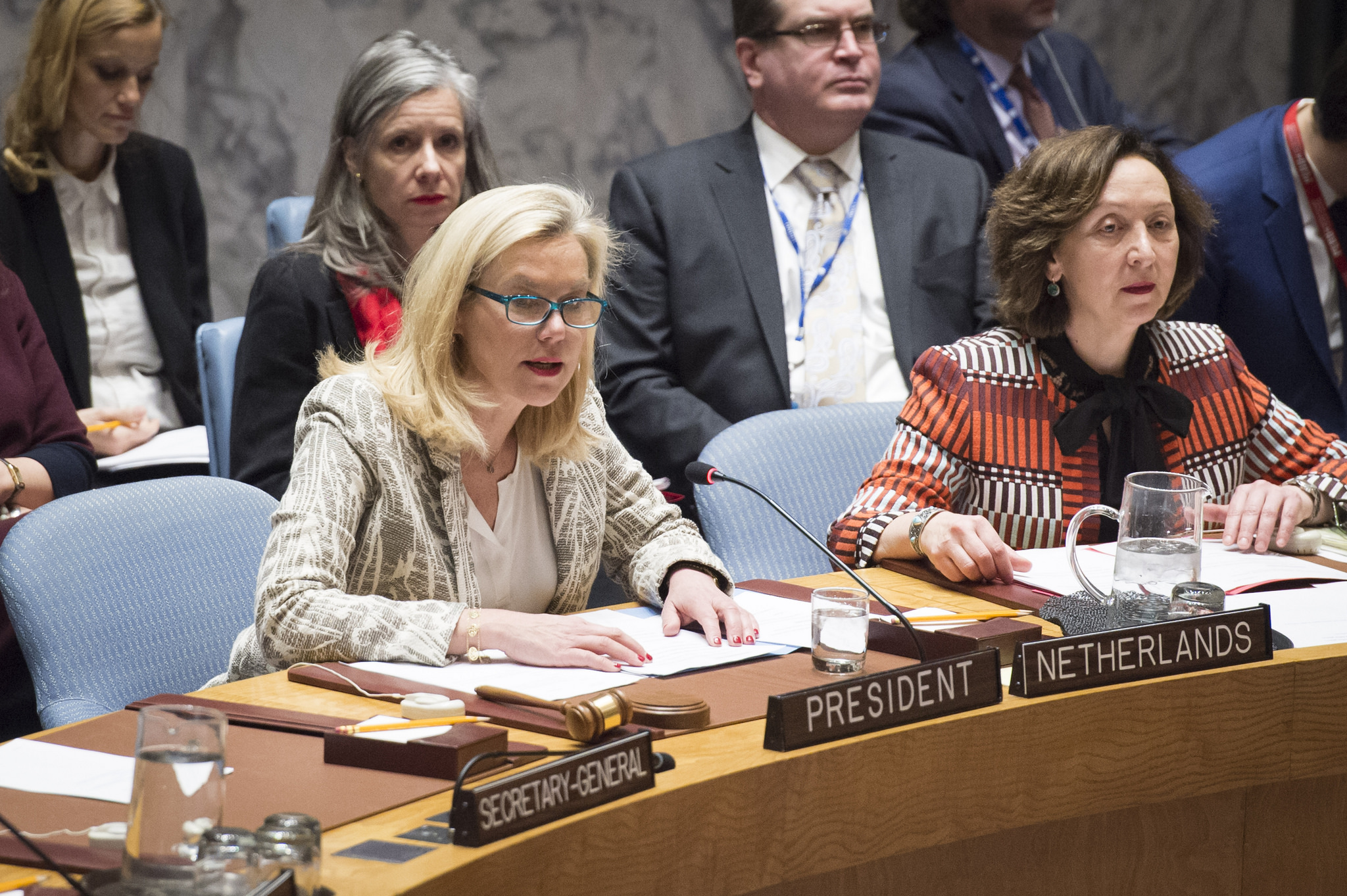
On Friday, the long awaited policy note by Dutch Minister for Foreign Trade and Development Cooperation Sigrid Kaag was published. The note was the outcome of a process of consultation, scientific analysis and much discussion within and outside the Ministry of Foreign Affairs. We searched for the spirit underlying it: What trends does this minister consolidate and deepen? What is new? Are those new aspects a superficial change of discourse or a genuine break with the past? On what issues is the paper silent and what do those silences tell us?
Both ENDS' director Danielle Hirsch published her reflection on the policy note on the website of Vice Versa in Dutch. Below you can read the English version.
THE SILENCES.
A deafening silence on the fossil economy
One of the most conspicuous silences in the policy note is on climate change. The document may be peppered with the word 'climate' but, like the rest of her cabinet colleagues, Minister Kaag has no ambition to combat the emissions that Dutch economic and industrial sectors generate directly or indirectly in other countries.
The climate aspect of the Netherlands' foreign policy in the coming three years seems to boil down to this: 'With our experience as a low-lying country in controlling and managing water, we are going to help others to protect themselves against the effects of climate change through the international activities of our business community.' The Dutch government is promoting this policy under the slogan of BV Nederland ("The Netherlands PLC"), the notion of the Netherlands as an international trading company.
With her silence on the Netherlands' worldwide involvement in the fossil sector and the lack of any concrete intentions to make money flows like the new Invest-NL fossil-free, the minister confirms that, for this third government under the premiership of Mark Rutte, climate change is nothing more than a way of making money for Dutch businesses.
Disappearance of reducing poverty and inequality
With its Sustainable Development Goals (SDGs), the UN has established a new framework for international development. This framework is 'universal', in that the SDGs concern not only poor countries but also call on 'developed' countries like the Netherlands to make fundamental changes. Furthermore, the goals cannot be seen in isolation from each other, but form a coherent whole.
At first glance, the policy note seems to embrace the SDGs. But an 'SDG check' shows that the government is going to focus on only 13 of the 17 goals and the minister will only report on eight of those 13. There will be no report, for example, on SDG 13, which concerns the climate.
The four SDGs that have ben left out in the cold are:
SDG 1: eradicating poverty
SDG 10: reducing inequality
SDG 14: protecting the seas and oceans
SDG 15: restoring ecosystems and preserving biodiversity
The fact that Minister Kaag has abandoned poverty and inequality raises the question of what she sees as the tasks of international cooperation. In addition, the lack of attention to the two most important SDGs on nature and the environment suggests that the minister does not share the conclusion of the Monitor Brede Welvaart, the report on prosperity in the Netherlands published by Statistic Netherlands (CBS). In this report, the CBS concludes that we generate our prosperity at the expense of the world's forests, water, coasts and seas.
The signals that the minister sends out by ignoring these SDGs in particular also immediately raises questions about what she considers to be the 'root causes of conflict'. Let us take a look at those.
THE NEWCOMERS
In contrast to the silences, there are issues about which the policy note has much to say: migration and gender equality. Does the greater attention to these challenges signify a fundamental shift in policy?
Migration
The minister is earmarking the greatest part of the €400 million additional funds allocated to her budget to combat irregular migration. She has translated her experience with conflict and migration into a vision that requires political courage: non-voluntary migration can only be prevented if people have the prospects of a minimum standard of living and if the root causes of conflict are systematically removed.
The Netherlands' trade and development policy aims to help make those prospects a reality by increasing access to education and generating employment. The policy note does not however permit local actors to show much initiative; in the section on food security, for example, it seems to give priority to international organisations like the International Fund for Agricultural Development (IFAD) and the International Fertilizer Development Center (IFDC). Given her wish to offer people better prospects locally and her correct choice to increase support for civil society organisations in the South, it is unclear why the minister has decided to support the Great Green Wall initiative to combat desertification in Sub-Saharan countries, while existing local initiatives deserve just as much recognition.
The policy note rightly states that the root causes of conflict need to be addressed. But what are those root causes, in the minister's eyes? Is it the fossil economy, which benefits from instability and conflict in oil- and gas-rich rich countries? Is it the immense inequality in and between countries? Is it the collusion between those in power and multinationals, which expresses itself in the authoritarian governments in countries in her focus region? Is it increasingly weak social systems and rising national debts, which women in particular are the victims of? Is it the depopulation of the countryside resulting from drought, land-grabbing, the expansion of large-scale agriculture and the destruction of ecosystems by dams and mines? Is it the tax paradises that make it impossible for developing countries to earn from their natural resources?
The analyses of such a diverse group as the World Economic Forum, Naomi Klein, Oxfam and the IMF suggest that this short list covers the root causes of conflict reasonably well. But the paper chooses to address other issues, such as access to education and creating jobs for women and young people by connecting them to international markets.
This apolitical approach suggests that the minister does not accept the universality of the SDGs as an integral principle in her policy, and in doing so effectively ignores the core of the UN's Agenda 2030.
Gender goes mainstream
Minister Kaag takes the following, necessary step in gender policy: she goes further than the existing sector-based focus on sexual and reproductive health and rights and mainstreams gender. And those are not just empty words: the paper announces concrete action on gender in all its chapters.
While the paper offers openings to strengthen the position of women and girls, the minister misses a golden opportunity by failing to make the funding of initiatives by women a clear priority in the new Dutch Climate Fund. After all, as the paper rightly notes, women will be affected the most by climate change. Moreover, they are often the ones with relevant knowledge and the drivers of climate initiatives.
Whether the minister's focus on creating jobs for women, for example by participating in the World Trade Organization's #SheTrades initiative, is a good choice is a matter of discussion. A large group of civil society organisations have serious doubts about this. Generally, women are mostly active in the informal and care economies. International trade chains like palm oil or coal or multinational supermarket chains often destroy these women's livelihoods. The formal jobs that replace their sources of income often do not even pay a living wage and therefore fail to provide livelihood security.
It is more effective to strengthen the position of women in the informal economy with direct financial support and by strengthening their legal status. Given the minister's wish to base her policy on empirical studies, we hope that the coming evaluation by the Policy and Operations Evaluation Department (IOB) of trade policy in recent years will also address its impact on women, for example by looking at the consequences of Dutch investments in international chains, such as that for flowers, for the position of women.
More money for Southern organisations
The Minister is going to send more money directly to Southern civil society organisations (CSOs). That is an important acknowledgement of the effectiveness of these organisations, which are close to the reality of poor people's lives. Good examples of this are the various women's and environmental funds led by local CSOs, which can ensure that relatively small amounts of money reach a broad network of grassroots organisations quickly and efficiently.
Hopefully, the minister will see the increasing flow of funds to these and other CSOs also as a job for the Dutch Climate Fund, and will choose organisations in her new focus region as partners in achieving her ambitions for water, food and agriculture. After all, through innovative financing systems, she can support a large number of local civil society actors in implementing their projects. That not only results in good initiatives, but also creates jobs.
IS CONTINUITY ALSO DEEPENING?
Interesting trends in trade
The third Rutte government confirms the vision of its predecessor that trade and aid are inseparably linked. The neocolonial approach to trade, with obligations for countries and people and rights for multinationals, is slowly but surely being challenged. The minister recognises that private actors in the system will only move if new rules force them to, but packages that awareness in somewhat veiled terms. Nevertheless, the ambition is positive: she is going to make sustainability a serious topic in trade negotiations, increase the transparency of negotiations and involve civil society at an early stage. She is going to work on the UN Treaty on Human Rights, strengthen the National Contact points of the OECD Guidelines for Multinational Enterprises so that the guidelines can be better implemented, and put human rights at the centre of her private sector policy. And she is going to explore the possibilities for legislation that will make corporate social responsibility the norm.
At the same time, the policy note takes the Netherlands' competitive position as a norm that has to be maintained. There is no mention of the impact of our way of trading on poverty and inequality, climate or ecosystems, as shown by the abovementioned CBS prosperity report. Why is the minister afraid to stop supporting the fossil economy? Or to instruct embassies not to support private initiatives without a sound human rights analysis? Or not to permit businesses that have not publicly embraced the OECD guidelines to take part in trade missions?
Civil society organisations: no shine without friction
The Minister recognises that civil society organisations contribute to achieving the goals she has set in a variety of ways, even when they oppose her policy. Though she is not the first minister to see the relationship with CSOs in this way, her recognition of the added value of healthy opposition deserves praise. And the OECD agrees. A recent evaluation by Kaag's colleagues in other European countries identified the relationship between the ministry and CSOs as one of the most innovative elements in the Netherlands' policy. And other countries come and visit more often to see how this division of roles and cooperation has been achieved. As the saying goes, no shine without friction.
The policy note rightly expresses concern about the shrinking space for civil society. Local groups that combat human rights violations by businesses in collusion with governments will benefit greatly now and in the near future from the Strategic Partnerships between the Minister and civil society organisations.
We know from experience that embassies have a crucial role to play in this respect. It is therefore very important that the extra funds for the diplomatic missions are used to strengthen relations between the embassies and CSOs. The embassies should also be given greater capacity to integrate international standards like the UN Guiding Principles on Business and Human Rights and the OECD Guidelines in trade missions and all their activities relating to economic diplomacy.
CONCLUSION
In recent weeks, many people have expressed criticisms of Minister Kaag's failure to make choices. But the minister does make definite choices. She is continuing efforts to refine the trade dossier and has set a number of welcome priorities: more enforcement, attention to the sections on sustainability and transparency, and perhaps more legislation on corporate social responsibility. She is focusing on mainstreaming gender. She has chosen to combat migration through prevention, even though her 'root causes' approach seems apolitical. In her new focus region, money is going primarily to education and employment.
The minister has also chosen to give the core task of the Netherlands' climate dossier – to reduce the use of fossil fuels – a wide berth. She devotes no attention to environmental degradation or the loss of ecosystems. Given the CBS' conclusion that the Netherlands has an excessively negative impact in these areas, the policy note seems to confirm that the Netherlands refuses to take its responsibility on protecting the environment.
If we put the silence on our fossil footprint, our role in the loss of ecosystems, the failure to address a number of the most crucial SDGs, and the apolitical analysis of the root causes of migration together, the minister's policy seems to be mainly concerned with strengthening BV Nederland. There is little to be earned from poverty reduction and environmental protection. If our delta approach can win us contracts to protect cities from rising sea levels, we are only too pleased to oblige, but it is a different story when it comes to our own emissions. We do not address the real causes of conflict and migration.
These choices are at odds with others made in the policy note. Ambitions like mainstreaming gender throughout the whole policy, making the trade agenda sustainable and strengthening the role of Southern partners will clash regularly with the interests of BV Nederland.
The coming months will show how the minister will deal with these tensions in her policy. It is up to all those who were involved in making the policy to break through the silences and make use of the dilemmas inherent the policy note to arrive at a coherent package of policy measures that do justice to the universal spirit of the SDGs. A fantastic challenge for the coming years!
Read more about this subject
-
 News / 11 September 2023
Our director Danielle Hirsch will stand as a candidate for the Dutch parliament
Danielle Hirsch, our director, is running as candidate for GroenLinks-PvdA in the parliamentary elections in November this year.
-
Letter / 4 May 2020
Letter to Minister Kaag with five recommendations to achieve the SDGs and the climate agreement
The Corona crisis is showing us just how closely our current economy is irrevocably intertwined with the pollution of the planet and is making people all around the world more and more vulnerable. Both ENDS and MVO Nederland (CSR Netherlands) – are particularly concerned about what we hear about human rights, climate and the environment. We ask the Dutch government, in a letter to Minister Kaag, to commit to achieving the Sustainable Development Goals (SDGs) and the goals of the Paris climate agreement.
-
 Blog / 29 January 2019
Make the climate debate a part of our foreign policy
The climate debate in the Netherlands is bogged down in what we can change at home and does not touch on our actions abroad. And that is a missed opportunity. Precisely because our international trade model is both so influential and, at the same time, such a widespread cause of pollution, changes in that policy can have an immediate effect.
-
 External link / 22 May 2018
Reflection on policy note "Investing in Global Prospects" on Vice Versa
On Friday, the long awaited policy note by Dutch Minister for Foreign Trade and Development Cooperation Sigrid Kaag was published. We searched for the spirit underlying it: What trends does this minister consolidate and deepen? What is new? On what issues is the paper silent and what do those silences tell us? Both ENDS' director Danielle Hirsch published her reflection on the policy note on the website of Vice Versa (in Dutch).
-
 News / 16 August 2019
Opinion: "Sustainable land use needs radical policy change"
Today, an op-ed by Nathalie van Haren and Stefan Schüller was published in the Dutch national newspaper De Volkskrant about the IPCC's latest report "Climate Change and Land". Below you find the English translation.
-
Letter / 19 October 2022
Both ENDS' input to the 'Consultation Feminist Foreign Policy' of Ministry of Foreign AffairsZa
In May 2022, Minister Hoekstra of Foreign Affairs and Minister Schreinemacher for International Trade and Development Cooperation announced that also The Netherlands will work towards implementing a Feminist Foreign Policy (FFP). This means that within its Foreign Policy, the Netherlands will pay more attention to inclusivity in general and specifically to women's rights and gender equality, including LGBTIQ+. This feminist lens will be central to all aspects of foreign policy; security, trade, diplomacy and international cooperation.
To foster an inclusive process and acquire insights in what a Dutch FFP should look like, the Ministry of Foreign Affairs opened an internet consultation. Both ENDS welcomes the FFP and therefore gladly shares its input and suggestions.
-
Publication / 2 November 2021
-
 News / 17 February 2026
Civic space at the frontlines: "Build strong coalitions and counter repressive regimes"
Today, we look back on an inspiring event Civic space at the frontlines -
Environmental Defenders and the Role of International Trade and Investment Policy. The panel exist of Michel Forst, UN Special Rapporteur Environmental Defenders under the Aarhus Convention, Suzanne Kröger, Member of Parliament for GroenLinks–PvdA, Dr. Margit van Wessel, Associate Professor at Wageningen University, Anne de Jonghe, policy advisor at Both ENDS, and Jonila Castro, national spokesperson for Kalikasan People's Network for the Environment. With an audience of CSO experts, academics, accountability experts and students we discussed the effects of Dutch economic activity on Environmental Defenders, and what we all can do to support those on the front lines of the fight for the environment and human rights. -
News / 2 February 2026
Response to the D66-VVD-CDA coalition agreement
Coalition: Repair the damage and dare to go further
At Both ENDS, we see a number of cautious steps in the right direction in this coalition agreement. There is a slight emphasis on green issues, renewed attention to women's rights, recognition of the importance of civil society, and discussion of trade agreements with a focus on mutual interests. However, without structural change in how we trade, invest, and cooperate, fine words remain empty shells.
-
 Blog / 31 March 2025
International cooperation and solidarity are in the interest of both the Netherlands and Africa
Traditional development aid keeps Africa in a state of aid dependency, but development cooperation is essential to break this post-colonial dependency, argues Melvin van der Veen in response to an interview in NRC Handelsblad with the Cameroonian economist Célestin Monga. By breaking off this cooperation on the basis of equality, we are actually stifling the voices of African civil society organisations, indigenous communities, youth and women's movements and human rights defenders, and we are not solving global problems.
-
 News / 18 March 2025
Abuses surrounding TotalEnergies‘ LNG project in Mozambique are piling up; Dutch support irresponsible
On Friday 14 March, the French Public Prosecutor's Office announced that it would launch an official investigation into TotalEnergies’ involvement in involuntary manslaughter during the attacks on Palma, the location of their LNG project. This umpteenth abuse makes it clear that the Netherlands cannot in any way provide public support for this project.
-
 News / 4 March 2025
Feminist March 2025: let's take to the streets for gender justice
Women's rights are under pressure worldwide, and hard-fought rights and freedoms are being dismantled. Whereas until recently the Netherlands was a champion of emancipation, women's rights and gender justice, the current cabinet is breaking with this policy and abandoning millions of women and girls. That is why Both ENDS, together with many other allies, will be taking to the streets on 8 March. It is time to make a strong stand against the dismantling of gender policy and to stand up for gender equality and social justice.
-
 News / 21 February 2025
Cabinet turns its back on international cooperation and solidarity with callous policy letter
Foreign Trade and Development Minister Klever's published policy letter is coldhearted and callous. It places the Netherlands in international isolation and abandons the most vulnerable people worldwide, including many women, farmers, indigenous peoples and youth.
-
 Blog / 18 November 2024
The global rise of authoritarian regimes demands global strategies
The global funding landscape for civil society movements is changing, and is increasingly faced with policies that restrict funding streams, limit philanthropic work, and silence critical voices. These are not incidental shifts but part of a broader pattern that erodes the support for those international networks and movements under the guise ‘necessary financial cuts’, ‘aid reform’ or ‘efficiency’.
-
 Press release / 12 November 2024
Ruling climate case Shell: "Shell has an obligation to protect human rights."
The Hague, 12 November 2024 - The court has ruled in Shell's appeal in the Climate Case that Milieudefensie won against Shell in 2021. The Court of Appeal has ruled that the oil and gas giant has a responsibility to reduce its emissions, but has not imposed a reduction obligation.
-
 Press release / 11 November 2024
Both ENDS's response to government letter on future cooperation with civil society organisations
DEN HAAG, 11 November 2024 - Today, the Dutch government published its policy on future cooperation with development organisations, both in the Netherlands and abroad. PVV minister Reinette Klever is putting the axe to this funding: she has decided to cut the budget for aid to international civil society by more than two-thirds: from roughly €1.4 billion to €0.4 billion in the period 2026 to 2030. This has major implications for critical voices at home and abroad, at a time when civic space for organisations around the world is already shrinking. Karin van Boxtel, director of environmental and human rights organisation Both ENDS: ‘This is an unprecedented step in exactly the wrong direction. Civil society organisations are essential for sustainable and social change worldwide. International movements fulfil multiple, indispensable roles: as a watchdog of the rule of law, as a driver of change, and as a counterforce against authoritarian tendencies. The weakening of support for these roles is a telling signal.’
-
 News / 21 October 2024
Disappointment over failure to submit National Biodiversity Strategy and Action Plan
We are deeply disappointed and frustrated that the Dutch government has not submitted its National Biodiversity Strategy and Action Plan (NBSAP) for the CBD COP16 in Cali. This disregard for international agreements undermines the concerted global effort to address the urgent biodiversity crisis.
-
 Blog / 21 June 2024
International coorperation - especially now!
This blog is written in Dutch
-
 News / 11 June 2024
Stand in solidarity; sign the petition
Together with a vast majority of Dutch NGO's, political movements and other concerned professionals we have started a petition to call out to the Dutch new government to invest in international cooperation and stop the planned budget cuts (2,5 billion euros).
-
 News / 21 December 2023
The Netherlands is certainly not more Catholic than the Pope
The Netherlands is well on its way with the energy transition at home, but our country continues to encourage Dutch investments in fossil projects elsewhere. This is obviously not in line with the climate goals and, moreover, these kinds of projects cause major problems in the countries where they take place. What can a new cabinet do to reduce the Dutch footprint abroad? Ellen Mangnus discussed this with several experts: today part 2.

